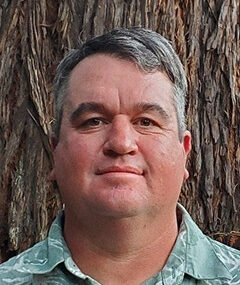
Today, Stiff oversees the implementation of restoration activities as field operations manager for Redwoods Rising, a collaboration between the League, California State Parks, and the National Park Service to restore more than 70,000 acres of previously logged coast redwood forest in Redwood National and State Parks. He is the project’s on-the-ground point person, managing relationships with park inspectors and contractors and addressing challenges as they occur. Stiff also manages the logs generated from the project’s restorative thinning activities.
“I was really interested in doing large-scale watershed restoration—fully restoring these streams, removing old roads, and getting the crowded forests thinned back and into a healthy state,” says Stiff. “These measures help reduce the chance of catastrophic wildfires and recreate old-growth forest conditions.”
Stiff’s role with Save the Redwoods League also enables him to spearhead work improving conditions for fish in redwood ecosystems. He oversees the decommissioning of former logging roads that haven’t been used in decades, which stems soil erosion that can cloud creeks.
Stiff is also implementing aquatic restoration projects, working with contractors to place whole logs with intact “root wads” into streams, where they can help slow the movement of water and create ideal habitat for young fish to thrive among the redwoods.
“A lot of these streams were completely buried by old roads and crossings. Unearthing these waterways and removing the fill material will allow gravel to move down the creeks into larger streams, where they can provide high-quality spawning and rearing habitat for salmon and other fish.”