Redwood recovery happens at the watershed level, where forest health, clean water, and wildlife habitat depend on one another. Past logging left dense stands and aging roads that continue to damage streams. Today’s restoration work tackles these impacts together—thinning forests, repairing road-related damage, and restoring aquatic systems across the landscape.
Forest restoration
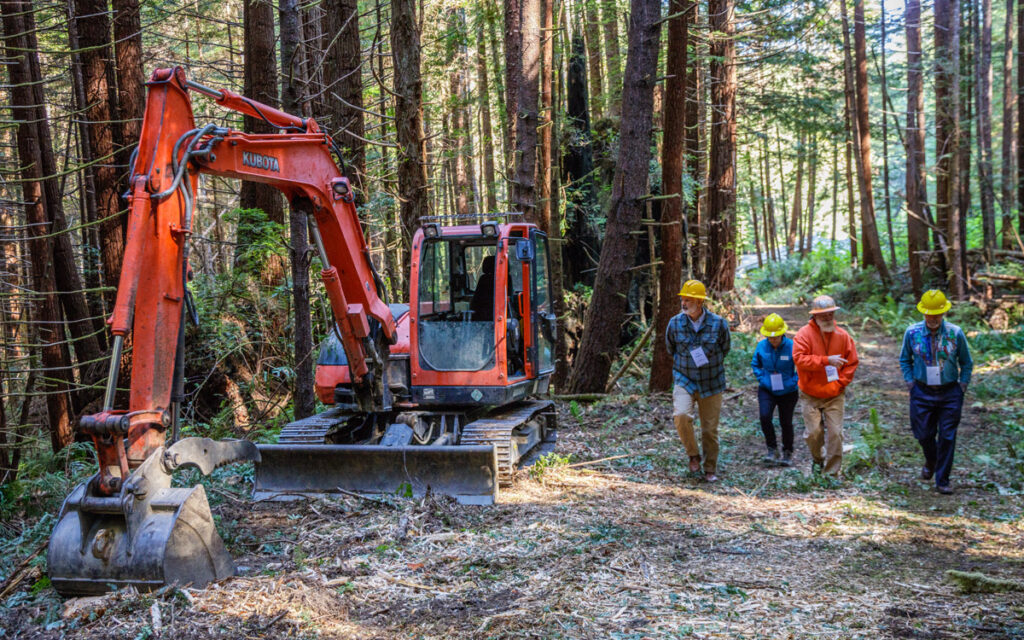
Redwoods Rising partners tour a restoration site. Photo by Max Forster.
Forest restoration activities reduce stand density, redistribute growth among the remaining trees, and enhance forest health. Variable density thinning is a primary method used, which seeks to accelerate the development of old-growth forest characteristics. While some trees cut in thinning activities are left on site, removal of these trees is preferred to reduce fire hazards, encourage understory development, and increase carbon sequestration benefits.
Some trees removed from the project site are transported as logs to local sawmills, and the biomass revenue generated from their sale is reinvested in Redwoods Rising. To date, the partnership has completed restoration thinning on more than 5,000 acres. The ecological benefits of this work extend far beyond the treated area by providing watershed-scale benefits for fish, wildlife, and forest resilience, while accelerating carbon sequestration and storage.
Road treatments
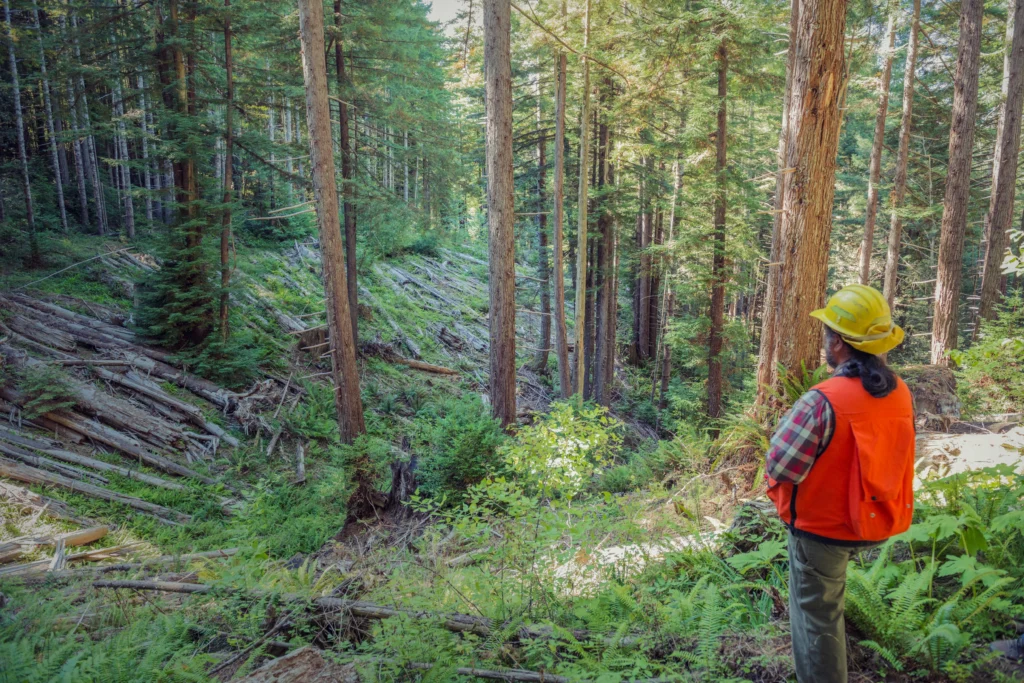
This former logging road was decommissioned in Redwood National Park. Photo by Mike Shoys.
Legacy logging roads have been identified as the biggest threat to aquatic resources in RNSP. Combined, the Mill Creek and Prairie Creek watersheds within RNSP have several hundred miles of abandoned haul roads, associated skid trails, and over 630 legacy stream crossings—many of which are failing and choking streams with eroded sediment. Initially, it has been necessary to repair and reuse some logging roads to facilitate access for forest restoration, restore historical drainage patterns by removing fill from eroded stream crossings, and remove malfunctioning drainage structures such as culverts to improve stream flow and remove barriers to fish passage.
After forest restoration treatments and aquatic restoration activities are complete, most logging haul roads will be removed and reforested, while administrative roads that are part of the transportation network will be left as needed for interior park access. To date, Redwoods Rising has completed improvements on approximately 32 miles of roads, removed approximately 22 miles of roads, replaced or removed 34 stream crossings, and installed one bridge and three temporary bridges. These treatments improve downstream water quality and reduce habitat fragmentation, benefiting fish and wildlife on a watershed scale.
Aquatic restoration
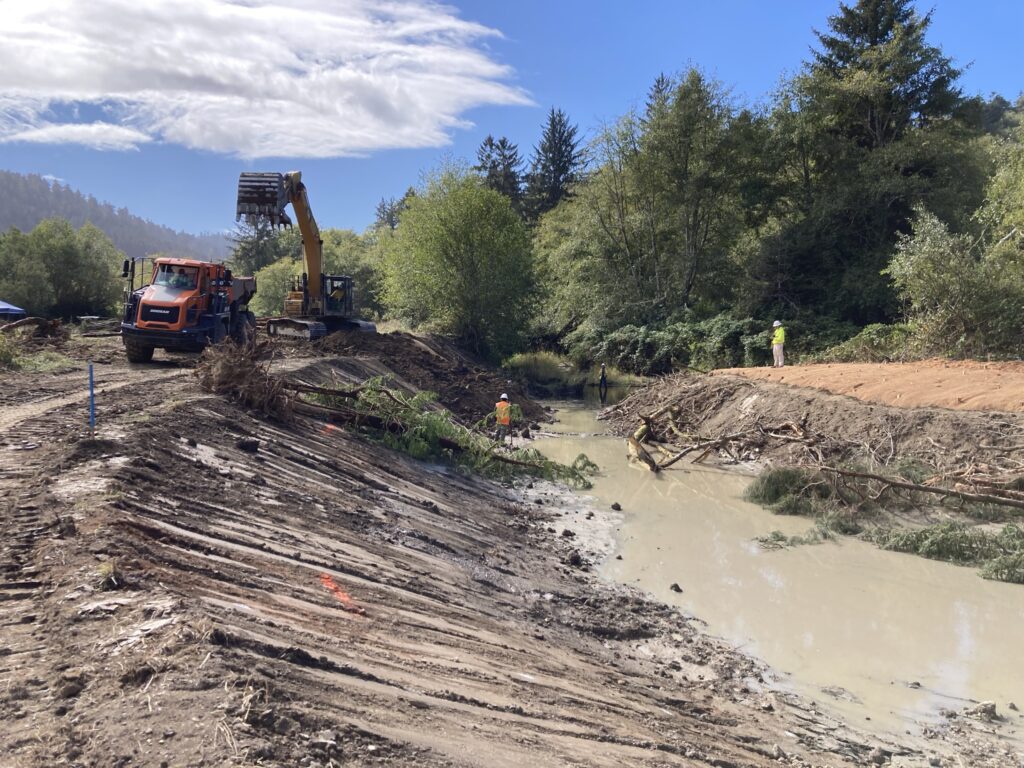
Yurok Tribe Construction Corporation crew members excavate a two-acre backwater channel connecting to the main stem of Prairie Creek to provide salmonid habitat. Photo by California Trout.
Redwoods Rising aquatics projects improve critical habitat for aquatic life, including three threatened and endangered species of salmonids found within both project areas: Chinook and coho salmon and steelhead trout. This work involves restoring natural stream channel processes, creating habitat by inserting large wood structures into the channel, removing invasive plants, and replanting with native species. The values and benefits of this work extend both upstream and downstream.
To date, the partnership has installed large wood at 26 sites within a 1-mile reach of Prairie Creek, positioned large wood within a 0.8-mile stretch of Bummer Lake Creek, and restored 15,840 feet of stream channels. In Greater Prairie Creek, aquatics restoration work has been completed by the Yurok Tribe Construction Corporation and Fisheries Department, which is renowned for its aquatic restoration expertise.
Project sites
Mill Creek
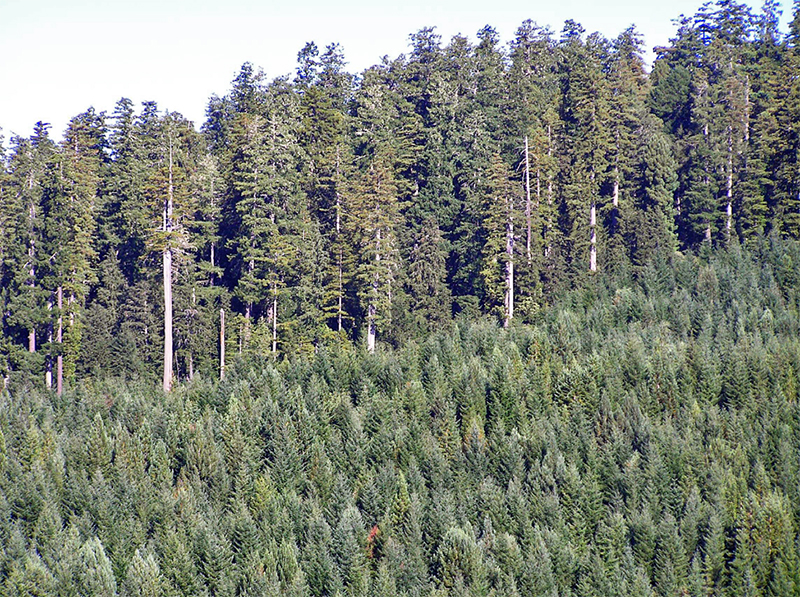
Immediately upstream of the spectacular primeval forests of Jedediah Smith, about a quarter of the trees in the 25,000-acre Mill Creek Watershed are less than 30 years old. After it was logged, much of the watershed was seeded with Douglas-fir at 10 times normal forest densities. These thick stands do not have the biological diversity of a healthy forest and shade out other plants. Crumbling roads continue to dump sediment into Mill Creek—a major spawning ground for coho salmon and steelhead trout.
Through Redwoods Rising we are restoring the watershed’s youngest forests and developing a landscape-level plan to treat the remaining 20,000 acres of second-growth forest in the coming years.
Prairie Creek
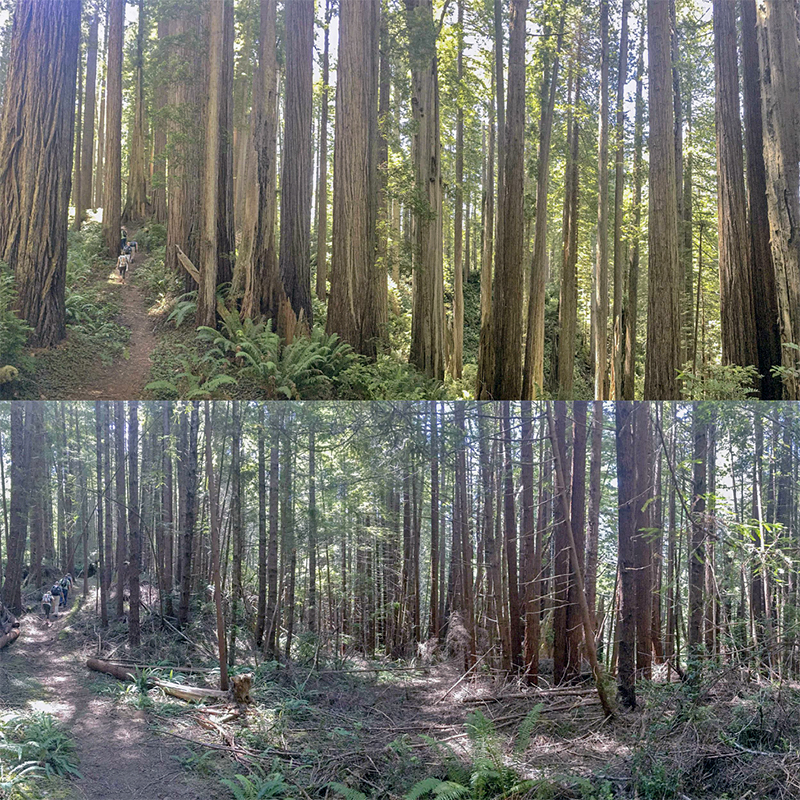
State park lands in Upper Prairie Creek are home to mostly old-growth redwood forest, however the lower reaches of the watershed are a patchwork of young and old forest on both national park and state park lands.
Under Redwoods Rising, we will be able to create 30,000 contiguous acres of old-growth forest in the Prairie Creek Watershed; the largest stand in the world. Save the Redwoods has been working in this part of the park since 1923, and we are thrilled to be able to continue to care for these lands through this unique collaborative partnership.