January 12, 2021
Coast redwood forests are best known for their larger flora, but this ecosystem is also home to some very things at a much smaller scale. We’ve talked about wildflowers elsewhere, but now we want to focus on fungi. This is a good time to highlight these strange residents, as they flourish in the winter rains.
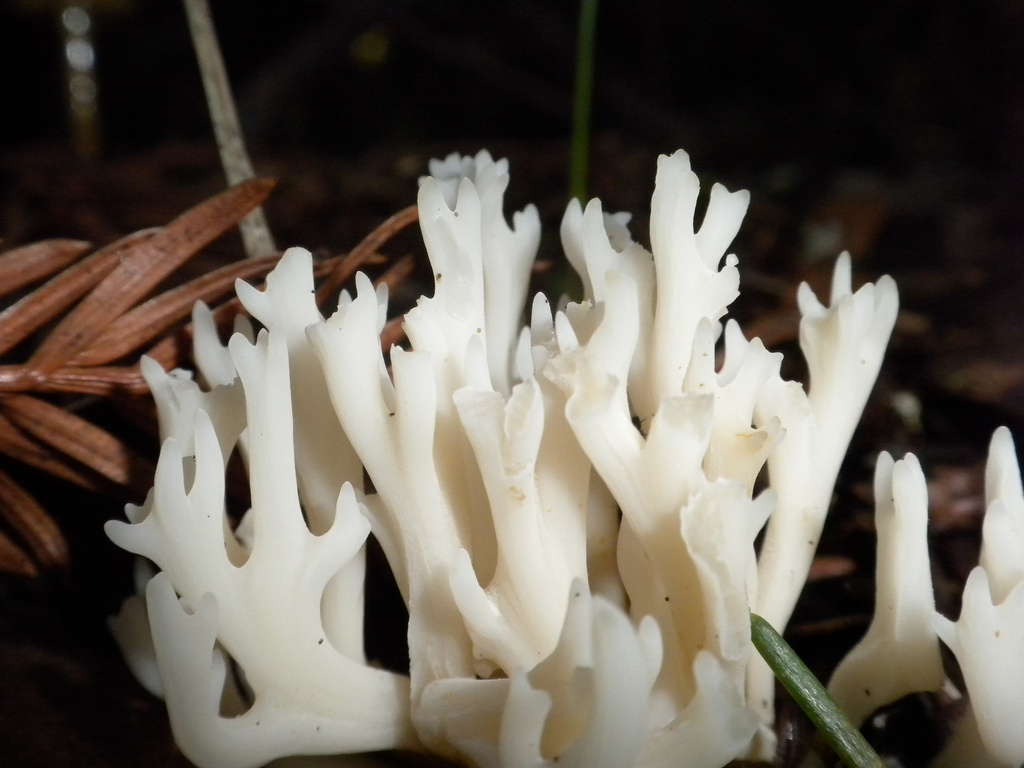
Coral fungus emerges from the forest floor after the rain, and comes in a variety of colors: white, yellow, orange and red. It quickly grows to a height of 5-10 inches off the forest floor, forming connections to the roots of trees and trading the nutrients absorbed from the soil for sugars from the trees. This mushroom does not have gills like many of the capped mushrooms we are most familiar with, but instead produces olive-colored spores all over the delicate branches of its fruiting body.
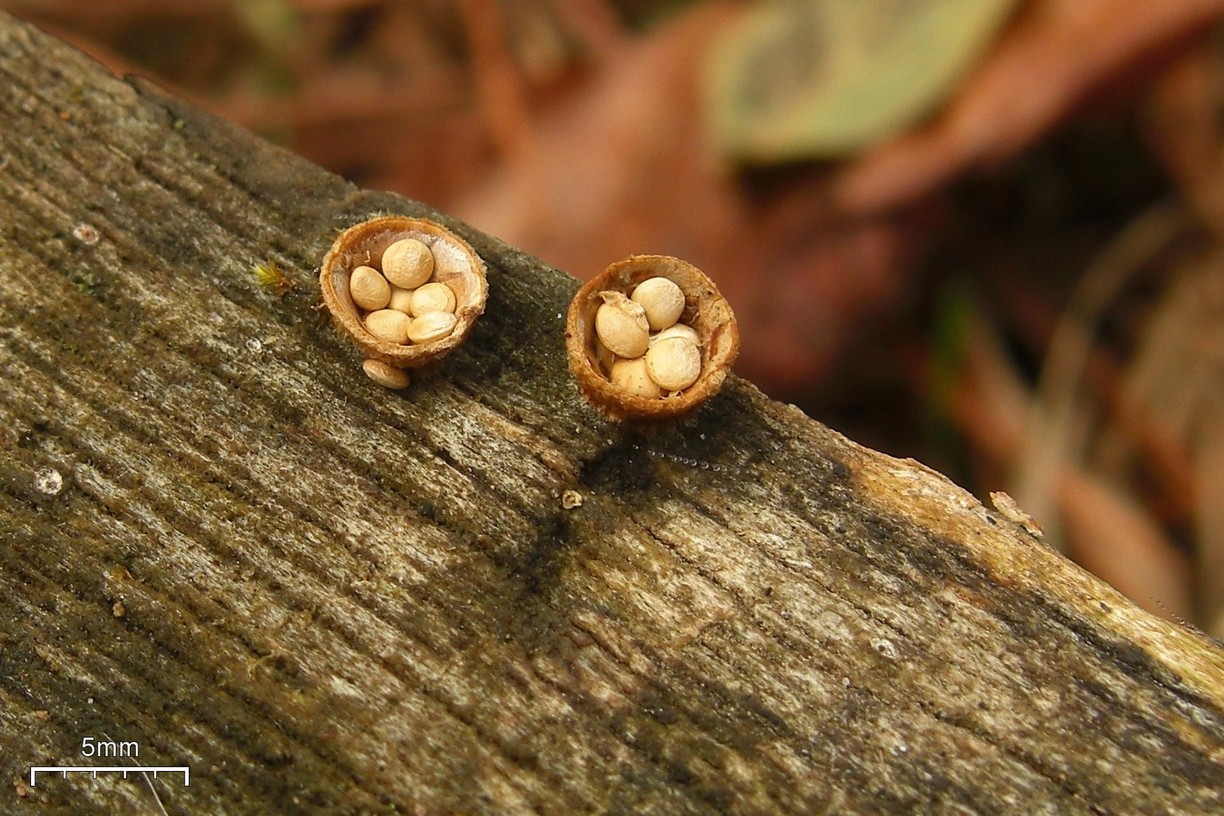
Bird’s nest fungus. Photo by pellaea, Flickr Creative Commons.
It’s obvious how the bird’s nest fungus gets its name. But it’s also fascinating how this mushroom’s shape helps reproduction. It is shaped in a way that it becomes a perfect splash cup. When a raindrop falls and hits the cup of the mushroom, it has enough force to propel the peridioles outside the cup onto some other surface, where spores are released.
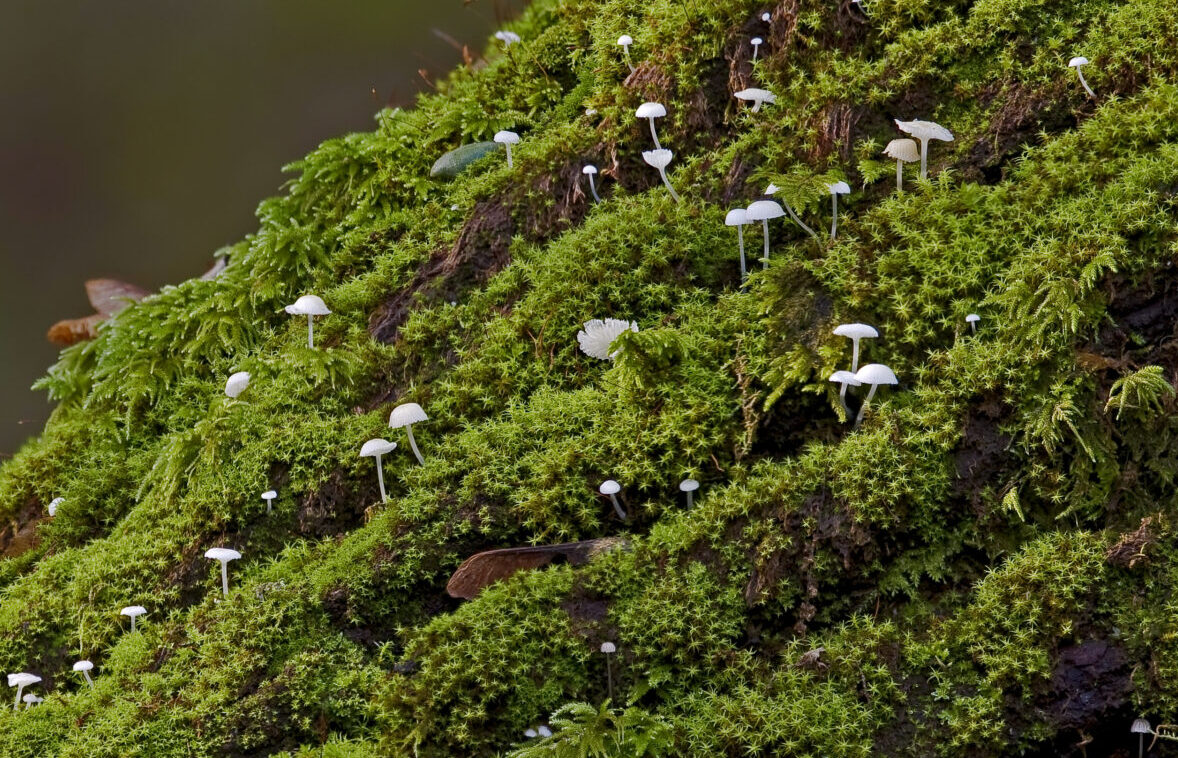
Here are some of the other wonderful mushrooms and fungi that we’ve found in coast redwood forest.
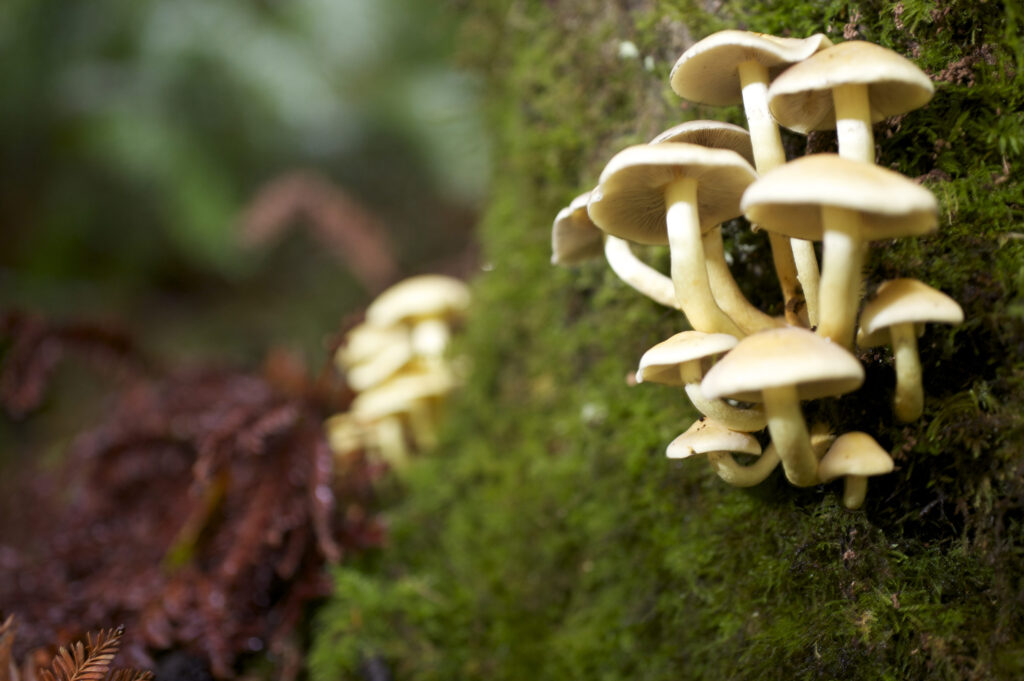
Photo by Humboldt State University.
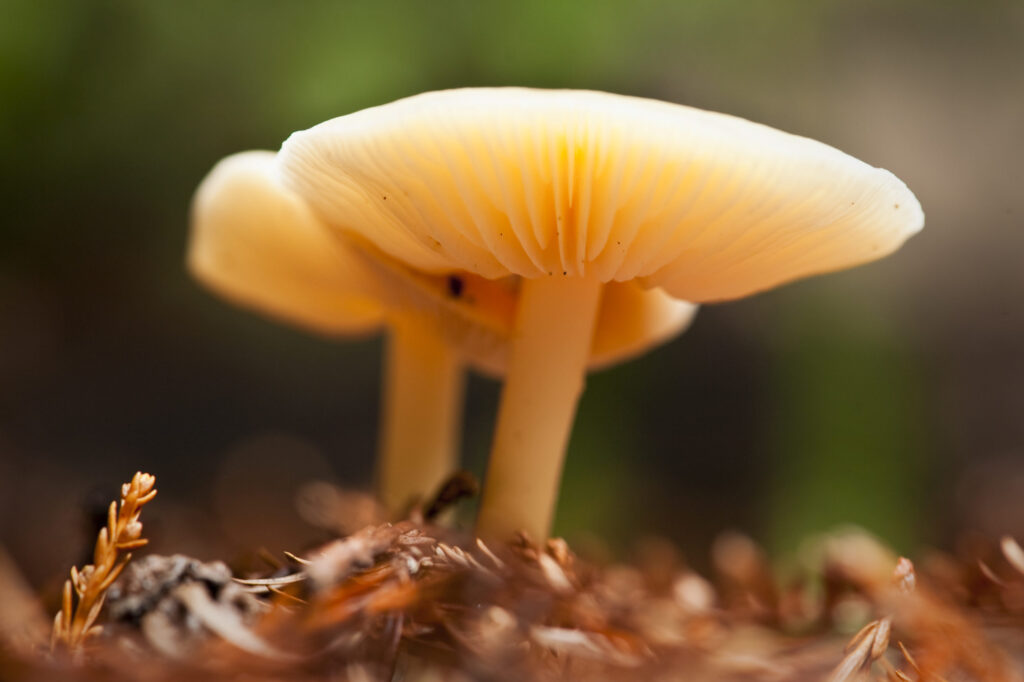
Peter L. Buranzon
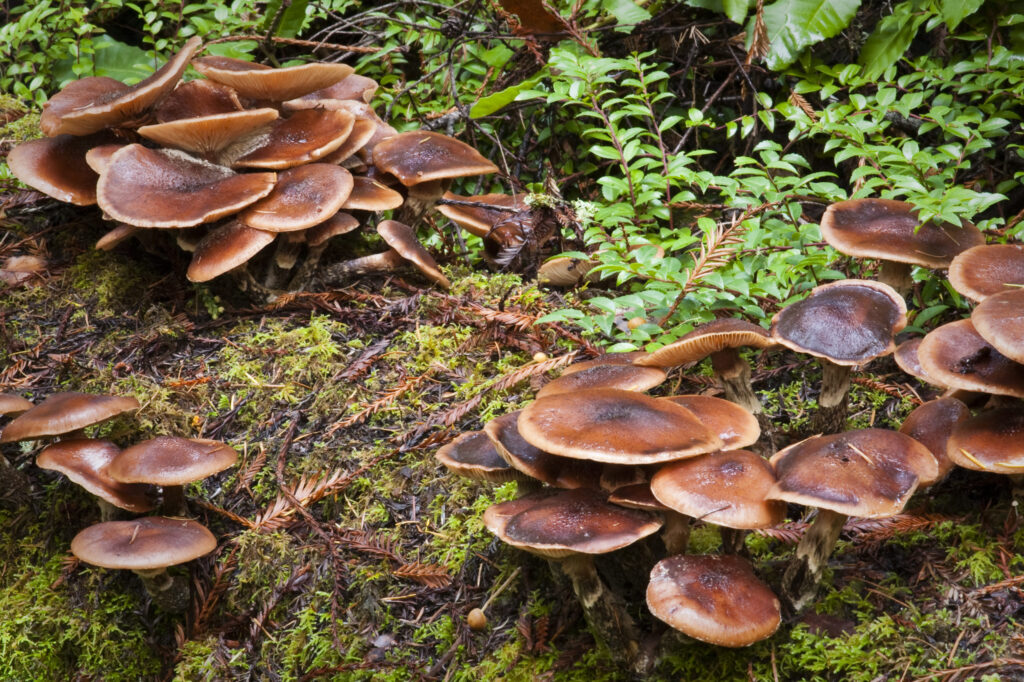
Photo by Peter L. Buranzon
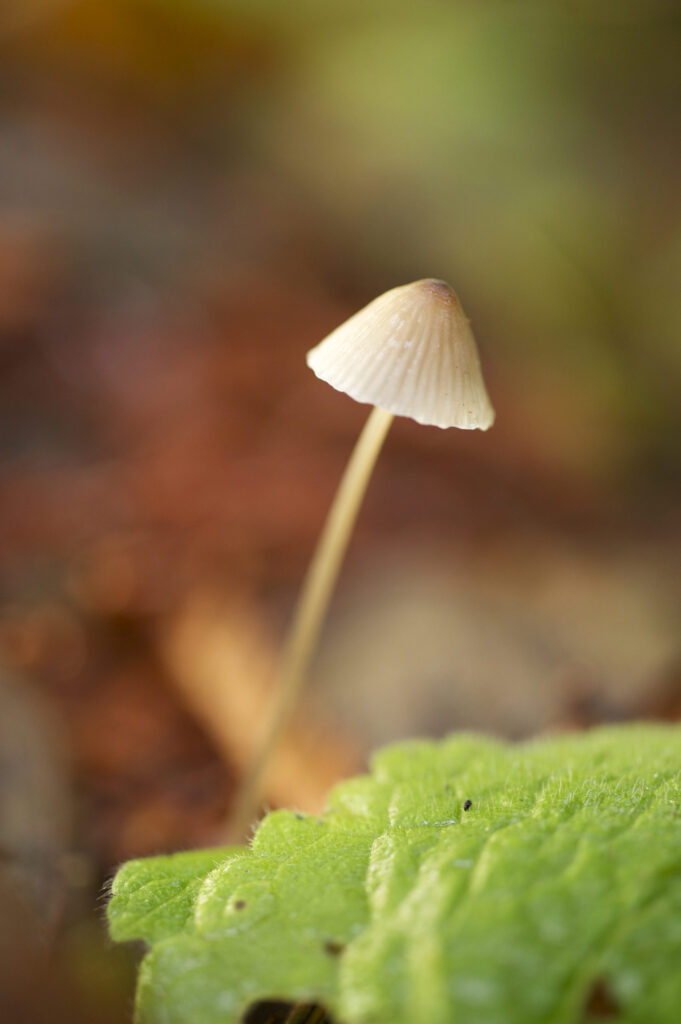
Peter L. Buranzon
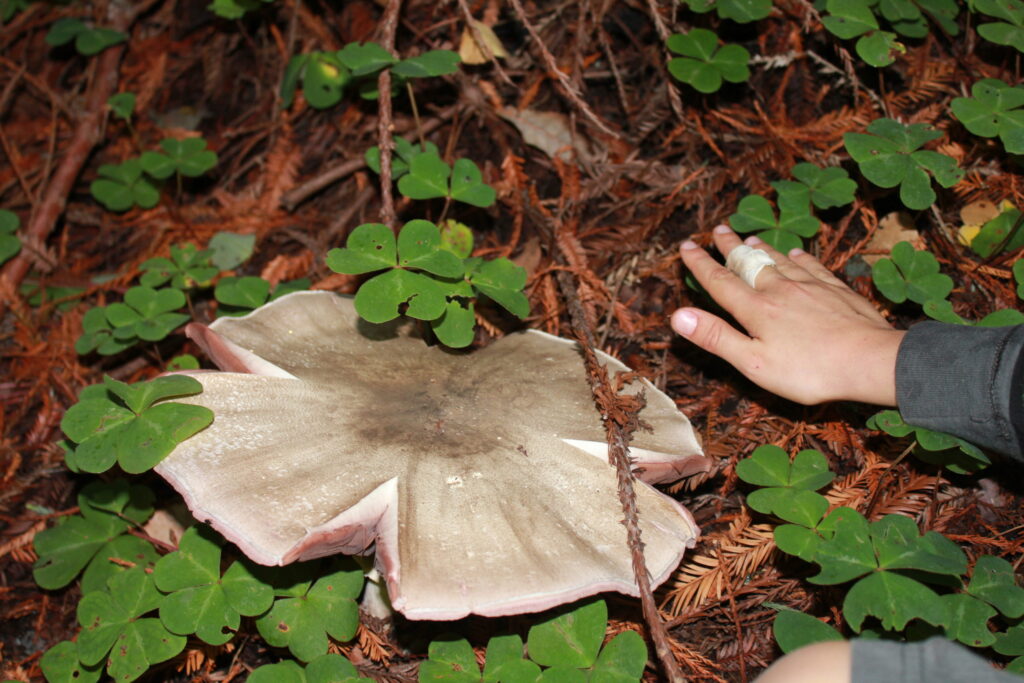
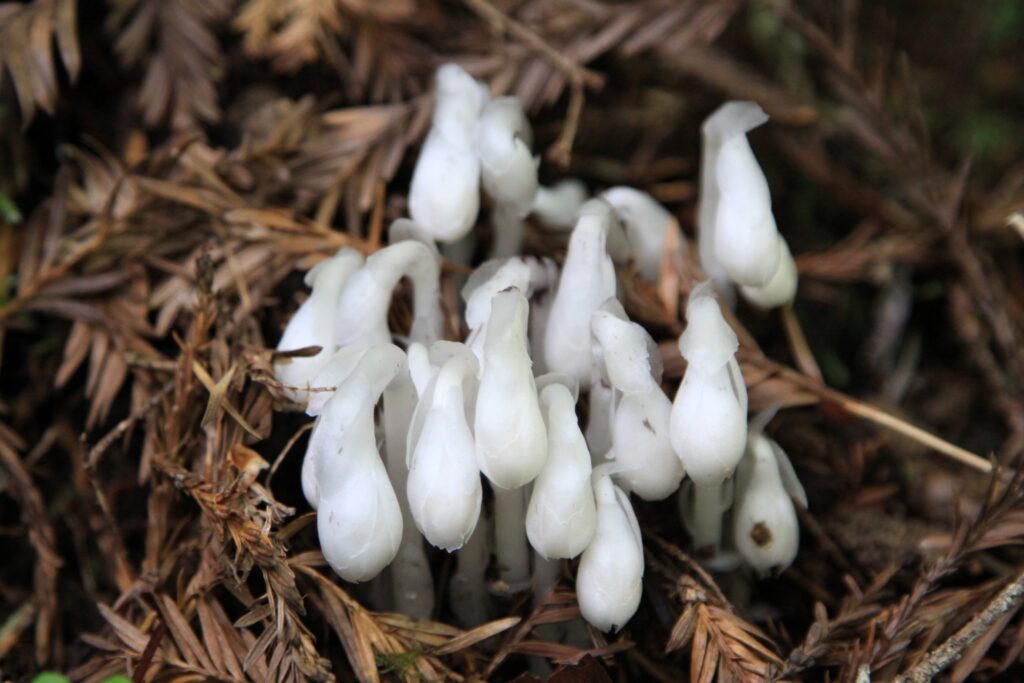
Indian Pipe, also known as Fungus Flower, Mycotrophic Wildflower, and corpse plant. Only found in Del Norte and Humboldt counties.