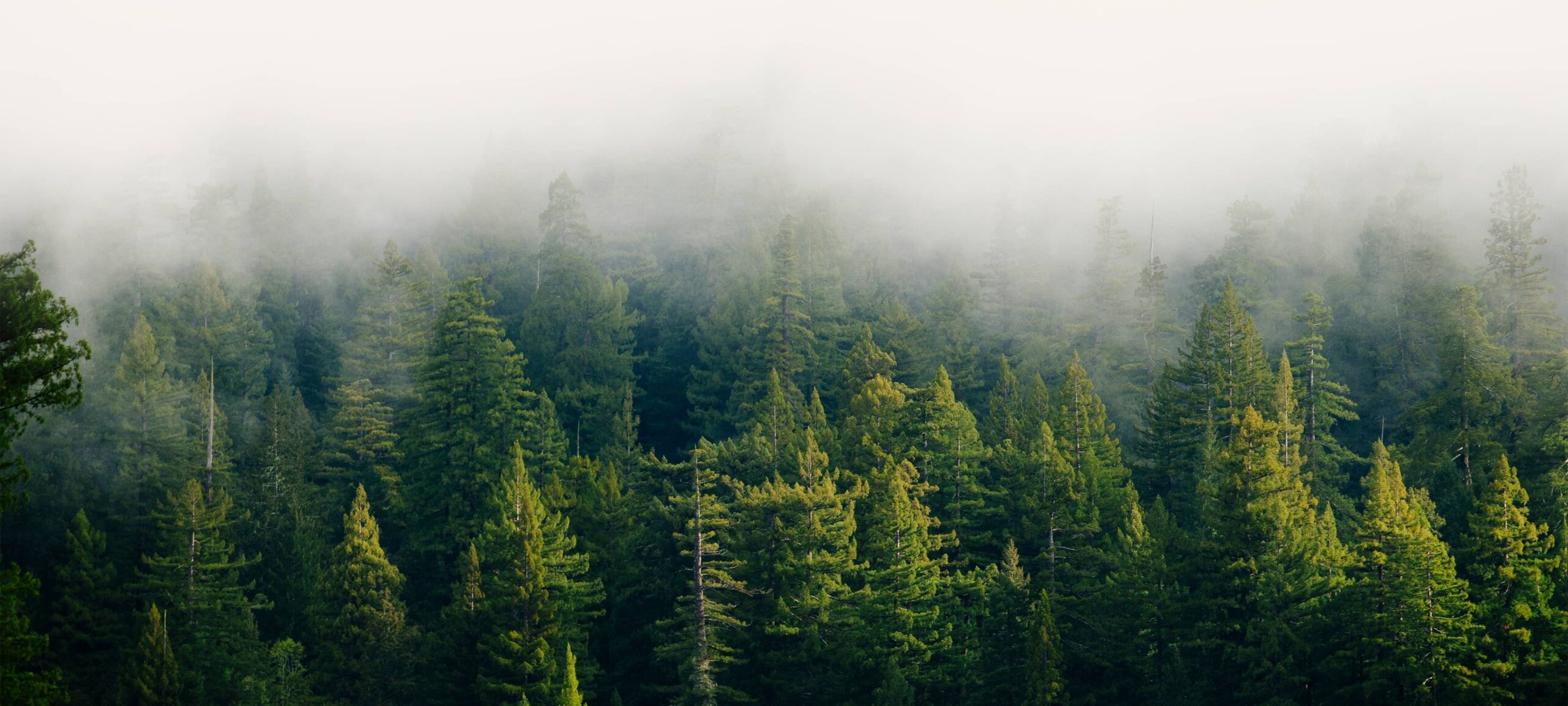
Though smaller than both coast redwoods and giant sequoias, dawn redwoods still rank among the world’s great trees, reaching heights of more than 120 feet. Their soft, feathery foliage and leaf-dropping habit often remind visitors of another close relative native in the southeastern United States, the bald cypress.
Once thought to be extinct and known only from fossils, dawn redwoods were found alive and well in central China in the 1940s—one of the greatest botanical revelations of the 20th century. These graceful trees bridge the ancient and modern worlds, connecting living forests to deep time and reminding us that nature still has remarkable stories to tell.
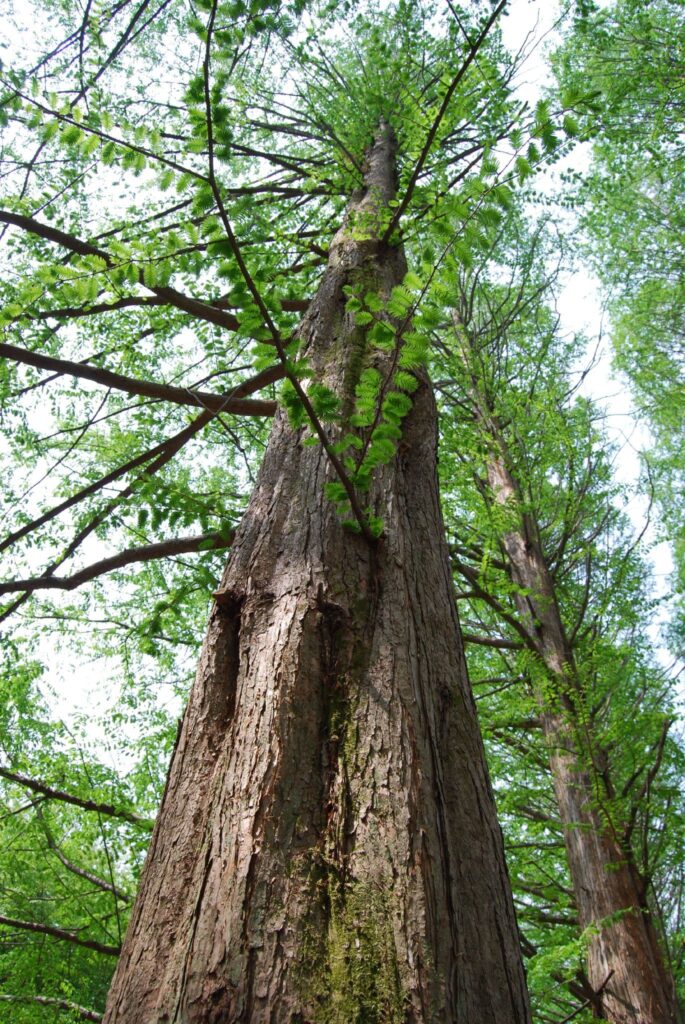
Fibrous bark shows the family resemblance between dawn redwoods and their California kin. Photo by bittegitte/Flickr.
Key Facts
- Scientific name: Metasequoia glyptostroboides
- Claim to fame: A “living fossil” once thought to be completely extinct
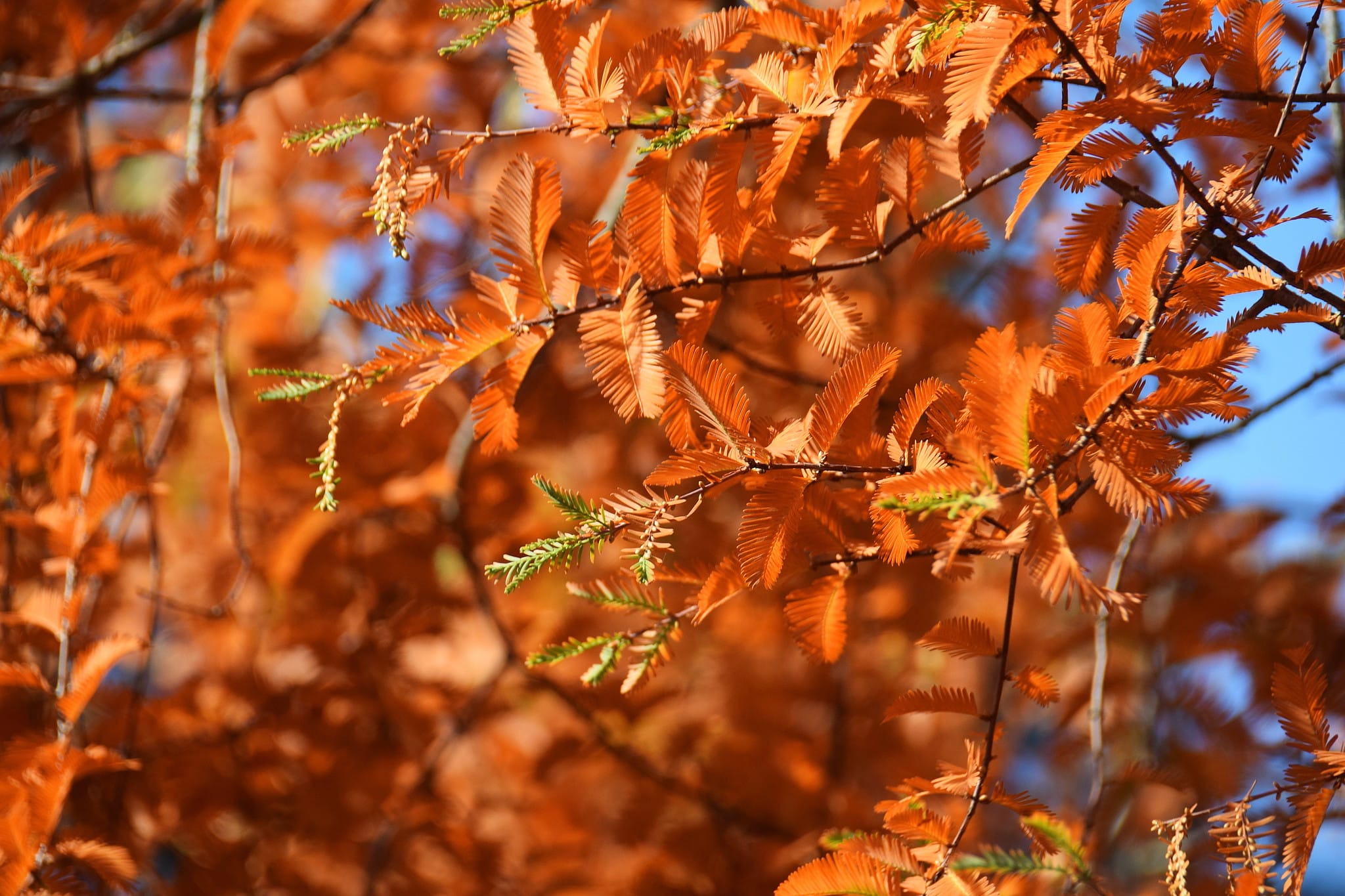
- Distinctive trait: A deciduous, foliage-shedding conifer—needles turn copper-orange each fall before dropping
- Native range: Small valleys in central China; now planted worldwide
- Biggest threats: Limited native range, habitat pressure in China
- Fun fact: Fossils of dawn redwoods are found across the northern hemisphere—evidence of a once-vast ancient forest
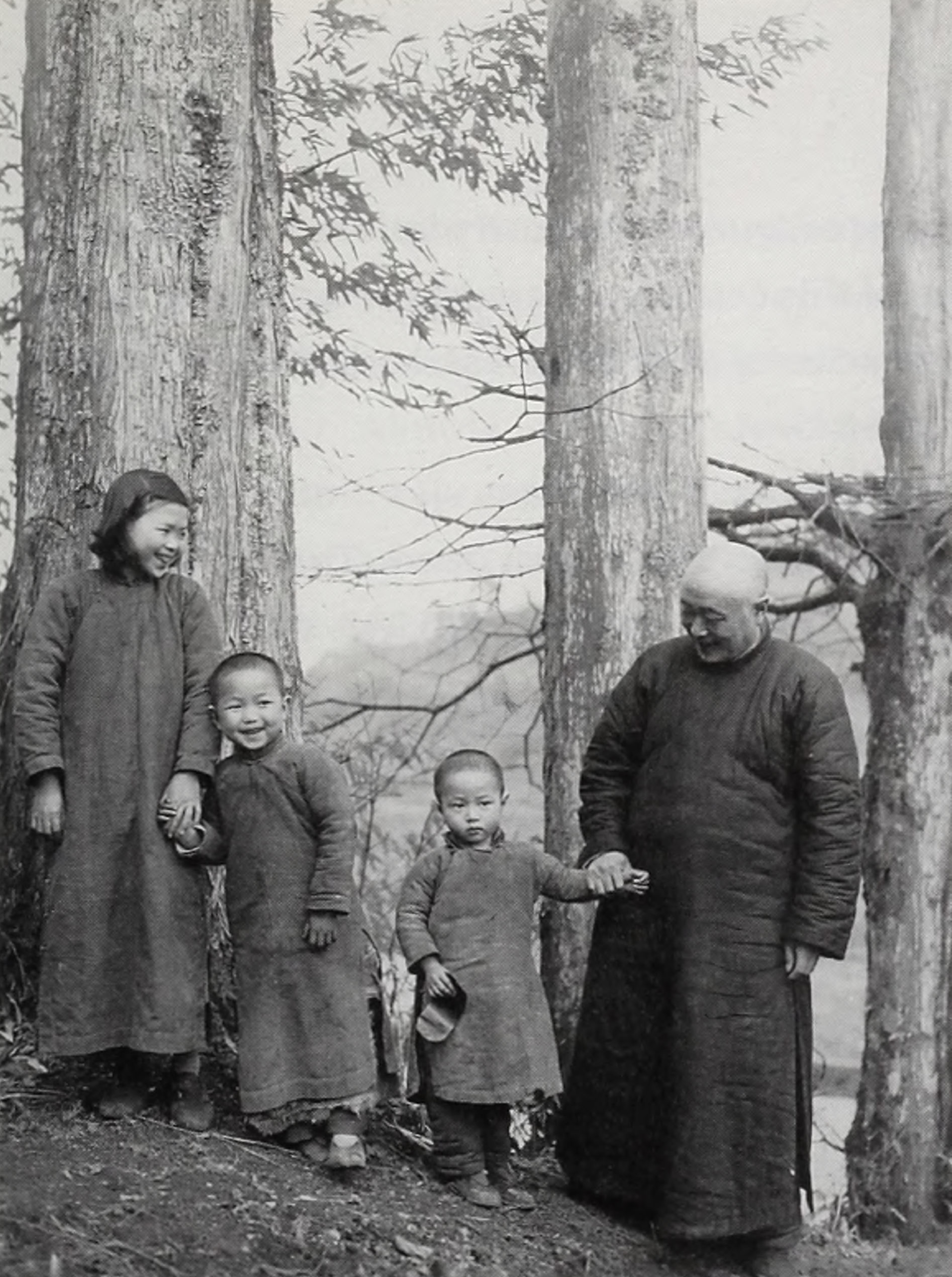
At the property in China where dawn redwoods were found, the landlord stands near a large tree with his children. Photo by Ralph W. Chaney, © President and Fellows of Harvard College/Arnold Arboretum Archives.
The Backstory
For decades, dawn redwoods were known only from fossilized remains dating back tens of millions of years. By the early 20th century, botanists believed the species had vanished from the Earth, making it one of many plants thought lost to time.
That assumption changed dramatically in the 1940s, when an expedition sponsored by Save the Redwoods League found living dawn redwoods in a remote valley of China’s Hubei Province. This rediscovery sent shock waves through the scientific community and quickly became one of the most celebrated botanical finds of the twentieth century. A tree once known only from the fossil record was suddenly alive, growing quietly in the wild.
While the Western world was thrilled by this news, the rediscovery was not without complexity or controversy. The expeditions that brought dawn redwoods to international attention unfolded within a broader history of Western scientific exploration, plant collecting, and colonialism. Read more about that history.
At the time, seeds from the Chinese dawn redwoods were soon shared with botanical gardens and arboretums around the world, ensuring the species’ survival far beyond its native range. Today, these trees are widely planted in parks and on campuses across temperate regions, where they continue to captivate visitors with their beauty and remarkable story.
In the wild, however, dawn redwoods remain restricted to a small area of central China, primarily in Hubei, Hunan, and Chongqing. Conservation efforts focus on protecting these remnant forests, restoring habitat, and ensuring that this remarkable survivor continues to thrive in the one place where it has endured for millennia.
Dawn Redwoods Biology
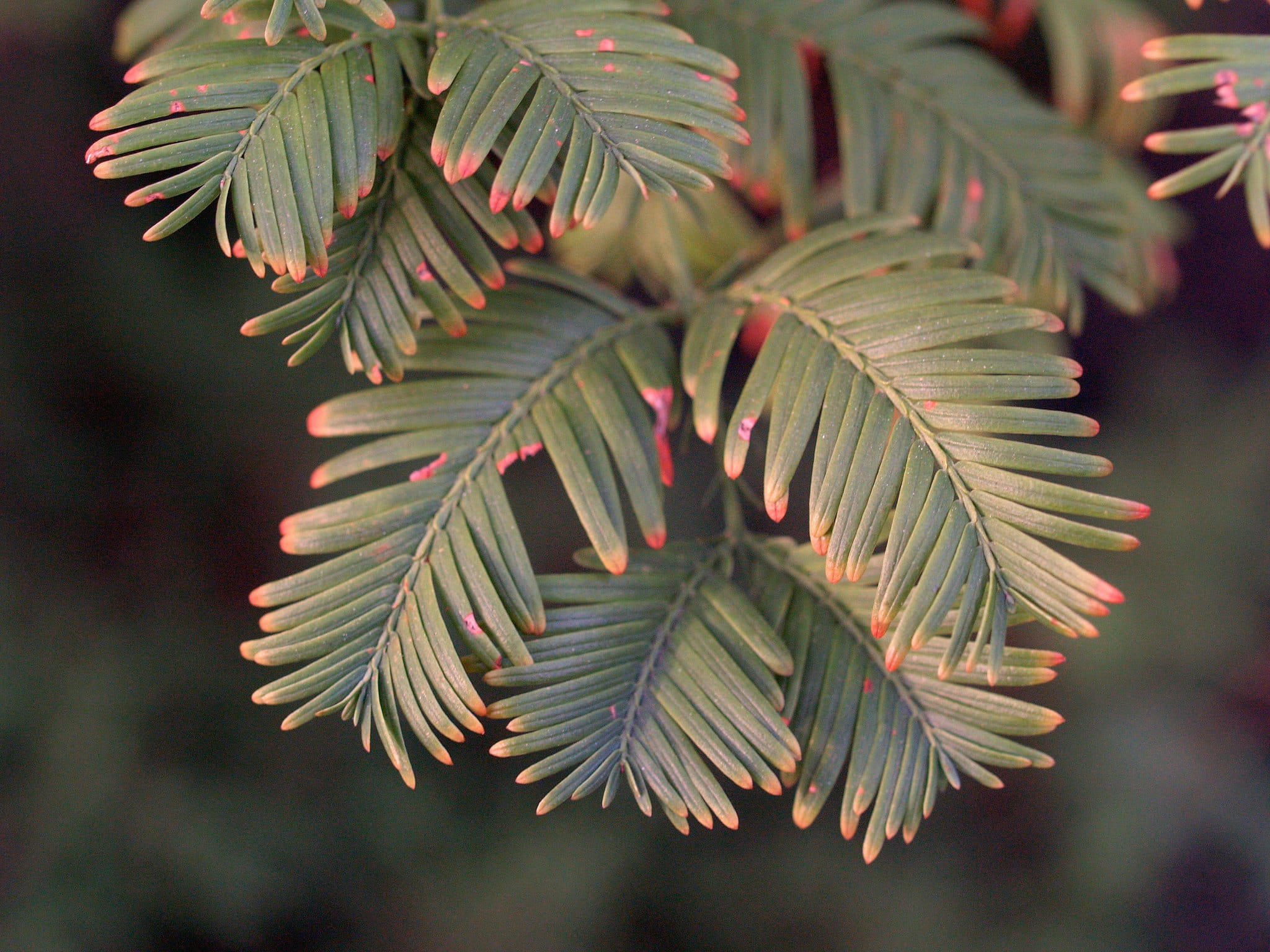
Needles of the dawn redwood begin to change color. Photo by Maggie/Flickr.
Dawn redwoods are conifers—cone-bearing trees—and one of three redwood species on Earth. Unlike coast redwoods and giant sequoias, they are deciduous. Each autumn, their soft, feathery needles turn a rich copper-orange before falling, allowing sunlight to reach the forest floor through winter.
In modern times, dawn redwoods commonly grow to 100 to 130 feet, with the tallest ancient trees once exceeding 160 feet. Their broad trunks, often more than 10 feet in diameter, flare into buttressed bases that help anchor them in the saturated soils of river valleys and floodplains. This affinity for water has earned the dawn redwood their common Chinese name, “water fir.”
Like their California relatives, dawn redwoods produce small, woody cones, but they also bear separate male pollen cones and female seed cones on the same tree. They reproduce primarily from seed rather than by sprouting from burls, and unlike coast redwoods and giant sequoias, they are not adapted to frequent fire. Instead, dawn redwoods evolved in moist landscapes where seasonal flooding and abundant water shaped their ecology. Rather than relying on coastal fog or mountain snowpack, they thrive where rainfall is reliable and soils remain moist.
The graceful crowns of dawn redwood trees create cool, shaded forests that support birds, insects, amphibians, and a rich diversity of understory plants. In their native range, these forests provide habitat for colorful golden pheasants, the critically endangered Chinese giant salamander, and countless other species that depend on healthy river valleys and temperate woodlands. Together with coast redwoods and giant sequoias, they complete one of the world’s most remarkable tree lineages—a family that has persisted from the age of dinosaurs into the present day.
Where to See Dawn Redwoods
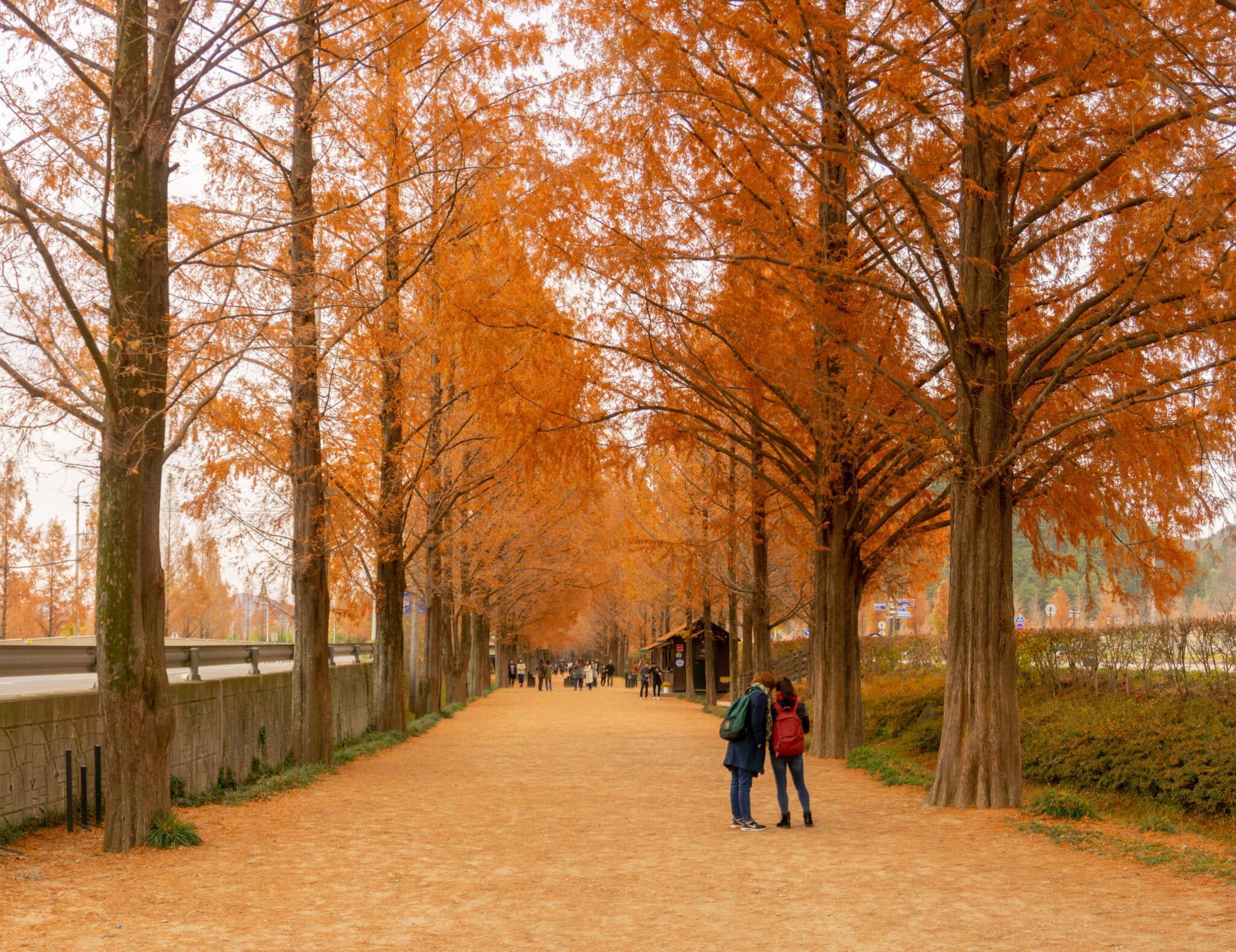
Besides Nami Island, another famous spot for viewing dawn redwoods is Damyang, in southwest Korea, where you can walk a 3-mile-long road lined with dawn redwoods. Photo by Kamchai/AdobeStock.
To meet dawn redwoods in their native setting is to step into a landscape where past and present overlap. In China, they grow in protected valleys where mist, rivers, and human history converge. In South Korea, they have become a beloved landscape tree—most famously on Nami Island, where rows of dawn redwoods create a striking seasonal corridor.
Beyond Asia, dawn redwoods are widely planted in temperate regions around the world, where their seasonal color and graceful form stand apart from evergreen forests. In the United States, they can be found in botanical gardens, arboretums, and university campuses showcasing global tree diversity, as well as in urban parks, where they’re often planted near waterways.
- Top West Coast sites include the UC Berkeley Botanical Garden and Portland’s Hoyt Arboretum, both of which showcase all three redwood species.
- Just outside Columbus, Ohio, the Dawes Arboretum is home to 8 acres of dawn redwoods that are open to the public.
- On the East Coast, one of the oldest U.S. dawn redwoods grows at Harvard’s Arnold Arboretum in Boston. In New York City’s Central Park, you’ll find three dawn redwoods at Strawberry Fields.
Whether they’re growing in a quiet valley in central China or at a local park, dawn redwoods invite us to see trees through the lens of deep time. Once believed lost forever, they now stand as living reminders that the natural world still holds remarkable stories—and that protecting biodiversity means safeguarding both ancient lineages and the discoveries yet to come.