
August 19, 2024
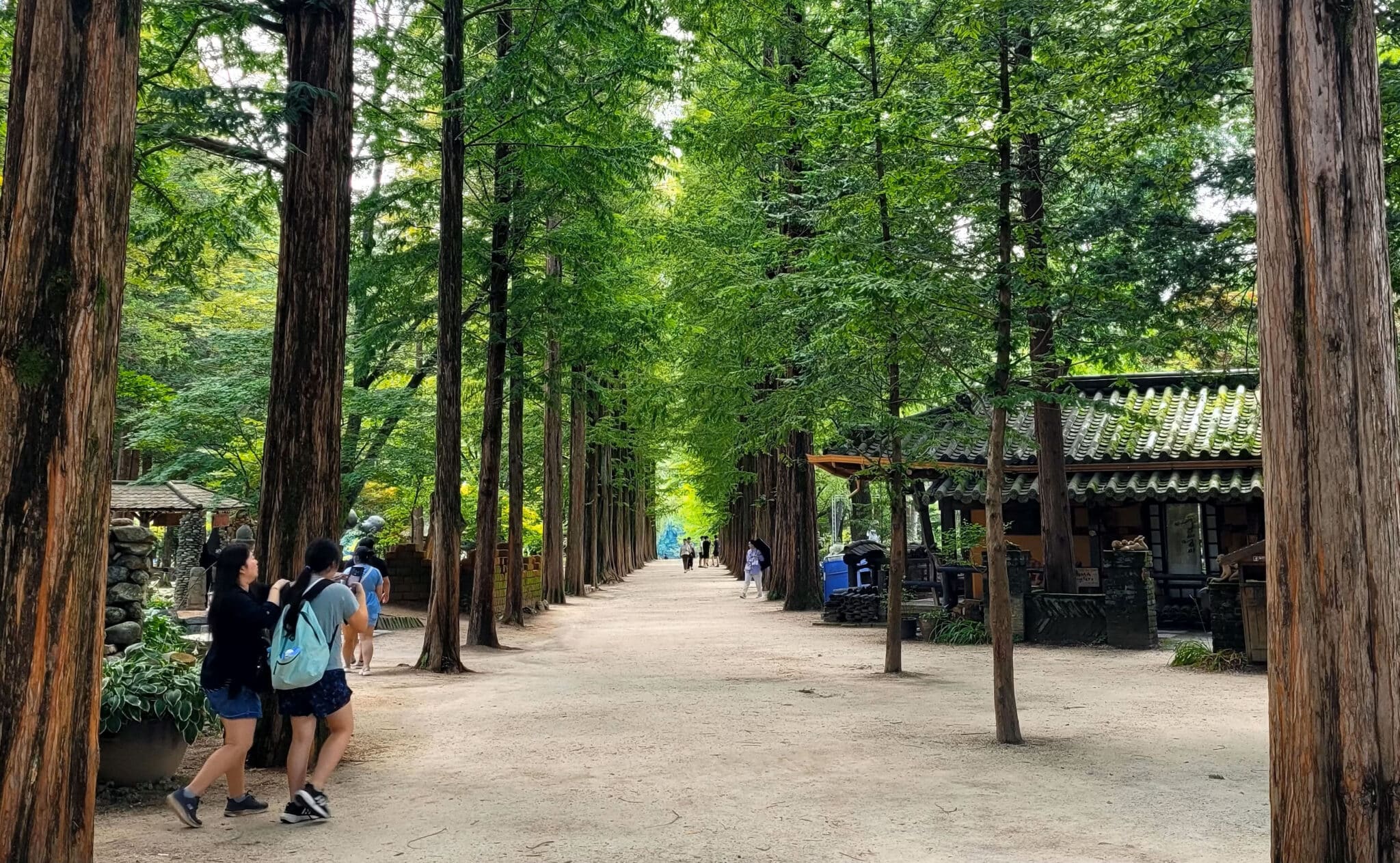
On a sweltering June day, I stepped off a ferry and onto Nami Island, one of the most popular tourist destinations in South Korea, 33 miles outside of Seoul. Hundreds of needle firs and Korean pines welcomed me, my husband, and our two young daughters, but we didn’t pause for long. The reason for our visit lay farther on, toward the heart of the island: the famous “Metasequoia Lane.”
This trip to South Korea meant a lot to our family. Not only was it my younger daughter’s first visit to my birthplace, but we would have a chance to connect with the beautiful and mysterious dawn redwoods, one of the three distinct redwood species, along with coast redwoods and giant sequoias.
Face to face with “living fossils”
After walking another mile, there they were: Rows of majestic dawn redwoods lining a wide path. Visitors wandered the lane, snapping photos and enjoying a respite from the blazing sun.
I gazed upwards at the treetops. The dawn redwoods weren’t nearly as tall as their California cousins, but looking at the shaggy, reddish-brown bark, the family resemblance was obvious. Because it was summer, the feathery canopy overhead was thick and green. But dawn redwoods are deciduous—the only redwood trees to lose their needles. If we had visited in late autumn, their foliage would have been a beautiful coppery orange.
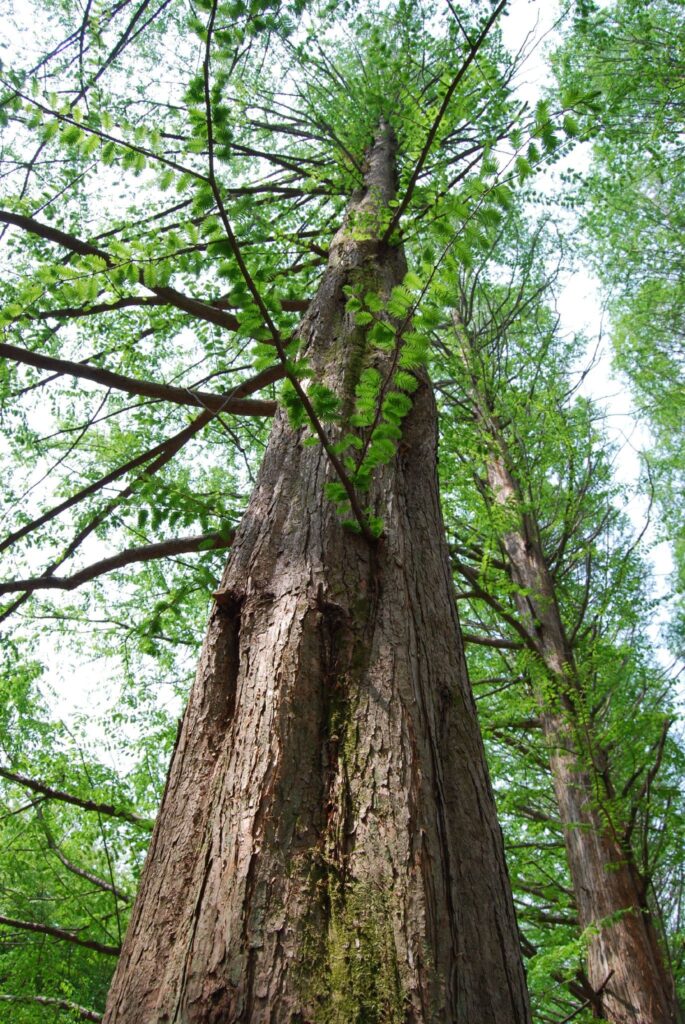
Metasequoia glyptostroboides or dawn redwood is one of three distinct redwood species, along with Sequoia sempervirens (coast redwood) and Sequoiadendron giganteum (giant sequoia). Flickr photo by bittegitte.
For centuries, dawn redwoods were believed to be extinct, their existence known only through the fossil record. Then in 1948, a small grove was discovered in China. Seedlings were brought to Korea in the 1950s, and the government later planted dawn redwoods as street trees, due to their resilience to Korea’s cold temperatures and air pollution.
In 2009, a fossilized Metasequoia glyptostroboides was unearthed in North Gyeongsang Province in eastern South Korea. It was proof that dawn redwoods had once thrived on the Korean peninsula some 20 million years ago
Forest bathing, the Korean way
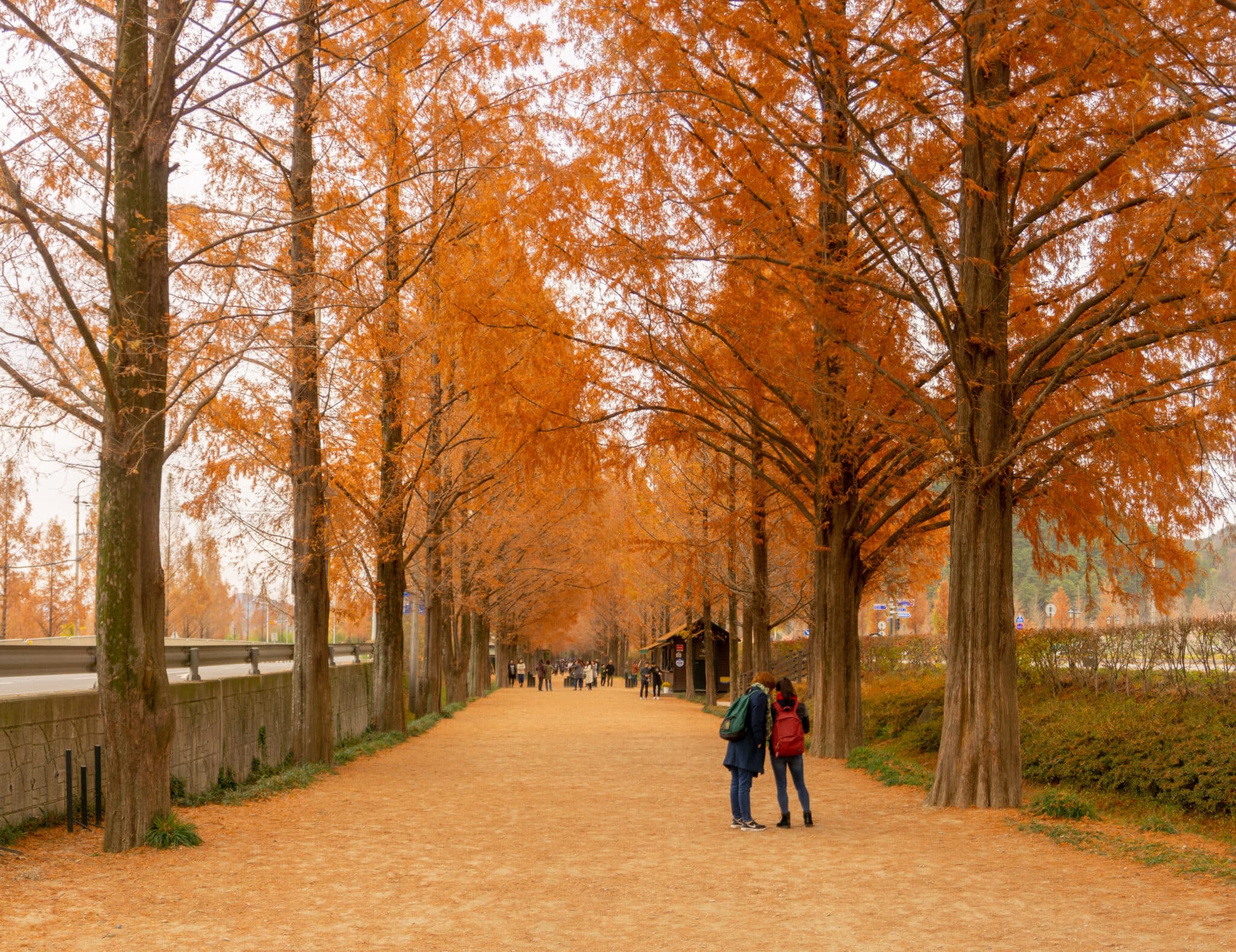
Autumn foliage along Damyang’s dawn redwood road. In summer, try walking the lane barefoot to soak up all the Ki energy—the Korean way of forest bathing. AdobeStock photo by Kamchai.
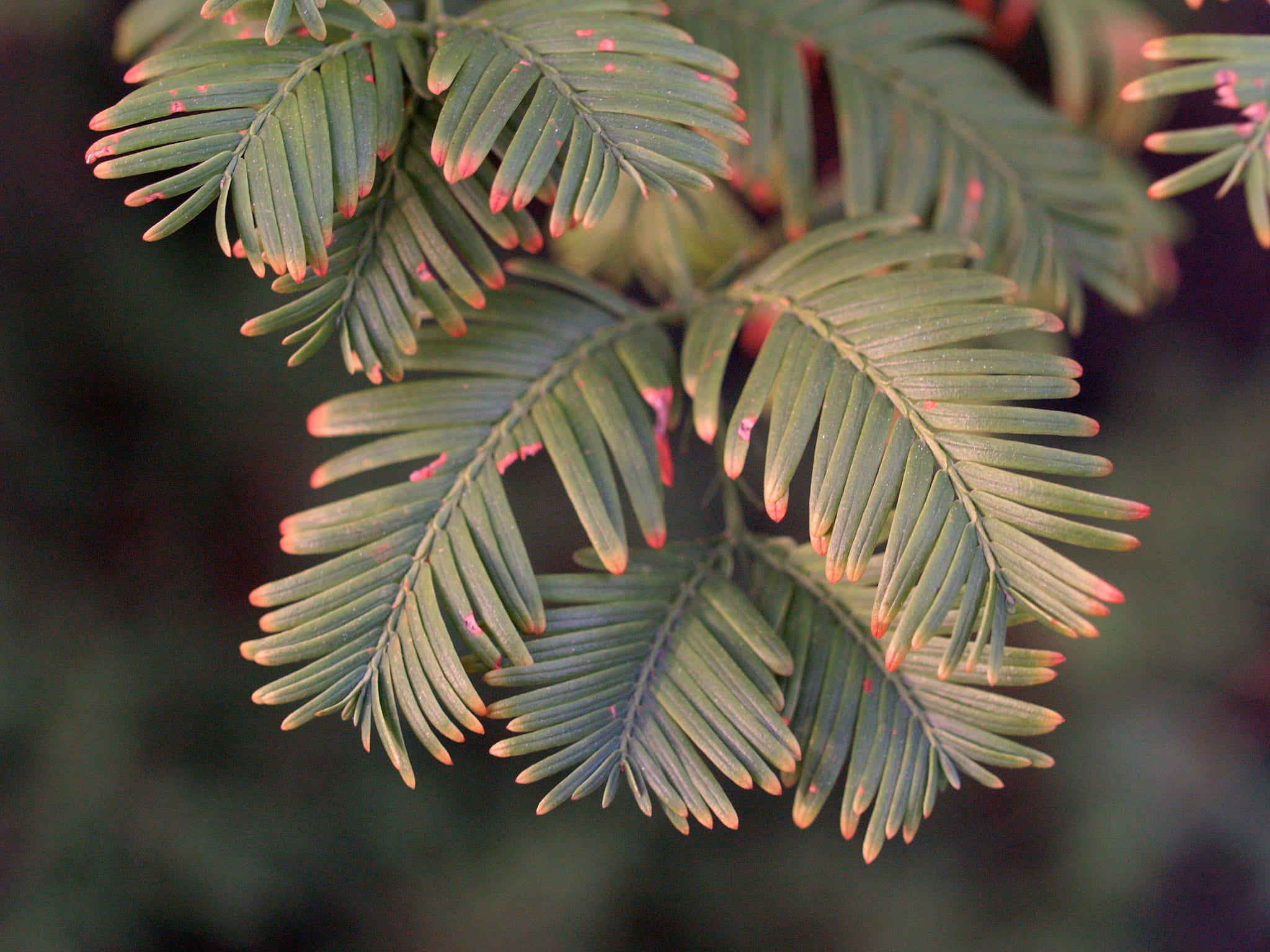
Dawn redwood needles show the first signs of autumnal color. Flickr photo by Maggie.
Besides Nami Island, another famous spot for viewing dawn redwoods is Damyang, in southwest Korea. There, you can experience a 3-mile-long path lined with tall trees—an ideal place to enjoy forest bathing, or Sanlimyok (“San-leem-yolk”).
Places with lots of trees or mountains are considered sacred spots by the Korean people, as we believe nature gives you the vital energy known as Ki (“key”). For this reason, the dawn redwood lanes have become must-visit sites among Koreans, as well as for visitors from around the world.
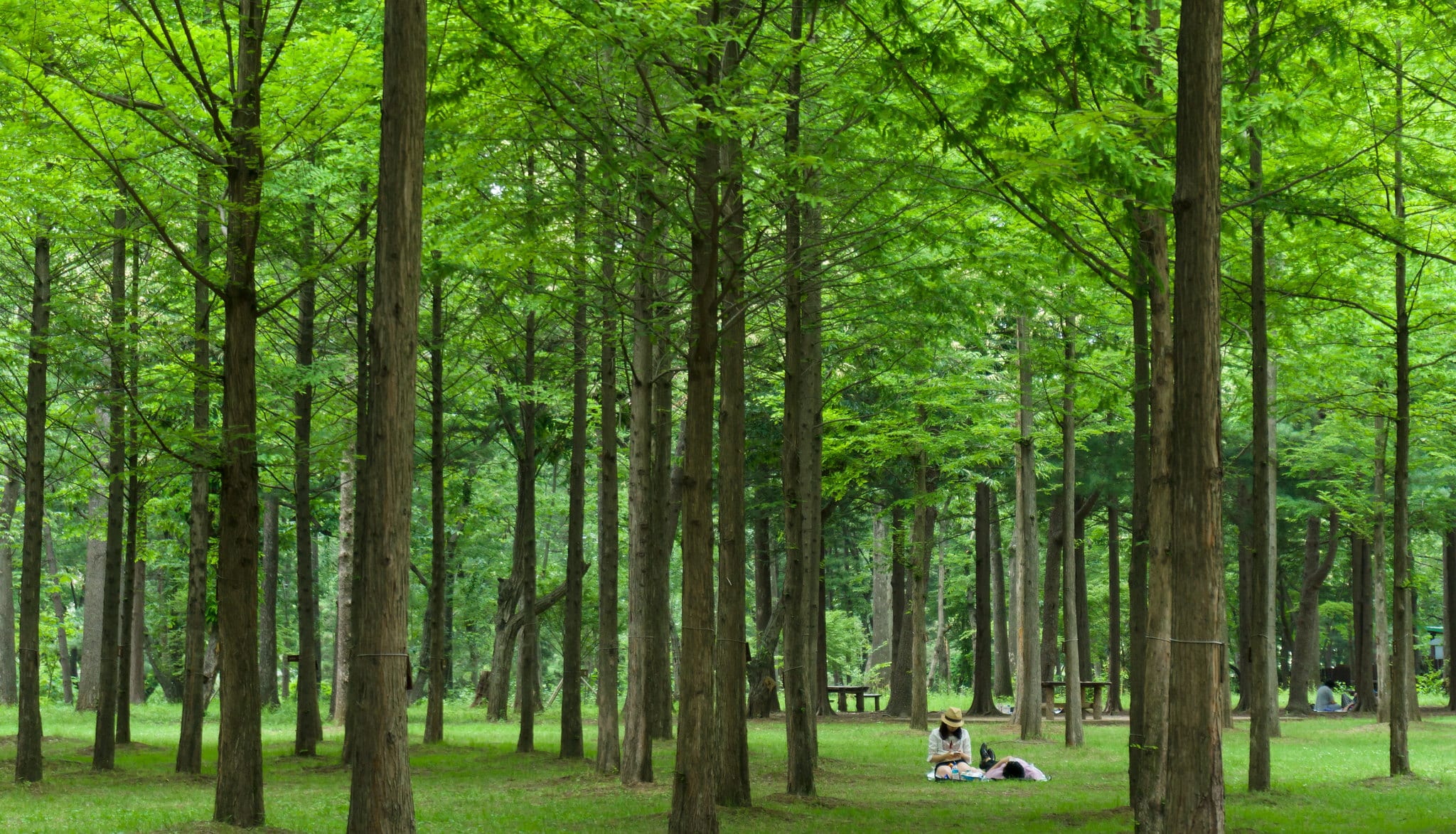
Escaping to the shade of Metasequoia Lane outside Seoul, South Korea. Flickr photo by Rico Lee.
I always feel refreshed in nature, and walking down Nami Island’s long lane of dawn redwoods to the Bukhan River was no exception. But whatever energy the trees had gifted me was no match for the oppressive heat and humidity of the South Korean summer. I knew it was time to call it a day when my older daughter asked me, “Umma, is this how dumplings feel in a pot when they are steamed?”
But as we left the island and began the journey back to Seoul, I was filled with joy. My family had gotten to connect with the dawn redwoods. We had shared a moment in their long and fascinating story.
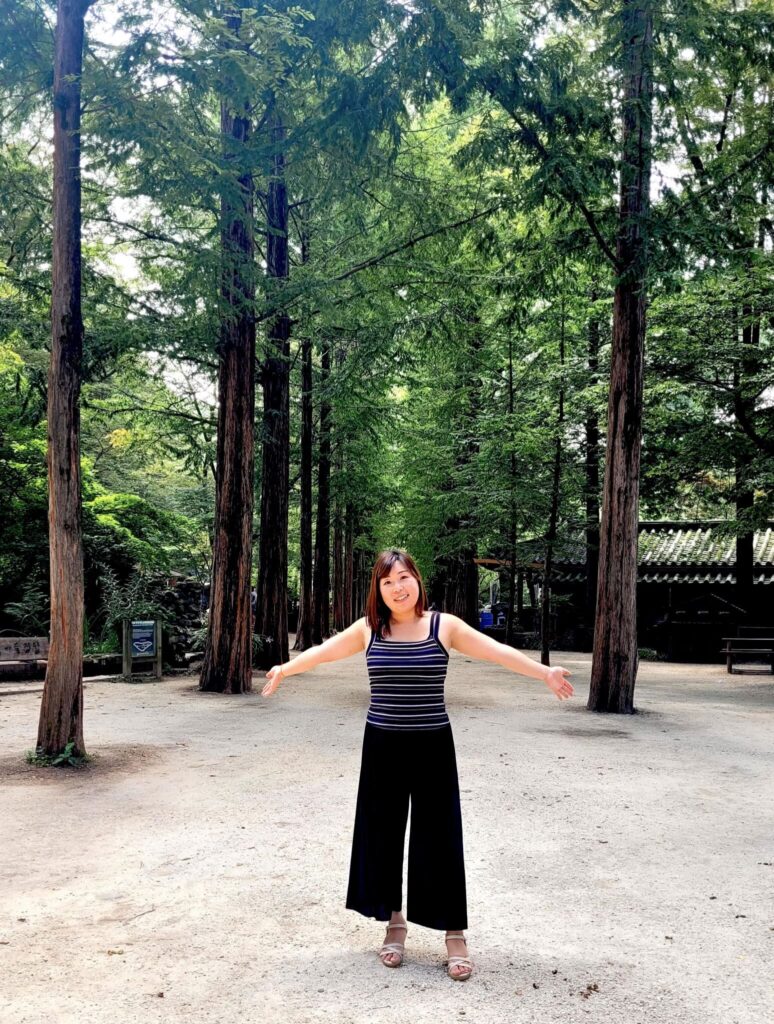
Jiyi Jun bathes in the vital energy of the dawn redwoods. Photo by Nikolaj Leschly.
9 Responses to "Discovering dawn redwoods on Nami Island"
How cool! I’ve always wanted to see the dawn redwood. What an unique experience for you and your family. I’m definitely ready for some forest bathing amongst the dawn redwoods… then some dumplings after!
I volunteer at Armstrong Woods State Redwood Reserve in Guerneville. As a docent, I tell visitors about the 3 redwood species, and that the dawn redwood was from China. I LOVE this article and photos and seeing them in South Korea. However, in Guerneville there is a resort called “Dawn Ranch,” and guess what? They have several dawn redwoods on their property. I went to see them last year and the needles were turning brown. thanks for the article.
Here in Ukiah California there are a handful of Dawn Redwoods! They are relatively young, but lovely. Nice to see mature specimens.
I’ve had a slight obsession with dawn redwoods for a while now. In Sonoma County, I know of three: one at Dawn Ranch in Guerneville (so named after the tree), one in the front yard of a house in G section of Rohnert Park, and a big beautiful specimen right outside the Luther Burbank Gardens, near the corner of Santa Rosa Ave and Sonoma Ave. There’s a helpful little identifying placard at the base of that one.
I bought two Dawn Redwoods a couple years ago and planted them here in Meade County, Ky where they are around 12′ tall now. They’ve literally grown 3 ‘ in that short time. Your pictures were beautiful as well as your description of the trees relationship to your people. I’ll be planting more this fall and hopefully my granddaughter will be able to take a walk such as your child did.
PAX
I have always enjoyed their golden color in the fall. My 3 trees live in the Central Valley of California. Just make sure to wipe your feet before entering any house with light color carpet.
If you feel the need to visit some Dawn Redwoods in the Bay Area, please come to visit the University of California Botanical Garden where there is a nice collection of them in the Asian Area grown from the seeds brought back from China in the 1940s. They are lovely trees.
Thank you for the nice tour through the dawn redwoods. Wish I could visit.
I, too, have wanted to see the dawn redwoods. Your story about these unique redwoods and your family connection was heartwarming. Keeping heritage, wherever that may be, in your heart and mind is a vital part of our human experience. Thank you for sharing your dawn redwoods story.