
July 16, 2026
The big picture
- A team of scientists scaled Yosemite’s legendary Grizzly Giant from roots to crown.
- Researchers found strong signs of resilience to drought, bark beetles, and the wildfires that have devastated other giant sequoia groves.
- The survey offers a valuable snapshot of the Grizzly Giant’s health and how ancient giant sequoias are responding to changing conditions in the Sierra Nevada
The Grizzly Giant stands defiant in the center of Yosemite’s Mariposa Grove, one particularly burly limb held high, as if warning away any potential threat. Though at 208 feet tall with a trunk 30 feet wide, it’s hard to believe anything could possibly threaten this iconic giant sequoia. Not fire, not drought, not insects or disease. Nearly 3,000 years old, the Grizzly Giant seems to defy even time itself.
Yet, mature giant sequoias are indeed threatened. Since 2015, 17% of these colossal trees have been killed by extreme wildfires alone. Along with drought, bark beetles—which tunnel into trees and destroy their vascular system—also pose a danger to giant sequoia groves.
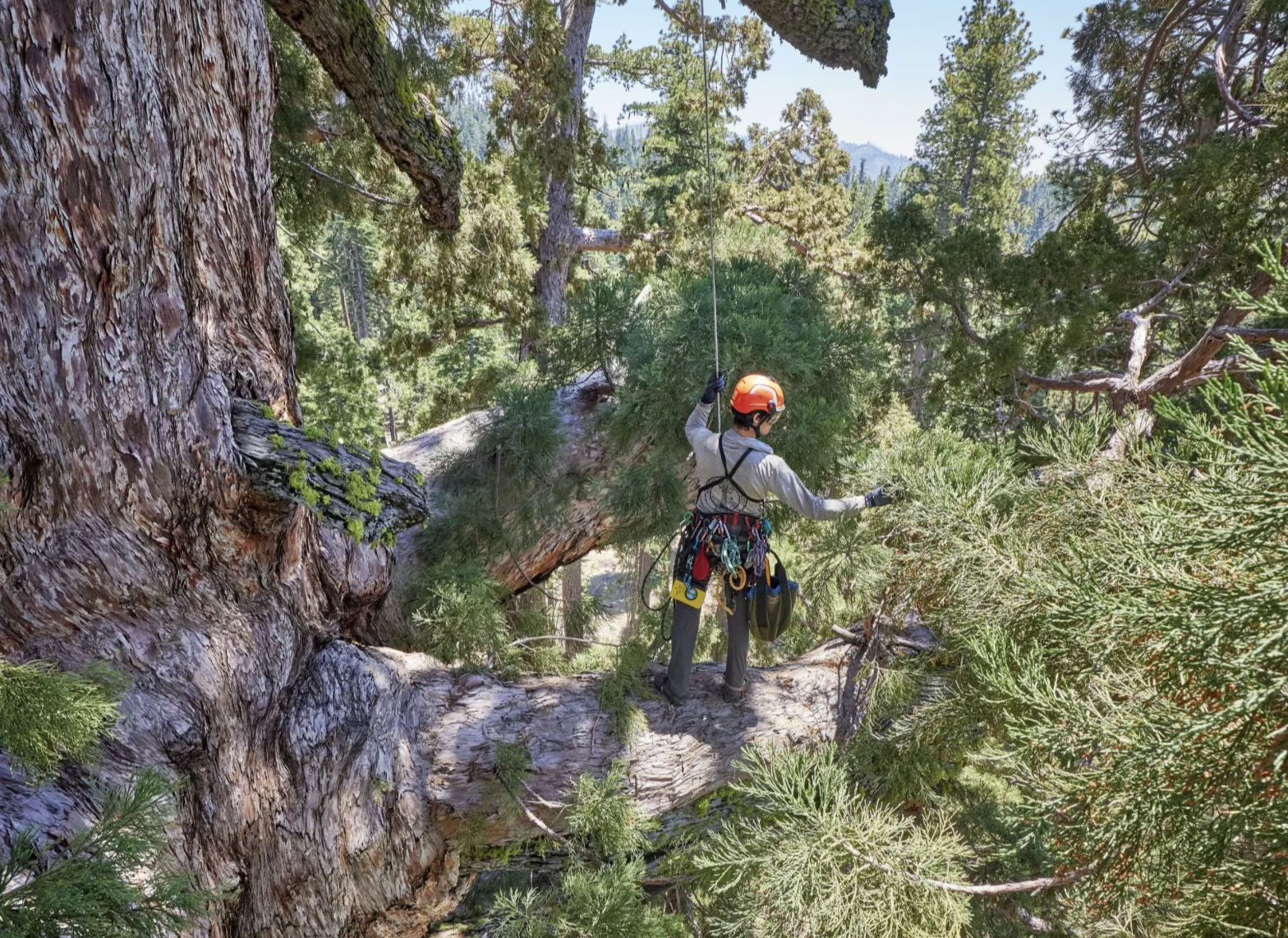
Given those threats, researchers wanted a closer look. On June 17, a crew from the Ancient Forest Society—a member of the Giant Sequoia Lands Coalition, alongside Save the Redwoods League—climbed the Grizzly Giant to assess the tree’s health. Their findings provide a snapshot of how this ancient sequoia is faring after decades of restoration work in Mariposa Grove, and how that work may help the grove weather future challenges.
“A tree this large has a lot to teach us,” says Luis Vidal, giant sequoia stewardship manager at Save the Redwoods. “The more we learn about what’s happening from the canopy to the base, the better we can understand what helps giant sequoias stay healthy and resilient.”
Taking a giant’s vital signs
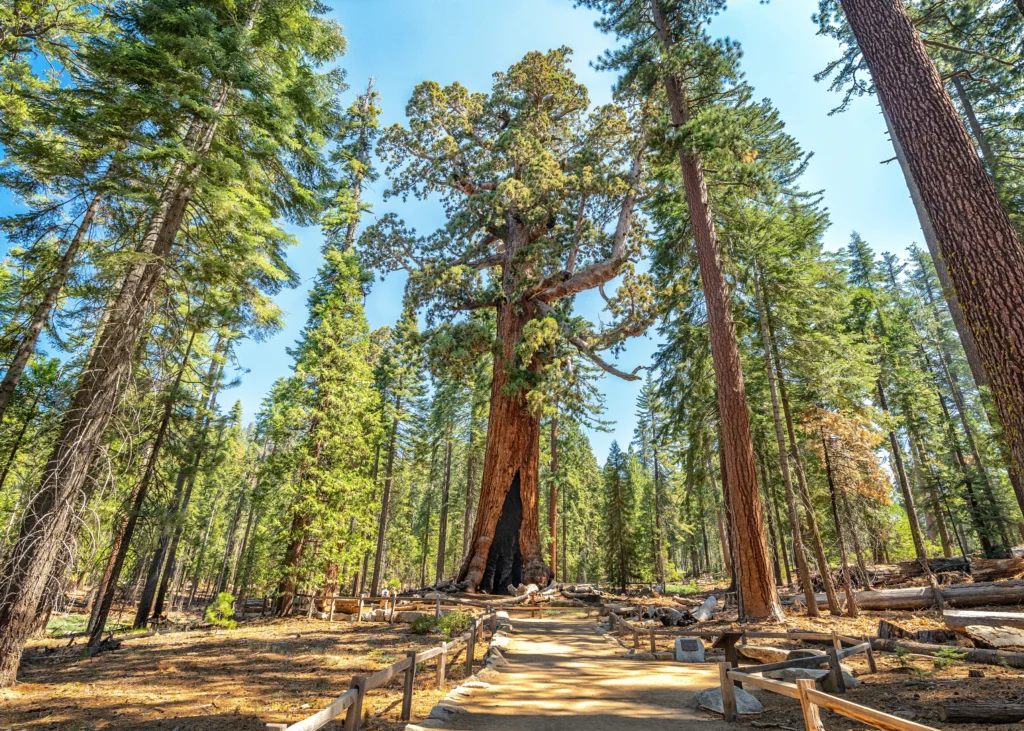
3,000 years old, 208 feet tall, and healthy as an ox. Er, grizzly. Photo by Rebecca Latson.
The Grizzly Giant is no stranger to visitors, but very few have seen it from 200 feet up. In fact, the iconic sequoia had only been climbed once before for research when the National Park Service, Yosemite Conservancy, and Southern Sierra Miwuk Nation asked the Ancient Forest Society to give the colossal tree a checkup.
Researchers began by hauling themselves into the tree’s highest branches using climbing ropes and harnesses. While enjoying a spectacular sequoia’s-eye view of the surrounding grove, the crew examined four key aspects of the tree’s health: water status, damage from past wildfires, bark beetle activity, and reproductive health.
For its age and size, the Grizzly Giant appears to be drinking plenty of water. Water pressure measurements from the highest reaches of its canopy were typical of a healthy giant sequoia, suggesting the tree is staying well hydrated (which is more than many of us can say).
A well-hydrated tree makes lots of resin, which flushes attacking beetles out and deters them chemically. Researchers found beetle activity throughout the canopy, but the Grizzly Giant is holding its own, repelling invaders before they gain a foothold. While the team observed more beetle activity than in the General Sherman Tree they climbed in 2024, that wasn’t surprising for Mariposa Grove, where bark beetles are more active.
Researchers also found evidence of the Grizzly Giant’s fire resilience. About 70% of the tree’s base is blackened by old wildfires, but that’s normal for a giant sequoia that’s stood since the beginning of the Roman Empire. Plenty of healthy tissue remains, leaving the Grizzly Giant well positioned to survive—and thrive—for centuries to come.
Ancient tree, new life
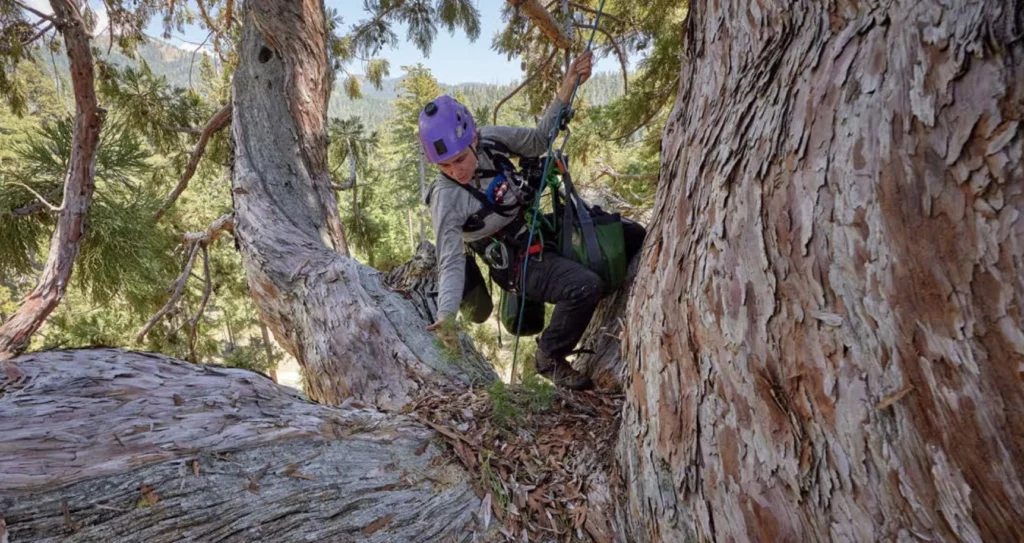
Since their roots can’t reach the ground, the tiny trees living on the Grizzly Giant will remain miniaturized, like bonsai pines floating in the air. Photo courtesy of Ancient Forest Society.
The findings weren’t all about potential threats, however.
Researchers also checked in on the Grizzly Giant’s future offspring by examining its seed cone crop. Looking at branches throughout the crown, they found a healthy number of cones of varying ages—a great sign that the tree is still a productive giant sequoia despite its advanced age.
The Grizzly Giant isn’t just supporting future sequoias, either. Climbers found two small sugar pines growing on branches high in the giant sequoia’s canopy. The pines are epiphytic, meaning they use the ancient tree as a place to grow, but don’t take water or nutrients from their giant host.
There are plenty of other organisms making their homes up there too. During their time in the branches, researchers were delighted to discover a family of Douglas squirrels living in a cavity in the tree’s immense trunk. We call dibs if they ever decide to move out.
The data shapes the treatment
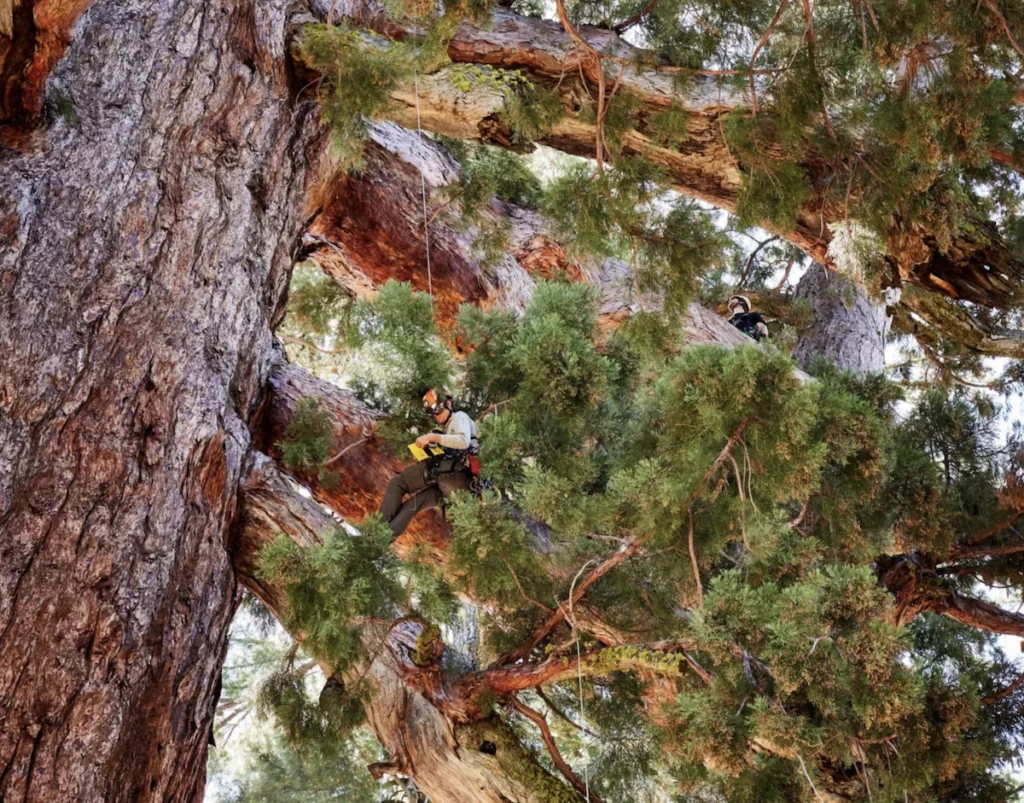
Despite that incredible mass of branches and trunk, the Grizzly Giant is only the 26th-largest giant sequoia on record. Photo courtesy of Ancient Forest Society.
Like a doctor recording a patient’s vital signs, researchers use assessments like this to establish a baseline for long-term monitoring. Understanding how the Grizzly Giant is responding to today’s conditions can help ongoing restoration work. It can also help scientists track changes to the tree over time and better understand how ancient sequoias are faring in a warming, drying Sierra Nevada.
Well-hydrated, productive, and still standing strong after nearly three millennia—the Grizzly Giant continues to set an impossibly high bar for healthy aging.

6 Responses to "What researchers found at the top of Yosemite’s Grizzly Giant"
Hope abides…
Fantastic article…
I am absolutely envious of these climbers/researchers. I can’t even imagine how magical that feels to be on these gorgeous giants! These photos are beautiful but I want to be there!
WOW WHAT ELSE TO SAY. THE SIZE OF THOSE BRANCHES IS UNBELIEVABLE, THEY ARE TREES WITHIN THEMSELVES.
WHAT A PRIVILEGE TO BE ABLE TO BE ALLOWED BY THE TREE TO GO WITHIN. TAKE CARE OF THEM THEY ARE ALL WE HAVE.
From my Plant Ecology professor, Dr. Jack Major, I learned about the vital role of fire in our forests. That was at a time when Smoky the Bear was the great savior.
What a wonderful article and photos. I’ve spent time in Northern California’s Redwoods and have always wanted to live in the area of The Avenue of the Giants. Years ago I knew several business women there. One had a charming little gift shop inside what is now called The Living Chimney Tree before they built a restaurant by it. The other women owned The Riverwood Inn many years ago when they also had The Riverwood Out next to it (a gift shop). I have been fascinated by Redwood trees ever since. Being able to be hollowed out in a fire yet still grow because of their phloem & xylem being directly under the bark is amazing. If you’ve never stood in a redwood forest, you’re missing out on an out of this world experience. Magic! Save these Giants!