
July 28, 2026
Every day, Yurok Tribal Chairman Joseph James pumps his fist as he drives past the place his people call ‘O Rew. He says a prayer of joy and happiness for ancestral land renewed and returned.
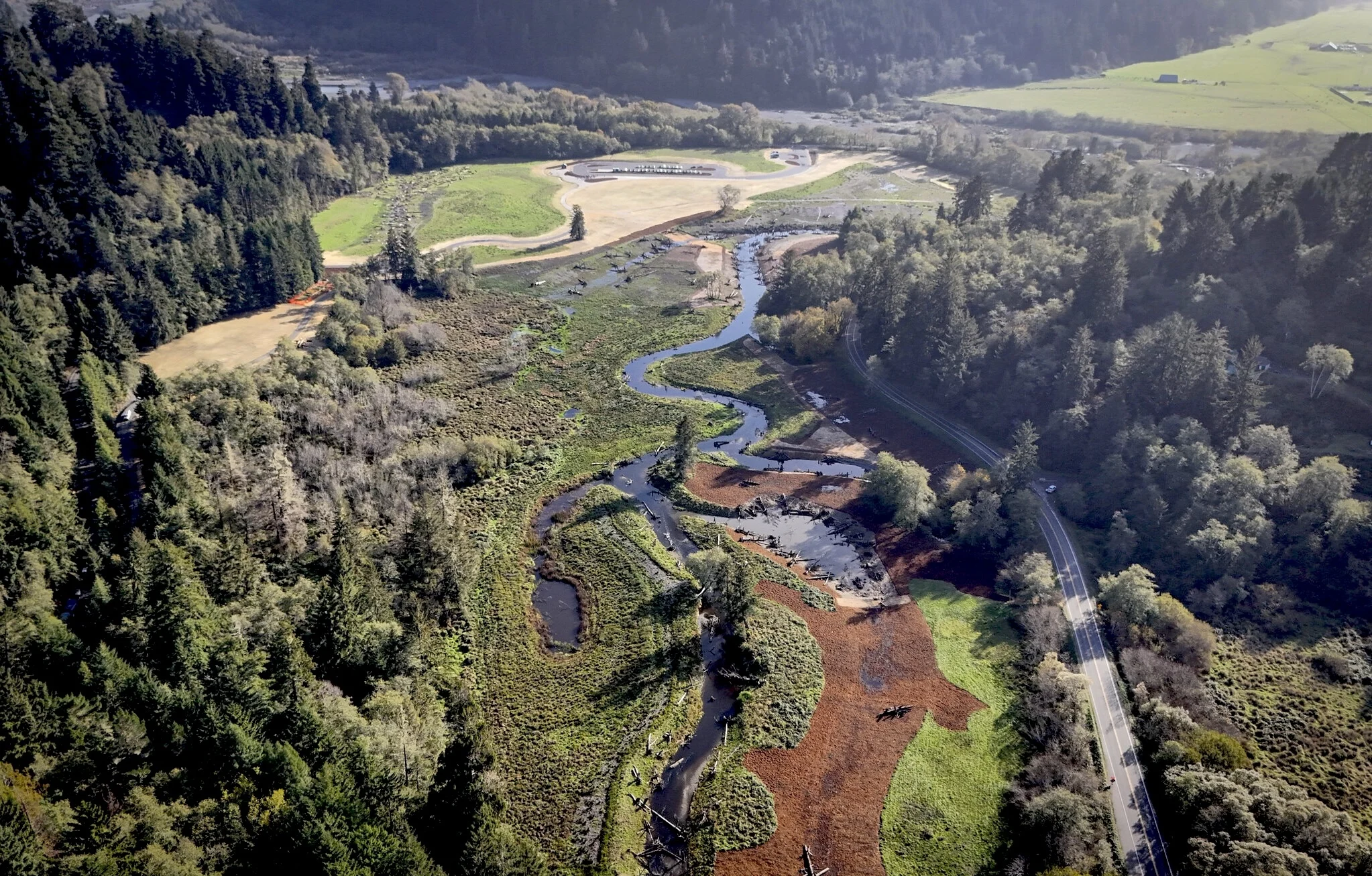
Only five years ago, the view from Highway 101 was of a derelict sawmill: acres of crumbling asphalt, a buried floodplain, the remnants of an industry that had left the nearby town of Orick behind. Today, it’s nearly half a million planted seedlings, a rewilded stretch of Prairie Creek, and a new visitor gateway to Northern California’s redwoods—built around an Indigenous perspective and now owned and stewarded by the Yurok Tribe.
“This is an exercise in our sovereignty,” says James of the ‘O Rew Redwoods Gateway, which Save the Redwoods transferred to the Yurok Tribe on June 29, 2026, for permanent protection and public access. “This project represents a truly just approach to the restoration of culturally important landscapes and Tribal communities. I believe it’s a leading example of what we need across the nation.”
Coming full circle
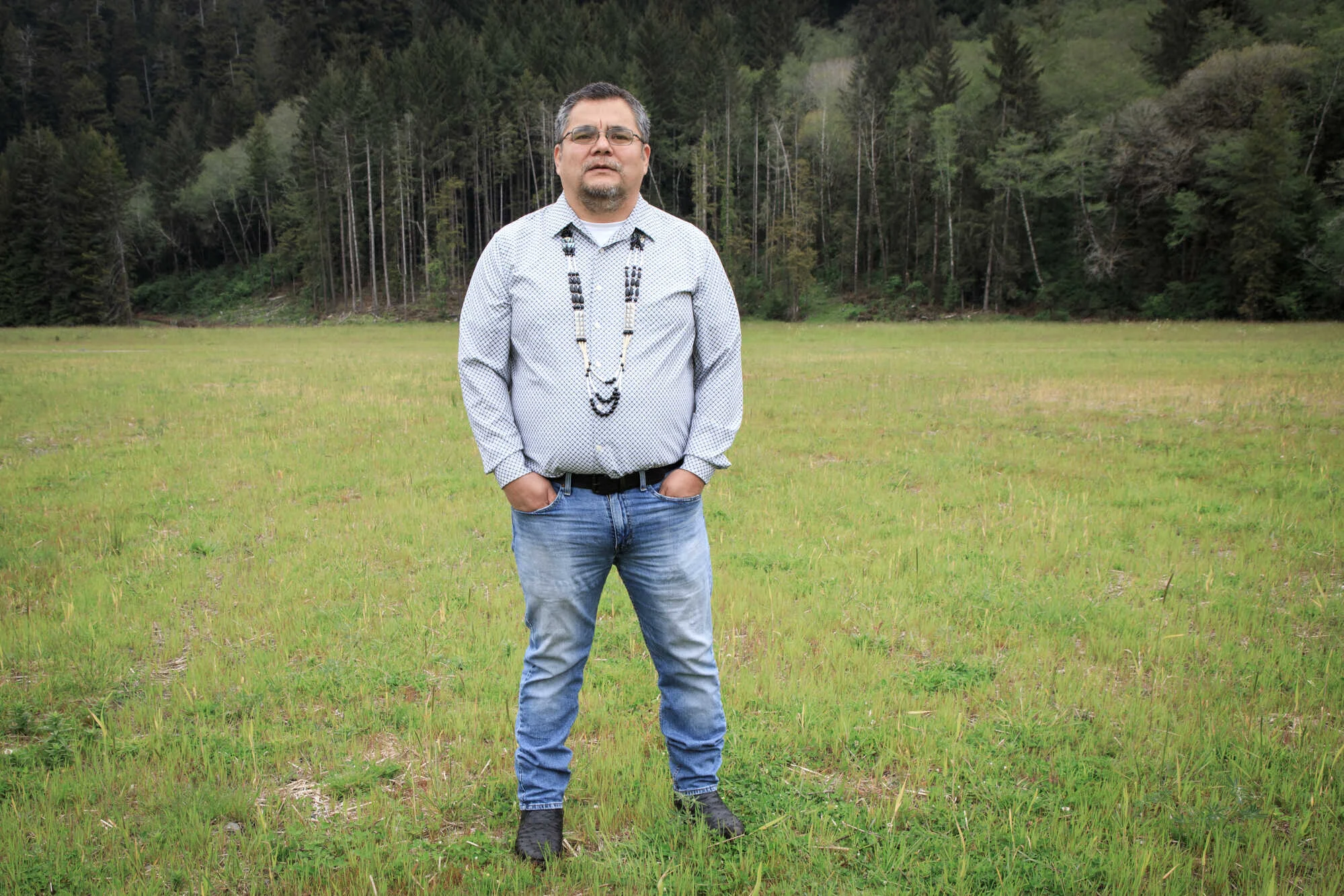
Chairman James and the Yurok Tribe have opened the first Indigenous-owned visitor gateway to the redwoods. “Whether you’re from California, out of state, or international—whether you know or don’t know anything about Indigenous people—you are going to get a welcome from our heart of what this place means to us.” Photo by Amy Kumler.
The return of ‘O Rew (pronounced here by a Tribal member) is a landmark moment more than a decade in the making. The journey began in 2013, when Save the Redwoods purchased a defunct mill site just north of Orick, California. The 125-acre property bore the scars of sawmill operations and cattle grazing. Yet its keystone location—at the confluence of Prairie and Redwood creeks, at the southern entrance to Redwood National and State Parks, and in the heart of Yurok Country—held enormous potential.
Save the Redwoods invited the Yurok Tribe to help envision what ‘O Rew might become, alongside California Trout, the California State Coastal Conservancy, NOAA Restoration Center, National Park Service, California State Parks, and numerous other public agencies and regional professionals. In 2021, the partners launched an ambitious five-year restoration of Prairie Creek as part of the shared vision for creating a world-class visitor gateway to the redwoods.
As Indigenous-led crews began reconnecting the creek with its floodplain, trust grew, the partnership strengthened, and the opportunity for land return to the Tribe took shape. The vision for ‘O Rew’s future began to align with its deep past: A place for nature and people, honored and cared for by the Yurok.
“Returning this land to the Yurok Tribe, it’s kind of coming full circle,” says Jessica Carter, senior program director at Save the Redwoods. “Yurok people have been stewards of this land since time immemorial.”
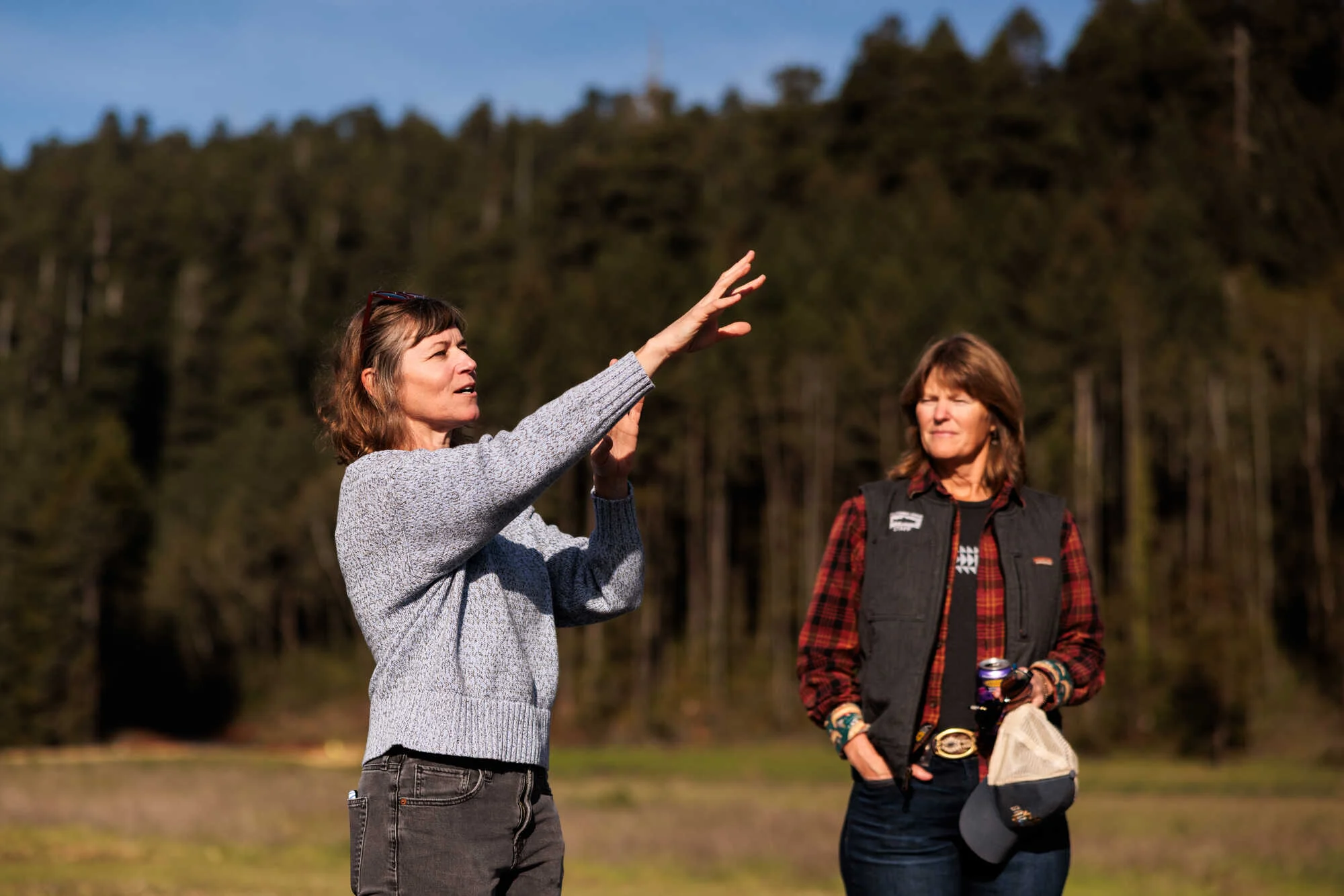
Jessica Carter (left) with Mary Burke, North Coast regional manager at California Trout. As Save the Redwoods’ project lead, Carter guided the ‘O Rew partnership across years of complex restoration work and site enhancements. Photo by Max Whittaker.
“Historically, Bald Hills Road was a trail,” says James of the road that winds into the hills from ‘O Rew. This footpath connected coastal Yurok with upland Yurok and other Tribes—a travel and trade route that provided access to ancestral gathering grounds at Redwood Creek’s coastal estuary. “Whether you are grabbing mussels or seaweed or fishing, you pass right through here.”
Colonization and displacement by gold miners and ranchers—and the installation of the sawmill in the 1950s—severed this physical connection to the land. But the Tribe’s bond remained unbroken.
“Yurok people are very place-based people,” says Rosie Clayburn Katri, Yurok Tribal cultural resources director and Tribal heritage preservation officer. “Our ocean gathering, hunting, and fishing areas were owned and caretaken by certain families and still are today. So getting back to this piece of land is healing.”
Weaving back a watershed
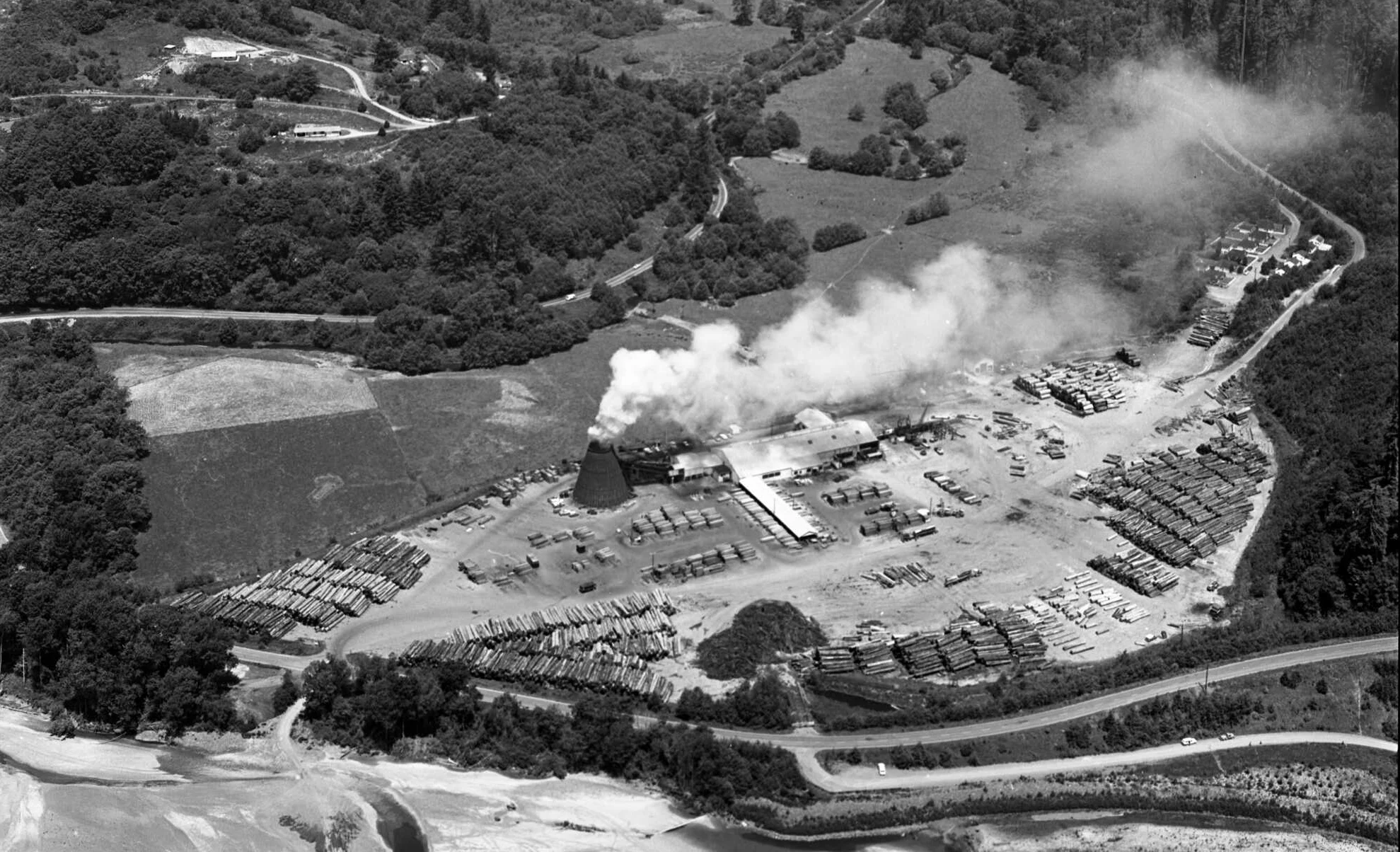
Sawmill operations at the Orick site began in 1954. Most of the surrounding coast redwoods were logged by the late 1960s. Photo courtesy of National Park Service.
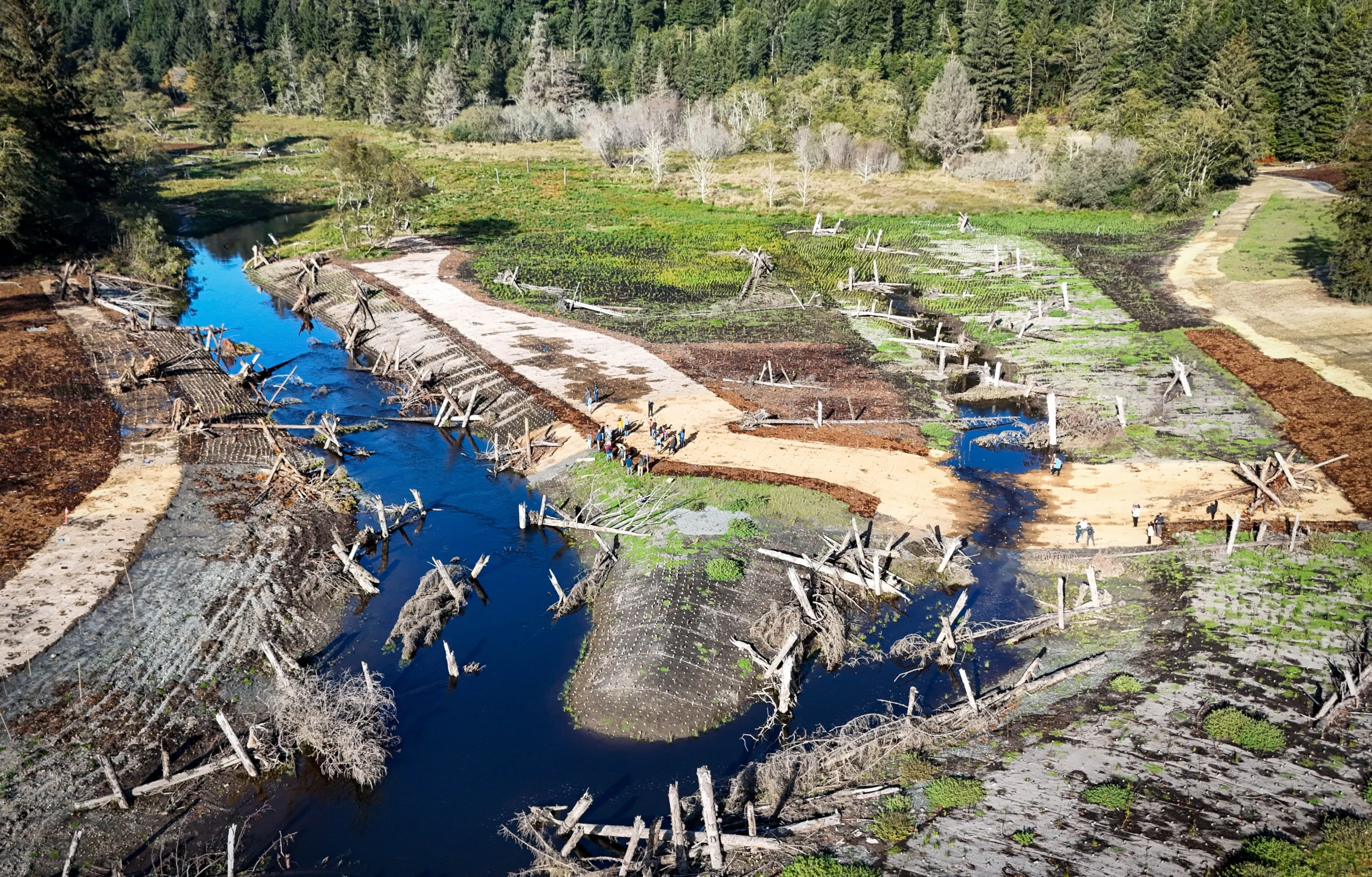
As part of the $23 million restoration, crews placed logs into Prairie Creek to slow the flow and provide habitat for threatened coho salmon and steelhead. Photo by Michael Wier/California Trout.
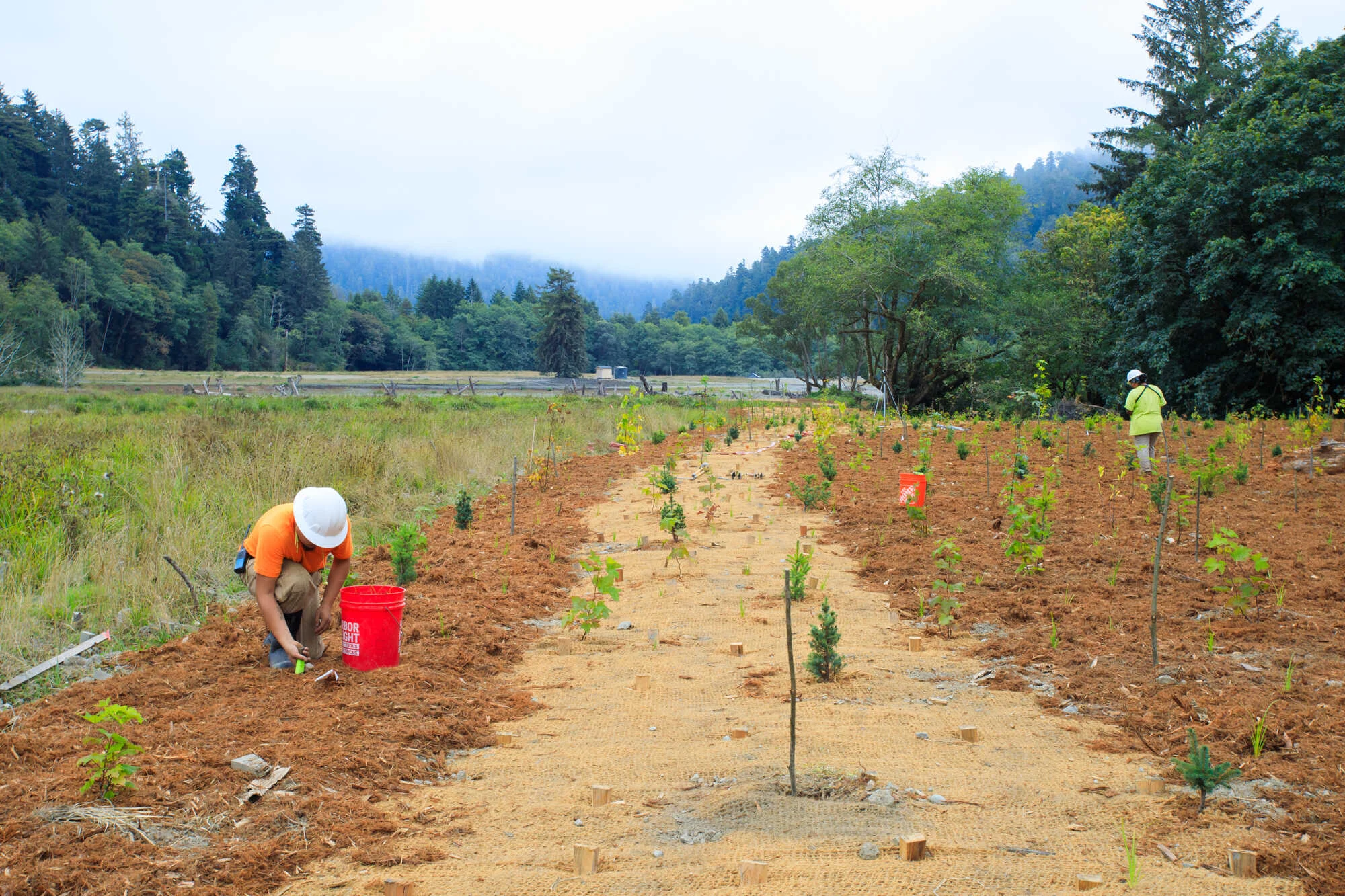
Planting native grasses and seedlings to reestablish habitat and prevent erosion. Photo by Amy Kumler.
Looking at ‘O Rew today, it’s hard to imagine that as recently as 2020, this was the site of a defunct sawmill where old-growth redwoods were once processed into lumber.
Healing this wound was essential to the partnership’s vision for ‘O Rew—a process that began with the Yurok Tribe Construction Corporation removing 10 football fields’ worth of asphalt. Members of the Yurok Tribe Fisheries Program then tapped their deep expertise in salmon river restoration, reshaping the trench-like creek into a gentle meander and reestablishing the floodplain. Now restored, Prairie Creek gives juvenile salmon and steelhead a place to grow strong before entering the ocean. As adults, these fish will pause here once more before swimming upstream to spawn.
“The crews weren’t just working with their hands,” says James of the transformation. “They were working with their hearts. Yurok people are restoration people, salmon people. For us, balance means bringing nature back to its original state.”
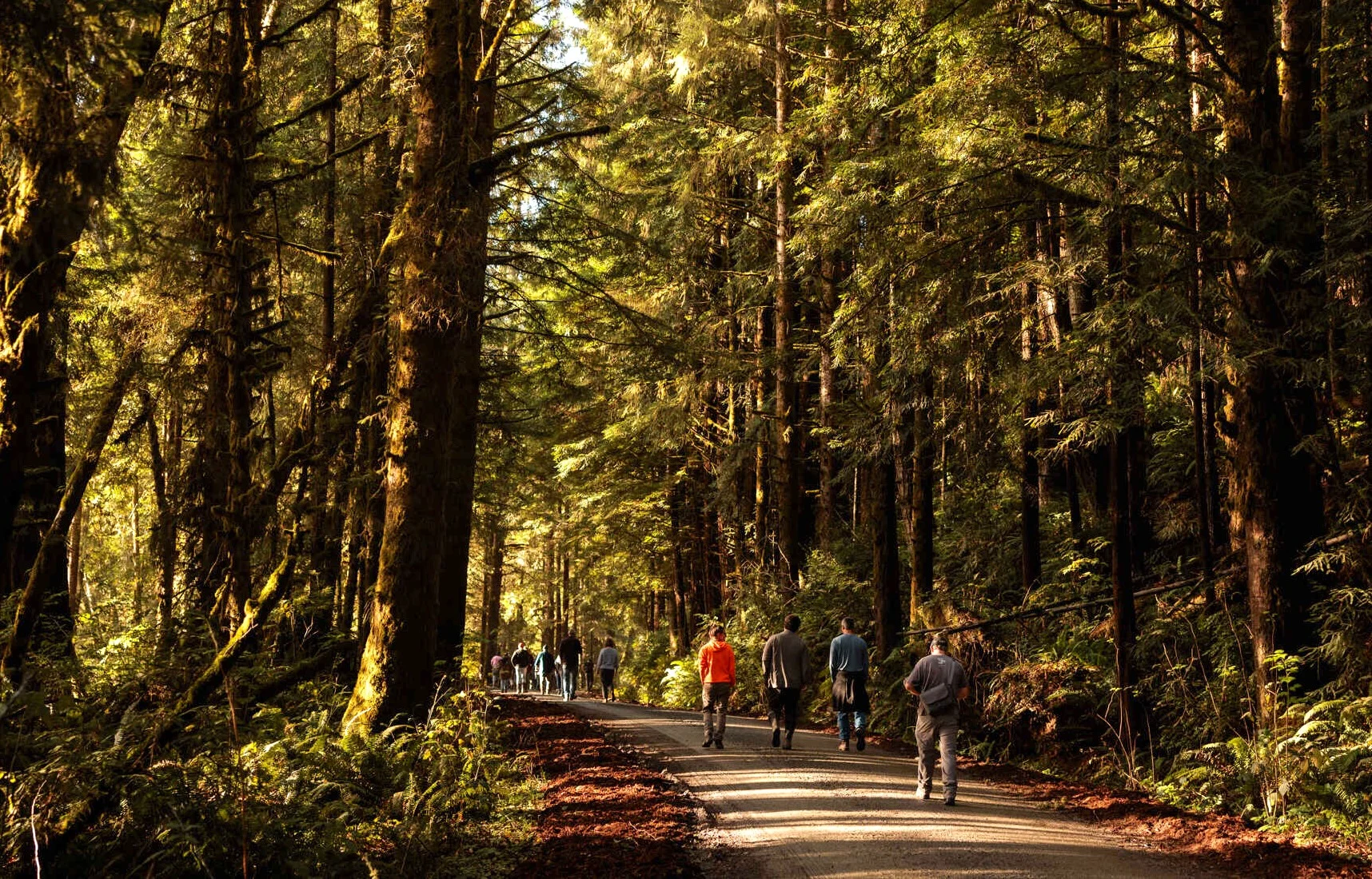
Site enhancements by Save the Redwoods include over a mile of accessible paths and a new segment of the California Coastal Trail. A connector trail links to the national park’s iconic Lady Bird Johnson Grove. Photo by Max Whittaker.
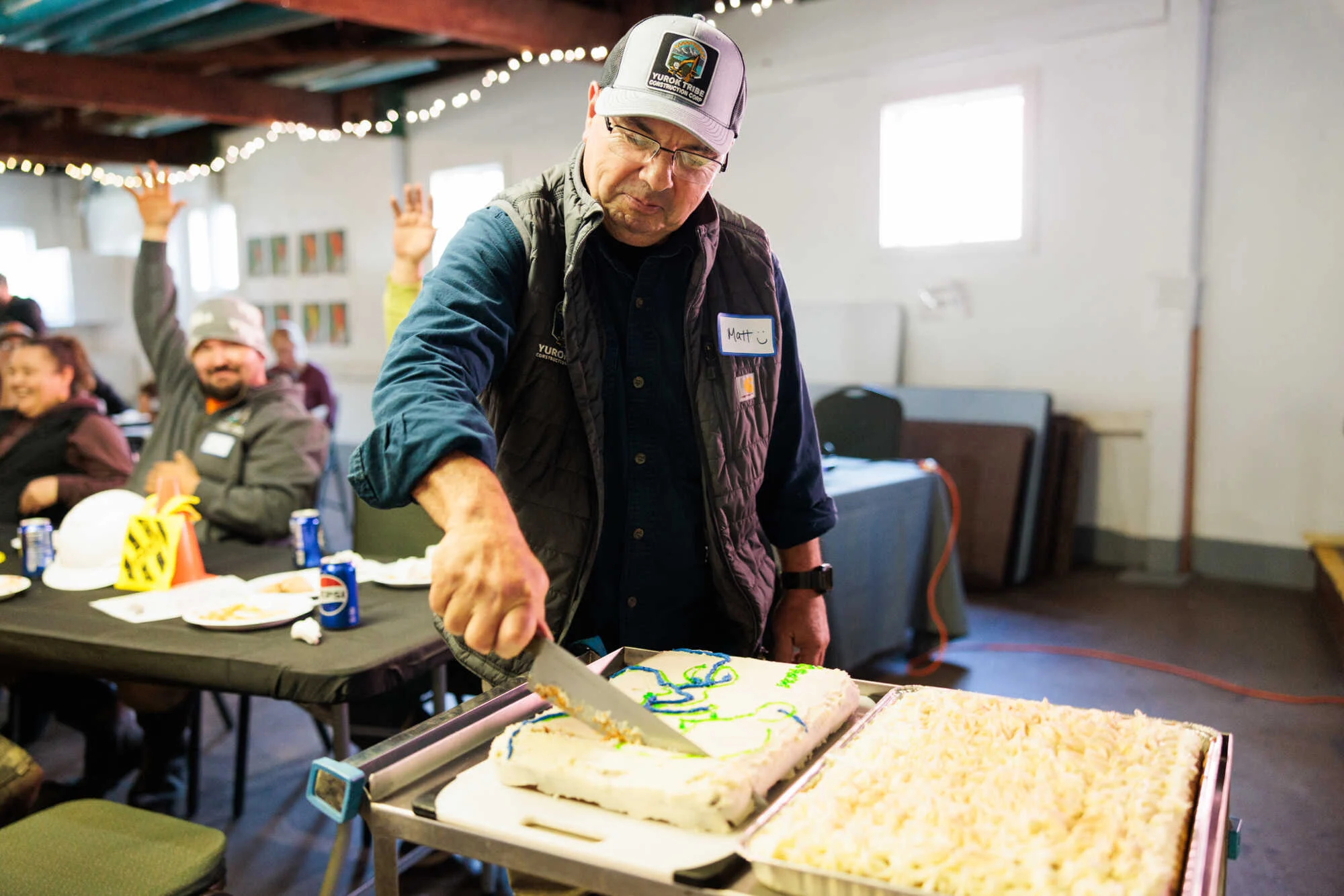
Tribal member Matt Williams, who led the Yurok Tribe Construction Corporation’s work onsite, slices into a sweet ‘O Rew landscape at the construction wrap celebration. Photo by Max Whittaker.
Many of these native plants also support Yurok cultural heritage. Traditional weavers gather the roots of softwood trees like willow and conifers like Sitka spruce. These materials are transformed into long pliable strips to make baskets and ceremonial regalia. Alder is also used to dye dried ferns that provide decorative accents.
As Annelia Norris, Yurok Tribal food village coordinator, describes in one ‘O Rew display, “Baskets weave every aspect of our world. They carry our children, they hold our food, they contain our medicine. We rely on a healthy ecosystem so that the materials in our baskets are strong to hold our culture together.”
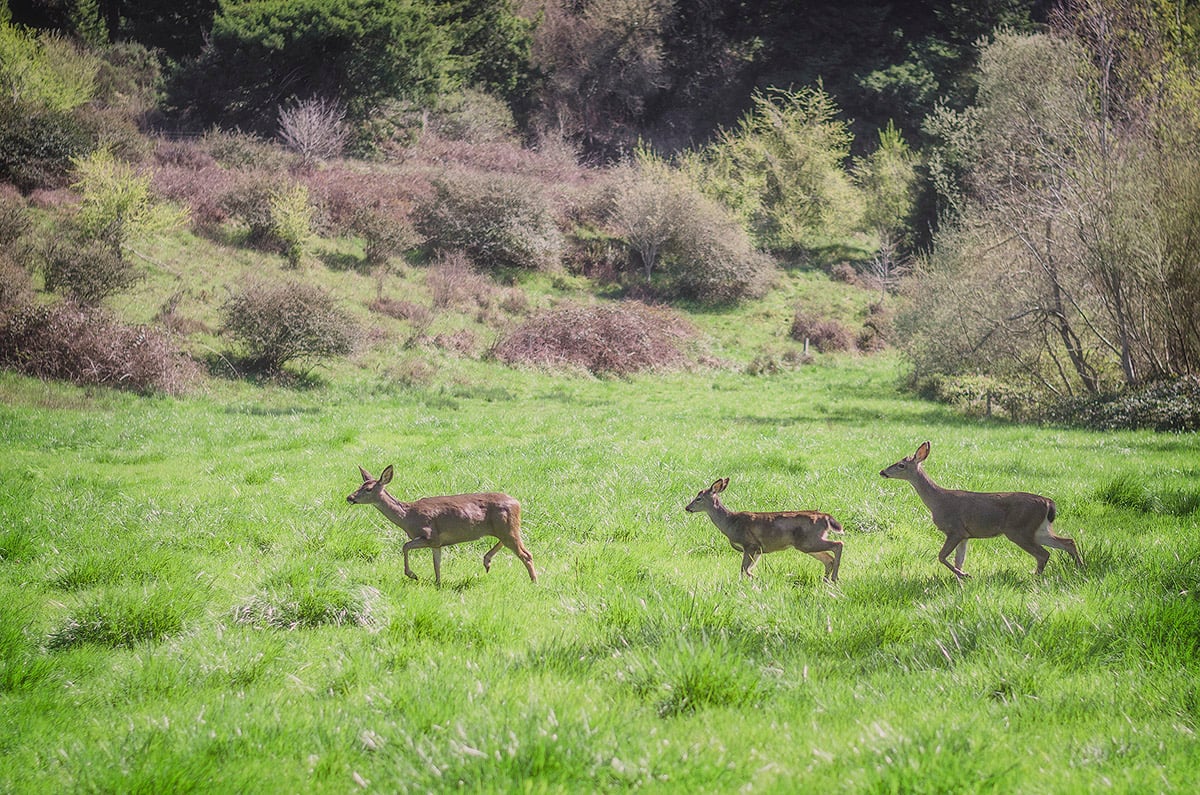
Already, ‘O Rew’s reconnected ecosystem thrums with life. Roosevelt elk graze in the meadow. Chickadees forage in the huckleberry bushes near a new forest trail. Along the former mill road, a Pacific tree frog calls. Egg masses sit in the gully just upstream.
Sharing their story, welcoming the world
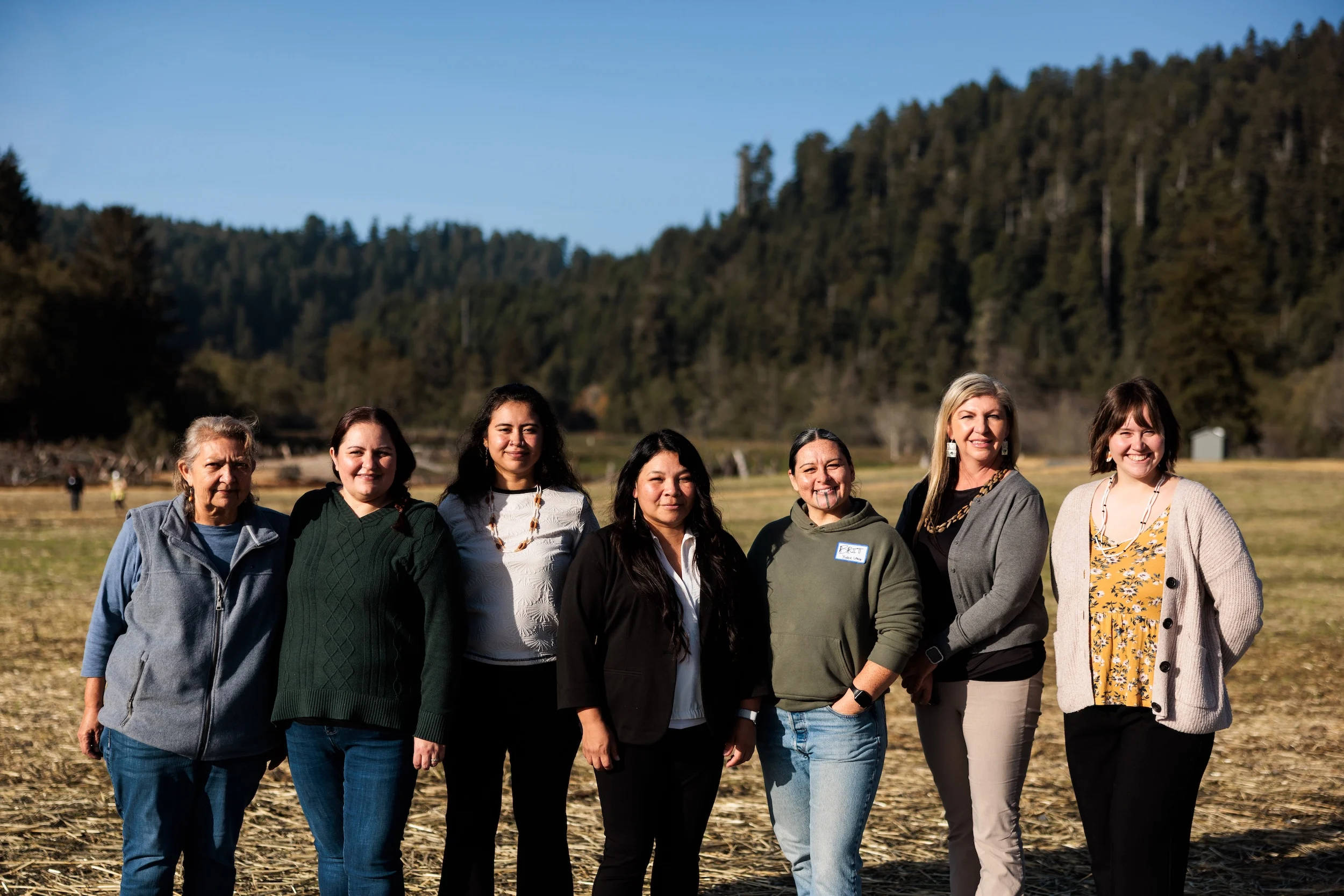
Members of the Yurok Tribe’s cultural resources and language teams collaborated closely with Save the Redwoods on the gateway’s interpretive design. Photo by Max Whittaker.
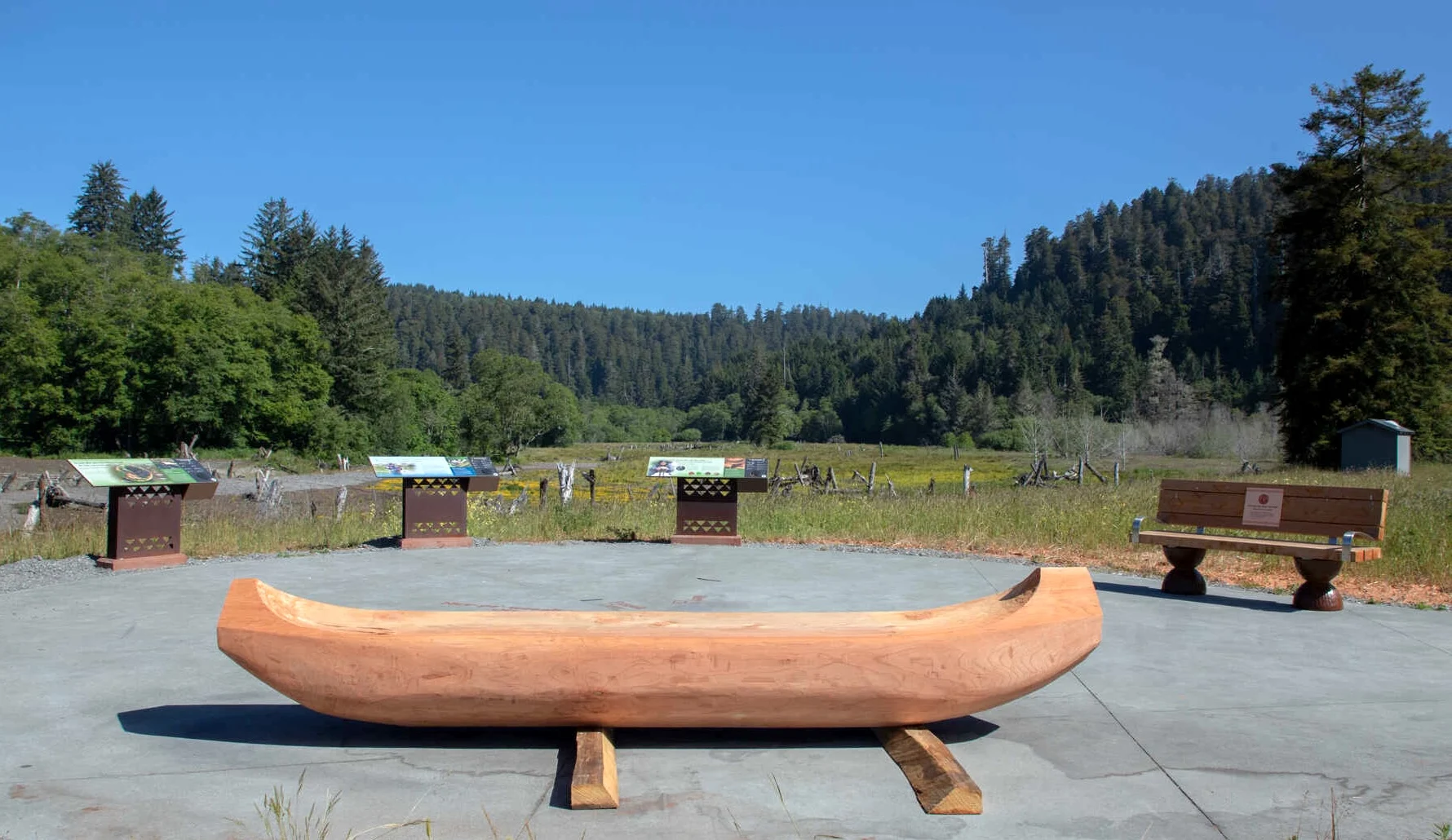
The outdoor classroom at ‘O Rew features interactive displays and a bench carved in the shape of a traditional canoe by David Severns, the Tribe’s master carver. Photo by Amy Kumler.
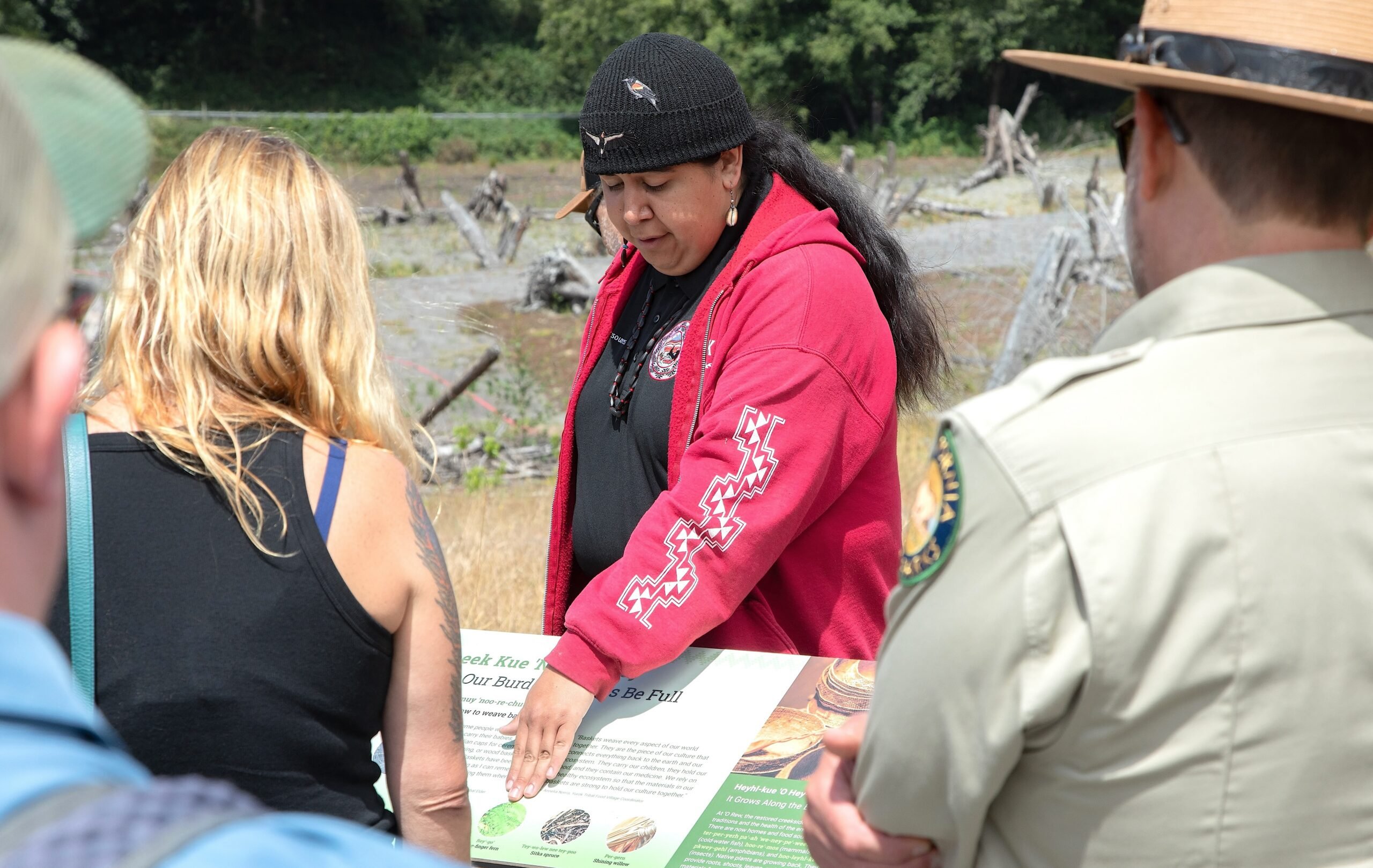
Guided tours led by Yurok Tribe interpretive staff are part of the visitor experience at ‘O Rew. Photo by Amy Kumler.
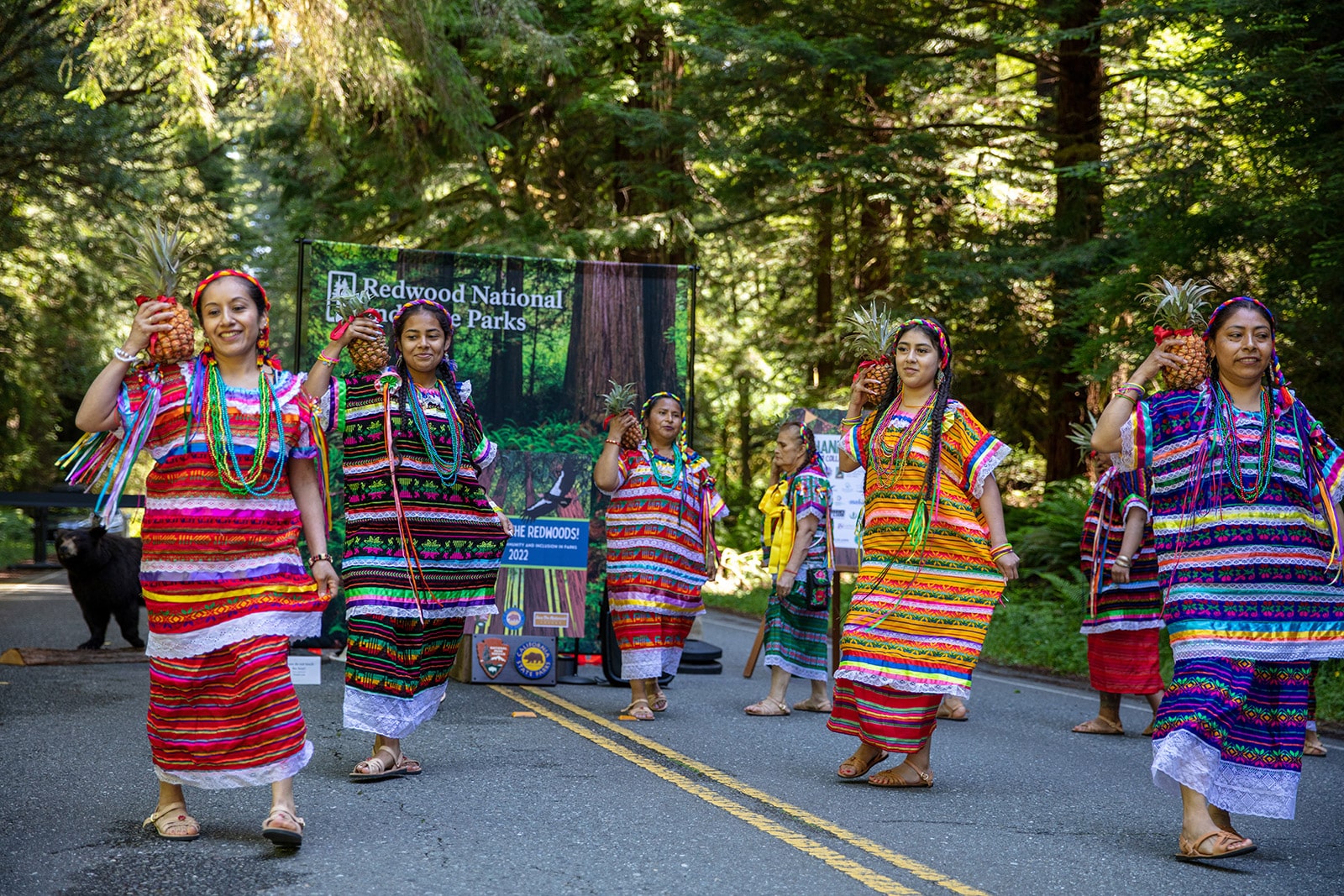
Last year, more than a million people from around the globe visited Redwood National and State Parks. Now that the ‘O Rew Redwoods Gateway is open to the public, it will be a don’t-miss first stop for park visitors arriving from the south. As welcome guests on Yurok land, they will picnic at the gathering area, explore interactive exhibits in the outdoor classroom, and follow newly laid paths through the wetland meadow and redwood forest.
Visitors will also experience an inversion of how storytelling usually works at a park. At ‘O Rew, the interpretive design was led by Indigenous people. On signs and maps installed at the site, the Yurok language comes first.
Deborah Zierten, senior manager of education and interpretation at Save the Redwoods, describes the process of sign-making: The interpretive design team would describe a theme and the Yurok Tribal Language Department would write the copy. Content was drafted in Yurok, then translated into English. “We all wanted Yurok language to be front and center,” Zierten says.
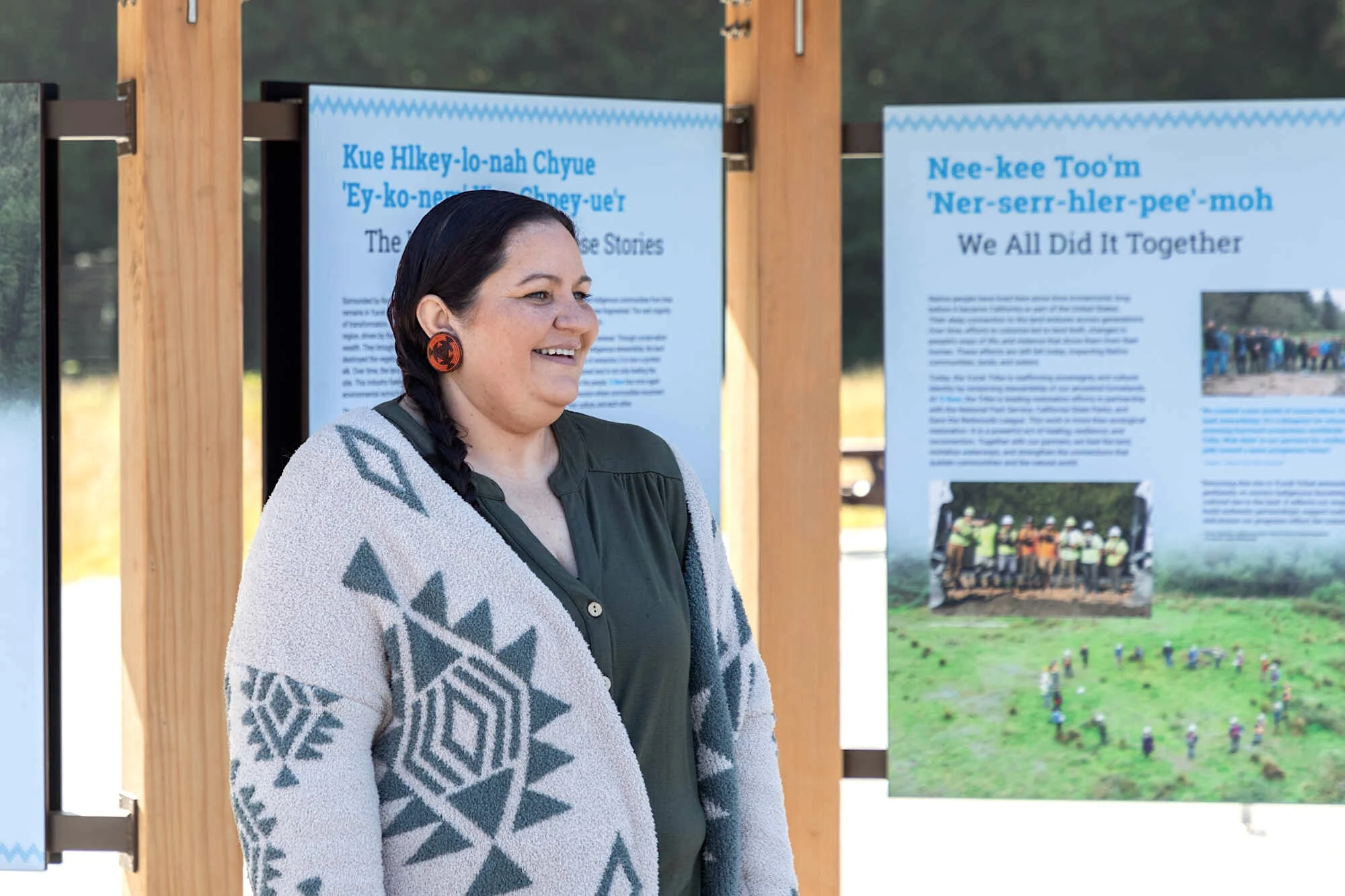
Rosie Clayburn Katri at the gateway’s welcome kiosk, where Yurok language leads the storytelling. Photo by Amy Kumler.
In addition to Yurok writing, interactive audio signs offer a chance to hear Yurok spoken. “Our whole world used to hear that language,” says Clayburn Katri, who as a child spent many evenings and weekends on elders’ floors, listening to her mother, a Yurok teacher, record and document the language. Visitors will hear some of those same voices at ‘O Rew, in what Clayburn Katri describes as “a continuation of time.”
Together, these displays introduce the Yurok worldview. They explain how the land must be burned so elk can eat; how waterways must flow freely so that salmon and people can thrive. They describe the Tribe’s reciprocal relationship with keehl (redwoods)—the living guardians that provide materials for traditional houses and canoes. In return, the Yurok are restoring the North Coast redwood forests to health. “Wek kee kem nee tey-po’n keehl,” reads one display. “There will be redwood trees growing around here again.”
A future grounded in place
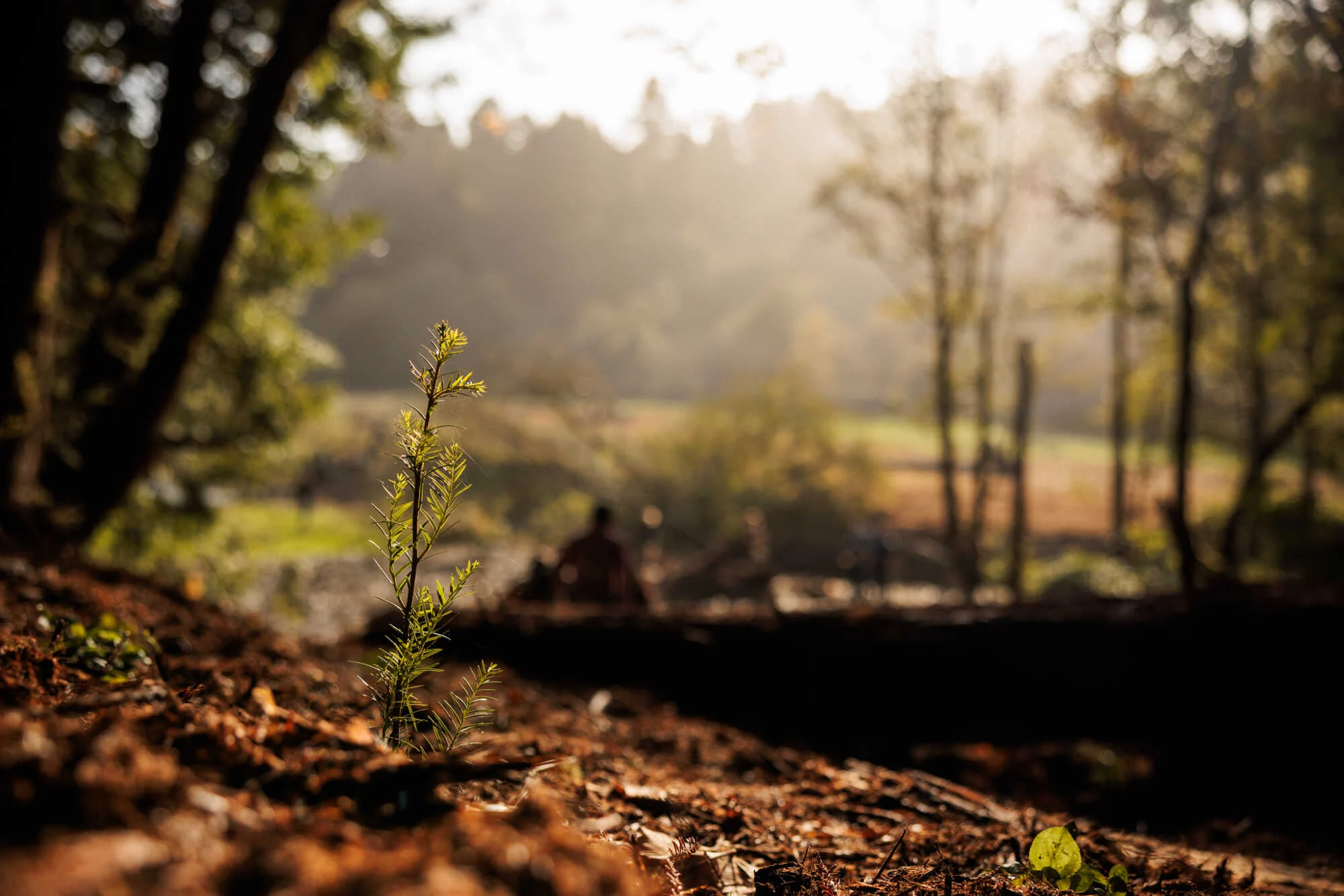
Over the next several years, the Tribe will continue to fine-tune the restoration work at the site and steward the next generation of redwoods. “I’m really excited about what this property will look like after a decade of Indigenous land management,” says Clayburn Katri. Photo by Max Whittaker.
With the public opening, ‘O Rew begins its next chapter as a visitor gateway to the ancient redwoods and living Yurok culture. But the Yurok Tribe’s vision for their ancestral land extends well beyond this milestone moment.
Over the next few years, their plans for the gateway include the construction of a traditional village, with plank houses and a sweat house, for ceremonial activities and public education. The Tribe also envisions a cultural center that will showcase Indigenous heritage and artifacts. The public will be invited to explore and learn, but unlike at some sites, the Tribe will decide which aspects of their culture to share, and how these are presented.
The cultural center will also play an important role in educating Tribal members on Yurok identity and traditions—a necessity for a people recovering from more than a century of disenfranchisement, from having their land taken and their language banned, to their children being forced into boarding schools.
Yurok people owning and stewarding their ancestral land begins to change this equation. At ‘O Rew, younger Tribal members will have opportunities for hands-on learning and engagement with their heritage. Already, Native youth have spent time onsite carving 70-year-old logs into benches for the gateway, led by the Tribe’s master carver, David Severns.
“It’s really about connecting our Tribal membership back to this land and creating a space for them,” says Clayburn Katri. “With history and land lost, there has been a disconnect between Tribal folks and pieces of land no longer in our ownership.”
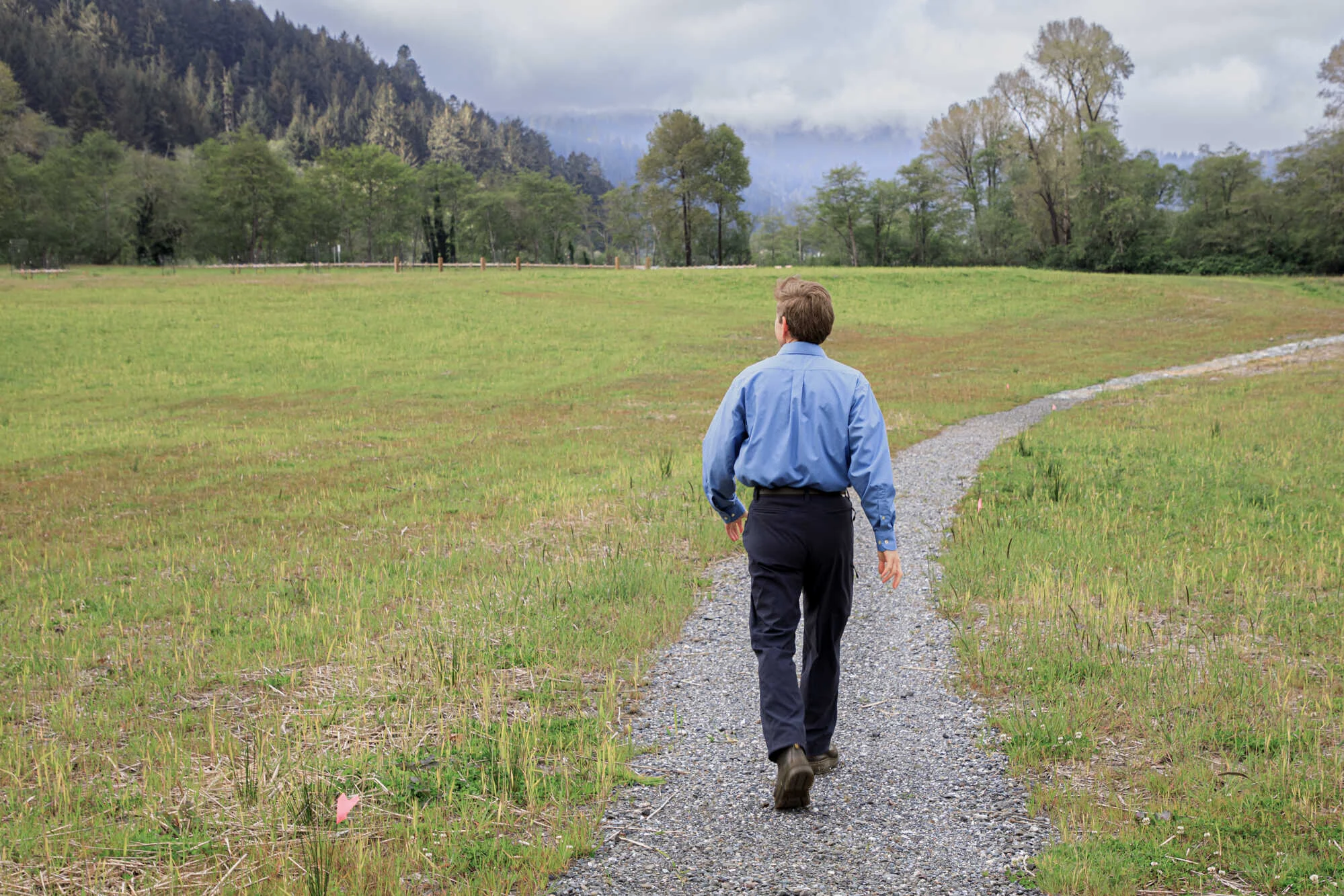
Steve Mietz, president and CEO of Save the Redwoods, sees ‘O Rew as a model for how conservation can heal both ecosystems and communities. Photo by Amy Kumler.
“For me, ‘O Rew represents hope,” says Steve Mietz, president and CEO of Save the Redwoods. “It’s the hope that as we heal the land, we can also heal our communities and the relationships broken by the injustices done to Tribal people.”
Clayburn Katri—along with Save the Redwoods and project partners—sees ‘O Rew as a model for how conservation groups and Tribes can work together towards recovery and renewal. It’s a promising match, given the alignment between conservation missions and the duty to nature that many Tribal Nations have included in their constitutions.
“Yurok people believe our mandate here on this earth is to renew the world and bring it back into balance,” says Clayburn Katri. ‘O Rew demonstrates what can change when Tribes lead. “Really it comes down to that trust,” she says. “It comes down to allowing Tribes to be in the driver’s seat.”

7 Responses to "‘O Rew returns: Redwood lands back in Yurok hands"
This is such a wonderful accomplishment!! Congratulations to EVERYONE involved. I can hardly wait to make a visit.
The recent photos and info about O’Rew Gateway being added to Redwoods State & National Parks was “MAGNIFICIENT”. The SIZE !!!! of the Redwoods State and National Parks should be TRIPLED. Please add more hiking, biking, kayaking and canoeing trails and opportunities. Transportation from the local hotels, resorts, to the State & National Parks, trailheads , and kayak put in sites , should be ONLY BY !!! SHUTTLE BUS.
How wonderful! Congratulations Save the redwoods.
Fascinating story. Including a map would have made it even better.
This is truly exciting and I can’t wait to visit. I love how the Yurok tribe took the lead, their alliance to the land to reclaim and honor what was once taken from them, shows how this can be a model for other places and tribal communities. I so wish we can give all of this land back to the tribes.
Thank you for the video, it’s beautiful there.
This is so inspiring, especially now at a time when the Feds are trashing so many sacred indigenous lands. I hope this restoration can be a springboard for further restorative partnerships with indigenous peoples.
I used to frequently drive up Hwy 101 by that area, when I lived in Cloverdale. I wish that I could see it now. However, I moved to Salem, OR, several years ago. I hope some day to revisit the revitalized Yurok land.