
July 14, 2026
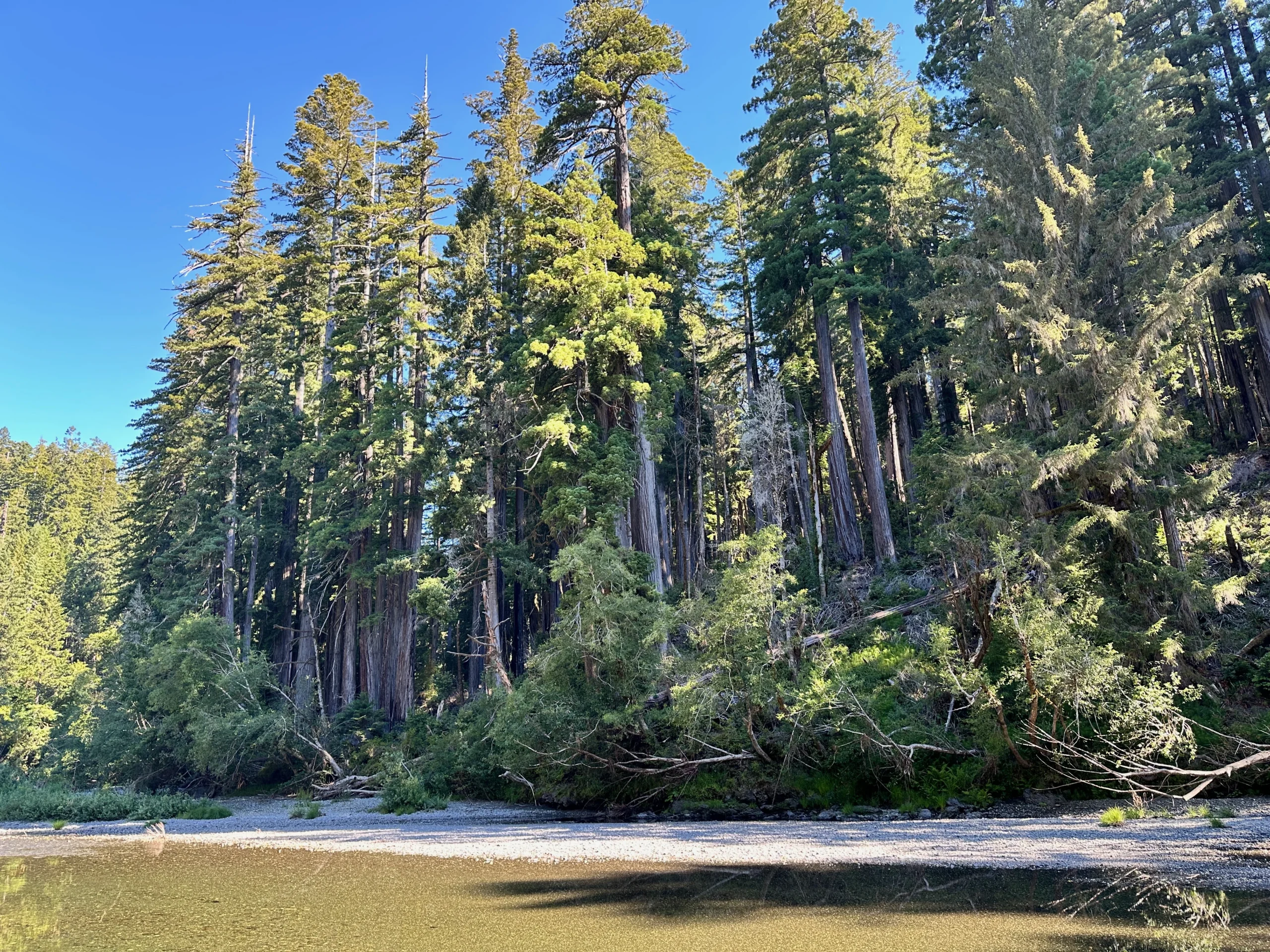
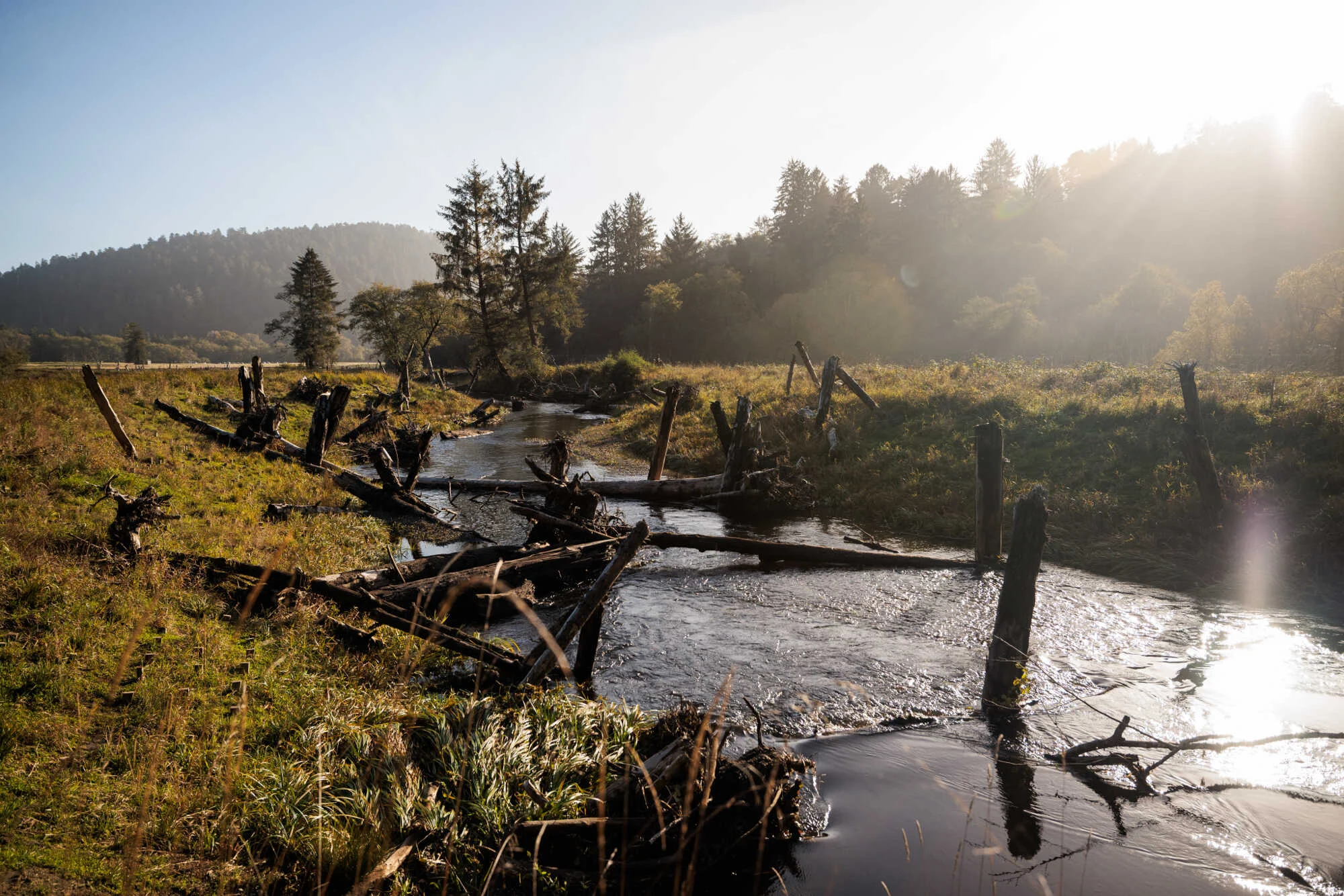
Redwood Creek shimmers in the morning light as I happily watch a mother duck teach her ducklings to dive for food. Suddenly I realize something remarkable: I’m at a UNESCO World Heritage Site, surrounded by the tremendous trees of Redwood National Park, but it’s been at least 30 hours since my partner and I have seen another human being.
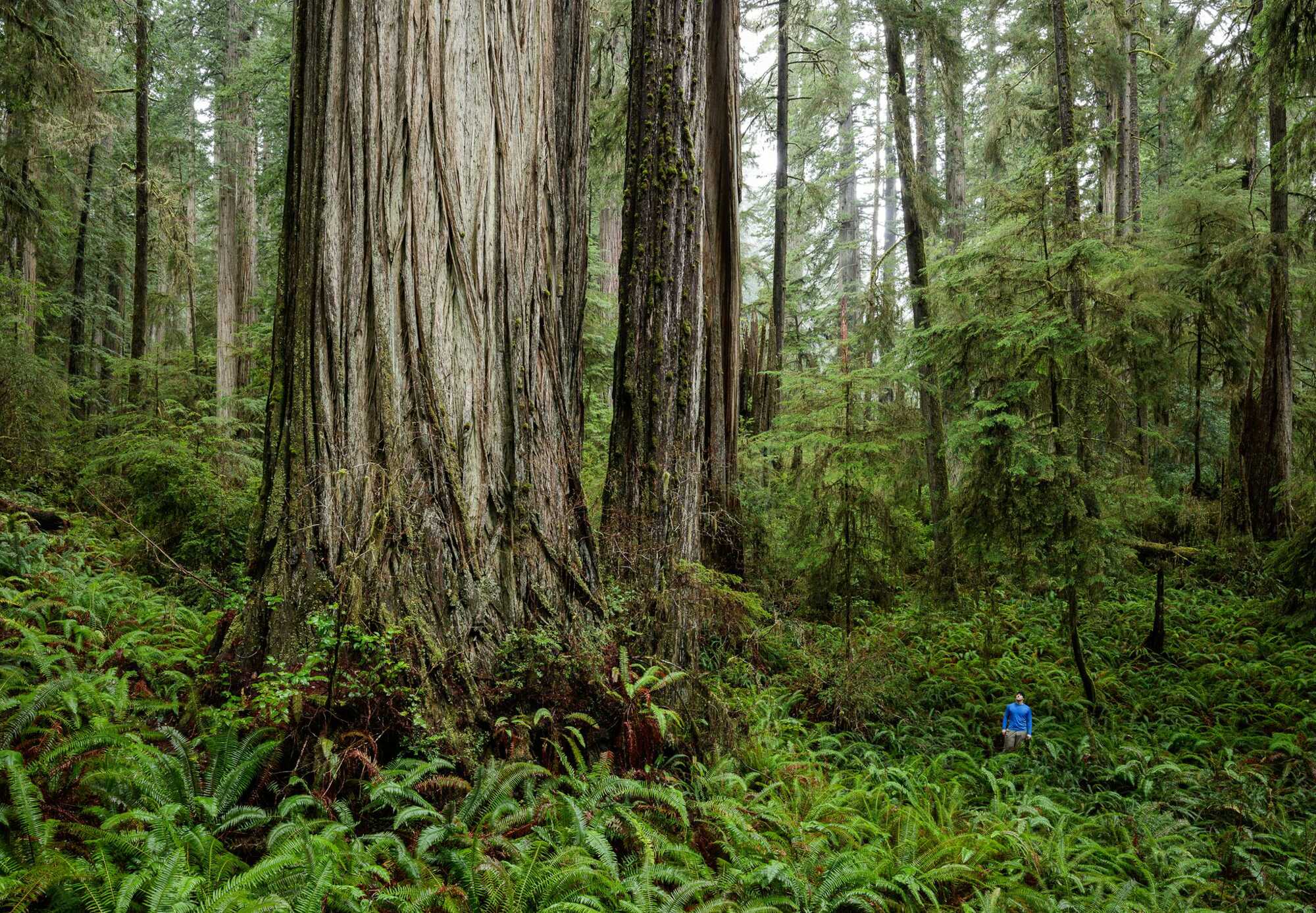
To find this blissful solitude in a park that draws more than a million visitors each year, we’ve taken advantage of dispersed camping—backcountry camping outside of designated sites—allowed on Redwood Creek’s gravel bars with a permit. Instead of heading to a permanent campsite with a picnic table, fire ring, and potentially noisy neighbors, we could pitch our tent almost anywhere on stretches of sandy sediment, alongside a rare free-flowing river, deep within a massive refuge for about 45% of the world’s remaining old-growth coast redwoods.
The adventure begins
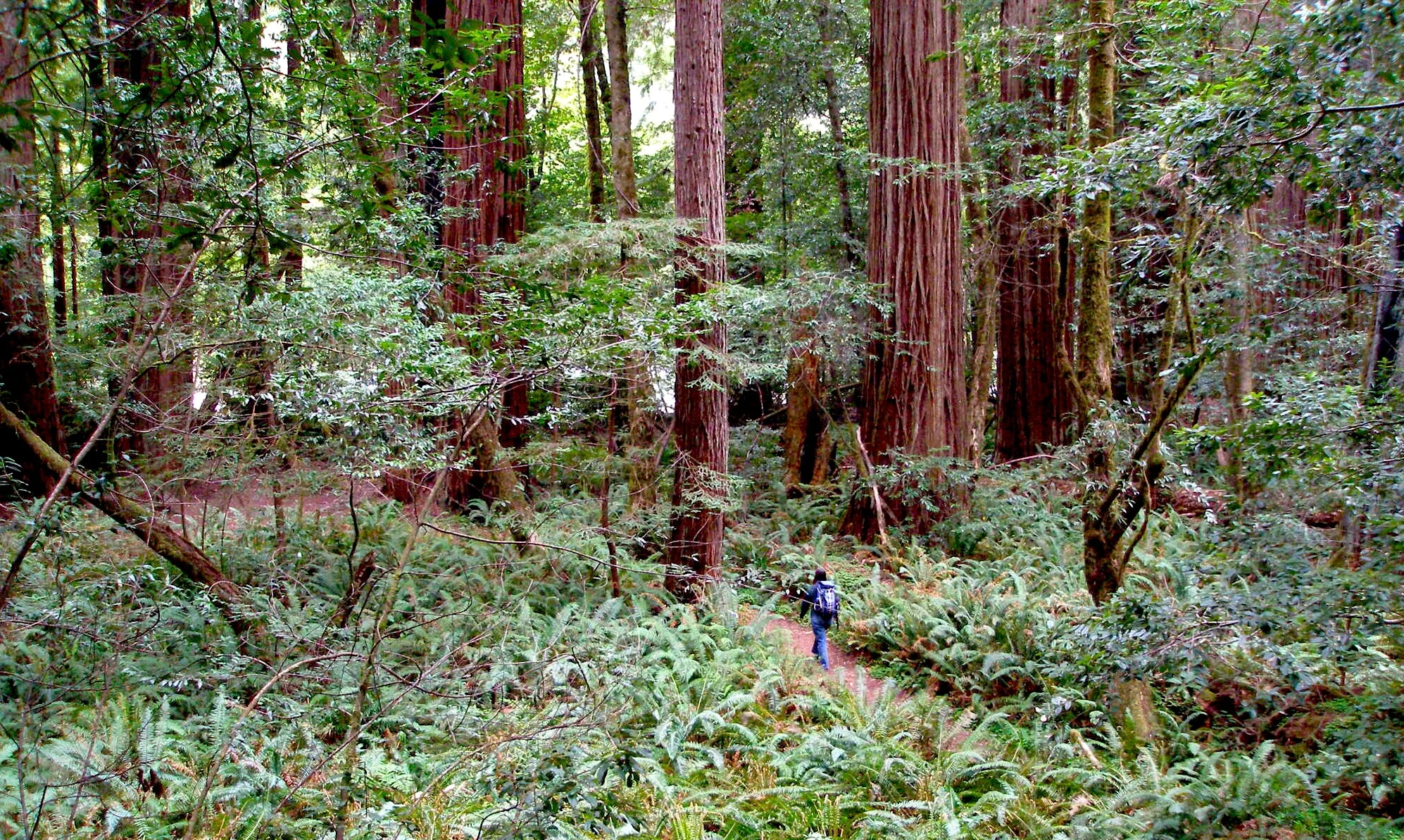
Even if you’re eager to reach camp, don’t miss the unforgettable Tall Trees Grove. Photo by Adam Lucas.
Before we could begin our choose-your-own-campsite adventure, we first had to reach the gravel bars. Two days earlier, we parked at the Tall Trees Trailhead, about a 40-minute drive from Orick, California. We then hoofed our backpacks down the moderately strenuous Tall Trees Trail (4.5 miles round-trip), descending 800 feet before looping around a magnificent redwood grove that helped spur the national park’s creation in the 1960s.
The sun was dropping behind the giant redwoods as we crossed the seasonal bridge (typically in place June to September) from Tall Trees Grove to the first of Redwood Creek’s many gravel bars. The handful of people we passed were either heading back to the parking lot or hiking on to Elam Camp. Before long, we were completely alone.
The search for an ideal campsite
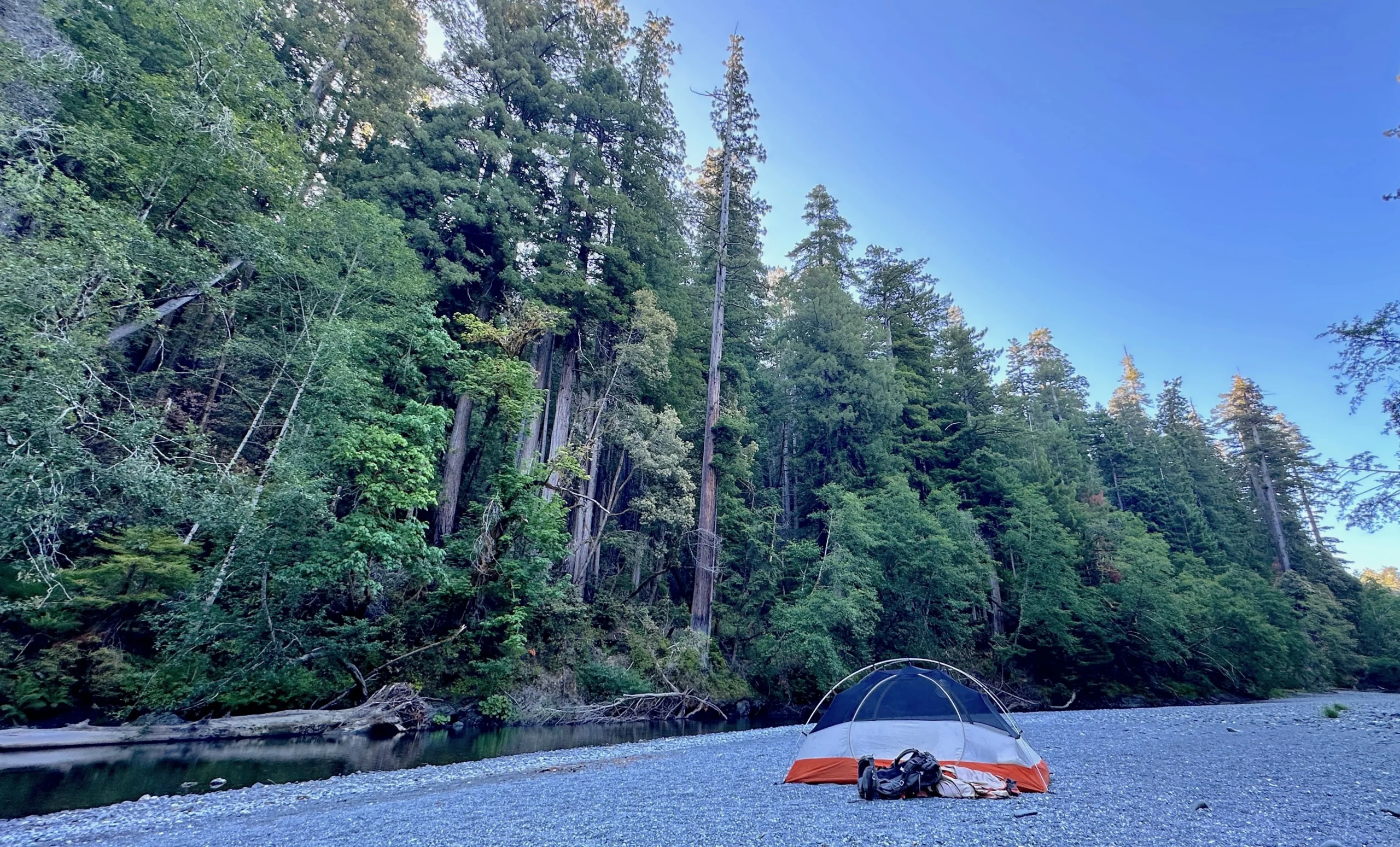
A gravel bar campsite combines a backdrop of redwoods with an unobscured view of the stars at night. Photo by Helena Guglielmino.
There was no map of campsites, no trail, no indication of what the experience would be like, except the words on our permit: “You must cross the river at least once to be at least 1/4 mile from the [Tall Trees] grove.” Our first creek crossing was the slowest, tiptoeing through the water, trying to avoid the jet-black tadpoles darting to safety.
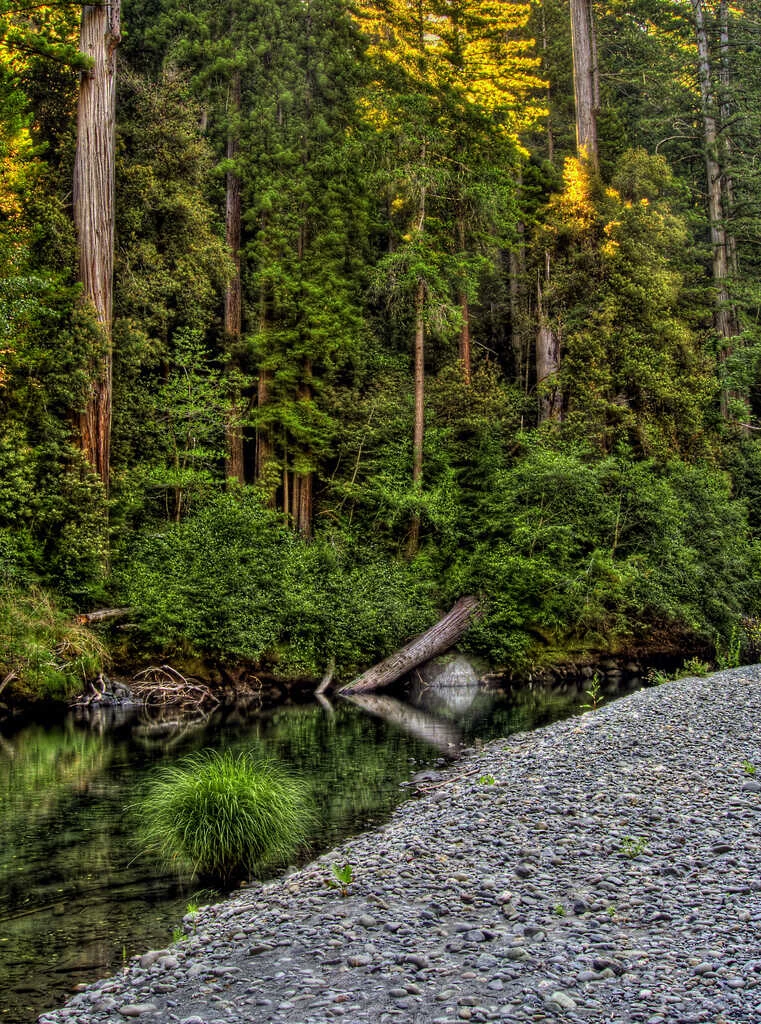
Redwood Creek offers a paradise for salmon and backpackers alike. Photo by Schedler/Flickr.
We eventually crossed the creek countless times in search of our ideal campsite, stepping between gorgeous rocks of swirling rainbow colors and crystals, the water varying in depth from our ankles to above our knees. The only sign of humans was the occasional lifeless fire ring tucked into the gravel.
Here, the coast redwood ecosystem ruled, providing a haven for native wildlife, including black bears, Roosevelt elk, and northern spotted owls, sheltered by 2,000-year-old trees soaring more than 350 feet into the air. The cool creek that whirled at our feet provided a paradise for threatened coho and Chinook salmon and steelhead trout. (Just downstream at the ‘O Rew Redwoods Gateway, Save the Redwoods, the Yurok Tribe, and other partners have revived vital habitat for young salmon.) Three state parks connect with Redwood National Park to protect more than 130,000 acres, more than half of which Save the Redwoods and its partners are working to fully restore.
Could there be any more wondrous place to camp?
Finding freedom among the redwoods
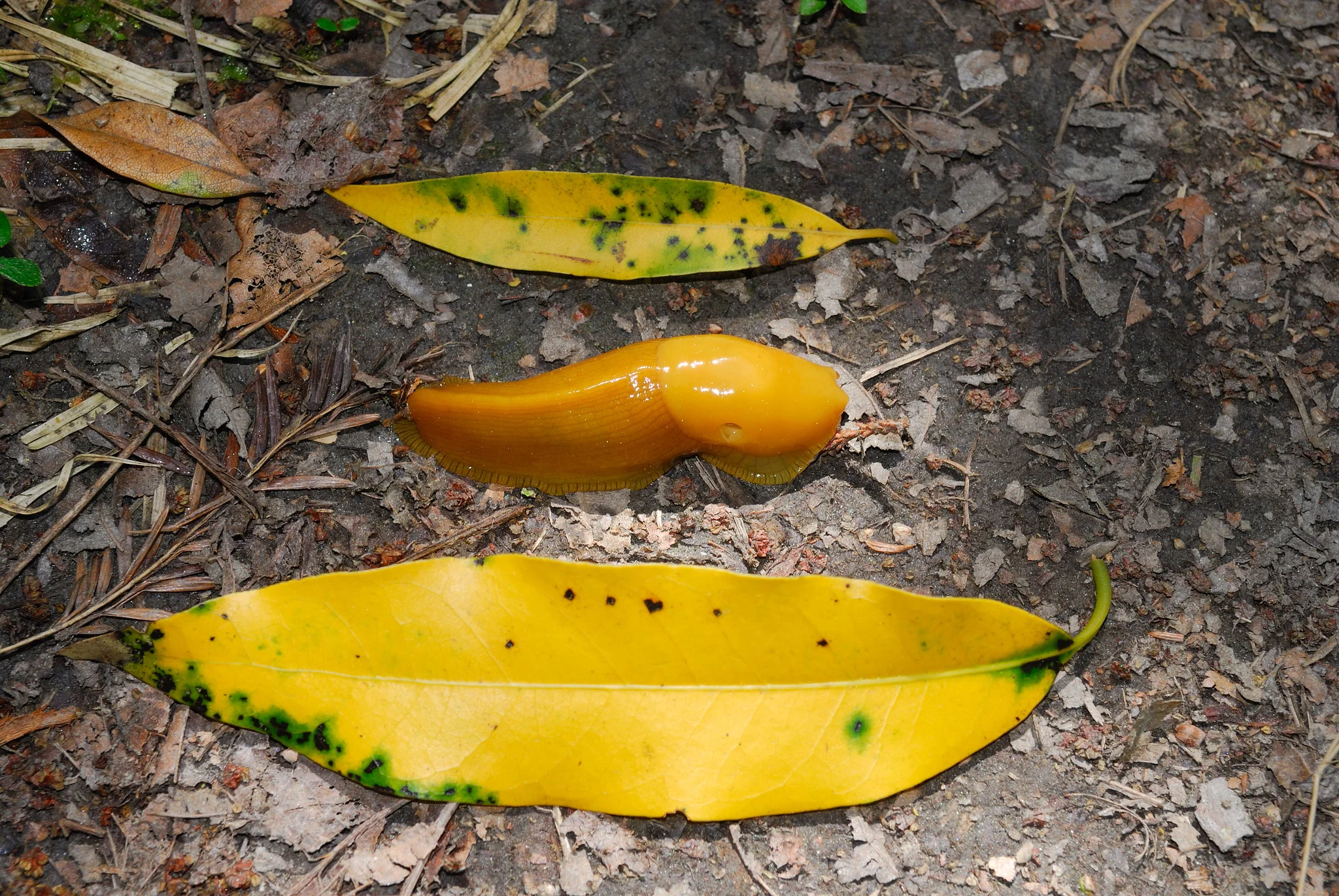
Far from a computer screen, your to-do list shrinks to “Count banana slugs.” Photo by Nicholas Turland/Flickr.
The next day, we continued north along the creek, stone-colored frogs jumping away from us with their sticky feet. We climbed over two massive redwoods that had fallen across the path, marveling at their size. We debated floating on our sleeping pads to our next campsite, wherever that may be. Finally, we decided on a gravel bar set against a row of alder trees that opened like a geode, revealing an ancient world of redwoods and ferns.
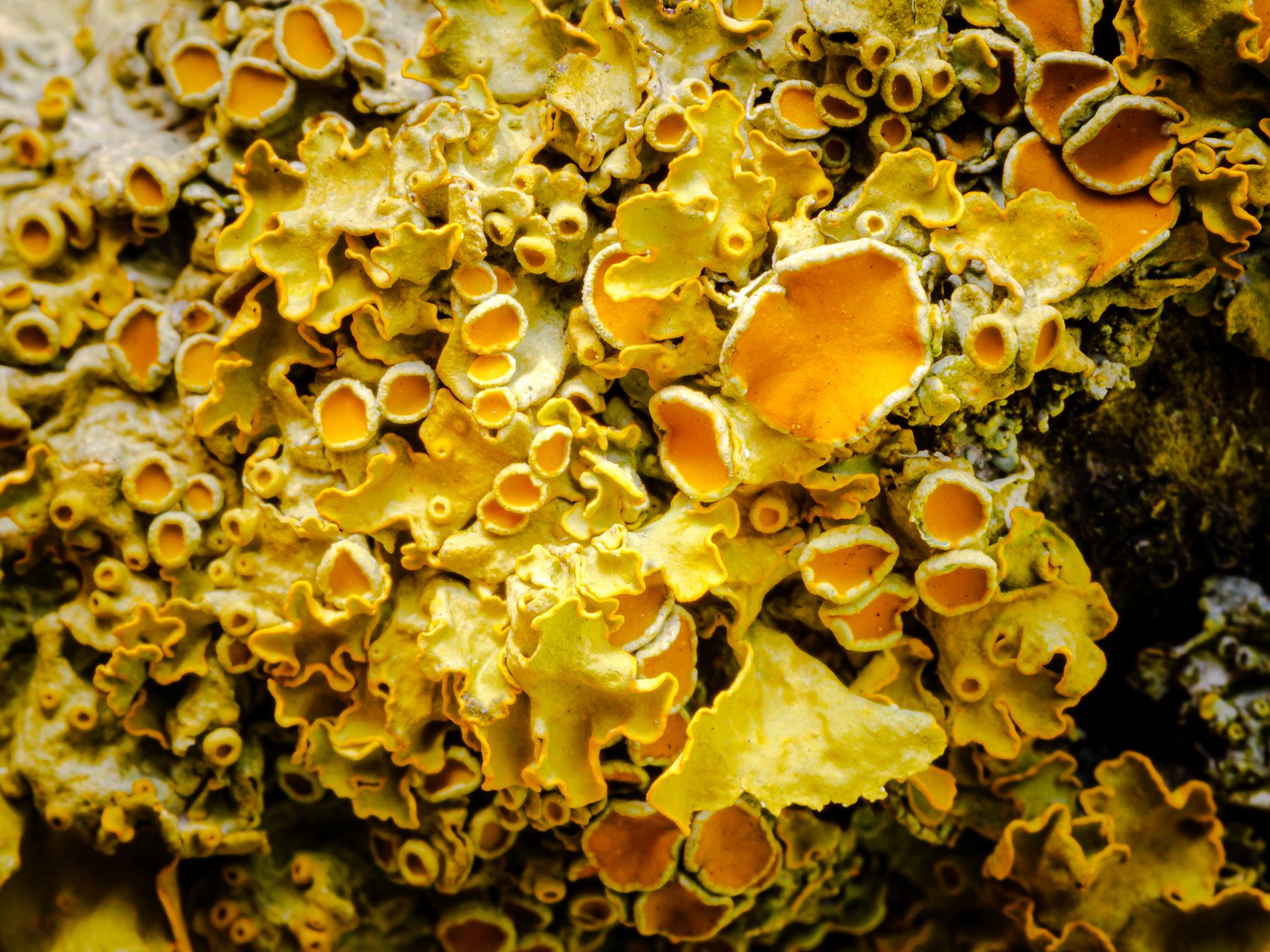
There was a swimming hole nearby, deep turquoise and enticing, and we plunged into its waters. We counted banana slugs, including one that made it into my coffee mug overnight. We scanned the hillsides above us with binoculars, looking for the coolest mushroom each of us could find.
The hours passed with no human contact other than our own. I don’t even recall a plane flying overhead. It felt like we had stepped into another world, our footprint minuscule compared to the scale of the surrounding forest. Far away from honking cars and blinding computer screens, I felt free.
Tips for gravel bar camping in Redwood National Park
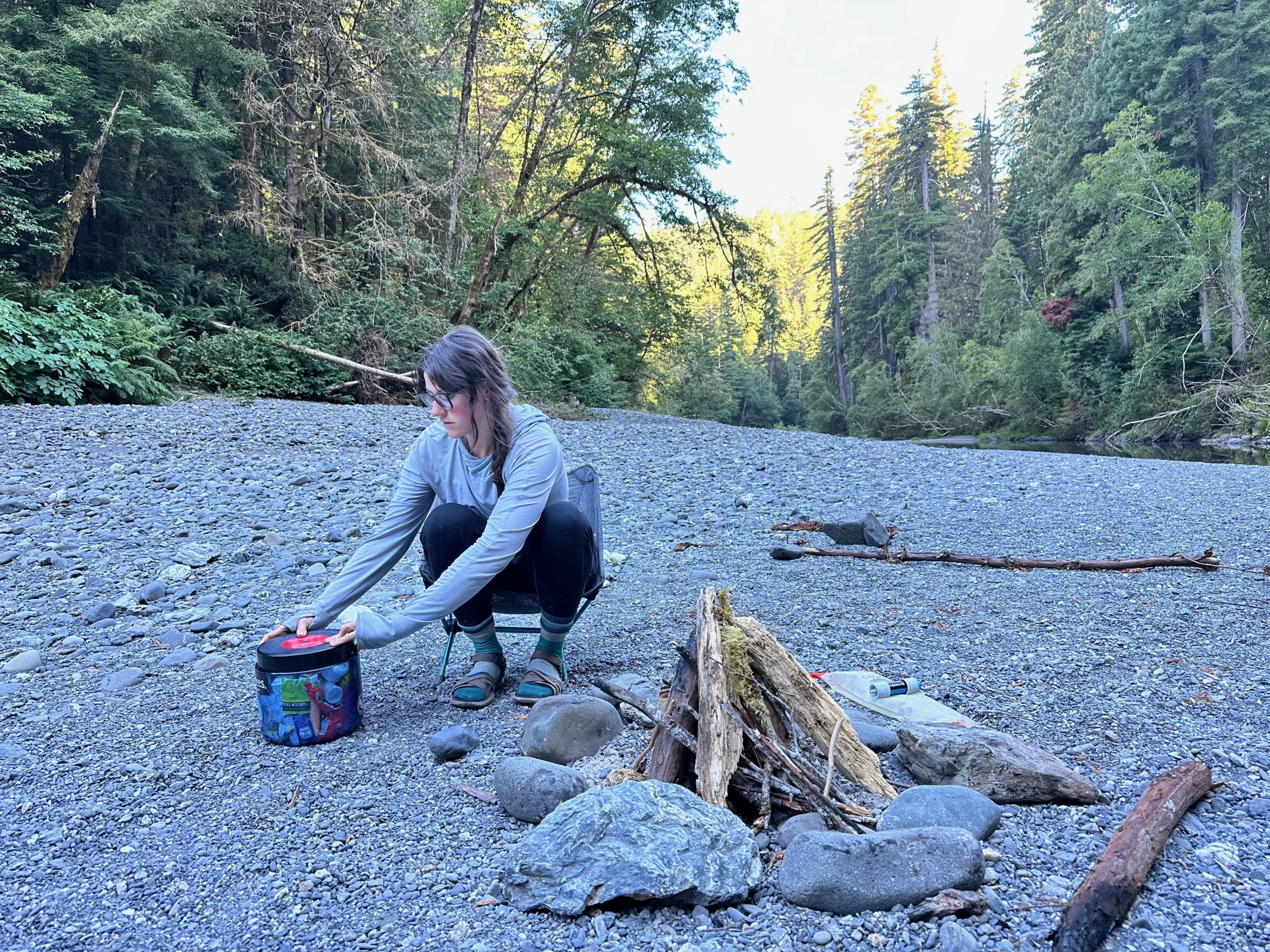
Under normal conditions, campfires are permitted along the creeks gravel bars. Photo courtesy of Helena Guglielmino.
Best time to visit: Camp during summer, when the creek is passable. The National Park Service (NPS) warns that the creek may be impossible to cross during the rainy season or high-flow stages. The bridges from Tall Trees Grove and Redwood Creek Trailhead are placed seasonally, usually from June to September.
Where to start: Redwood Creek’s gravel bars can be accessed either from the Redwood Creek Trailhead (1.5 miles to camp) or the Tall Trees Trailhead (2.5 miles to camp). NPS warns of frequent car break-ins at Redwood Creek Trailhead because it’s easier to access; starting from Tall Trees Trailhead provides some peace of mind, as the parking lot is more secure and requires a gate code to enter.
Permits and parking passes: A free backcountry camping permit is required to camp on the gravel bars. Permits are only issued online and can be requested up to 180 days in advance. You can choose a camping permit that includes parking at the Tall Trees Trailhead. You’ll receive the gate code in advance.
What to bring:
- Comfortable water shoes that also protect your feet. (Open-toed sandals are not recommended, as small rocks can lodge underfoot.)
- Trekking poles to help navigate pebbly waters and the steep descent into Tall Trees Grove.
- A foam pad or backpacking chair for relaxing, as the gravel can be uncomfortable to sit on.
- Adequate sun protection. There’s no shade on the gravel bars, so be prepared for heat.
- Backcountry camping supplies to bear-proof your food, filter drinking water, bury any human waste (200 feet from any water source), and pack out all trash—including toilet paper.
If you love solitude: Take your time exploring the gravel bars, both upstream and downstream of Tall Trees Grove. Many of the fire rings we saw were along the first couple of gravel bars; the farther you venture, the less likely you are to see others. We also camped mid-week in early July. There might be more foot traffic on weekends.
1 Responses to "Camping on Redwood Creek’s gravel bars"
Very valuable information! Thanks so much!