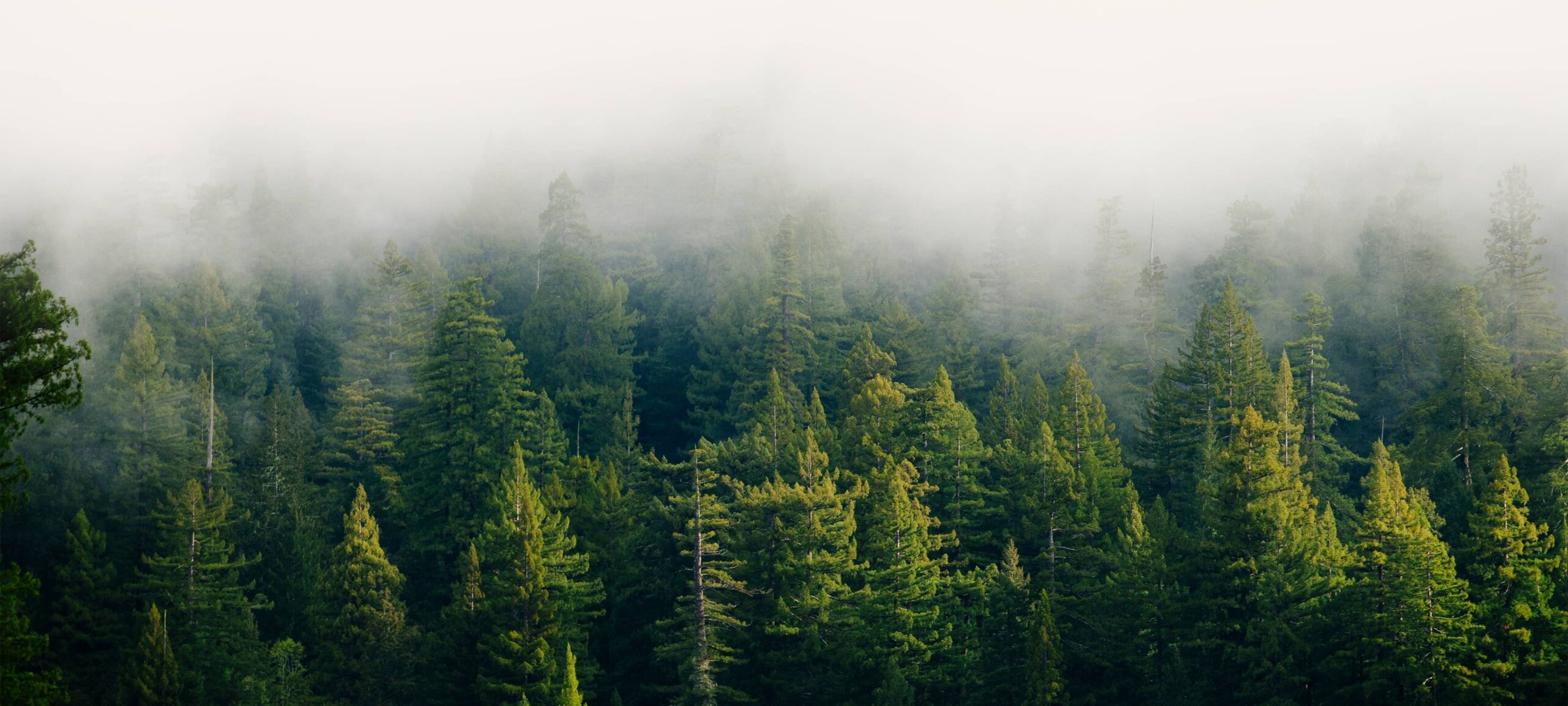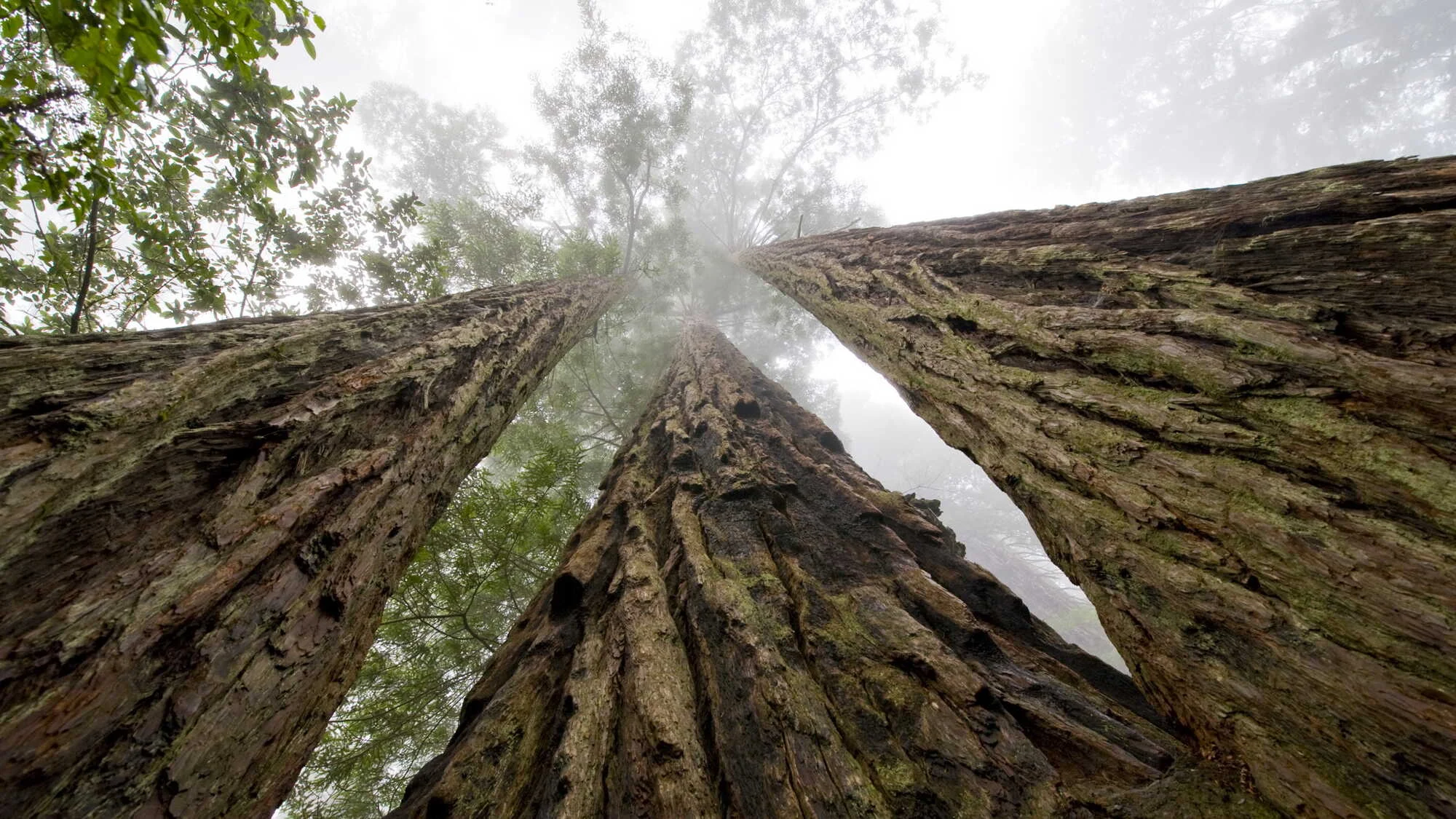
The coast redwood lineage reaches back tens of millions of years, when their ancestors spread across much of the Northern Hemisphere before retreating to a narrow coastal refuge. Here, they gather water directly from the fog to survive the drier California summers and store vast amounts of carbon in their wood. In fact, the branches of a coast redwood form entire ecosystems above the forest floor, with complex habitat for plants and animals—from massive tree ferns and unique mosses to endangered birds and fascinating amphibians.
Coast redwood forests are among the most awe-inspiring on Earth—and among the most altered. In the wake of historic logging, only a small fraction of the ancient forest remains, and much of what stands today is second-growth forest still recovering from past harvests. Yet these landscapes hold remarkable potential. With thoughtful restoration, young redwood forests can regain their complexity, resilience, and capacity to support diverse life—making stewardship not just necessary, but hopeful.
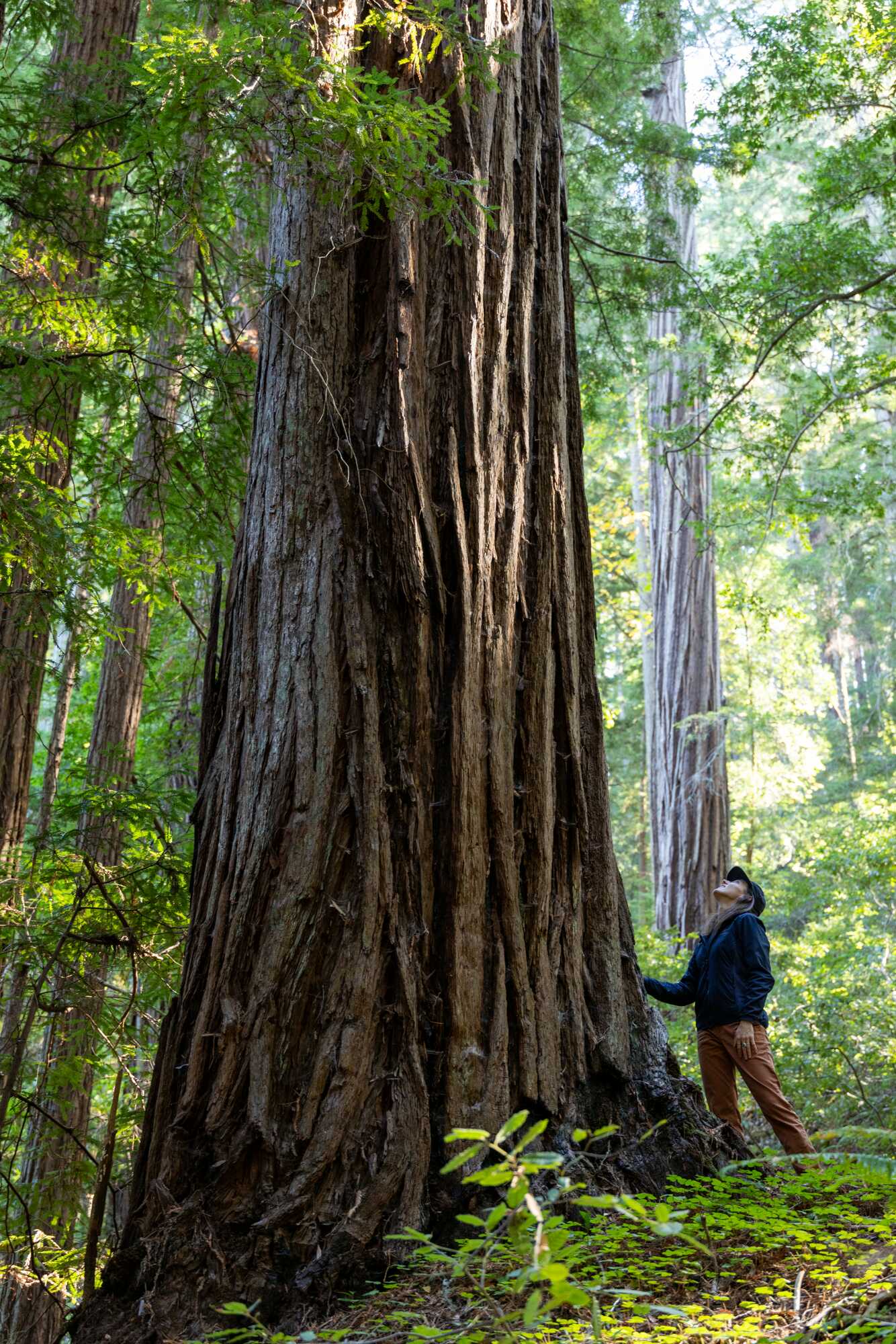
Walking among the giants can be a profoundly calming experience. Photo by Coldwater Collective.
Key Facts
- Scientific name: Sequoia sempervirens
- Claim to fame: Tallest trees on Earth—the tallest known tree, Hyperion, stands 380 feet
- Impressive trait: Acre per acre, one of the planet’s greatest carbon storage systems
- Current range: Narrow coastal band from central California to southern Oregon
- Biggest threats: Extreme wildfires, rising temperatures, habitat fragmentation
- Status: Most remaining old growth—5% of the original forest—protected; more than 1 million acres of second-growth forest unprotected
- Fun fact: Can “drink” fog by absorbing water directly through their leaves
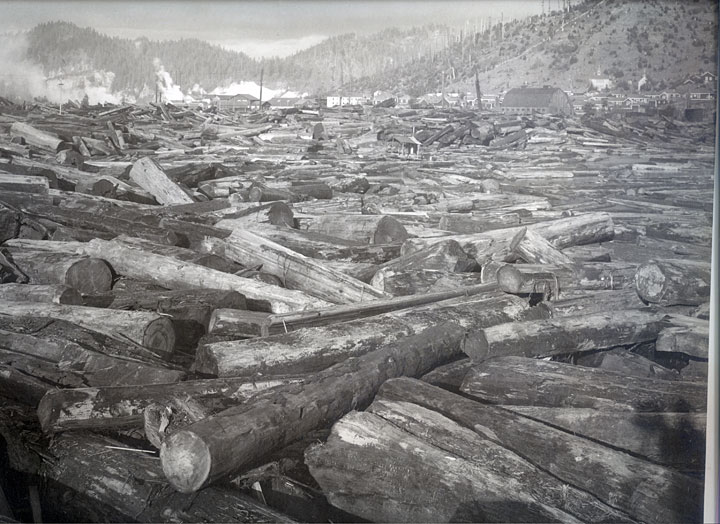
Much of the ancient forest fell to the axe, like these redwoods in Scotia, California, around 1918. Photo by H.C. Tibbits.
The Backstory
Coast redwoods and their redwood relatives once covered much of the Northern Hemisphere. Over millions of years, as climates cooled and became drier, coast redwoods disappeared from most regions, persisting only in a narrow, fog-influenced strip along the Pacific Ocean where conditions remained stable. More recently, redwood forests covered more than 2 million acres along the California coast for millennia—forming one of the most expansive contiguous temperate forests on Earth.
For thousands of years, this forest developed in dynamic balance with fire, water, and Indigenous stewardship. That balance shifted rapidly in the 19th and early 20th centuries, when unfettered industrial clear-cutting transformed the landscape. Vast old-growth forests—once connected—were fragmented into isolated groves.
Today, a small portion of ancient forest remains, alongside extensive second-growth stands that hold immense potential. Save the Redwoods’ ambitious vision is to stitch together the old-growth groves by restoring the young surrounding forests. With time and careful stewardship, these resilient trees will grow to be the old-growth forests of the future.
Coast Redwood Biology
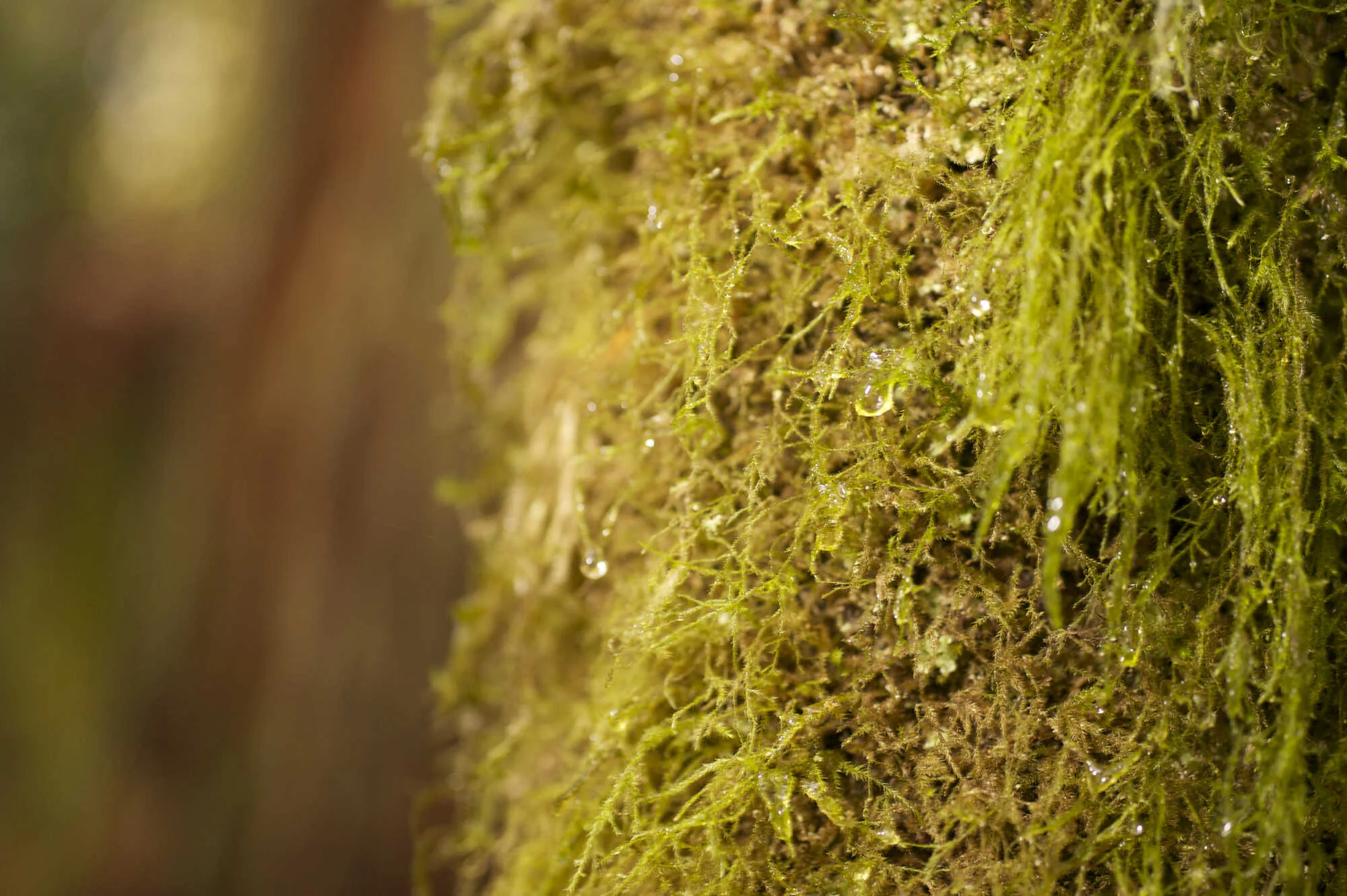
Mosses, lichens, and liverworts are some of the quiet heroes of coastal redwood forests. Photo by Kellie Brown.
Coast redwoods are conifers—cone-bearing trees—and one of three redwood species on Earth, along with giant sequoias and dawn redwoods. They are built for both height and longevity. To reach more than 300 feet into the sky, they move water from their roots up to their highest leaves, an immense vertical journey powered by a combination of evaporation and the pull of water through the trees’ tissues.
As an ecosystem, redwood forests have evolved with fire, and these trees are highly adapted to thrive with wildfire. Coast redwood bark is thick and fibrous, offering protection from fire, insects, and decay. When damaged, these trees can sprout new growth from trunks and burls, allowing them to persist through disturbance.
Despite their size, redwoods have surprisingly shallow root systems that are only 6 to 12 feet deep. Rather than growing deep taproots, redwoods have roots that spread wide and interconnect with neighboring trees, forming a network that provides shared stability. In this way, a redwood forest is not just a collection of individuals—it’s a community in which each tree is supported by those nearby.
The coast redwood’s relationship with fog is central to its survival. In the dry summer months, fog condenses on the tree’s leaves, and some of this moisture is directly absorbed. The rest drips to the forest floor—leading to the idea that redwoods can “create their own rain,” sustaining themselves and the ecosystem around them when water is scarce.
High above the ground, redwood canopies support entire ecosystems. Fern mats hold soil and moisture, creating suspended habitats where plants take root and animals find refuge. More than 70 species of plants have been documented in the canopy, alongside wandering salamanders and flying squirrels. Berry-producing shrubs grow high above the forest floor, adding to this layered world. Together, these living systems transform the upper reaches of the forest into a complex, elevated realm full of life.
Anchoring the Ecosystem
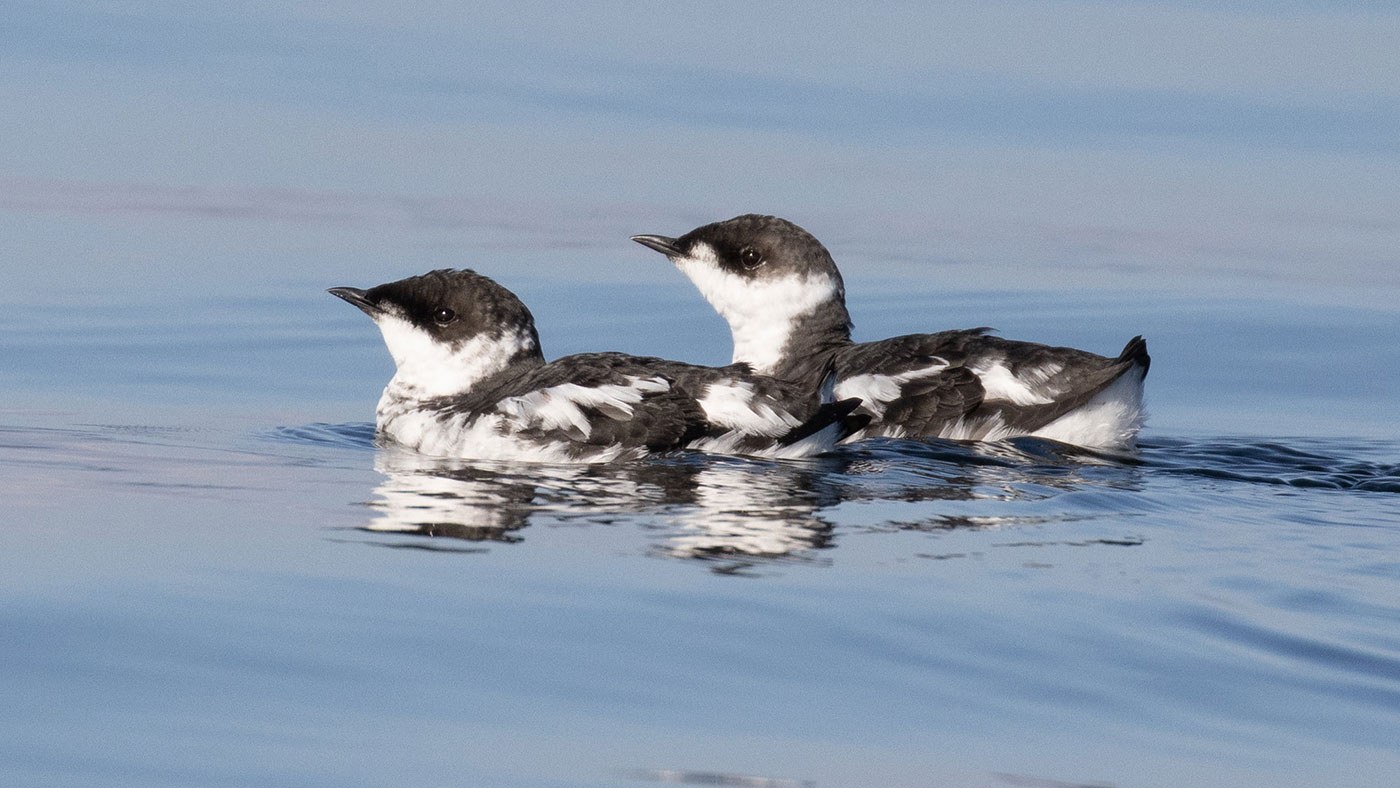
Though marbled murrelets spend most of their lives on the ocean, these endangered birds nest in the branches of old-growth redwood trees. Photo by Eric Ellingson.
A redwood forest is more than a stand of towering trees—it is an interconnected system of plants, animals, and people shaped by height, water, and time. The canopy holds ferns, mosses, and even small shrubs rooted in suspended soils, while marbled murrelets nest on wide redwood branches hundreds of feet above the ground. Below, salamanders and amphibians thrive in the cool understory, and wildlife moves through corridors that link forest to stream to coast. These connections—across layers and across landscapes—allow the forest to function as a whole, each part depending on the others.
Redwoods help shape the movement of water through this system. In summer, fog condenses on their needles and falls to the forest floor, adding moisture when rainfall is scarce and helping sustain soils, streams, and nearby plants. Their broad, interconnected root systems stabilize soil, reduce erosion, and help regulate water flow into creeks and rivers. Together, these processes support steady streamflow, critical habitat for salmon, and clean water for downstream communities. As fog passes through the forest, the trees also filter air—capturing moisture and particulates and returning cleaner, cooler air to the landscape.
Climate Allies
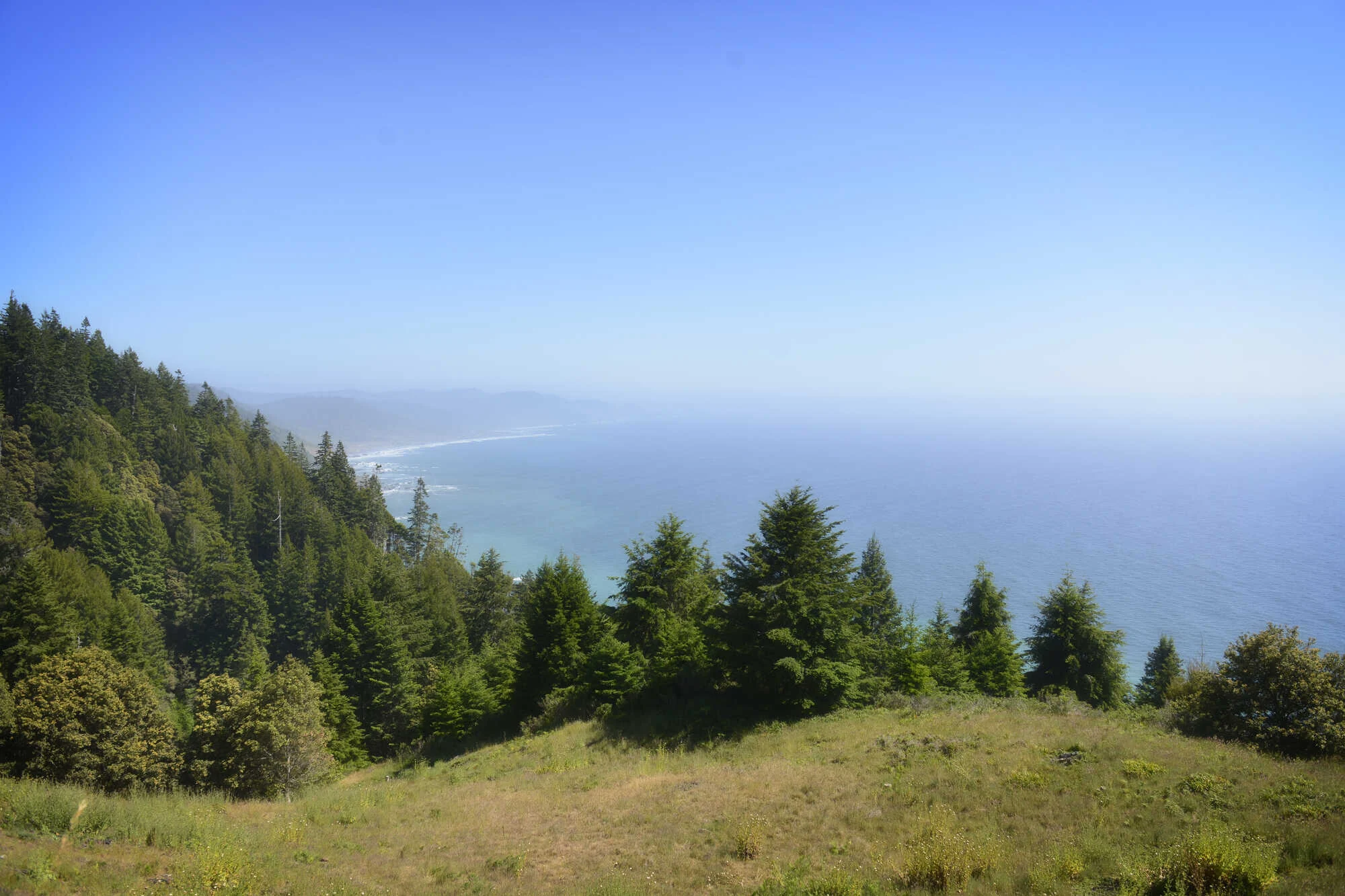
Redwoods clean our air and capture enormous amounts of carbon in their wood. Photo by Mike Shoys.
Ancient coast redwood forests store more carbon per acre than any other type of forest on the planet. Their massive size and long lifespan allow them to accumulate and hold this carbon in their wood for centuries, even millennia. Equally important, intact redwood forests continue to draw carbon from the atmosphere year after year.
Young coast redwood forests grow quickly—often 2 to 6 feet per year—and, if well stewarded, can rapidly regain the structure and scale needed for significant carbon storage. This means that restoration is not only about recovering habitat, but also about accelerating the return of these forests as powerful climate allies.
Research is helping us better understand how redwood forests stabilize the climate—and how restoration can speed their recovery. As part of a broader climate solution, redwoods offer a powerful example of what is possible: When forests are protected and allowed to grow, they can store vast amounts of carbon while supporting biodiversity and clean water. Successful restoration and stewardship of redwood forests can serve as a model, demonstrating how healthy forests around the world can help address climate change while sustaining life at every level.
Biggest Threats
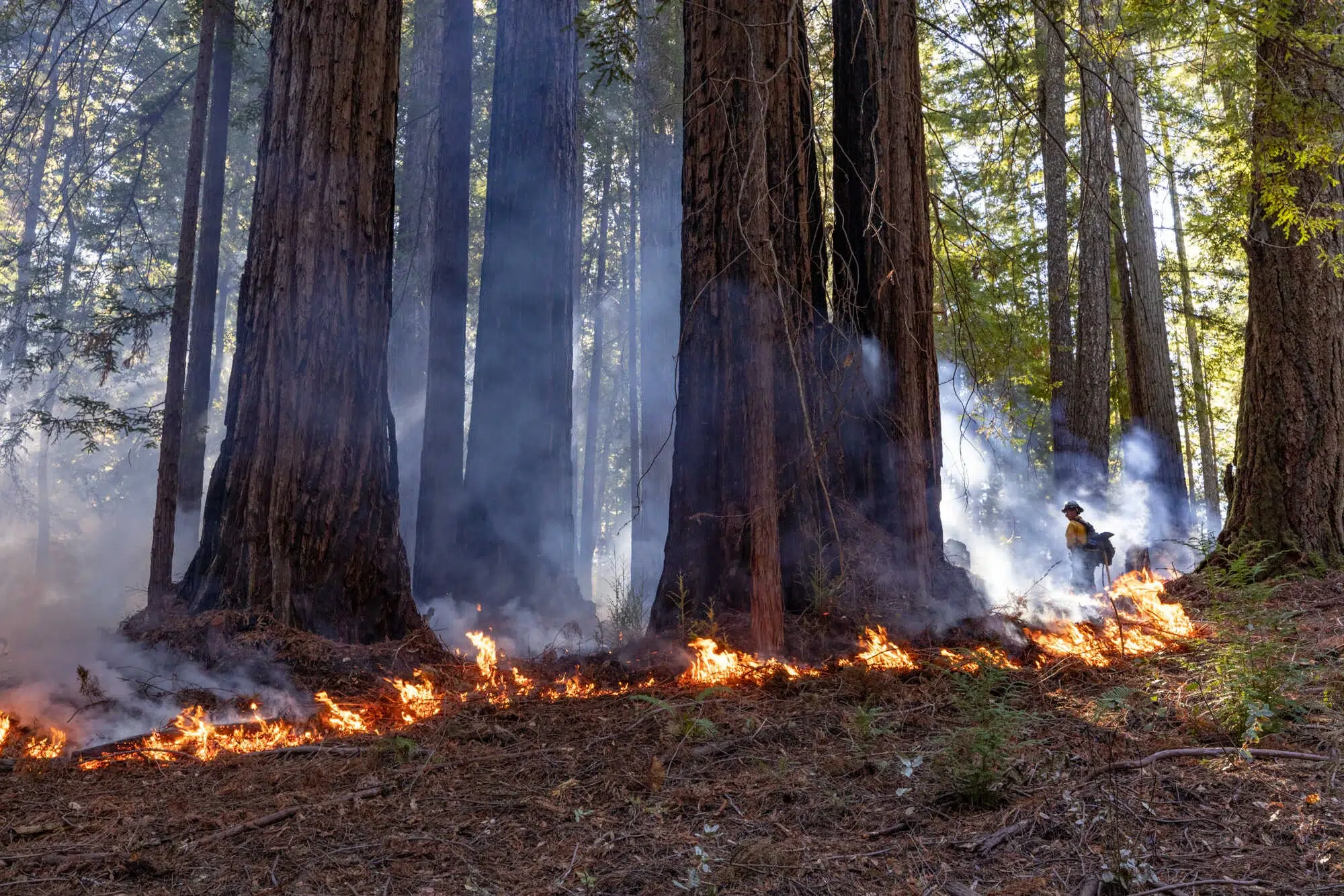
Save the Redwoods restoration crews conduct a controlled burn at Harold Richardson Redwoods Reserve. Photo by Sashwa Burrous.
Today, redwood forests face a very different set of pressures than in the past:
- Climate change is altering fog patterns and increasing drought stress.
- High-severity wildfire is becoming more common due to changing climates and decades of fire suppression.
- Fragmentation and development make it harder for wildlife and ecosystems to connect and remain resilient.
- Unsustainable industrial logging, as well as the legacy of clear-cutting, continue to impact today’s forests. Rapid replanting of redwoods for harvest has left many areas overly dense, lacking in diversity, and more vulnerable to fire, drought, and disease.
These forces are reshaping the future of redwood forests, making active restoration and stewardship more important than ever.
Our Vision
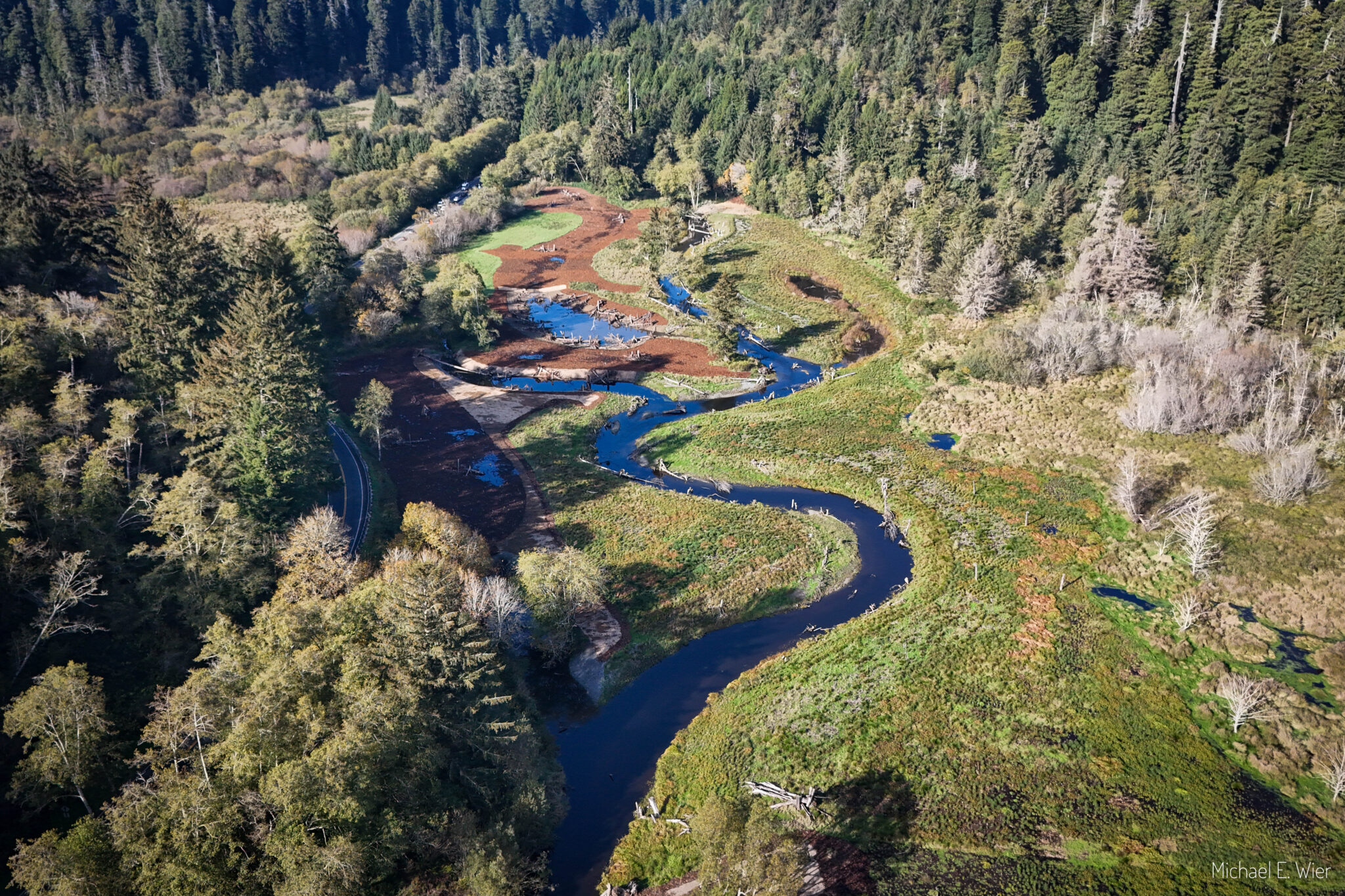
At ‘O Rew Redwoods Gateway, the five-year restoration of Prairie Creek has recreated the natural meander of this crucial salmon waterway. Photo by Michael Wier/CalTrout.
Save the Redwoods envisions tall, connected, and enduring redwood forests that once again function as complete ecosystems. The path forward isn’t only protection—it’s renewal at a massive scale. Our long-term goals include doubling the size of coast redwood forests in parks and reserves to 800,000 acres and putting these second-growth forests on the path to developing the complexity, resilience, and carbon storage of the old growth.
These ambitious efforts include our Redwoods Rising partnership, working to reintroduce natural processes and restore habitat for diverse plant and animal communities across 70,000 acres of previously harvested redwood forest in Redwood National & State Parks. Local crews thin overly dense tree stands, remove aging logging roads, and restore streams that have been buried for decades. This is how redwood forests return—not as remnants, but as living systems at full strength.