January 19, 2022
If you can get far enough away from the road, the soundtrack to any redwood park is likely to be its birds. On a spring morning, birds will make a redwood forest anything but quiet—but in a beautiful way. Indeed, one of the great joys of the redwood forest is its abundant bird life.
Hundreds of species make their way among the redwoods, and they all have their pleasures. So it’s pretty crazy to try and arrange a Top 10 list of redwoods birds. But, nonetheless, we polled some of the birders among staff and these 10 emerged as favorites. We’d love to hear your favorites, as well.
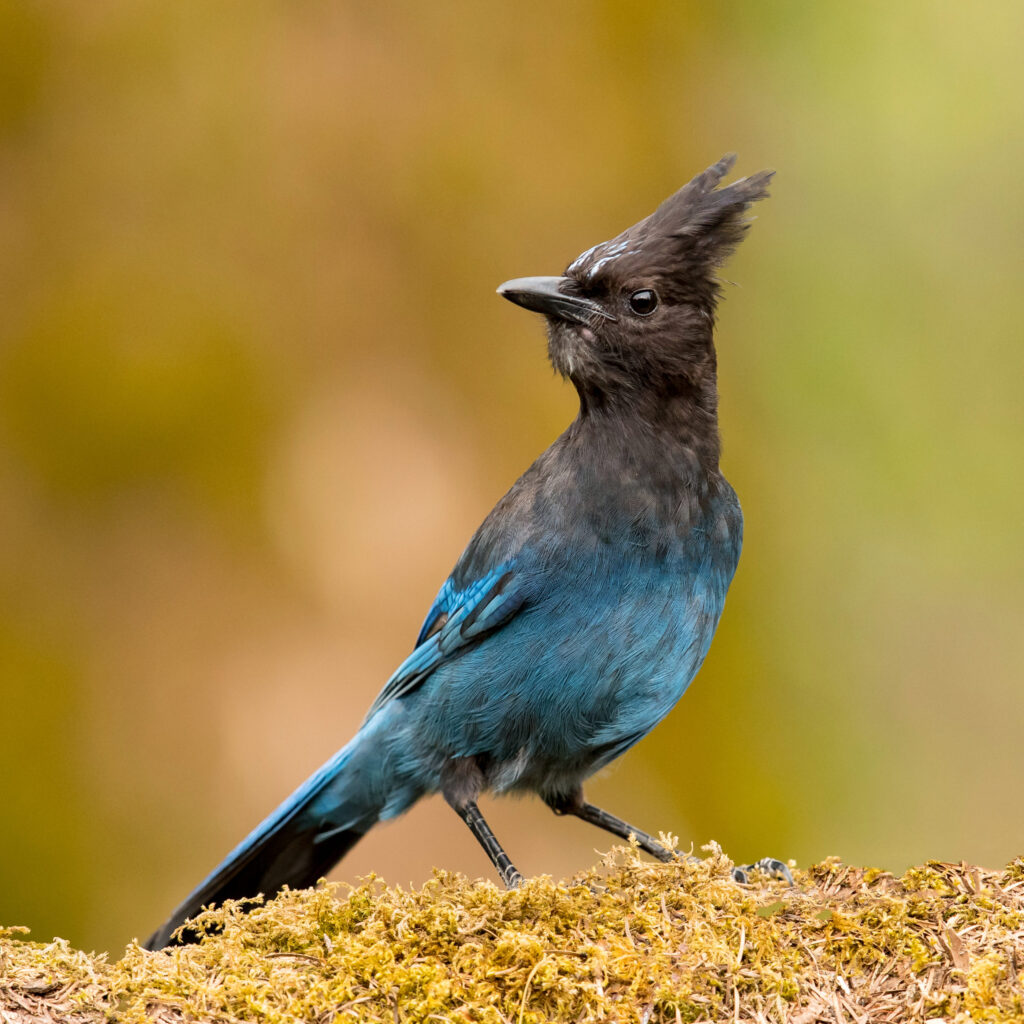
Steller’s jay. Photo by Mick Thompson, FCC.
Steller’s jay
Any list of redwoods birds has to start with the Steller’s jay. Bold in both appearance and personality, the Steller’s jay will definitely let you know when it’s around, and certainly remind you that you are merely a guest in its home. Its large crest and blue body make it one of the easiest birds to identify in all of bird-dom.
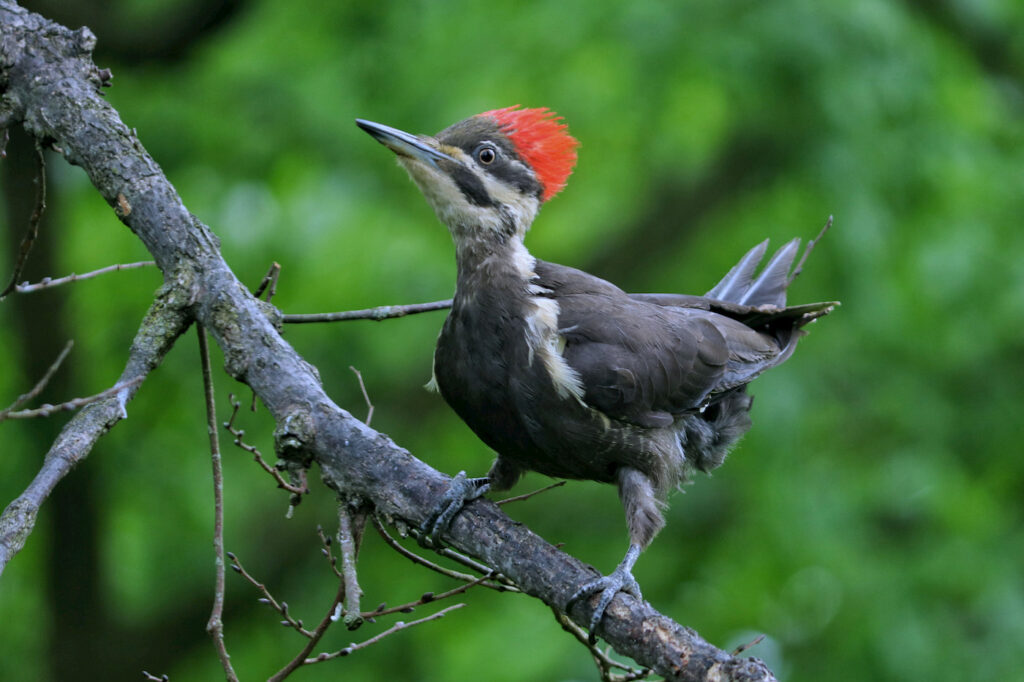
Pileated woodpecker. Photo by Mark Moschell.
Pileated woodpecker
Like the Steller’s jay, this crow-sized woodpecker can be mistaken for no other bird. Black with a dramatic red crest, white wing linings, and white neck stripes, its staccato, hammer-like pecking can usually be heard from considerable distances. It’s a beautiful bird, and every sighting is a true gift worth savoring.
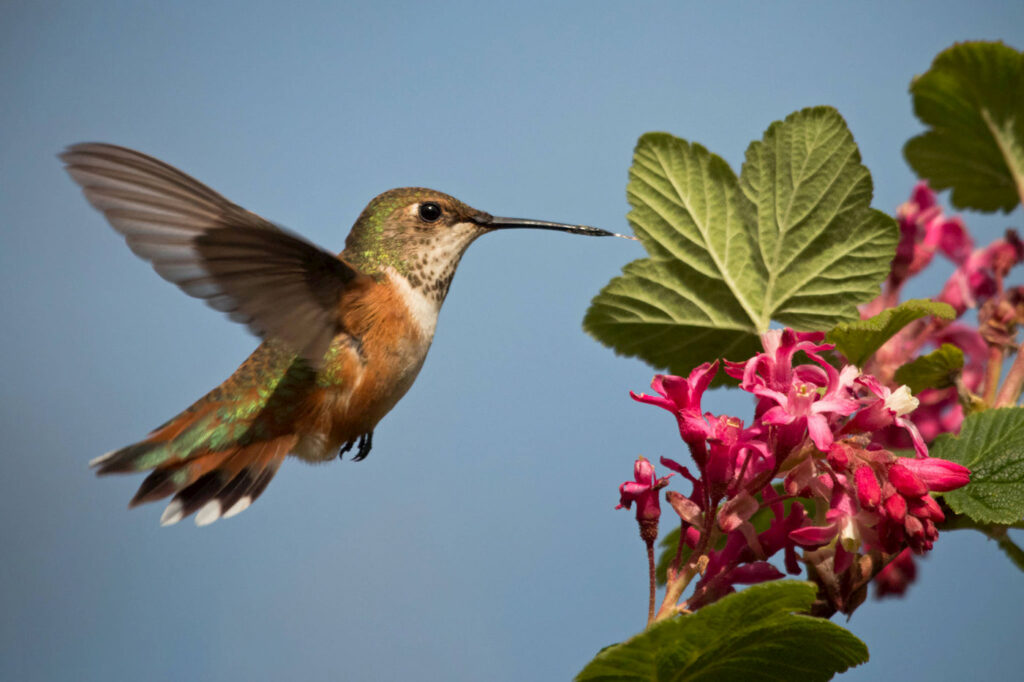
Rufous hummingbird. Photo by Peter Pearsall.
Rufous hummingbird
We could have picked any one of a number of hummingbird species for this list, but we went with the rufous because its northward spring migration takes is specifically through the coast redwood range and, because of declining numbers, it could use the attention. Males are a vivid rusty color on the back and belly, with a red throat. Females and immature birds have greenish gray heads and backs and rusty sides. Fair warning, in the field, the rufous hummingbird is almost indistinguishable from the Anna’s hummingbird: both will show a lot of green and red/orange.
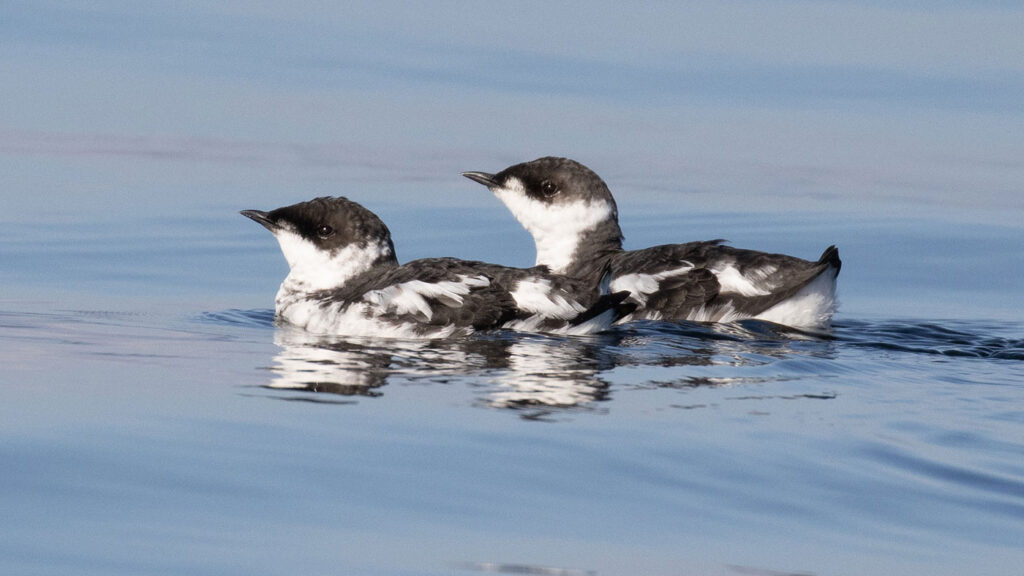
Two marbled murrelets in their usual environment out on the ocean. Photo by Eric Ellingson.
Marbled murrelet
In all honesty, the marbled murrelet is not the most spectacular looking bird, but what it lacks in looks it makes up in story. It is the only seabird that nests among the tall trees. In fact, until a marbled murrelet chick was found in Big Basin Redwoods State Park in the 1970s, its entire life history was a complete mystery to science. Once called “fog larks,” by lumberjacks, these birds have become richly associated with old-growth redwoods conservation. They’re hard to find, but look for a compact, plump seabird with a short, pointed bill and a short tail.
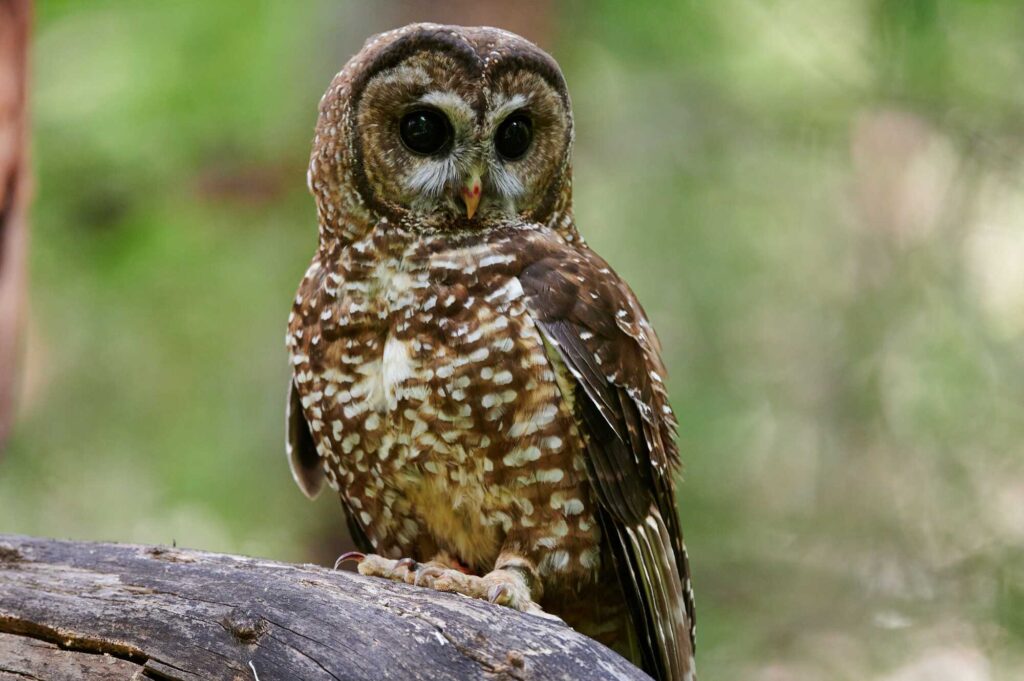
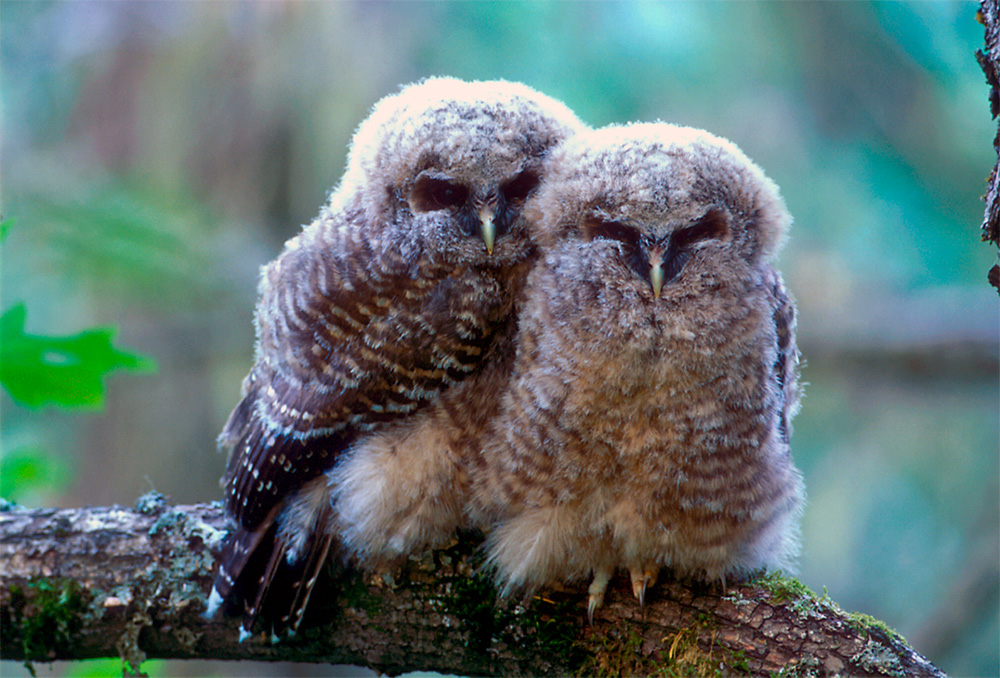
Spotted owl. Photo: Frank D. Lospalluto, Flickr Creative Commons
Spotted owl
Spotted owls are dark brown with white spots on the head and back; the breast has white horizontal bars. They have round heads, brown facial disks, and pale markings that form an “X” between the eyes. (Barred owls, which look similar, are somewhat larger and have dark vertical streaks on the belly plumage.) Its numbers are declining, and this struggling species is listed under both the federal and California Endangered Species Acts. Despite its ongoing difficulties, the spotted owl serves as a cultural touchstone for advocates of the redwood forests. Identifying one in the wild is a goal of any veteran birder.
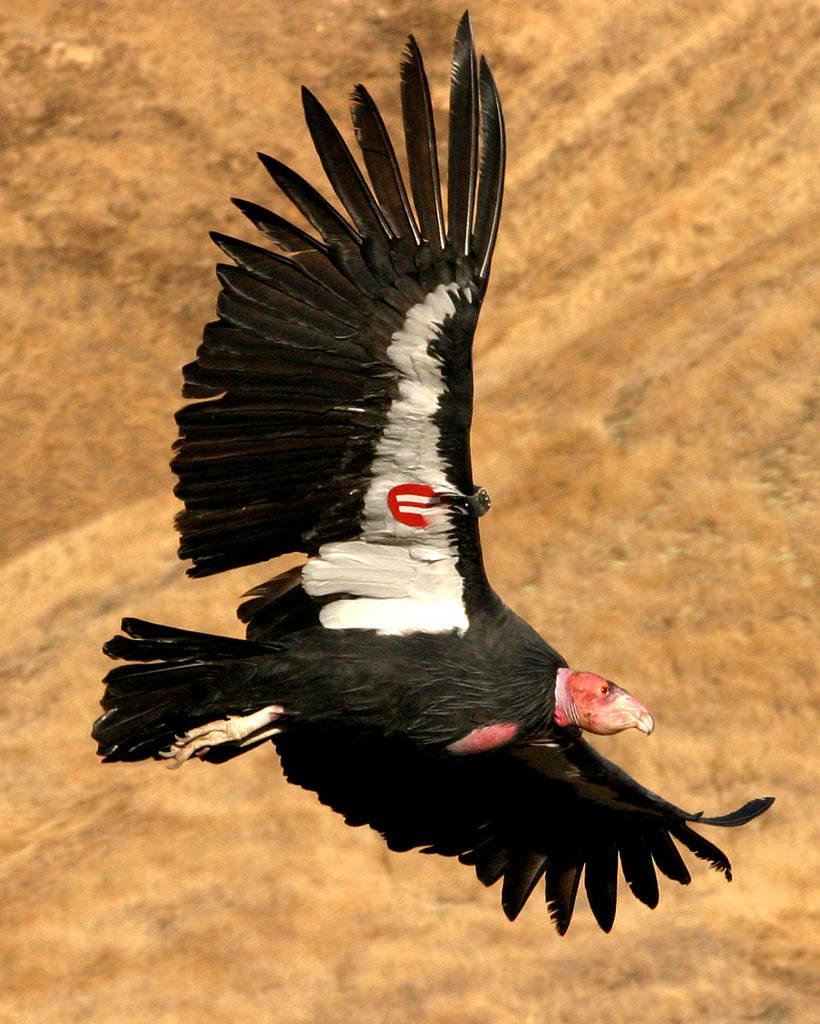
California condor. Photo by USFWS.
California condor
The Big Daddy of North American birds, the California condor likes to nest in tall, hard-to-reach places. Sometimes that means in the cavity of a coast redwood. In recent years, their presence has mostly been limited to the central part of the state, but a new push to reintroduce them to the forests of northern California is gaining steam. Look for a big, black bird with large, white patches under broad, long wings.
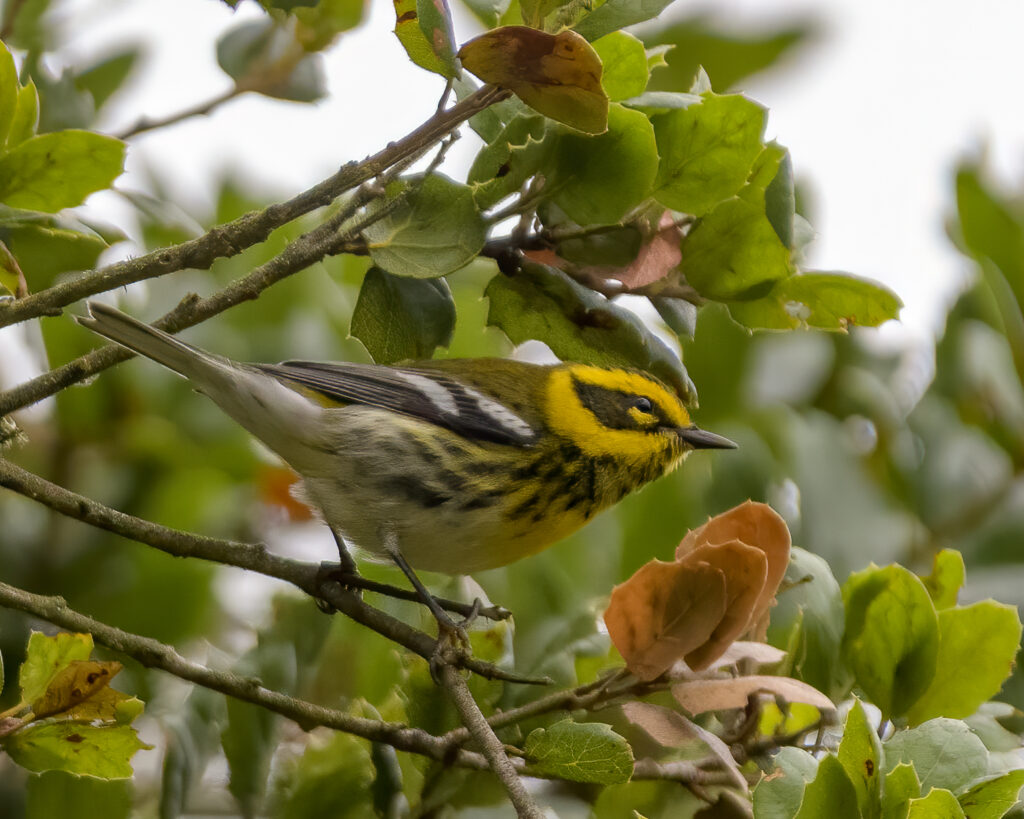
Townsend’s warbler. Photo by Becky Matsubara.
Townsend’s warbler
Ah, the Townsend’s warbler—such a treat to see. These small birds have dark ear and eye masks surrounded by yellow, wings with two white bars, and streaked flanks. Listen for a high-pitched “swee swee swee zee.”
Hermit thrush
The hermit thrush is certainly a nice-looking songbird, brown above with a reddish tail. If you can get close enough, its softly spotted chest is a giveaway. But you’re far more likely to hear this bird, and that’s the real treat. It’s haunting flute-like song echoes through the redwood forest with an almost angelic beauty.
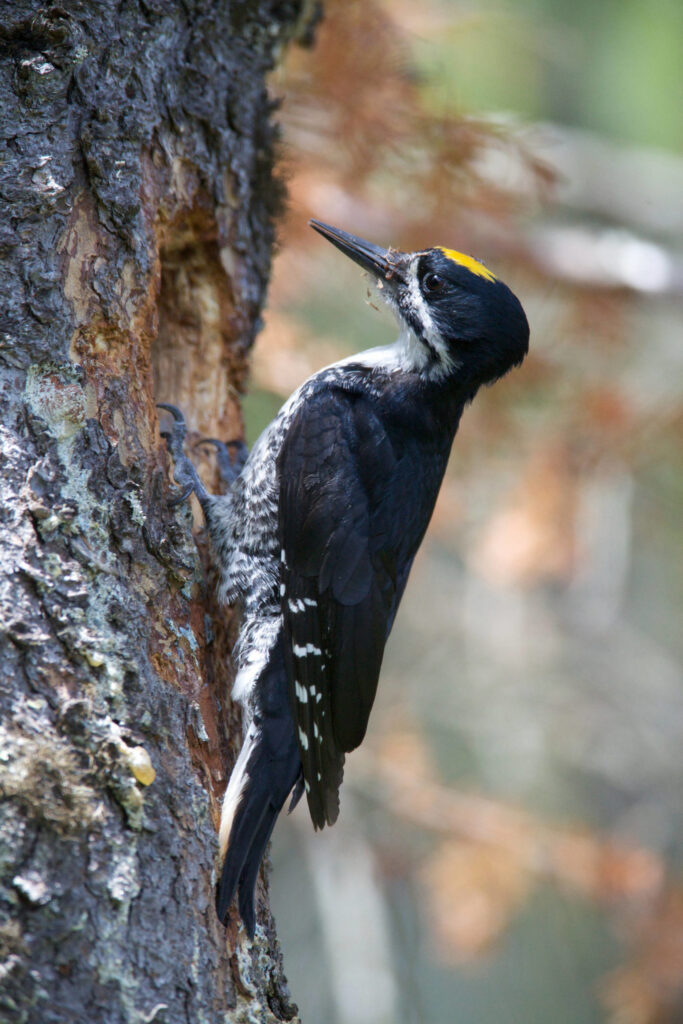
Black-backed woodpecker. Photo by Ryan Hagerty, USFWS.
Black-backed woodpecker
This large, hard-to-find woodpecker actually benefits from forest fires, as burned logs provide shelter and wood-boring insects to eat. In California, it lives mostly in the Sierra and northeast part of the state. It has black plumage on the back, a white facial stripe, and barred flanks. The male has a yellow crown patch. The call is a sharp “kik.”
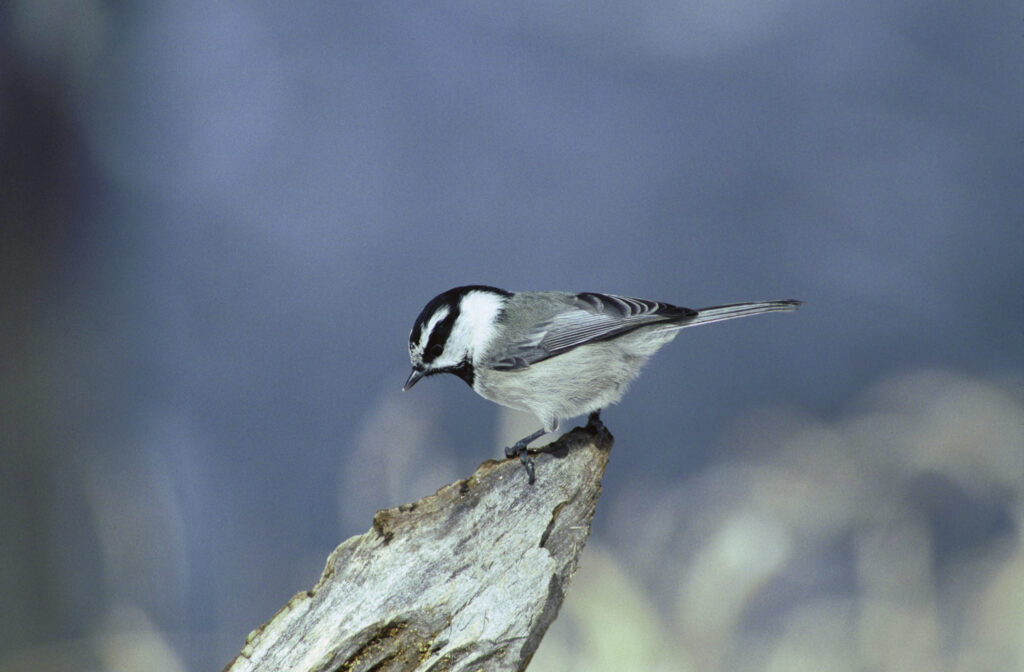
Mountain chickadee. Photo by Dave Menke, USFWS.
Mountain chickadee
This feisty and tough little bird favors coniferous forests of the West. It has a black cap, throat, and eye patch; a white cheek, eyebrow, and belly; and a gray back and flanks. It is one of the few birds that actually calls out its own name, “chick-a-dee,” often repeating “dee.”