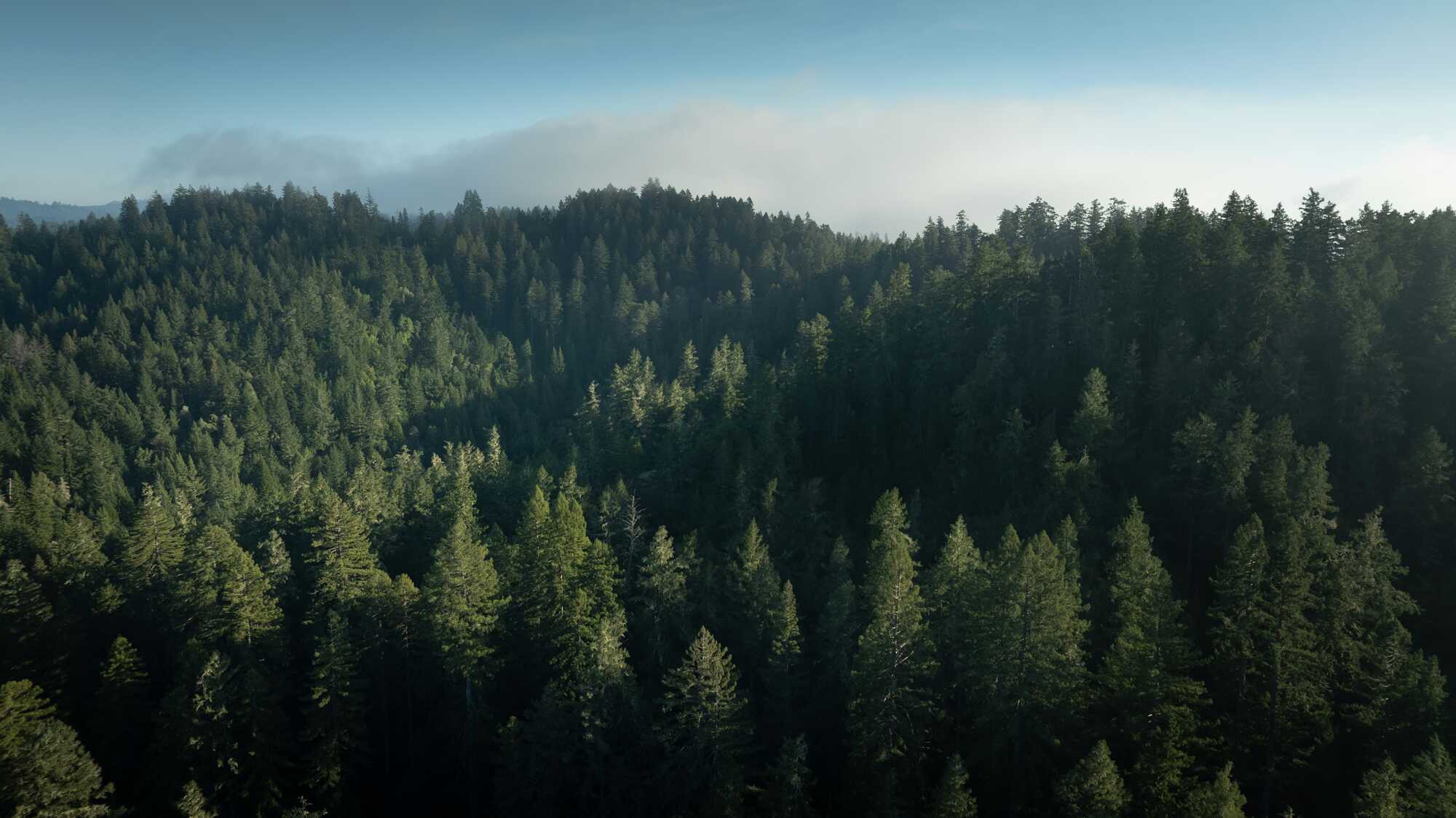
Redwood forests have been severely damaged by more than a century of commercial-scale industrial logging, prolonged fire suppression, and increasingly severe wildfires. Many of these forests are unable to recover on their own without active restoration to rebuild health and resilience.
In many places, past logging and modern high‑severity wildfires have altered forest conditions so significantly that natural recovery is slow or unlikely. Without intervention, these forests may not regain the structure, biodiversity, or resilience of old‑growth ecosystems.
Giant sequoias face an existential threat from extreme wildfires that have killed nearly 20 percent of the remaining large trees in recent years. Unlike their coast redwood cousins, giant sequoias cannot resprout once a mature tree dies.
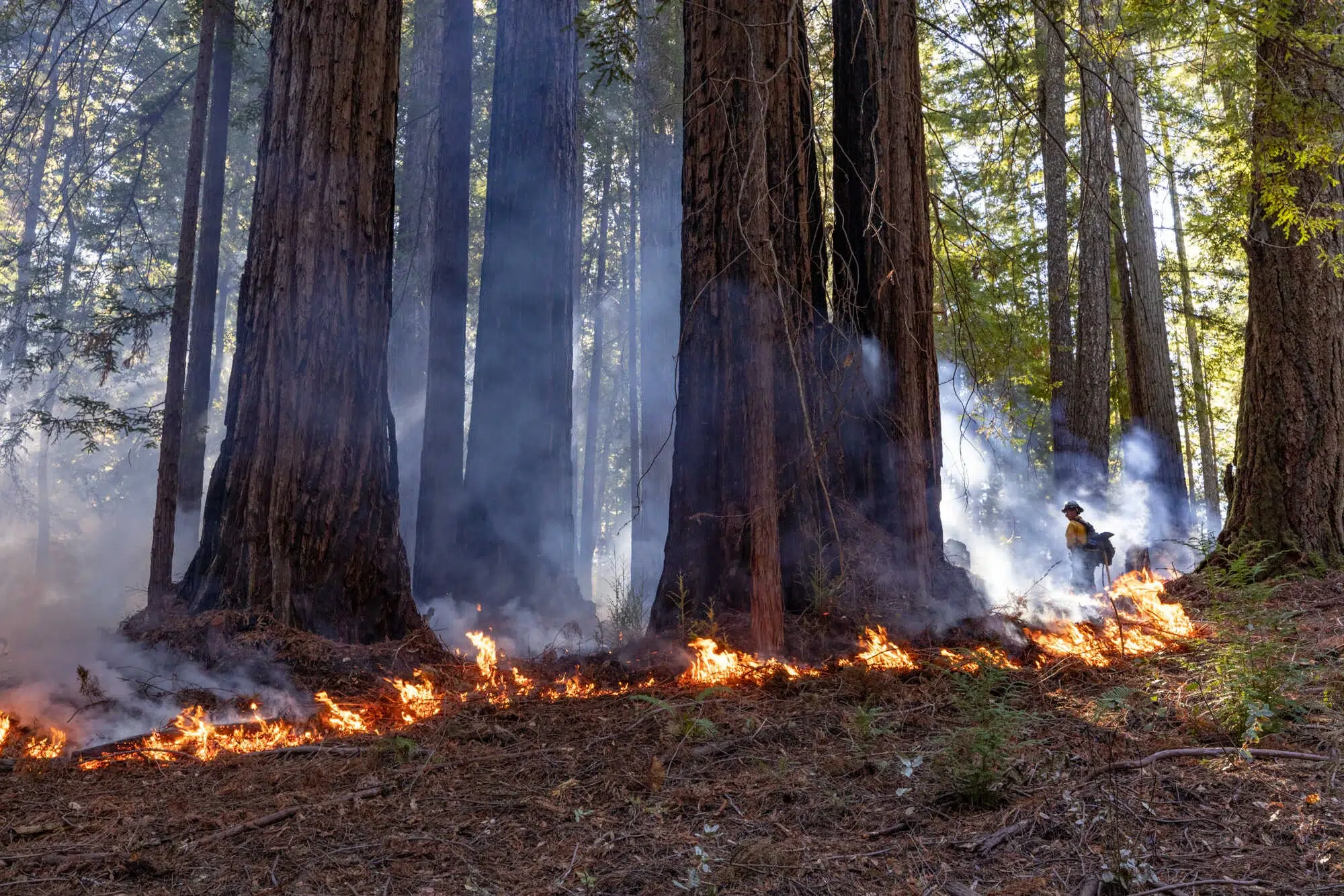
Since time immemorial, Indigenous land stewards have used low- and moderate-intensity fire to steward redwood ecosystems. Beginning in the 1800s, these practices were outlawed and fires of all kinds were suppressed. This allowed dense undergrowth, smaller trees, and deadfall to accumulate, creating dangerous fuel conditions that enable extreme wildfires to burn hotter and higher into forest canopies.
Restoration work helps historically logged and fire‑damaged forests grow toward the structure and function of healthy old growth. The goal is to restore resilience, support biodiversity, and reduce the risk of catastrophic loss from future wildfires.
Save the Redwoods’ focuses on both coast redwood forests and giant sequoia groves—the only places in the world where these iconic trees naturally grow. Restoration efforts are tailored to the specific challenges facing each forest type.
Climate change, combined with past land‑use practices, has accelerated forest decline and wildfire severity. Without immediate action, some redwood forests risk irreversible loss. Restoration is essential to ensure these forests survive and thrive into the future.