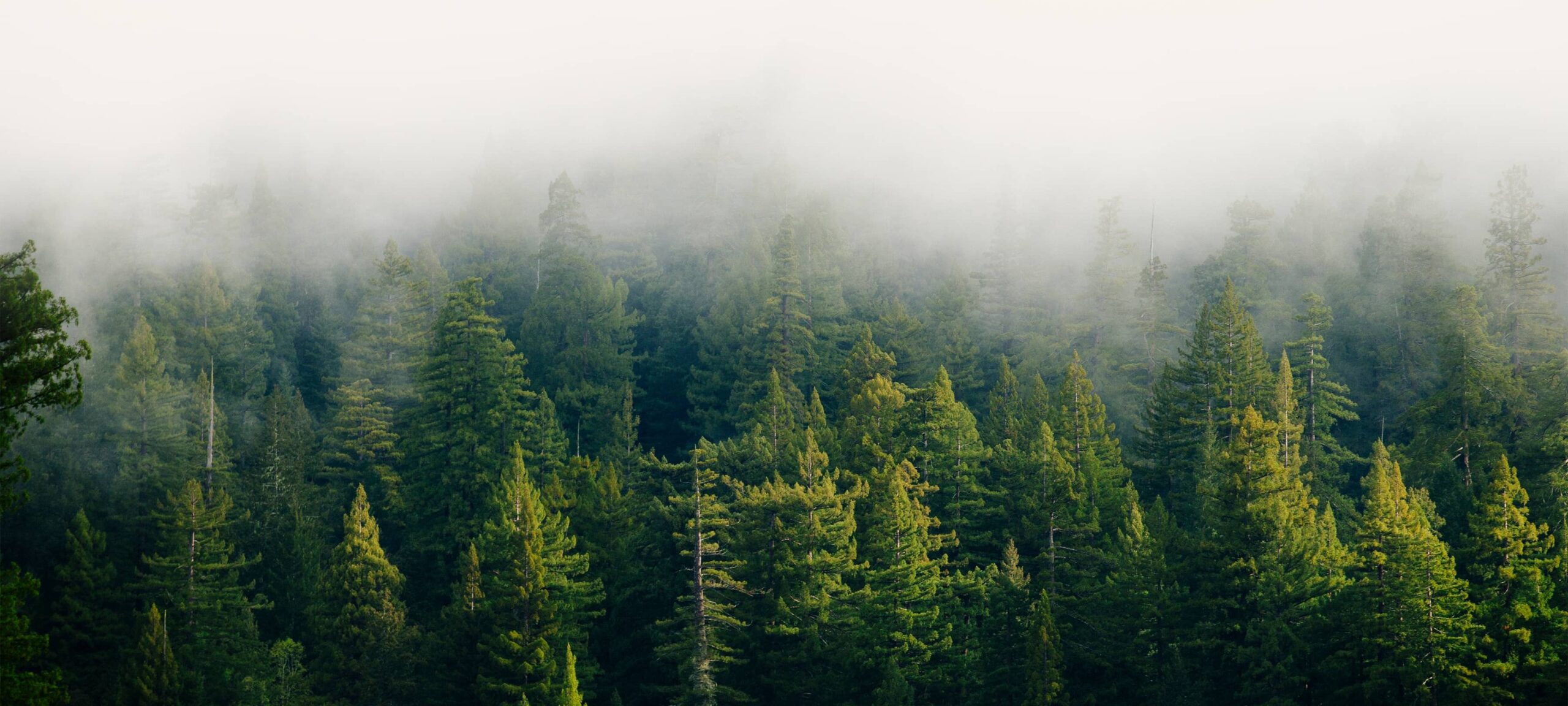
Standing tall within the ancestral lands of the Tolowa Dee-ni’ Nation, the magnificent trees in the Grove of Titans grew in peace for thousands of years, quietly becoming some of the largest coast redwoods in the world. Then around 2011, a social-media post provided GPS coordinates for the grove—an off-trail location in Jedediah Smith Redwoods State Park, part of Redwood National and State Parks (RNSP). Suddenly, visitors flocked to the area. But without official trails or visitor infrastructure, the influx of people gravely threatened the grove’s health.
Over time, a complex web of unofficial trails formed. The meandering foot traffic destroyed understory plants and damaged the ancient redwoods’ shallow root systems. Hikers walking through the sensitive ecosystem also pushed eroded soil and litter into the streams, impacting coho and steelhead spawning habitat. Visitors often left their trash behind.
The need to safeguard the famed old-growth grove was clear. In 2018, Save the Redwoods League, California State Parks, Redwood Parks Conservancy, and the National Park Service created a collaborative plan for official visitor access that would be both inspirational and sustainable.
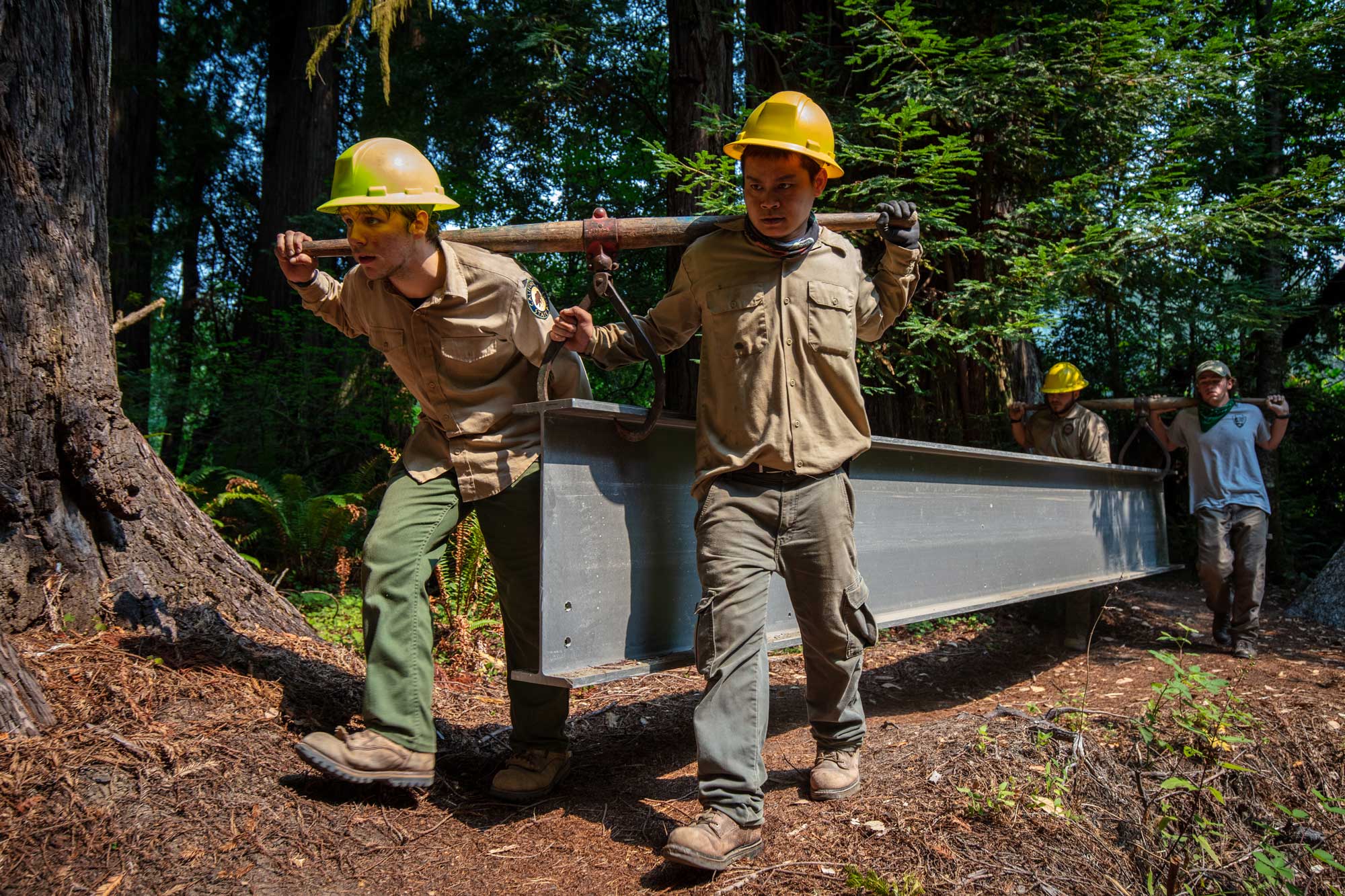
This plan included a 1,300-foot elevated boardwalk to protect the redwoods’ shallow root system, an official route to the grove along the 3-mile Mill Creek Trail, and ADA-accessible parking and restrooms. In May 2022, after more than 23,000 hours of work by trail crews, the partnership welcomed the public to explore the newly constructed boardwalk that now wound through Grove of Titans. Visitors could access this superlative experience via the re-aligned Mill Creek Trail, which offered interpretive signage and exhibits developed in consultation with the Tolowa Dee-ni’ Nation.
This project is a story about legacy: being mindful of the role we all play in helping our parks thrive. Together, the partners and supporters created an opportunity for visitors to experience the beauty and awe of the grove while also helping to protect a fragile landscape for future generations.
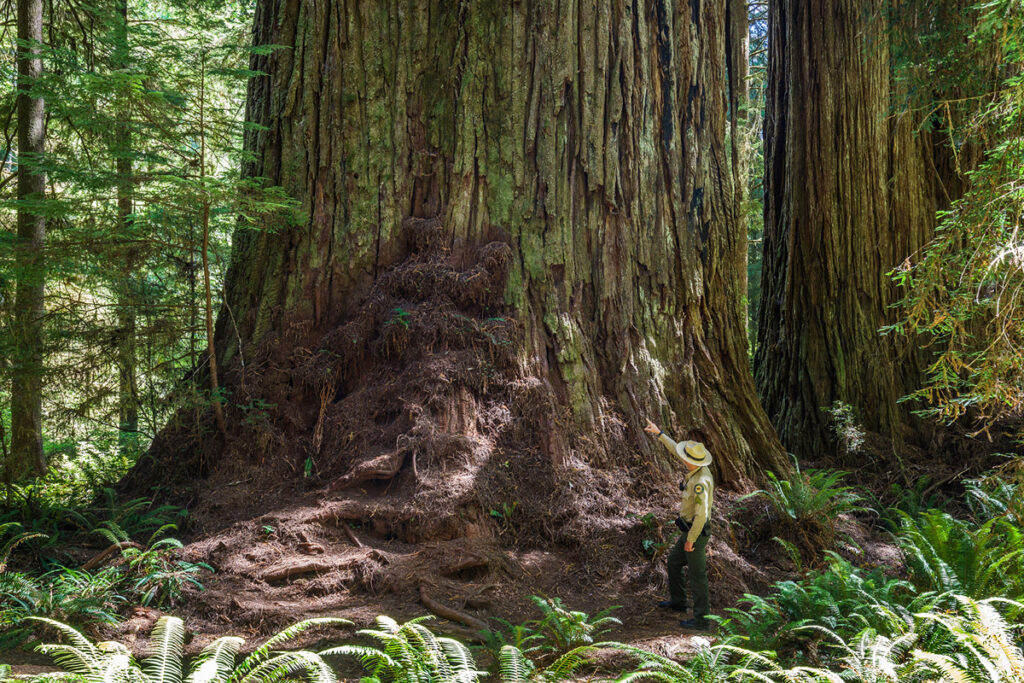
Before: Visitors once ventured off trail, damaging understory plants and exposing the roots of this ancient redwood tree. Photo by Max Forster.
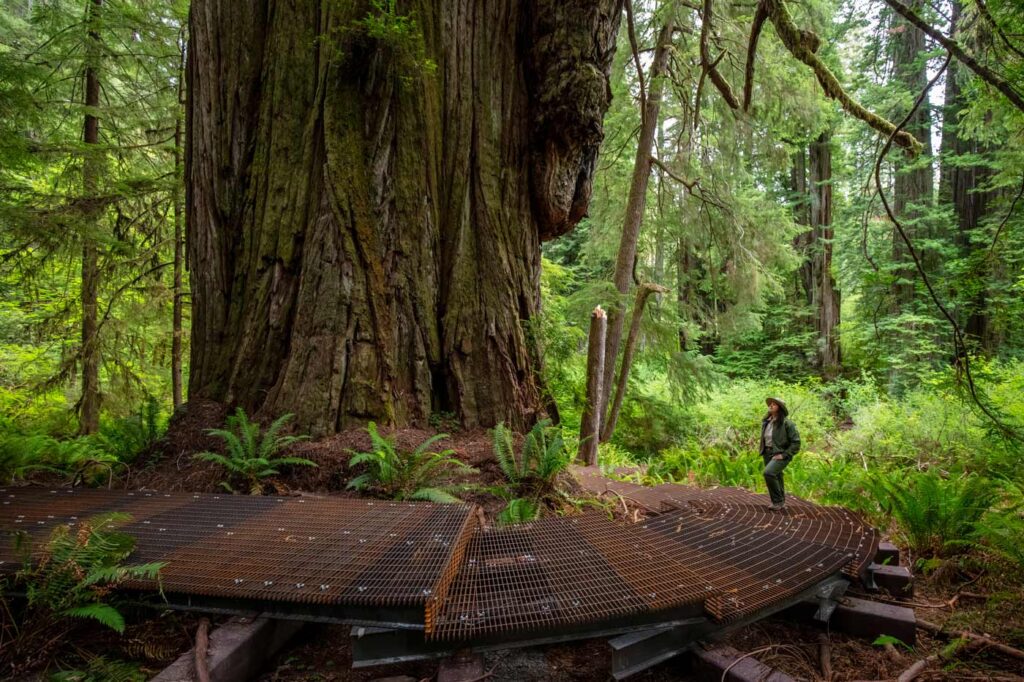
After: An elevated 1,300-foot walkway protects this redwood’s shallow roots and encourages visitors to stay on the trail. Photo by Max Forster.
What we secured
- Some of the largest and oldest coast redwoods in the world, now protected from damage caused by over-visitation, thanks to a 1,300-foot elevated boardwalk and realigned 3-mile trail
- Sensitive old-growth forest habitat close to an important stream where coho salmon and steelhead trout spawn
- New services and amenities, including ADA-accessible parking and restrooms
- New inspirational exhibits and interpretive signage, developed in consultation with the Tolowa Dee-ni’ Nation
New trail celebrates Tolowa culture, wins top award
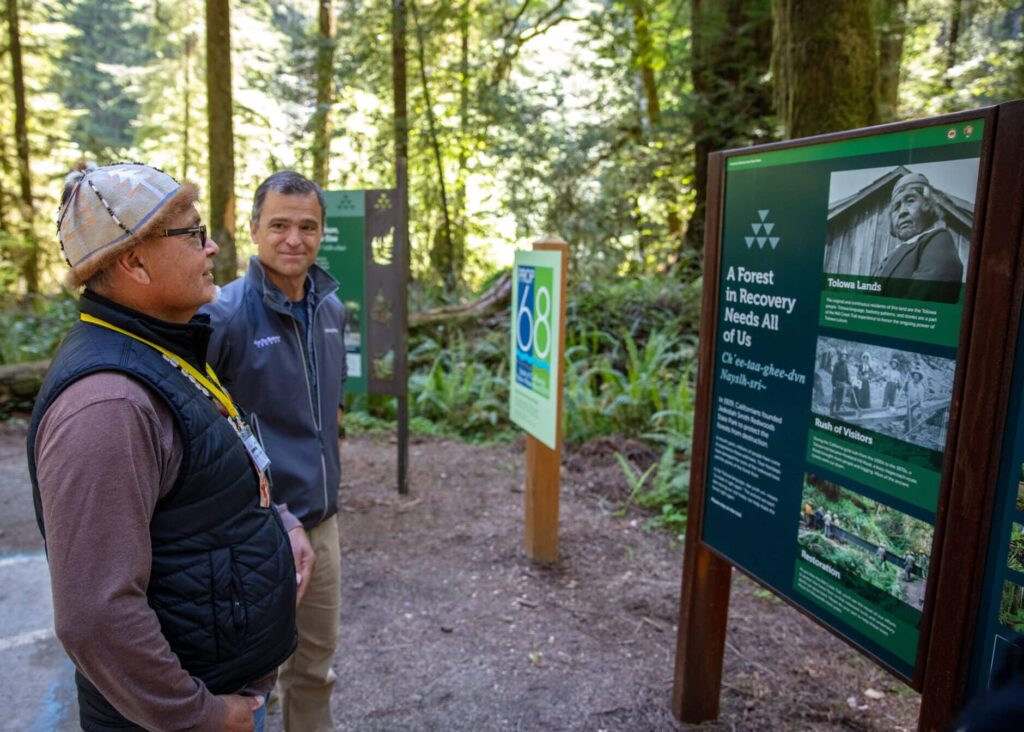
Loren Me’-lash-ne Bommelyn (left), Tolowa Dee-ni’ linguist and Tribal historian, tradition bearer, and teacher, views interpretive panels with former Save the Redwoods president Sam Hodder. Trailside panels communicate the sacredness of this land to the Tolowa People, and help visitors understand the forest ecosystem and how to tread lightly through it. Photo by Max Forster.
From the start, Indigenous perspectives were central to storytelling and interpretation along the new boardwalk and restored trail at Grove of Titans. “Since the site is on the traditional lands of the Tolowa Dee-ni’ Nation, it was important to us that Tolowa voices, stories, and culture be included throughout,” says Deborah Zierten, Save the Redwoods education and interpretation manager.
Despite decades of settler-colonial violence and displacement, Tolowa Dee-ni’ citizens still live in and around Del Norte County today and continue to practice their cultural traditions and speak the Tolowa Dee-ni’ language, part of the Dené language family. “Having the Tolowa language, art, and stories on all the interpretive panels was a way to show visitors that the Tribe is living and active, rather than something from the past,” says Zierten. “We were so fortunate to have a representative from the Tolowa on the interpretive team to guide us through how the Tribe wanted to be represented.”
Interpretation focused on the incredible natural history of the grove, the importance of redwoods conservation, and the enduring relationships between the Tolowa People and the land. In Tolowa culture, caring for the redwoods, called K’vsh-chu, is an essential responsibility, as all life is interconnected in the forest. The tree’s roots are used to make ceremonial baskets; the leaves are used for medicine; and wood is used to make tools and build houses, sweathouses, and dugout canoes.
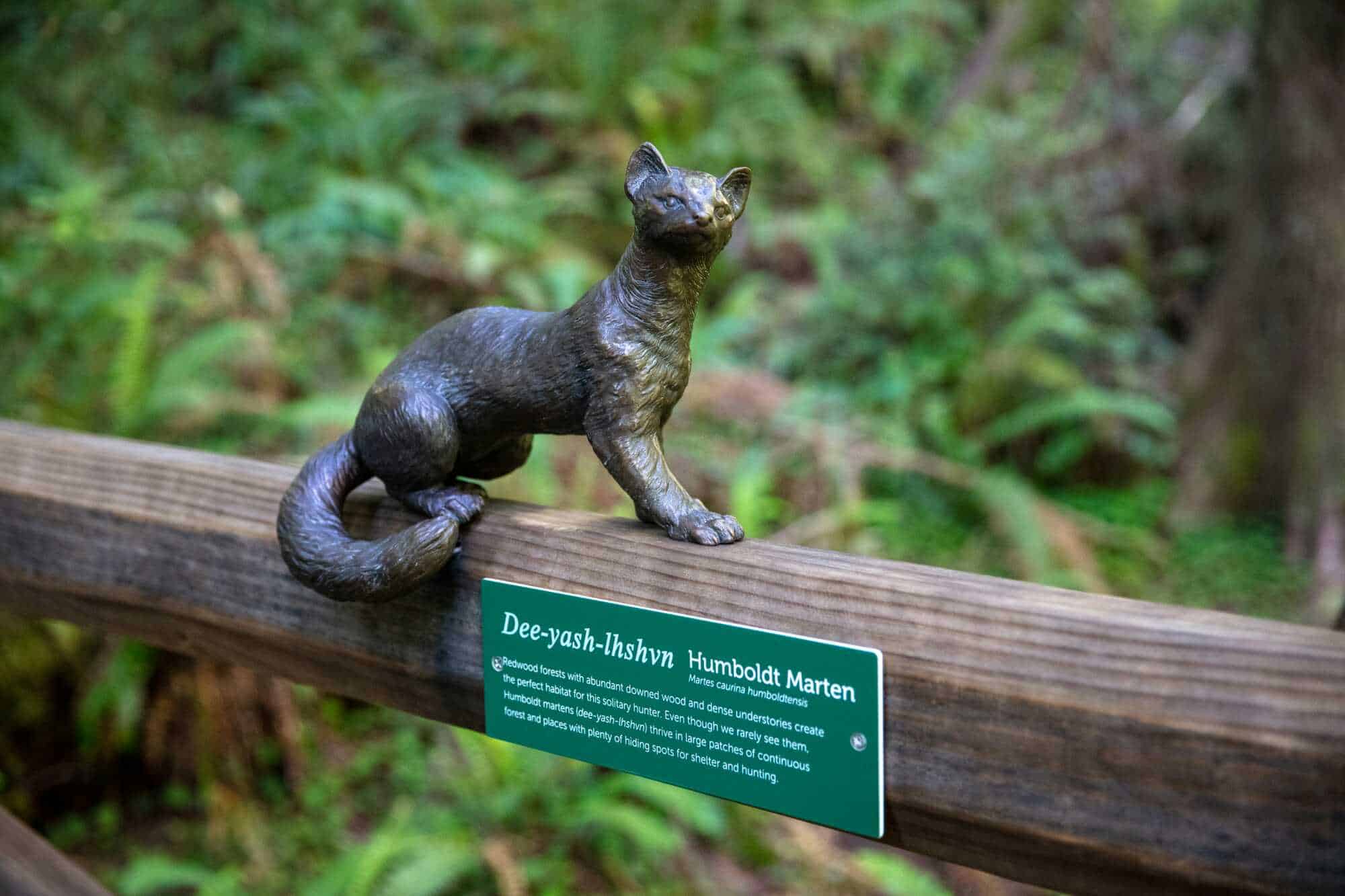
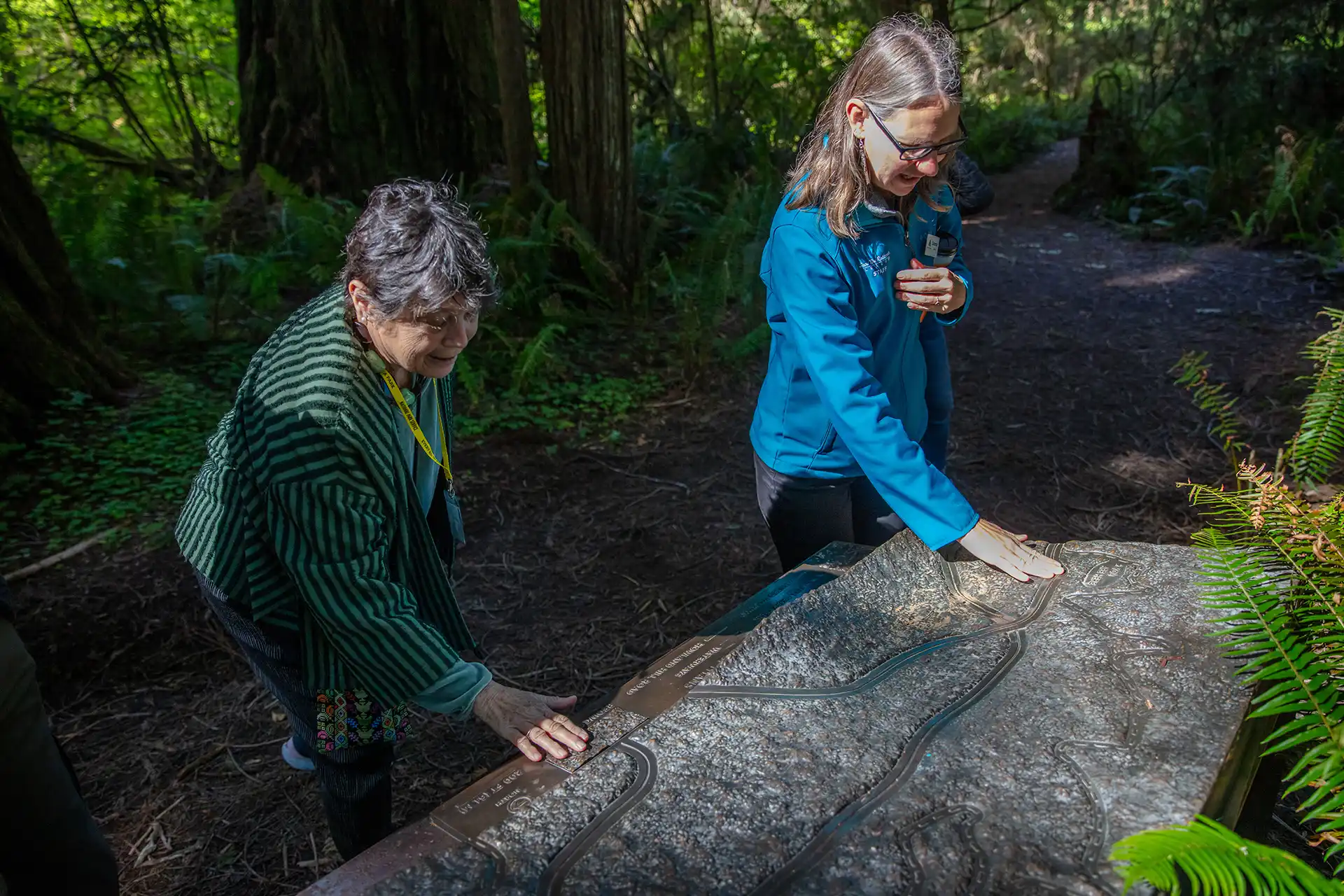
The National Association for Interpretation honored Save the Redwoods and its partners with a first place Interpretive Media Award for the trail project. Grove of Titans was selected from projects across the United States, giving national recognition to the importance of inclusive storytelling and redwood conservation.
What started as a rescue mission for threatened redwoods became an opportunity to share a larger story with people from around the world. “Originally visitors flocked to the park to see a collection of amazing trees,” says Zierten. “Now they will walk away with a greater appreciation and understanding of the entire ecosystem and the Tolowa culture.”
Newsroom
PRESS RELEASES
- May 20, 2022 — Grove of Titans Trail Project Completed, Providing Access to Some of the World’s Largest and Oldest Redwood Trees
IN THE NEWS
- This secret hike through California’s giant redwoods will take you to another world
—Los Angeles Times, June 2022 - Protecting the Titans: New Trail Provides Safe Access to Ancient Grove
—North Coast Journal, May 2022 - Famed California redwood grove damaged by visitors reopens with new elevated boardwalk
—KTLA 5 Live, May 2022 - Storied California redwood grove ‘almost loved to death’ reopens this weekend, with new boardwalk
—San Francisco Chronicle, May 2022