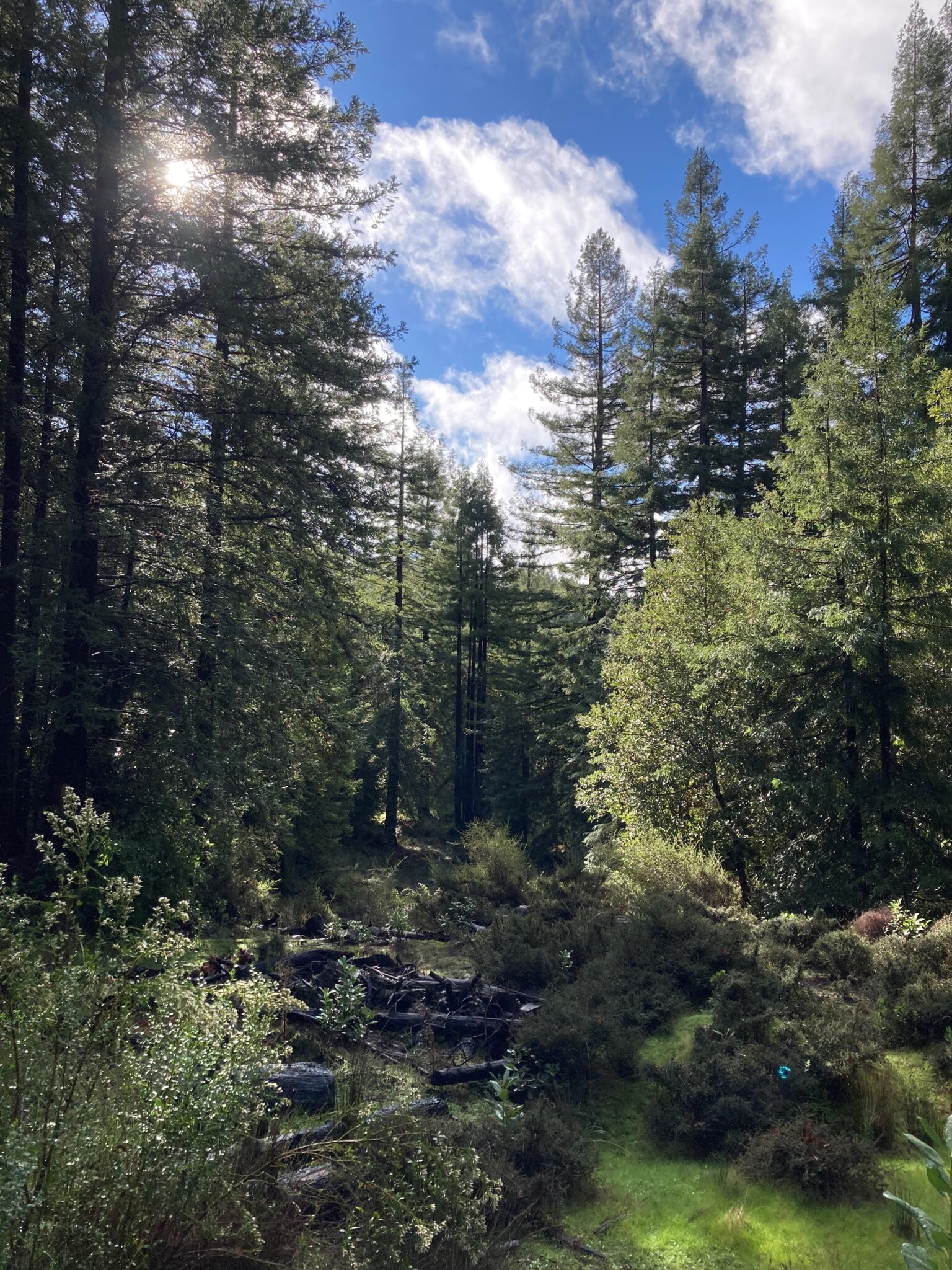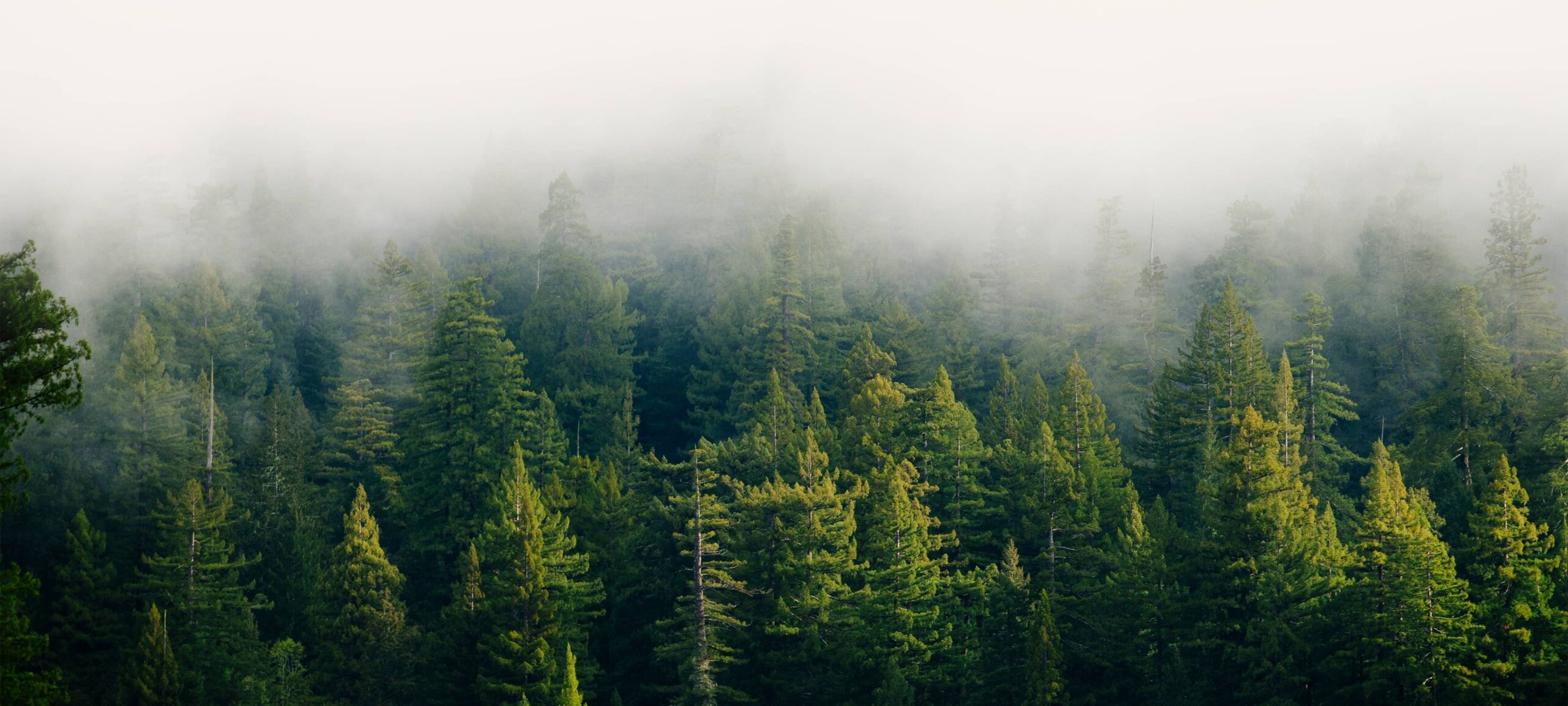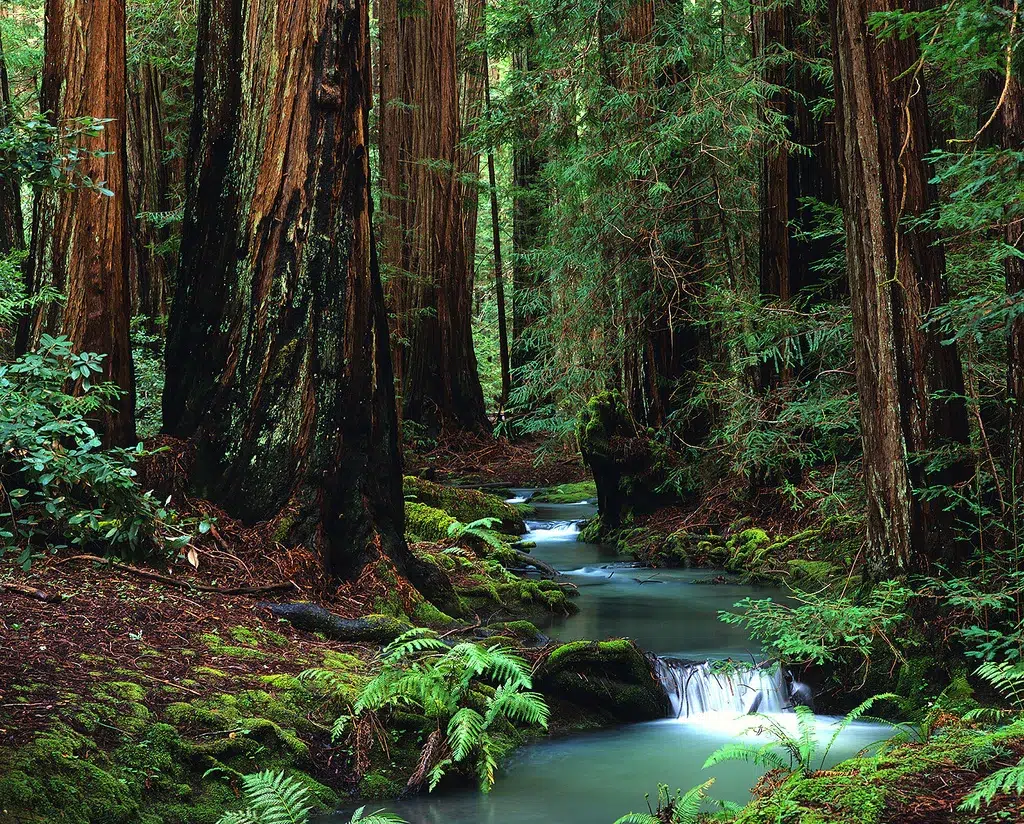
Home to what was once the tallest known tree in the world, Montgomery Woods State Natural Reserve (SNR) is a magical grove nestled in a serene valley 10 miles as the crow flies from Ukiah in Mendocino County. Found within the traditional lands of the Northern Pomo People, the park delights visitors with its old-growth coast redwoods, blankets of green ferns, and bubbling streams. “You arrive at the top of that first trail, and you feel you’ve arrived in a fairy wonderland,” says Jessica Carter, senior program director at Save the Redwoods League.
Save the Redwoods has a long history of protecting this special place and connecting people with its transportive, towering redwoods. Since 1947, we have completed numerous transactions to expand the Montgomery Woods SNR to 3,276 acres. We’ve also long partnered with California State Parks to develop visitor infrastructure. But we’re not finished yet.
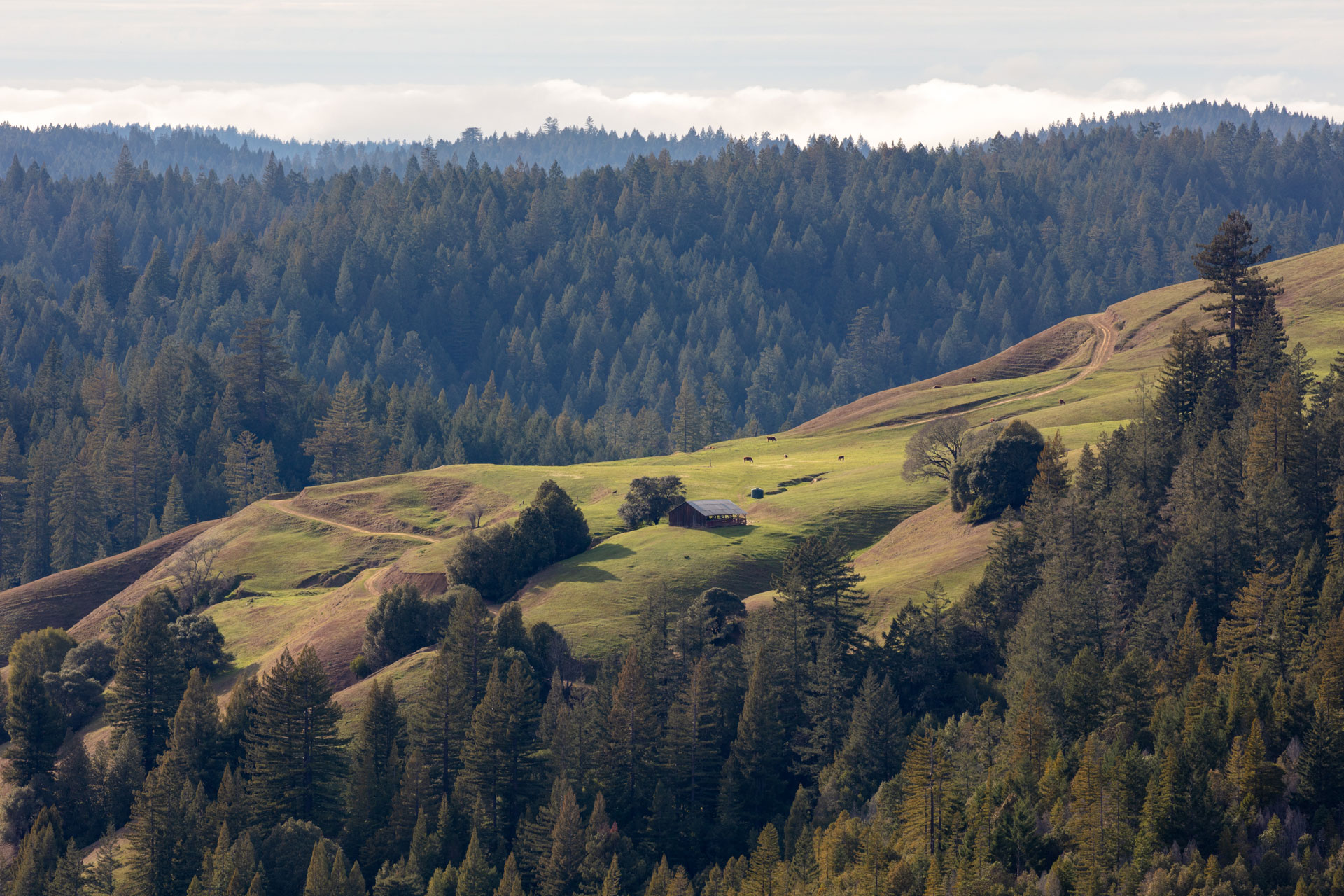
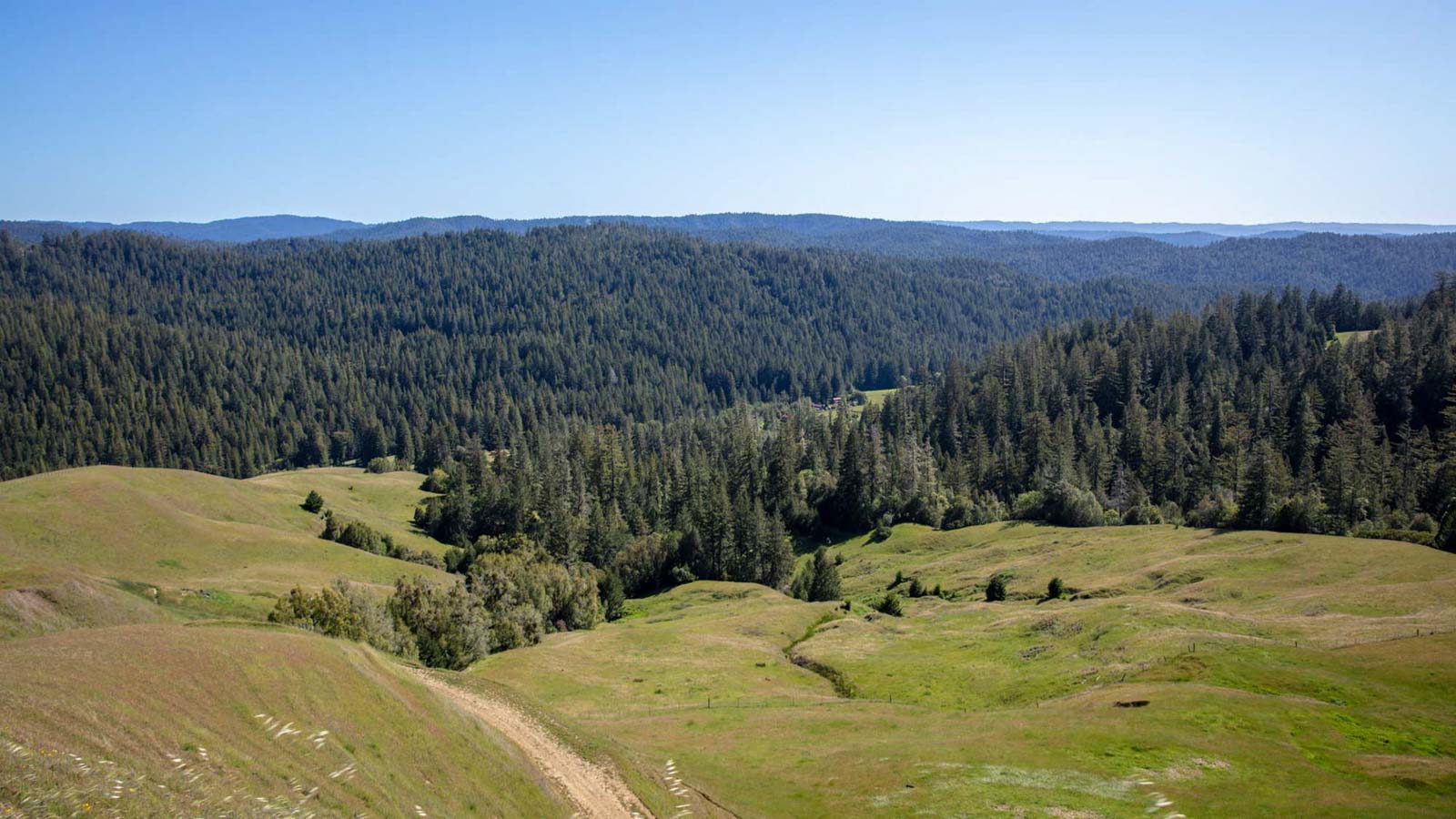
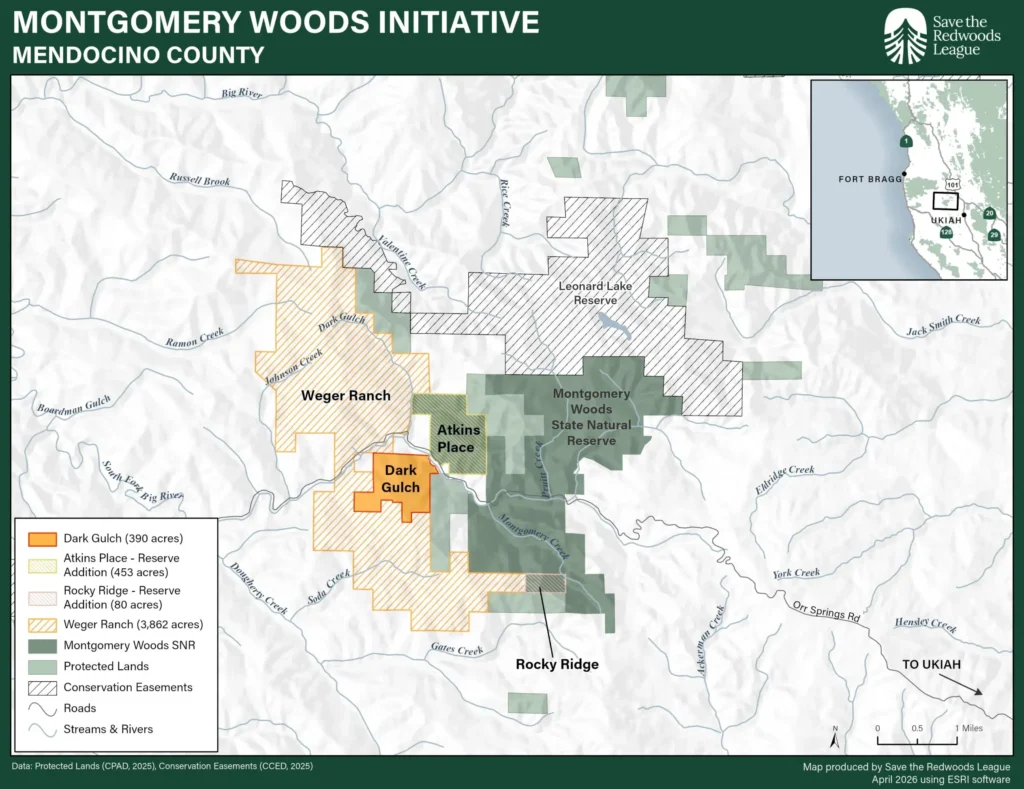
Through an ambitious, multifaceted effort, we’re now realizing an even broader vision for Montgomery Woods SNR and the surrounding region: The Montgomery Woods Initiative. Not only are we improving the park experience to make it more accessible, inspirational, and inclusive for all, but we’re also ensuring that this entire irreplaceable landscape remains protected. By securing multiple properties around Montgomery Woods SNR—Weger Ranch, Rocky Ridge, Atkins Place, and Dark Gulch—we’re conserving wildlife habitat within the Big River watershed and buffering the old-growth forest against wildfires, high winds, and encroaching development.
These properties are now part of a protected greenbelt of more than 11,500 acres, including Bureau of Land Management property, in the upper reaches of the Big River watershed. Two of the properties, Atkins Place and Rocky Ridge, have been transferred to California State Parks and are now part of the reserve.
Piece by beautifully forested piece, we’re putting together a puzzle of landscape-scale conservation that secures the region’s redwood footprint, creates new protected wildlife corridors, and deepens the public’s connection with this enchanting place.
What we’ve secured
- 7,608 acres of old-growth and second-growth forest and grasslands across Montgomery Woods State Natural Reserve and four surrounding properties
- Improved visitor experience and accessibility at Montgomery Woods SNR, including a rerouted trail to protect sensitive resources; new bridges and gathering areas; and updated, inclusive interpretive exhibits
- Protection for multiple headwaters that drain into the Big River watershed, critical for imperiled salmon species
- Crucial wildlife habitat and corridors for northern spotted owl, foothill yellow-legged frogs, three species of newts, and many other key species
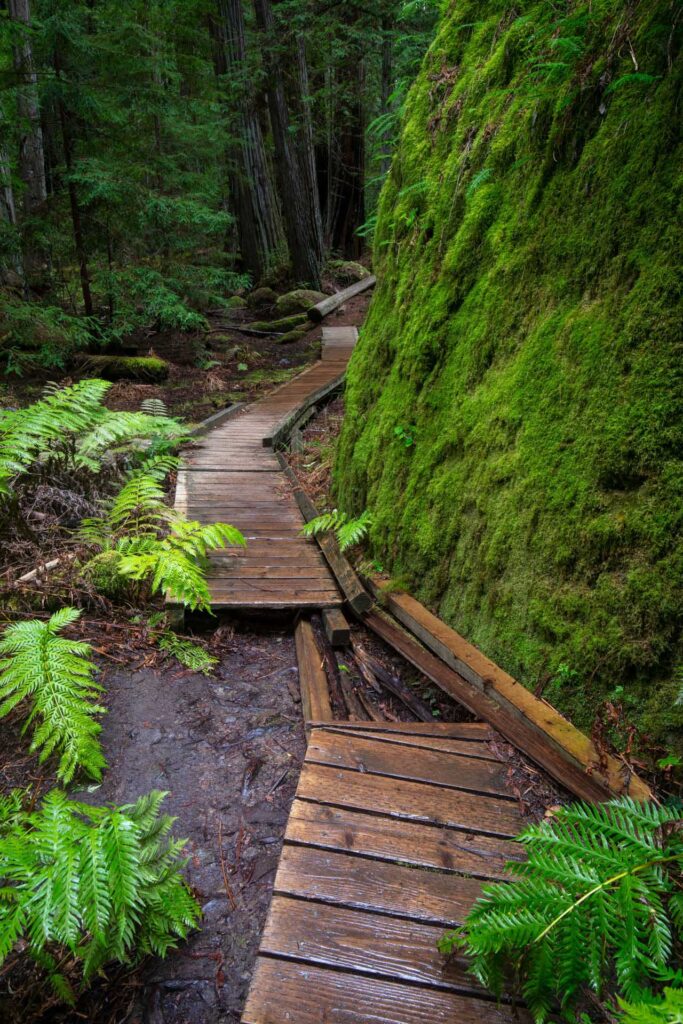
The trails and bridges in Montgomery Woods SNR are sorely in need of an upgrade. The makeover will reroute a 2-mile trail out of the muddy floodplain, protect sensitive redwood root systems, and create new places to gather, learn, and feel inspired. Photo by Max Forster.
Major upgrades to the park experience
It’s already easy to love visiting Montgomery Woods SNR, where you can wander through a tranquil refuge of skyscraping coast redwoods along with oak woodlands, ferns, huckleberries, and redwood sorrel. Now, in partnership with California State Parks, we’re giving the experience a major upgrade.
The redesign will simultaneously provide an immersive experience for visitors while restoring and better protecting the grove’s redwood root systems and unique water features.
Phase I of the improvement plan tackles the relocation of the roughly 2-mile existing perimeter loop trail out of the park’s floodplain, benefiting visitors and sensitive resources alike. An existing 80-foot bridge will also be replaced, along with the installation of new boardwalk and hundreds of feet of new rock walls to elevate the trail. This phase is being funded and carried out by California State Parks with completion estimated by the end of 2028.
Phase II of the project is a multi-pronged improvement of the park funded and designed by Save the Redwoods, with construction work done by California State Parks. This phase includes the creation of a gathering area in the main old growth grove that will elevate the trail above the vulnerable redwood roots and provide a bridge connection and viewing opportunities over the creek. We’re also expanding the parking lot with six new spaces and adding a new picnic grove. Finally, we’re updating all the interpretive and wayfinding signage to be more modern, comprehensive, and inclusive of early conservationists and Indigenous peoples. This phase will be completed by the end of 2027.
Save the Redwoods and California State Parks, with the help of the Mendocino Area Parks Association, are engaging local Indigenous groups and historically underrepresented communities in the project’s development and to support visits to this long-beloved park.
Continuing our historic dedication to the park
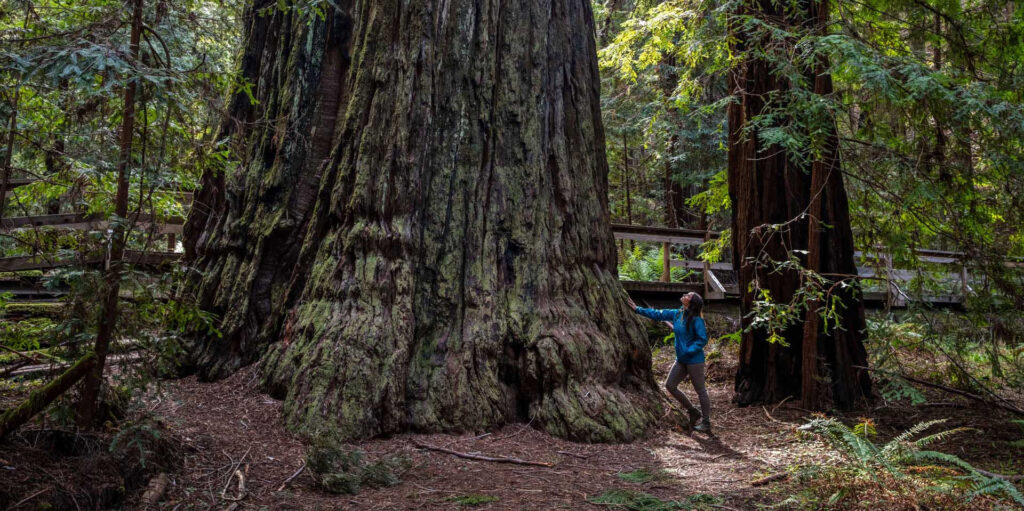
The original Montgomery Woods SNR started with a donation of 9 acres. Since 1947, Save the Redwoods has worked diligently to expand the park to 2,823 acres. Photo by Max Forster.
The much-needed upgrades to Montgomery Woods SNR are only the latest expression of Save the Redwoods’ long, dedicated relationship with this precious park.
Since time immemorial, the Northern Pomo people lived on and cared for lands in this region before they were forcibly removed by European American colonizers. In the late 1800s, this forested area became the target of the commercial timber industry. But fortunately, the steep canyon along Montgomery Creek made it difficult for loggers to harvest Montgomery Woods’ mammoth trees.
Official protection of Montgomery Woods was sparked by the prolific botanist Ynés Mexía An early member of Save the Redwoods, she wrote to the newly formed organization in 1919, asking to protect the Montgomery Woods redwoods from logging. Save the Redwoods Secretary Newton Drury requested an investigation of the area, leading to an end to tree cutting by 1920.
The reserve was established in 1945, thanks to the work of local conservationists and the donation of 9 acres by Orr Hot Springs owner Robert Orr. Starting in 1947, Save the Redwoods began to build on the size and protection of the grove through ongoing property acquisitions, which continue today. Now, Montgomery Woods SNR is 2,823 acres—and growing.
Building a buffer of resilience
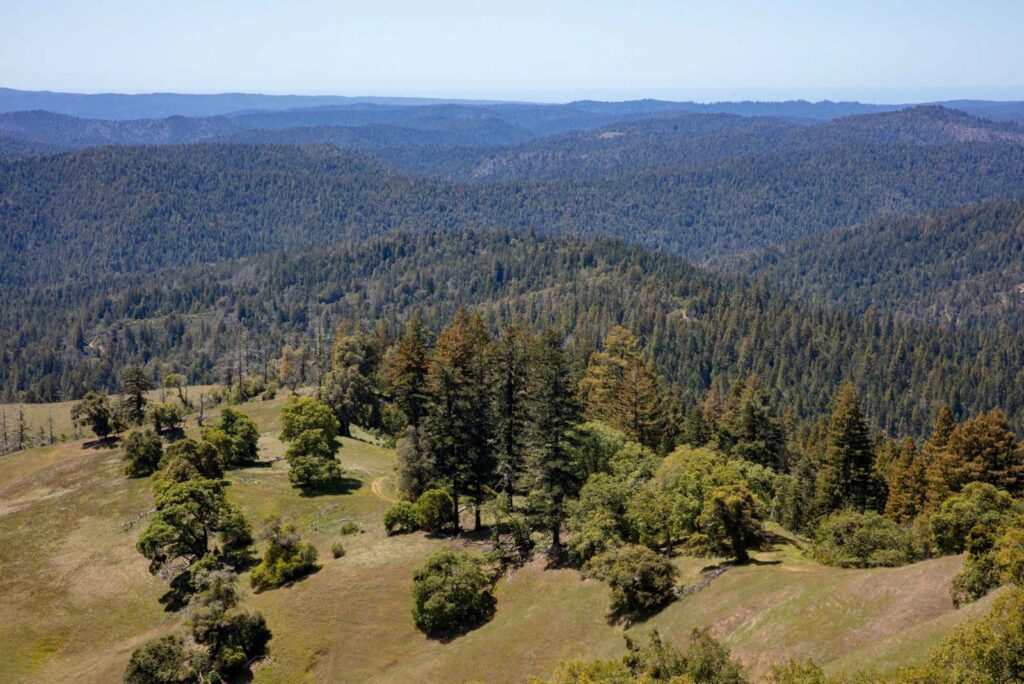
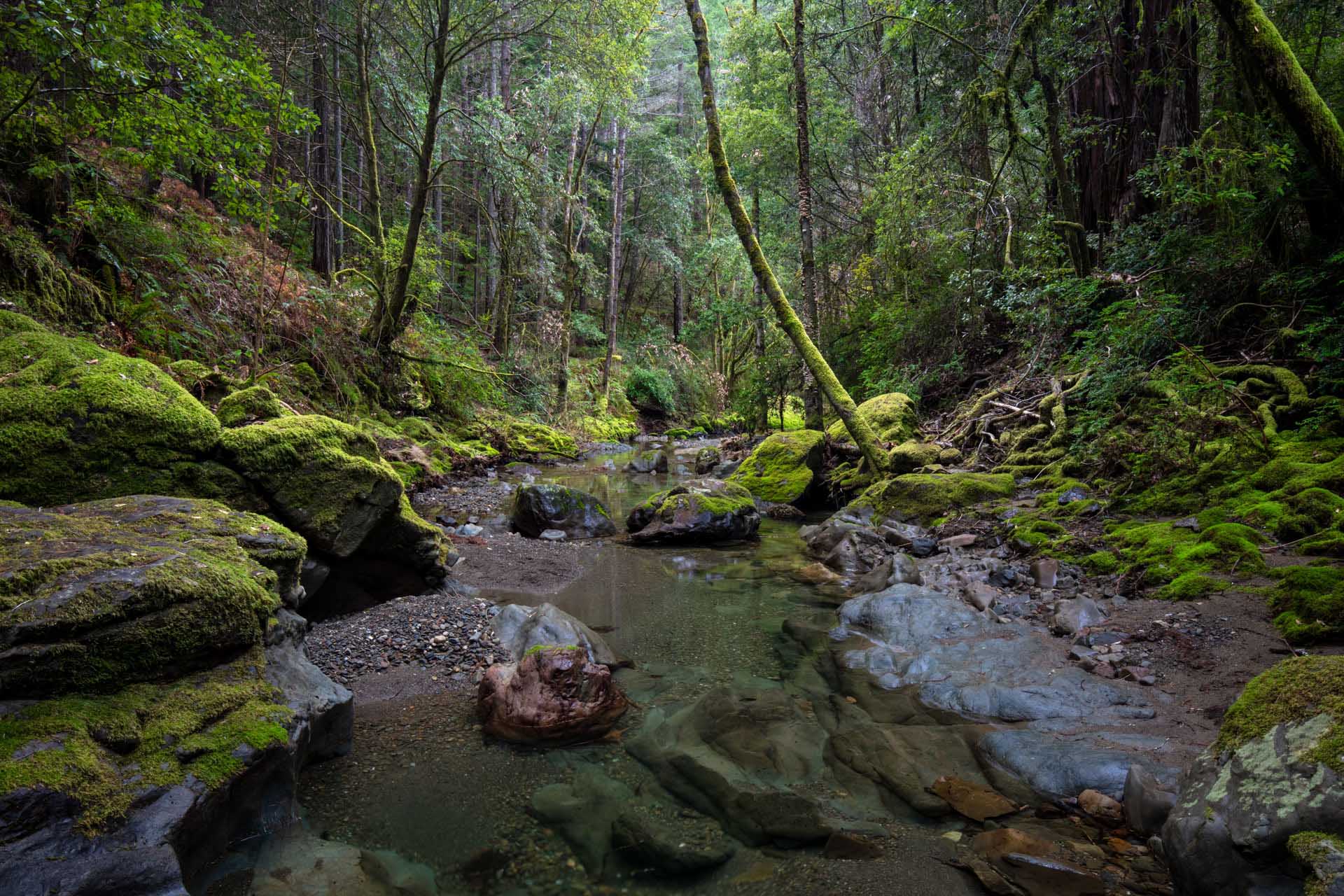
With 3,862 acres of grasslands and forests, Weger Ranch is just one of the properties Save the Redwoods now safeguards to buffer the old-growth forest at Montgomery Woods against wildfires, development, and industrial-scale logging. Photo by Max Forster.
Through the Montgomery Woods Initiative, Save the Redwoods aims to expand the reserve’s boundary and secure lasting protections for the vast forest that surrounds the park.
The Initiative began with the purchase of the 453-acre Atkins Place property in September 2022 as a future addition to the park. In August 2023, Save the Redwoods secured a conservation easement on the 3,862-acre Weger Ranch that protects the ranch’s coast redwood and Douglas-fir forest from subdivision, development, and excessive logging in perpetuity.
Save the Redwoods also expanded Montgomery Woods SNR by facilitating the transfer of the 80-acre Rocky Ridge property in March 2024―the first land acquisition by California State Parks in the Sonoma-Mendocino District since 2008. This expansion will also allow the reserve’s trail network to extend to a ridge overlooking the grove’s old-growth canopy and the surrounding landscape.
Most recently, in late 2024, Save the Redwoods purchased 390-acre Dark Gulch, filling a critical hole in the Initiative by connecting Atkins Place to Weger Ranch. The Dark Gulch acquisition also helps us build wildfire resilience and a new protected wildlife corridor so the region’s wildlife including black-tailed deer, black bears, and mountain lions can roam more freely.
Save the Redwoods’ Montgomery Woods Initiative—a long-term, coordinated effort to create an immense buffer around the ancient groves of Montgomery Woods and revitalize the visiting experience there—also falls in line with our Centennial Vision to protect and restore redwood forests and connect all people with the redwoods through inspiring parks experiences.
Newsroom
PRESS RELEASES
- April 16, 2024 — Save the Redwoods League and California State Parks Expand Montgomery Woods State Natural Reserve
- October 25, 2022 — Save the Redwoods League secures opportunity to protect 3,862-acre Weger Ranch in Mendocino County through conservation easement
- September 27, 2022 — Save the Redwoods League launches Montgomery Woods Initiative with purchase of 453 acres of redwood forest and groundbreaking on vital park improvements