Soul-stirring, mist-shrouded, majestic—the redwood groves of Redwood National and State Parks have long offered visitors a chance to connect with ancient giants. But for decades, travelers arriving here through the town of Orick passed a sawmill where redwoods were still being cut into lumber. Even after it closed, its aging structures and acres of asphalt lingered in the floodplain of Prairie Creek—a site shaped by a complex history of cultural loss, ecological damage, and economic hardship on traditional Yurok land.
Save the Redwoods recognized an opportunity for renewal. In 2013, with generous member support, we purchased the 125-acre Orick mill site—known as ‘O Rew in the Yurok language—and began working with local communities and partners to restore it. In collaboration with the Yurok Tribe, California Trout, the California State Coastal Conservancy, and others, we embarked on an ambitious project to restore Prairie Creek and the old mill site and establish a new gateway to the parks. That work, now complete, set the stage for the site’s next chapter.
In June 2026, Save the Redwoods transferred ownership of the property to the Yurok Tribe, restoring ancestral land to its original stewards while ensuring its permanent protection. The transfer also paved the way for the ‘O Rew Redwoods Gateway, a new space that will soon welcome visitors with cultural and public access to this remarkable landscape.
The vision was bold from the start: reviving a vital ecosystem and creating a brand-new visitor experience at the southern entrance to Redwood National and State Parks—one that is rooted in restoration, deepens connection, and now celebrates the enduring cultural traditions of the Yurok people through expanded trails and engaging exhibits.
A welcoming threshold to Redwood National and State Parks—returned to Yurok hands—with renewed habitat for salmon, steelhead, and other wildlife once seemed aspirational. Now it is a reality.
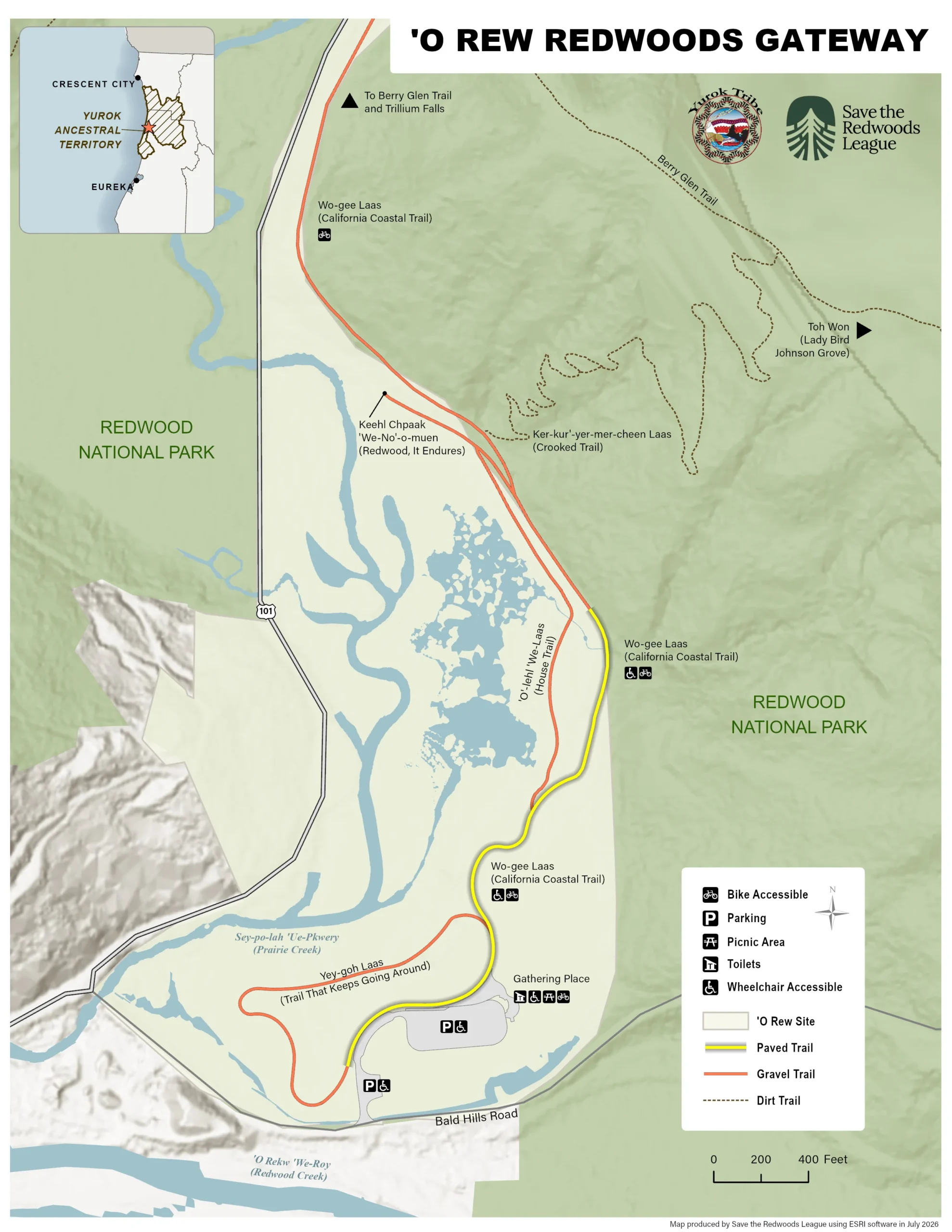
What we secured
- 125 acres of a vital floodplain ecosystem at the southern end of Redwood National and State Parks
- Nearly a mile of restored habitat for at-risk coho and Chinook salmon and steelhead trout
- New visitor amenities including Yurok-centered interpretive exhibits and expanded trails leading to popular locations within the parks
- Reestablishment of Yurok Tribe ownership and stewardship of a vital property in the heart of their ancestral territory
Restoring balance
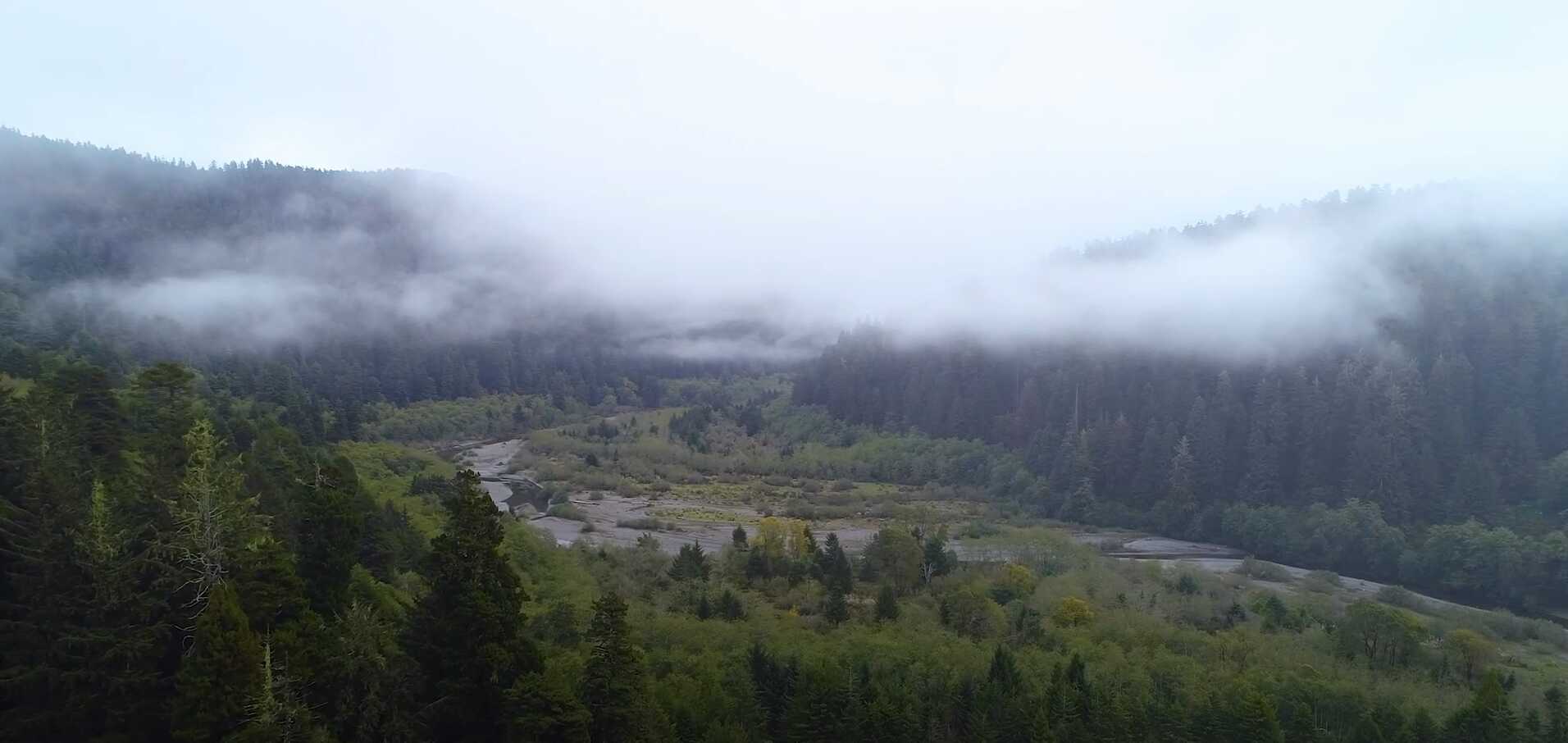
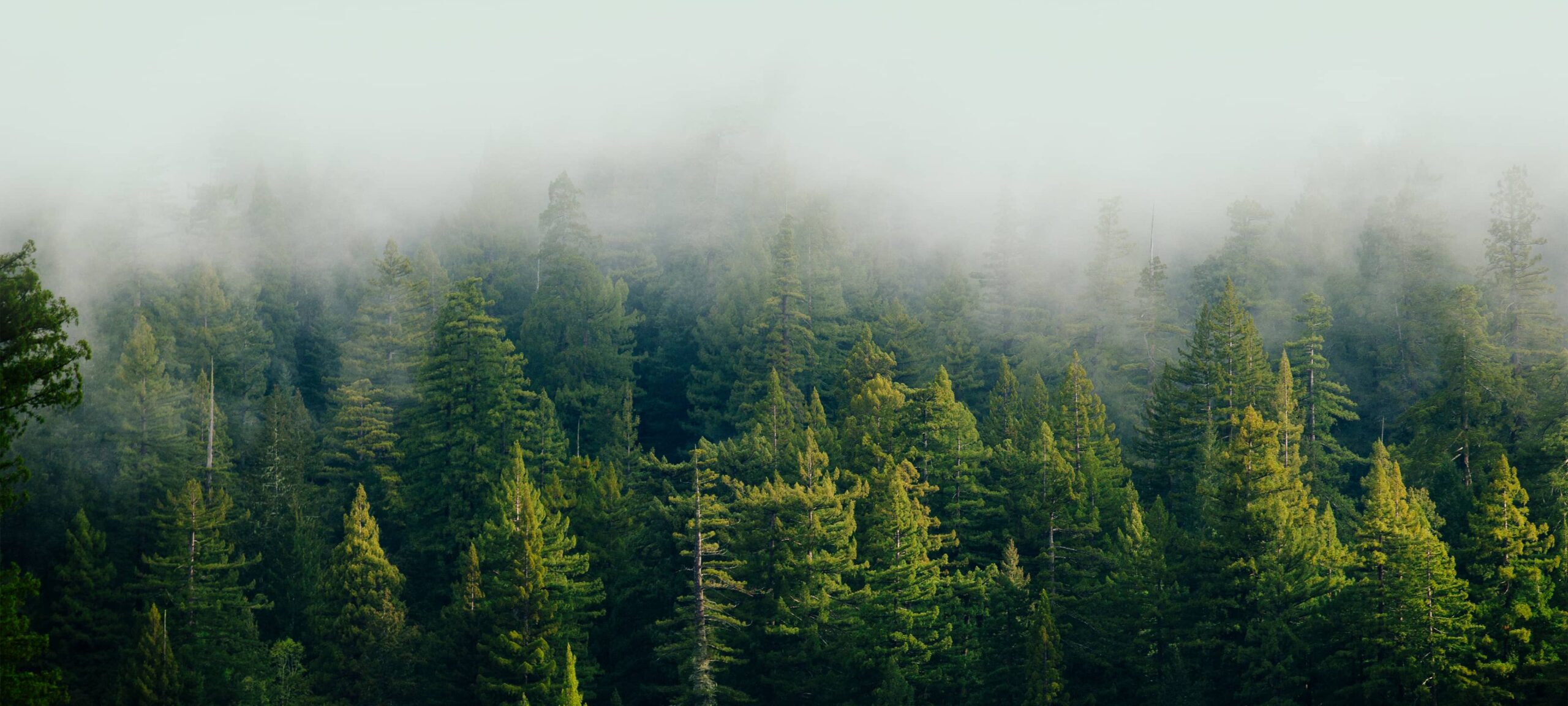
Surrounded by ancient redwood forests, ‘O Rew lies roughly in the center of Yurok ancestral lands. Photo by Michael Wier/California Trout.
The traditional lands of the Yurok people stretch along Northern California’s Pacific coast—from Little River in Humboldt County to Damnation Creek in Del Norte County—and include much of the lower Klamath River Basin. Within this ancestral territory lies ‘O Rew, where Yurok people have long gathered to fish for salmon and draw on the redwoods for shelter, tools, and canoes. The trees themselves are regarded as sacred living beings, a relationship that endures today.
In the mid-1800s, Yurok people were forcibly removed from their homeland to expedite gold mining and large-scale logging of old-growth redwoods. Violence, displacement, and cultural loss unfolded alongside widespread ecological devastation, as hillsides were clear-cut and waterways degraded. ‘O Rew was transformed into the Orick Mill Site—paved, industrialized, and cut off from the surrounding floodplain of Prairie Creek.
Despite this history, the Yurok people have maintained deep cultural, spiritual, and ecological ties to their homeland and continue their stewardship today. Save the Redwoods recognizes the Yurok peoples as the original stewards of these forests and streams. We support the reintroduction of Indigenous guardianship and the transfer of the ‘O Rew property—an important step toward healing the land and advancing a more just and sustainable future for redwoods conservation.
Indigenous-led restoration in action
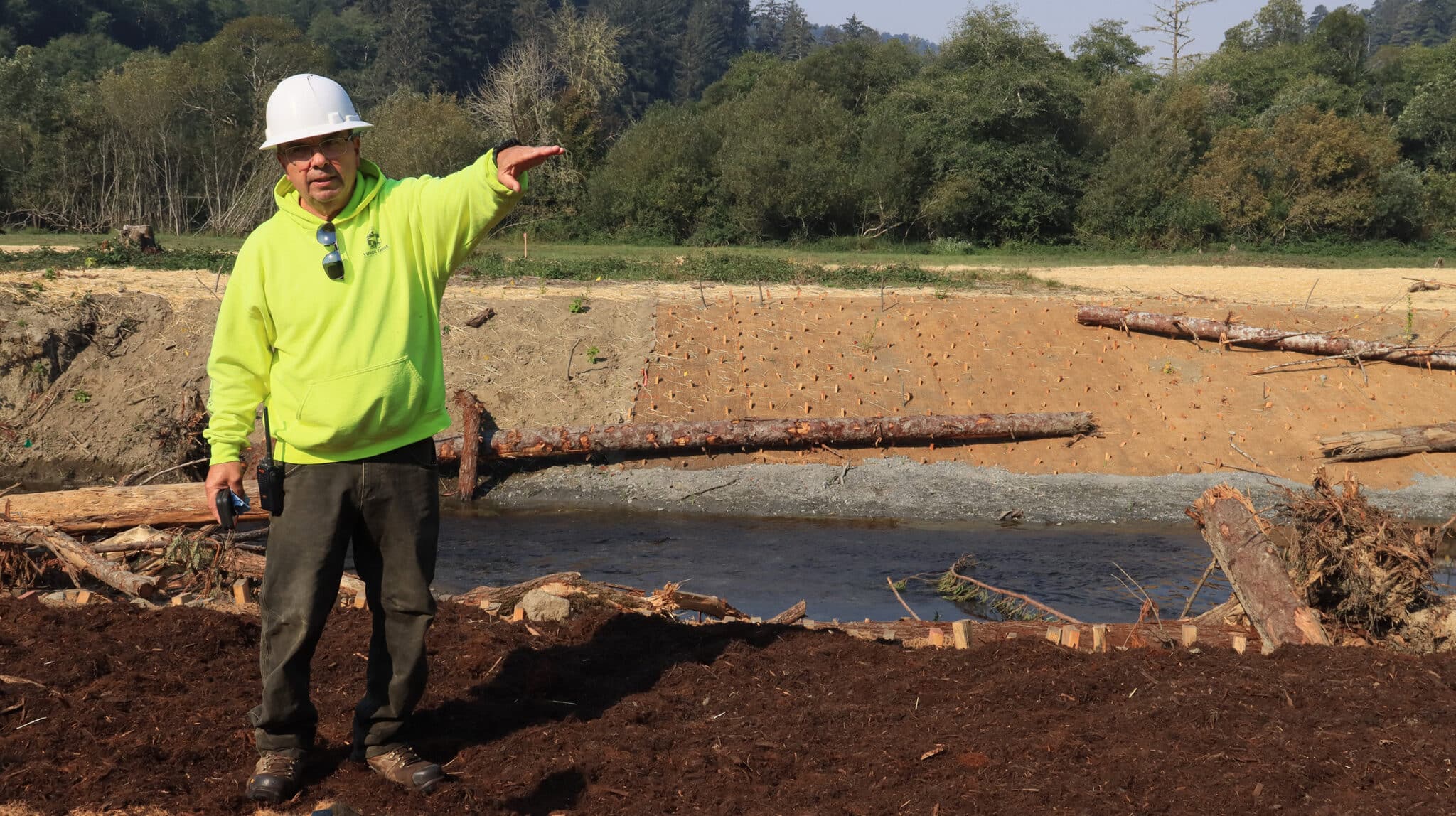
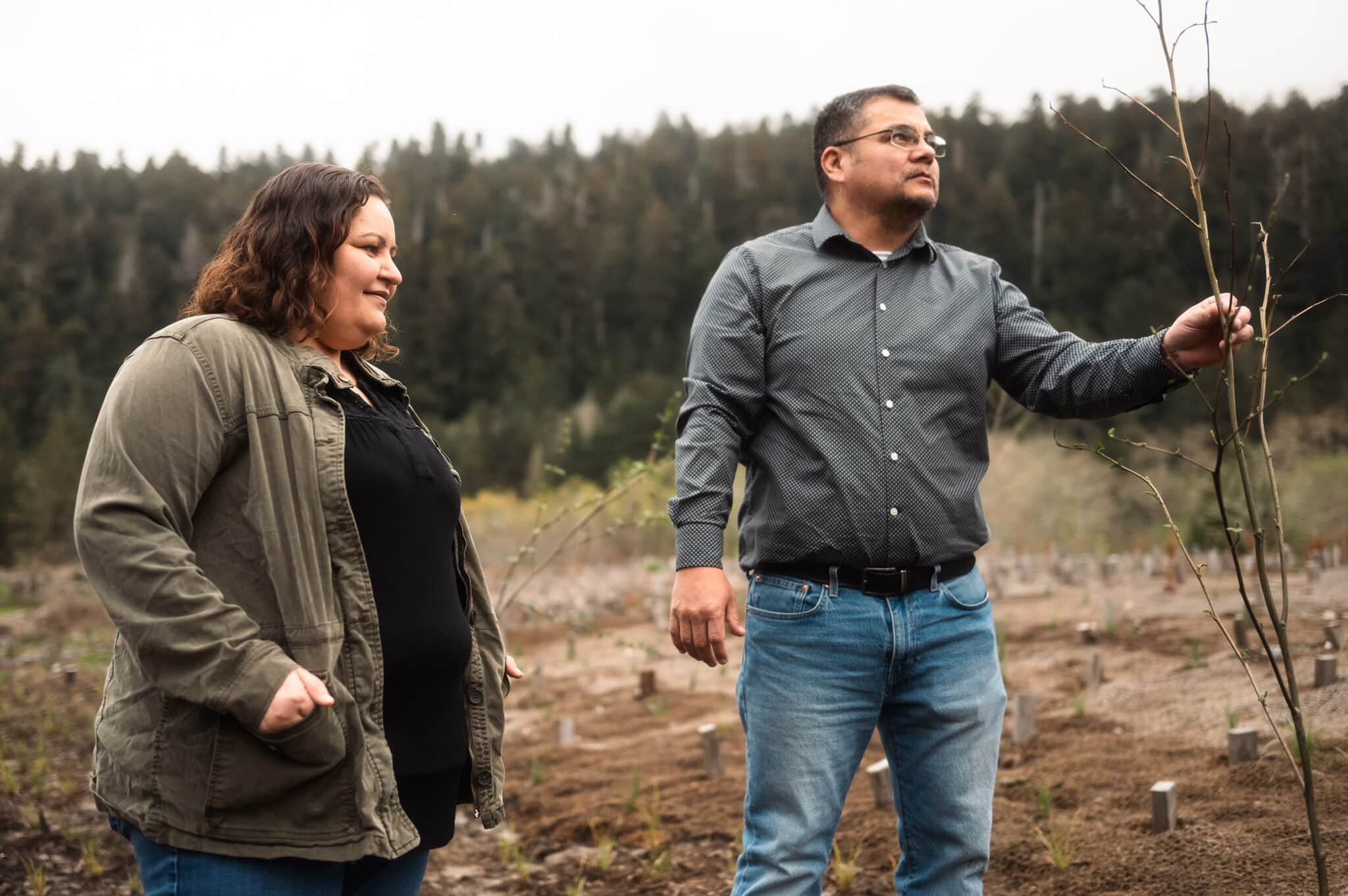
Matt Williams, ‘O Rew restoration project lead for the Yurok Tribe Construction Corporation. Photo by Kyle Cooper.
From the start, the focus of work at ‘O Rew was on restoring Prairie Creek and its floodplain.
The restoration project solidified the strong partnership between Save the Redwoods, California Trout, the California State Coastal Conservancy, and many other partners and was implemented by the Yurok Tribe—whose restoration work spans some of the region’s most important salmon rivers. Within this collaboration, a shared vision for ecological recovery took shape, rooted in both scientific expertise and traditional ecological knowledge.
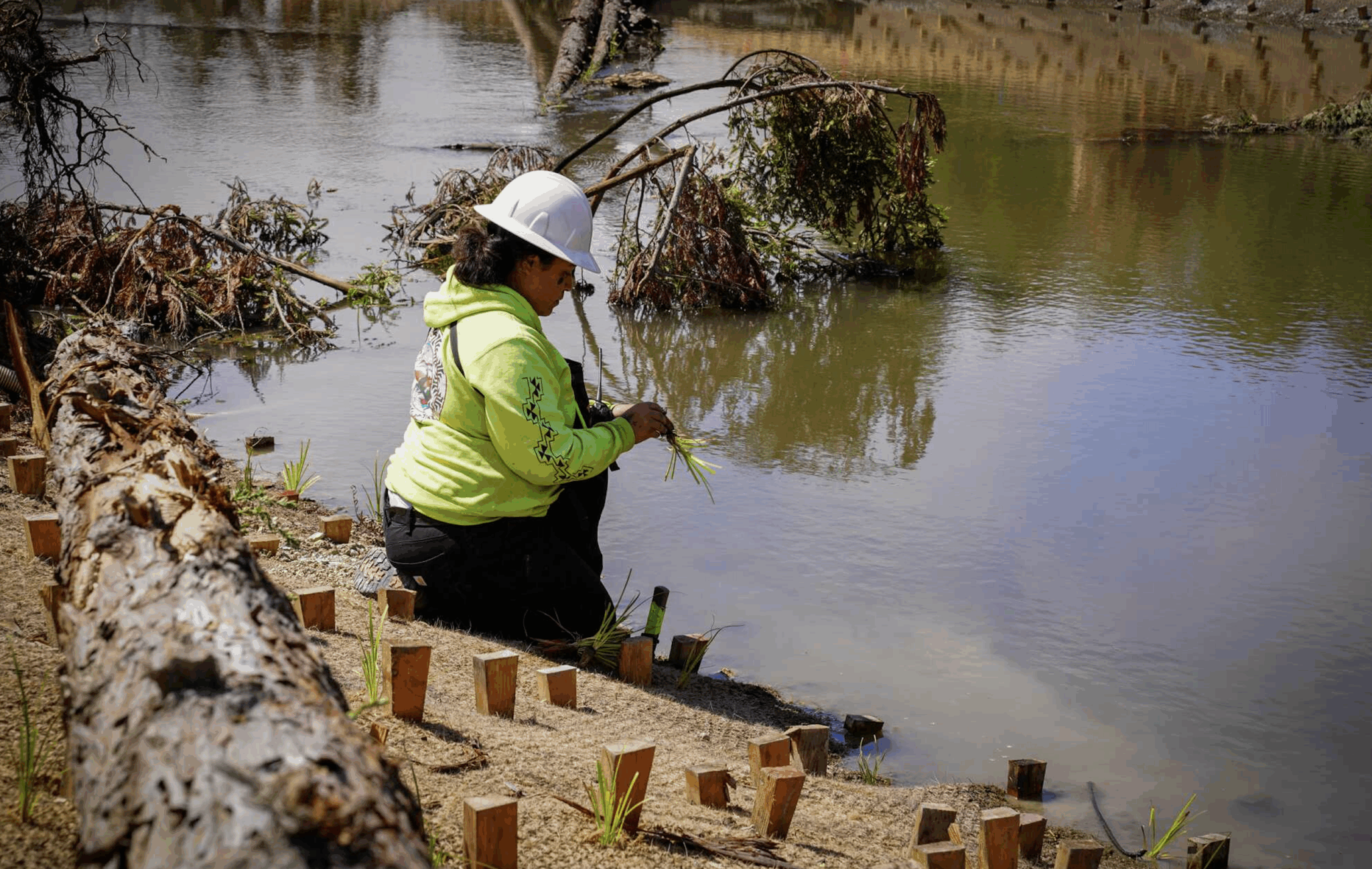
That rehabilitation began by peeling back decades-old slabs of asphalt from the former mill site and reshaping the land. The Yurok Tribe Construction Corporation and Yurok Tribe Fisheries Program led the transformation, putting their technical expertise and deep knowledge of the watershed to work. Crews first constructed a 2-acre pond to create aquatic habitat, then over the following years built a new, meandering stream channel along nearly a mile of Prairie Creek and additional ponds and 18 acres of floodplain. The creek and floodplain were reconnected, allowing water to move more naturally across the landscape.
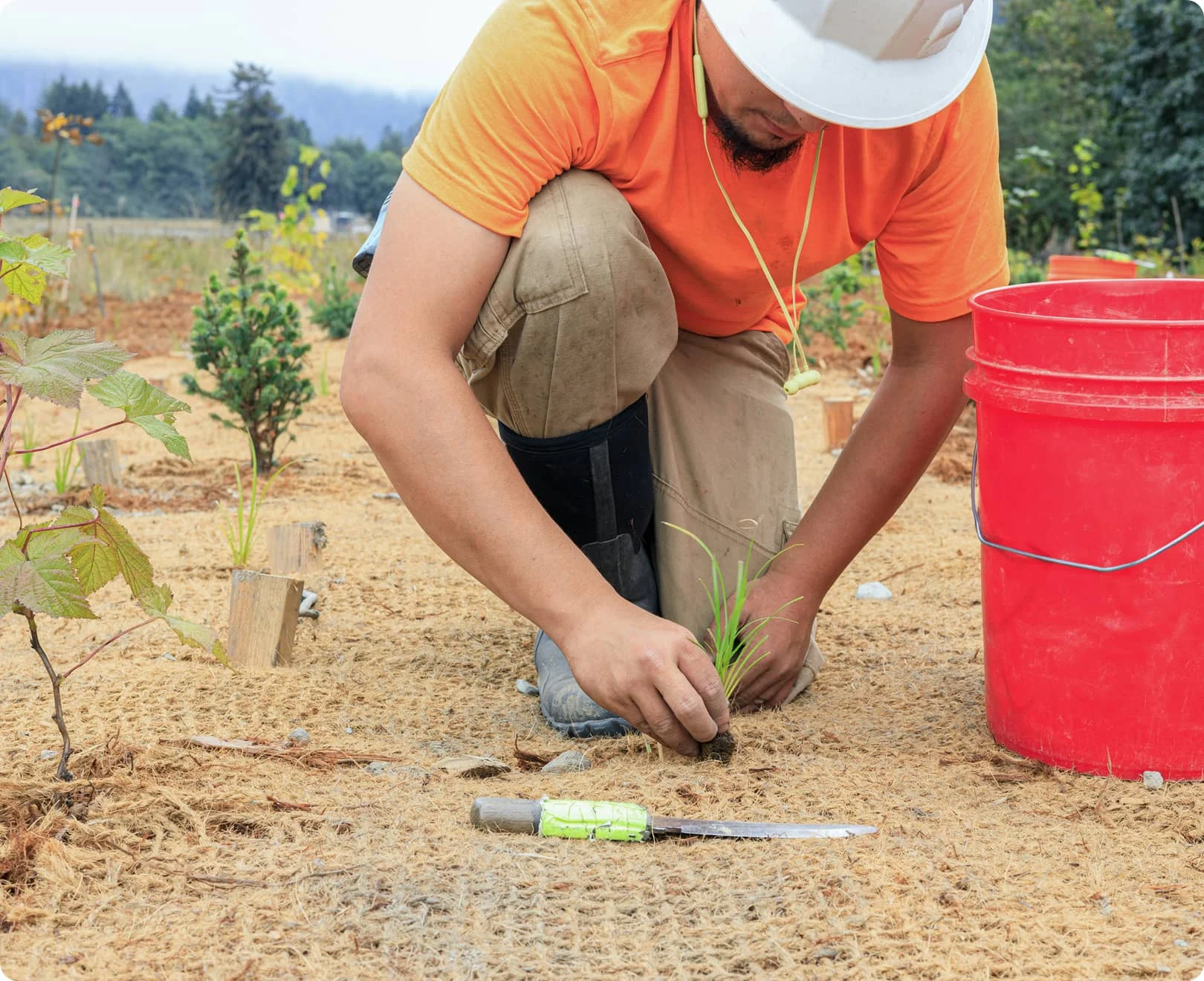
To rebuild a thriving ecosystem from the ground up, nearly half a million native plants—including coast redwood, black cottonwood, and slough sedge—were planted along this Redwood Creek tributary. Together, these efforts restored habitat complexity, strengthened biodiversity, and improved climate resilience.
The results came quickly. Coho and Chinook salmon, steelhead, and other wildlife began returning to the restored habitat soon after construction was complete—an early sign of what long-term, Indigenous-led stewardship can sustain.
Building a cultural gateway
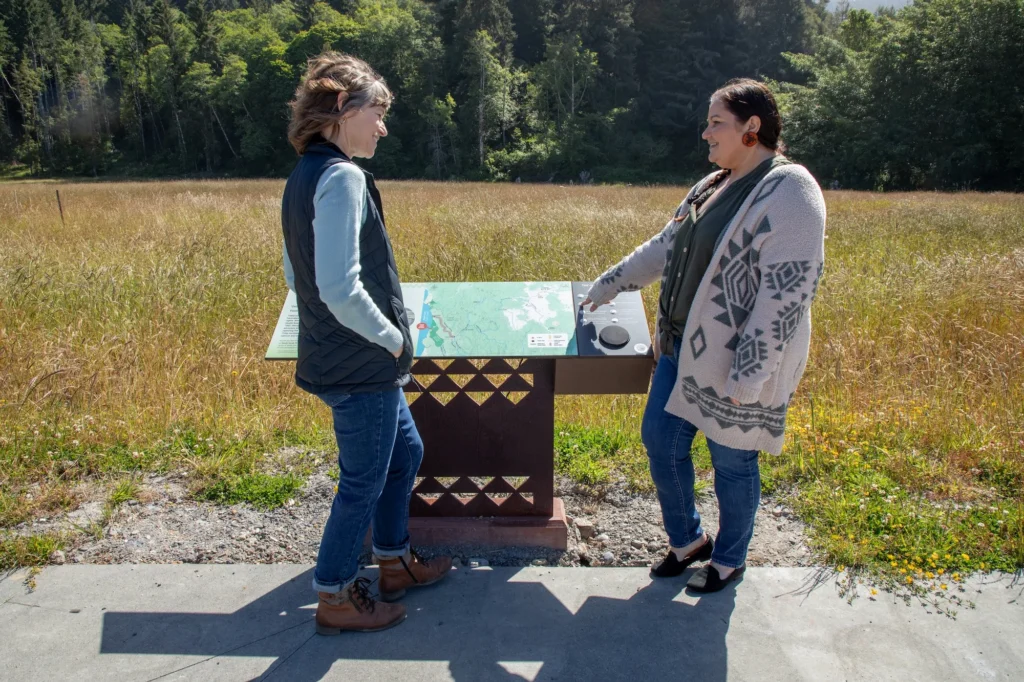
New installed interpretation at ‘O Rew features the Yurok language spoken long ago recorded on wax cylinders. Rosie Clayburn Katri (right) from the Yurok Tribe shows it off to Save the Redwoods’ Jessica Carter. Photo by Amy Kumler.
The ‘O Rew Redwoods Gateway creates an all-new Yurok-owned and operated recreational area at the southern end of Redwood National and State Parks. It’s expected to welcome hundreds of thousands of visitors each year from near and far and is a powerful opportunity to center Indigenous voices in the parks experience. Save the Redwoods, the Yurok Tribe, and other partners have completed significant site improvements with new visitor amenities, including engaging interpretive exhibits sharing Yurok perspectives in audio and written formats, and new, accessible trails. These include an extension of the California Coastal Trail and a new connection on adjacent Redwood National Park lands to Lady Bird Johnson Grove— one of the world’s largest remaining stands of old-growth redwoods.
The Tribe’s future plans include a cultural center highlighting Yurok history, living culture, and the natural wonders of the surrounding redwood landscape. A traditional Yurok village onsite will provide space for cultural activities and interpretation.
With the site transformation complete, the grounds opened to the public on August 1, 2026. ‘O Rew is poised to become a model for Indigenous guardianship at the doorstep of a globally significant park—telling a story of cultural resilience, ecological renewal, and what’s possible when stewardship is guided by Indigenous partnership and leadership.
Project partners
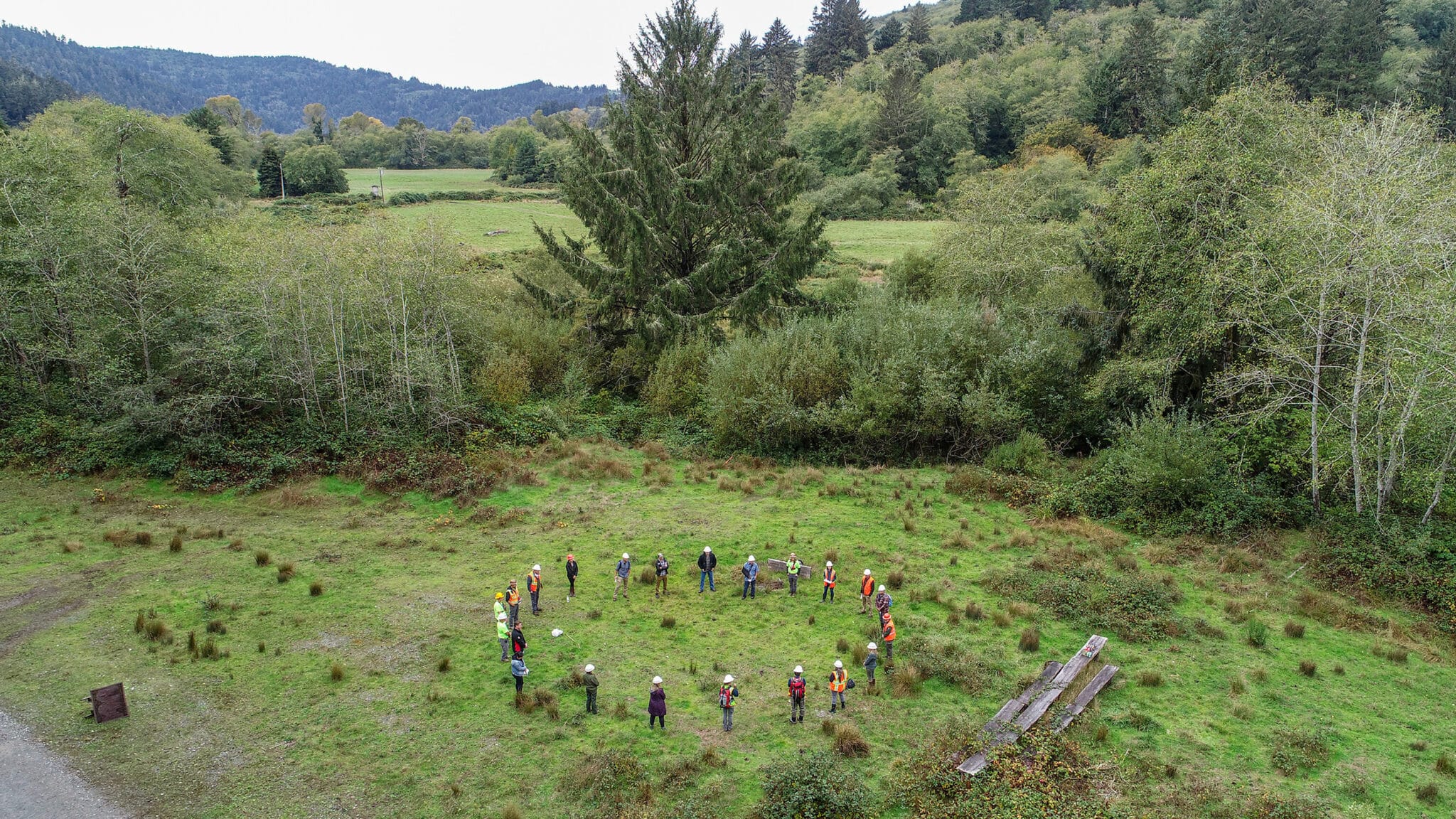
Collaborative partnerships have shaped and supported every aspect of the vision for ‘O Rew Redwoods Gateway, including the ongoing ecological restoration of Prairie Creek. Photo by CalTrout/Michael Wier.
This collaboration shows what’s possible when Tribes, nonprofits, agencies, and local experts work together. The work is complex and long-term—but the impact is real. Save the Redwoods is proud to support innovative conservation alongside these partners.
Funding Partners
Public agency and institutional partners have been critical to planning, design, and construction at ‘O Rew. The California State Coastal Conservancy leads public funding for the Prairie Creek Restoration Project and, alongside NOAA Restoration Center and the California Wildlife Conservation Board, has supported planning since 2013. We’re grateful for the continued support of all funding partners.
- California State Coastal Conservancy
- NOAA Restoration Center
- California Wildlife Conservation Board
- California Ocean Protection Council
- U.S. Fish & Wildlife Service
- National Park Foundation
- Cantus Foundation
Restoration Team
An expert team of aquatic restoration specialists partnered on design and implementation, bringing expertise in engineering, revegetation, invasive plant management, construction, fish relocation, and environmental compliance.
- California Trout
- Yurok Tribal Fisheries Program
- Yurok Tribe Construction Corporation
- Northern Hydrology & Engineering
- McBain Associates
- SHN Engineers & Geologists
- Ross Taylor and Associates
- GHD
- AECOM
Gateway Design Team
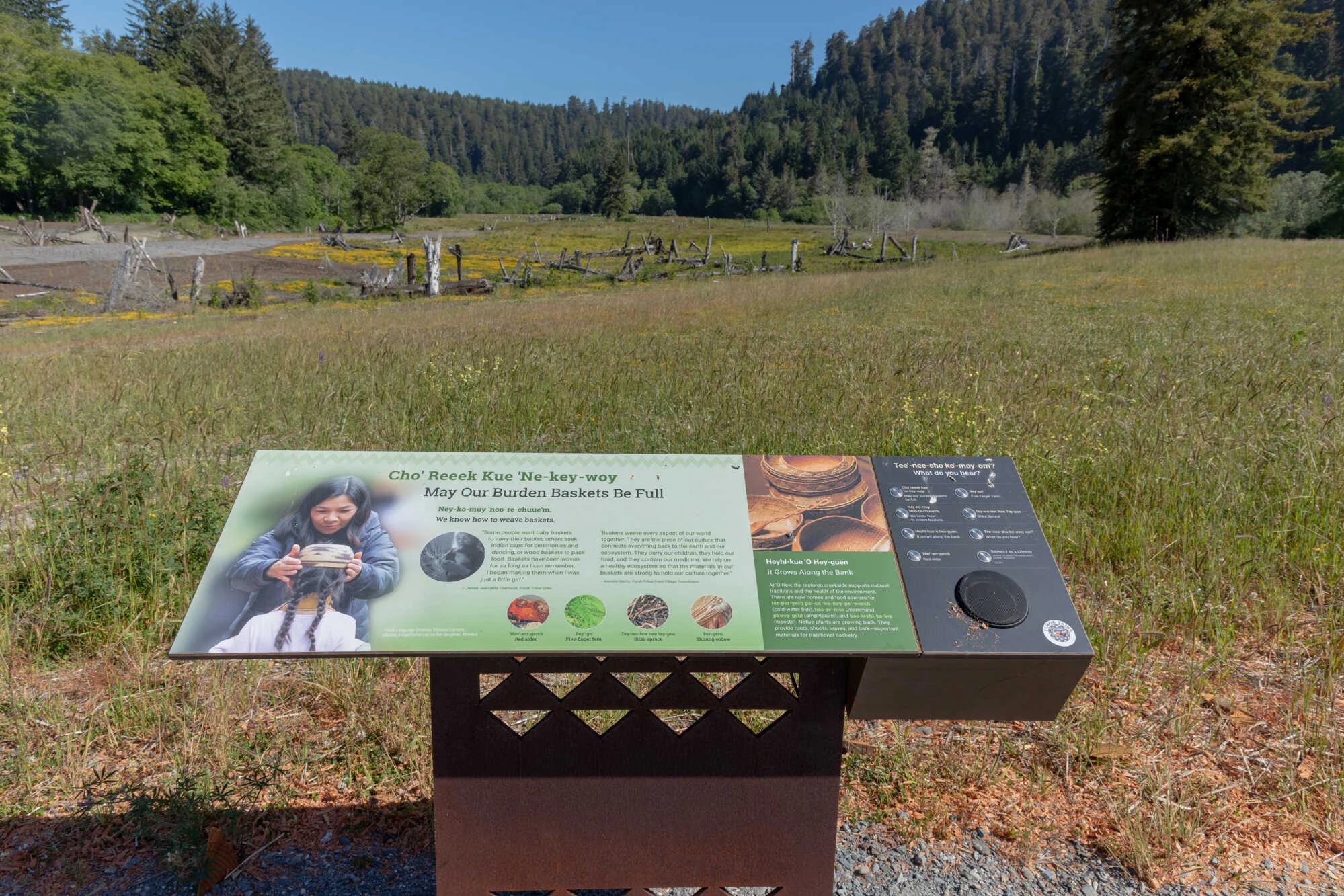
New interpretive displays at ‘O Rew center Indigenous voices and help the Yurok Tribe share their story with visitors. Photo by Amy Kumler.
Recreational site improvements and construction of visitor amenities are complete and will be open to the public in August 2026. Save the Redwoods has worked with an incredible team to finalize the designs for an inspiring and inclusive visitor experience at the ‘O Rew Redwoods Gateway.
- John Northmore Roberts & Associates
- AldrichPears Associates
- Yurok Tribe Cultural Resources Department
- Yurok Tribe Language Program
In addition to the partners listed above, Save the Redwoods is grateful to the many local organizations and community leaders in Orick and across Humboldt County who have helped shape the future of ‘O Rew, from early visioning through permitting, monitoring, and program planning. The project continues to benefit from their insight and care.