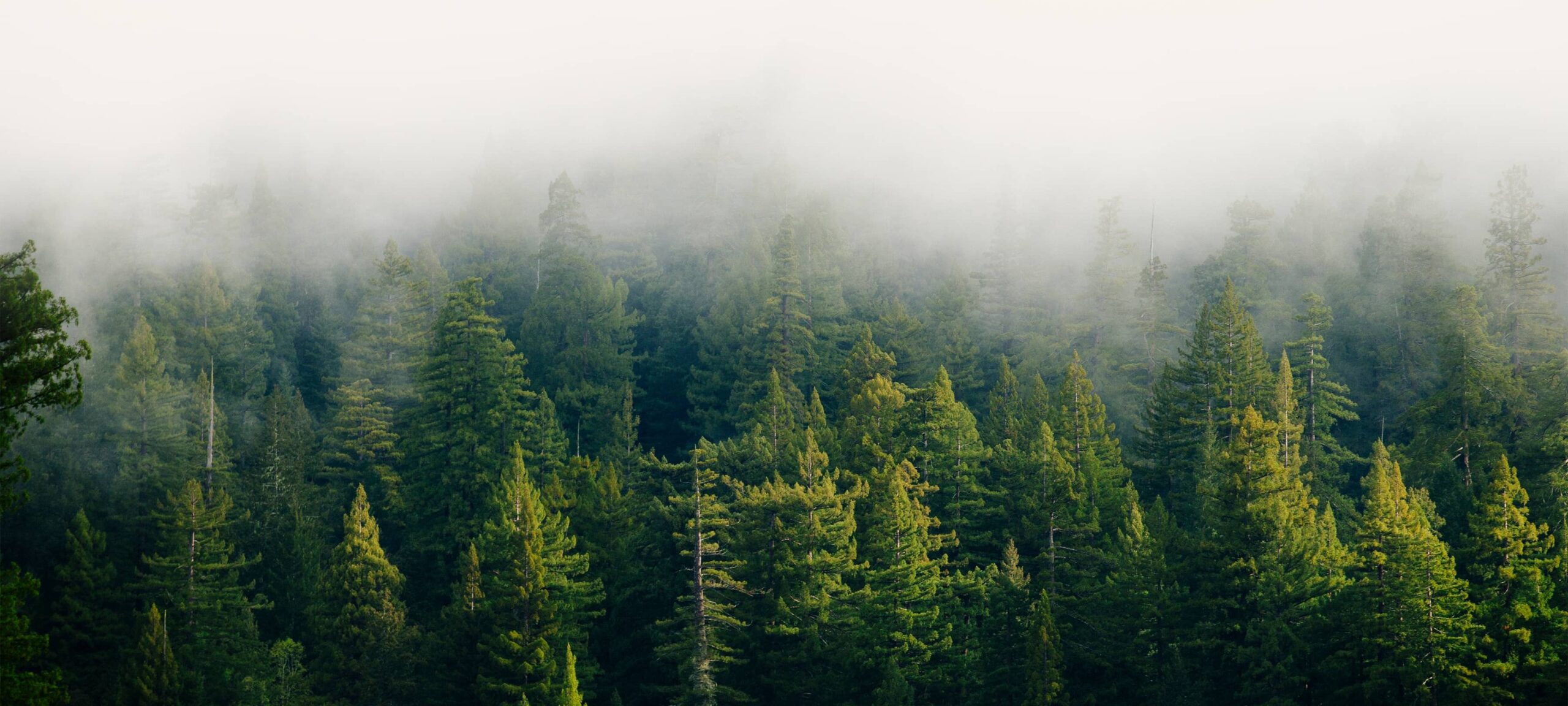
Standing on the Sonoma Coast Redwoods property, your eyes are immediately drawn to the infinite horizon. Panoramic views take in historic Fort Ross to the north and Jenner, Bodega Bay, and Point Reyes to the south—a sinuous coastline fronted by a shimmering expanse of Pacific Ocean. As you gaze out at the waves, the sounds of the Northern California coast soon emerge: the distant barking of sea lions, the screech of a red-tailed hawk, the hum of wind across golden prairie, the hushed rustle of towering redwood trees.
Just two hours from San Francisco, this land was prime real estate for development and fragmentation. But Save the Redwoods League and our partners had other plans. Together we acquired this 1,624-acre property—one of a treasured few of its kind—for the benefit of all.
Sonoma Coast Redwoods lies within the traditional homelands of the Kashia Band of Pomo Indians. The permanent protection of this vibrant landscape helps preserve its cultural value, reconnects wildlife corridors, and builds resilience to megafires and climate change. It also secures an extraordinary redwood ecosystem for the enjoyment of future visitors and the health and well-being of the 2 million people who live near this spectacular place.
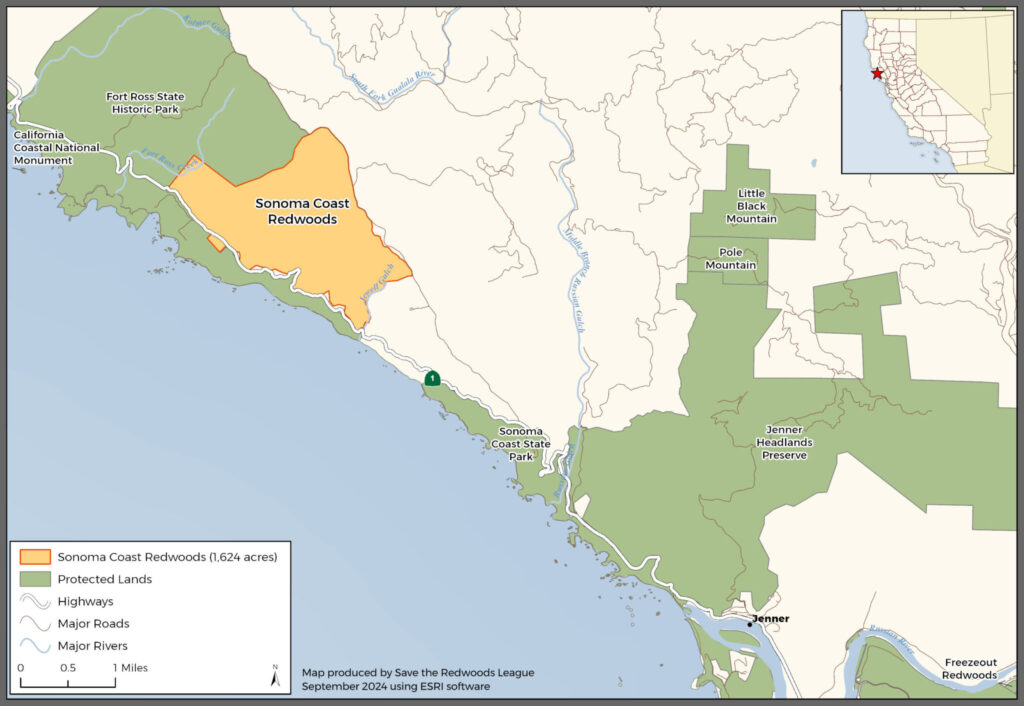
Securing Sonoma Coast Redwoods was an important step toward connecting a key wildlife and recreation corridor along the Northern California coast.
What we secured
- 1,624 acres, roughly twice the size of Central Park
- 836 acres of coast redwood forest, including some of California’s oldest second-growth trees and scattered old growth up to 1,000 years in age
- Stands of young redwoods that will store large amounts of planet-warming carbon as they grow
- Diverse habitat for native plant and animal species, including northern spotted owls, Sonoma tree voles, and the Sonoma spineflower
- Ancestral territory of the Kashia Band of Pomo Indians, who own and steward the nearby Kashia Coastal Reserve
- Greater fire resilience and a buffer for the redwood forest at adjacent Fort Ross State Historic Park
- Expanded opportunities for public recreation, including a potential extension of the California Coastal Trail
Reconnecting Sonoma’s redwood corridor
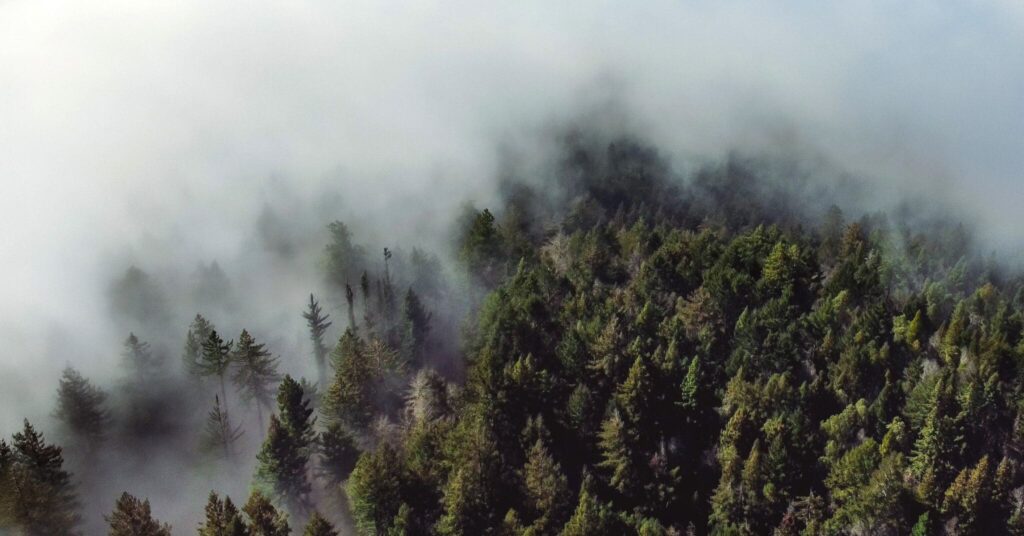
Pacific fog rolls across the property, providing moisture that’s essential to a healthy coast redwood forest. Photo by M3 Creative.
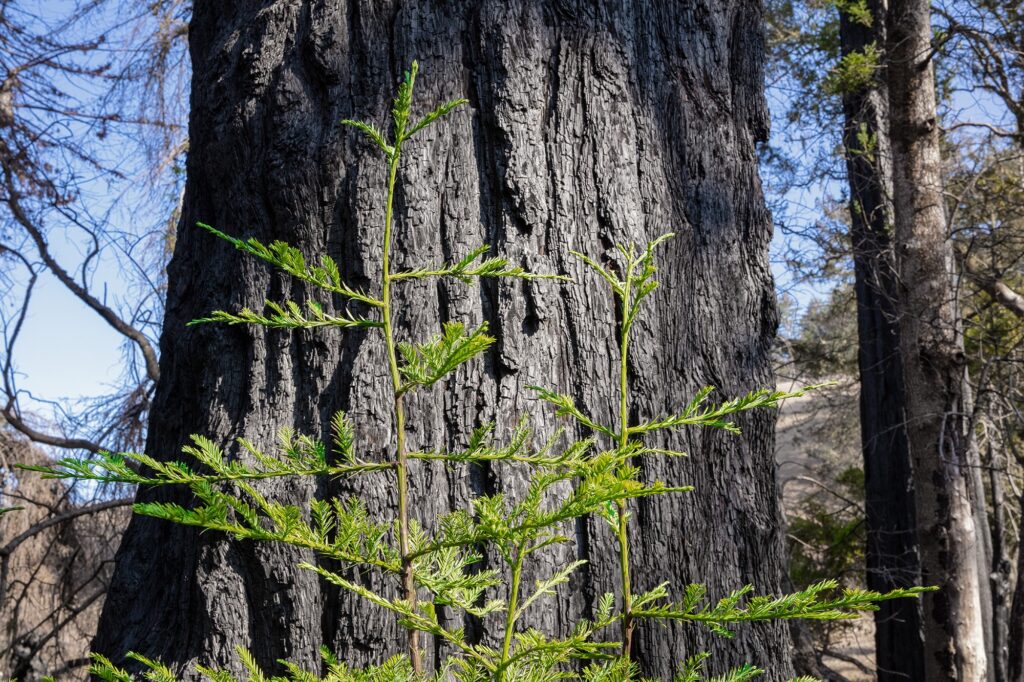
Though portions of the property were impacted by the 2020 Meyers Fire, the redwoods are already bouncing back, thanks to a history of sustainable forestry and a post-fire recovery program by the prior owner, Soper Company, in consultation with the Save the Redwoods. Photo by Max Forster.
For millennia, coast redwoods defined the Sonoma landscape. Fog-shrouded forests blanketed the coastal bluffs, while some of the tallest trees on the planet flourished in the rich soil of the Russian River floodplain. Many of these giants were lost in the California timber rush and ensuing harvests. But stunning pockets of old growth remain, along with resilient second-growth forests eager to reach the sky once more.
Acre by acre, Save the Redwoods and our partners are resurrecting these legendary redwoods; securing Sonoma Coast Redwoods adds a key puzzle piece to the region’s protected redwood footprint. The property contains 836 acres of coast redwood forest, much of which was in timber production for more than a century. As a result, the second-growth trees here are of varying ages, including scattered old-growth giants potentially as old as 1,000 years. This variety indicates a healthy recovering forest—the kind where young trees can grow quickly and pack away large amounts of carbon when the planet needs it most.
By safeguarding these resilient redwoods, we’ve set them on a trajectory toward becoming big, old-growth trees that support the highest biodiversity and store the most carbon. Protecting this sizable parcel aligns with Save the Redwoods’ centennial vision to double the amount of coast redwood forests in parks and reserves to 800,000 acres. It will also advance California’s 30×30 plan to protect 30% of the state’s land and coastal waters by 2030 to help fight climate change and support biodiversity.
Expanded habitat for wildlife
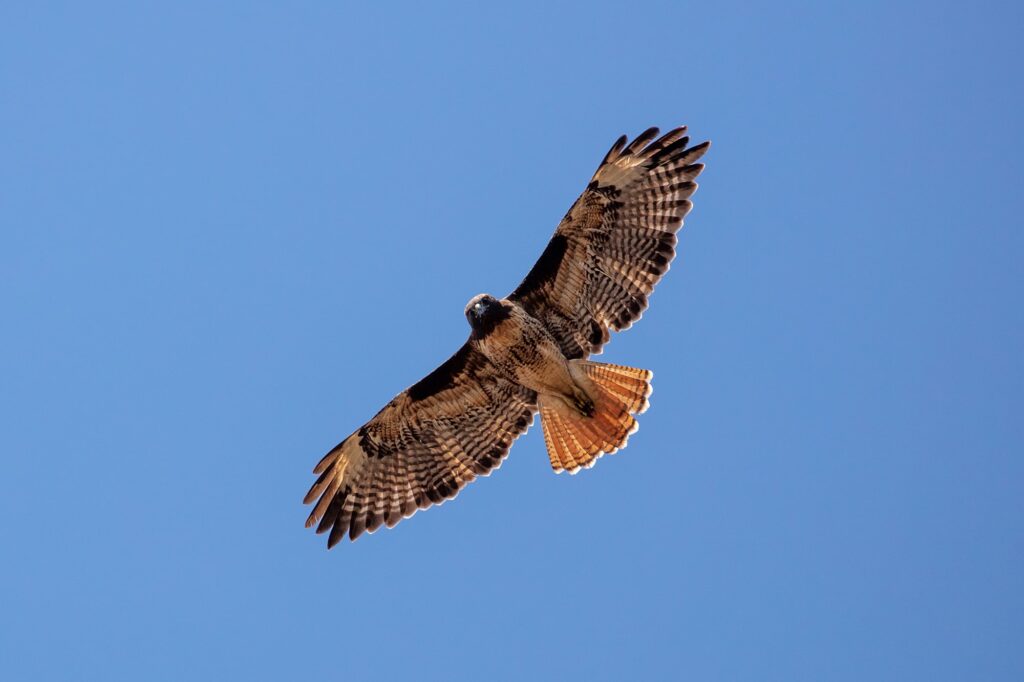
Sonoma Coast Redwoods provides habitat for native wildlife such as this red-tailed hawk. Other raptors such as golden eagles and bald eagles are a common sight, while northern spotted owls have been seen nearby. Photo by Max Forster.
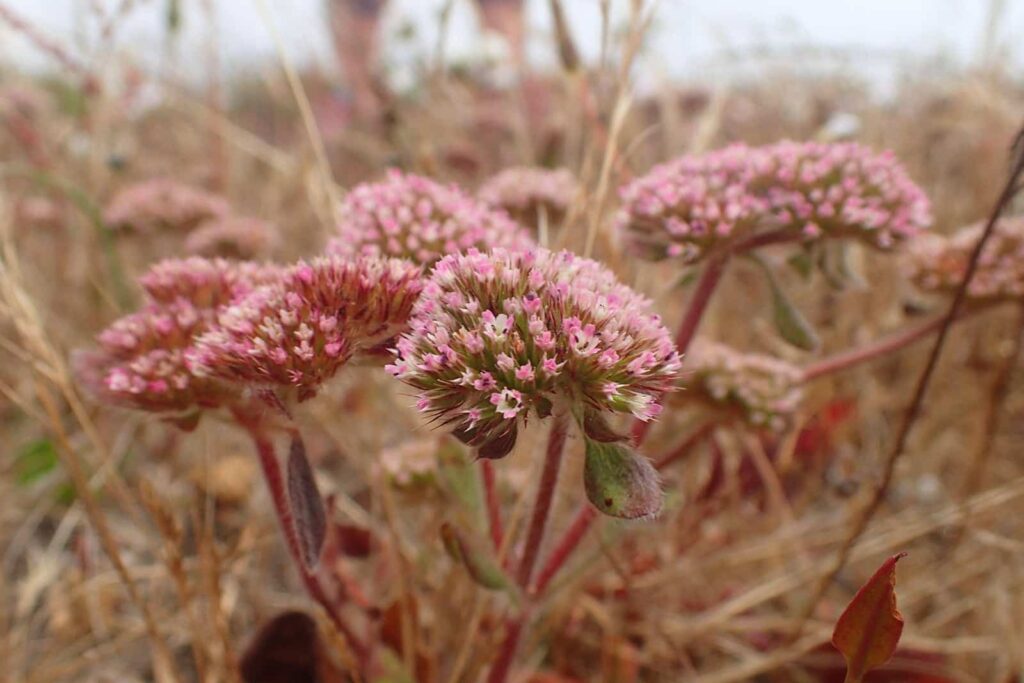
Once thought extinct, the rare Sonoma spineflower grows on the property. California’s coastal prairies are some of the most biodiverse—and most threatened—grasslands in North America. Photo by piemags/nature/Alamy Stock.
Within this landscape, the redwood forest meets sweeping ridgetop meadows where butterflies flit between flowers and deer wander in the grass. This stunning landscape is a haven for native plants and animals, many of them rare or endangered. The acquisition has reconnected more than 7.8 square miles of wildlife habitat and nearly 8 miles of streams, including a redwood-lined stretch of Fort Ross Creek where steelhead trout return from the ocean to spawn.
Raptors such as golden eagles, bald eagles, and red-tailed hawks are regularly seen riding the thermals above the property’s steep bluffs. There is also abundant owl habitat, with three northern spotted owl activity centers within a mile of the property. Several other wildlife species of special concern dwell here, including California giant salamander, foothill yellow-legged frog, and Sonoma tree vole.
In spring, wildflowers blanket the green meadows, home to colorful marsh pea, woolly-headed gilia, and rare Sonoma spineflower, a species once thought to be extinct. California’s coastal prairies are some of the most biodiverse grasslands in North America—and one of the most threatened due to development, invasive species, and fire exclusion. The grasslands at Sonoma Coast Redwoods, which have long been used for livestock grazing, are now secured for restoration.
Protecting a rich past and bright future
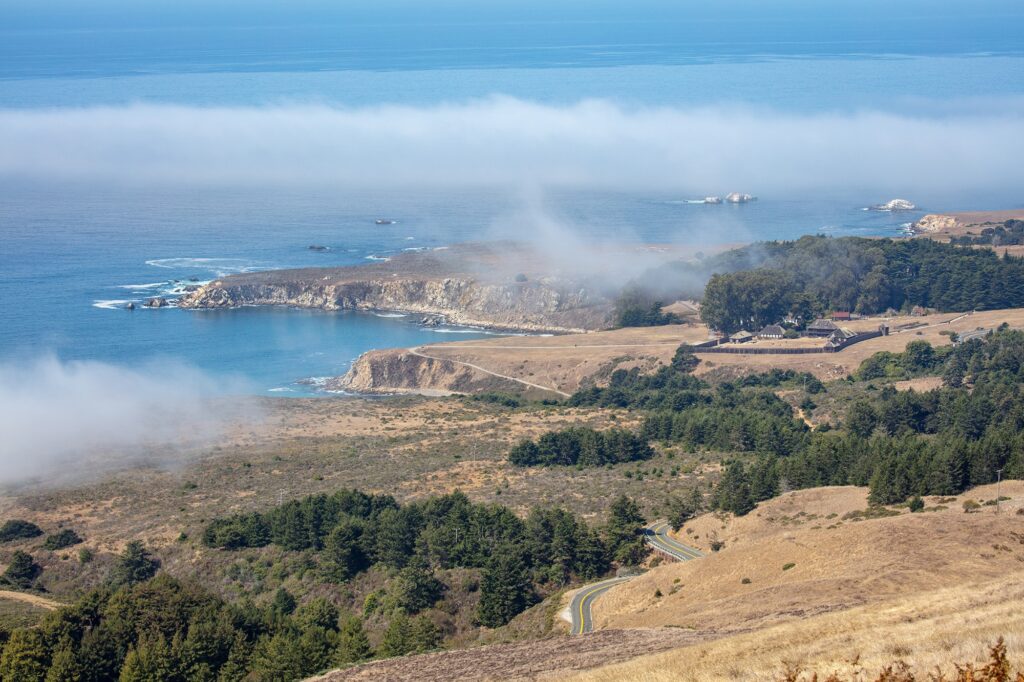
Panoramic views extend across the famed Highway 1 to the adjacent Fort Ross State Historic Park. The acquisition creates an exciting opportunity to expand the California Coastal Trail through this breathtaking scenery. Photo by Max Forster.
In addition to its ecological richness, Sonoma Coast Redwoods possesses great historical and cultural significance. The property lies within the ancestral territory of the Kashia Band of Pomo Indians, who own and steward the nearby Kashia Coastal Reserve and maintain deep cultural ties to these lands.
The present-day Kashia reservation, Stewarts Point Rancheria, represents only a small portion of the tribe’s traditional territory, which extends from the Pacific Ocean north to the Gualala River, inland to the confluence of Warm Spring Creek and Dry Creek, and south beyond the Russian River to Duncan’s Point. The Kashia People have stewarded this land for millennia; and prior to European contact, an estimated 1,500 people inhabited this territory.
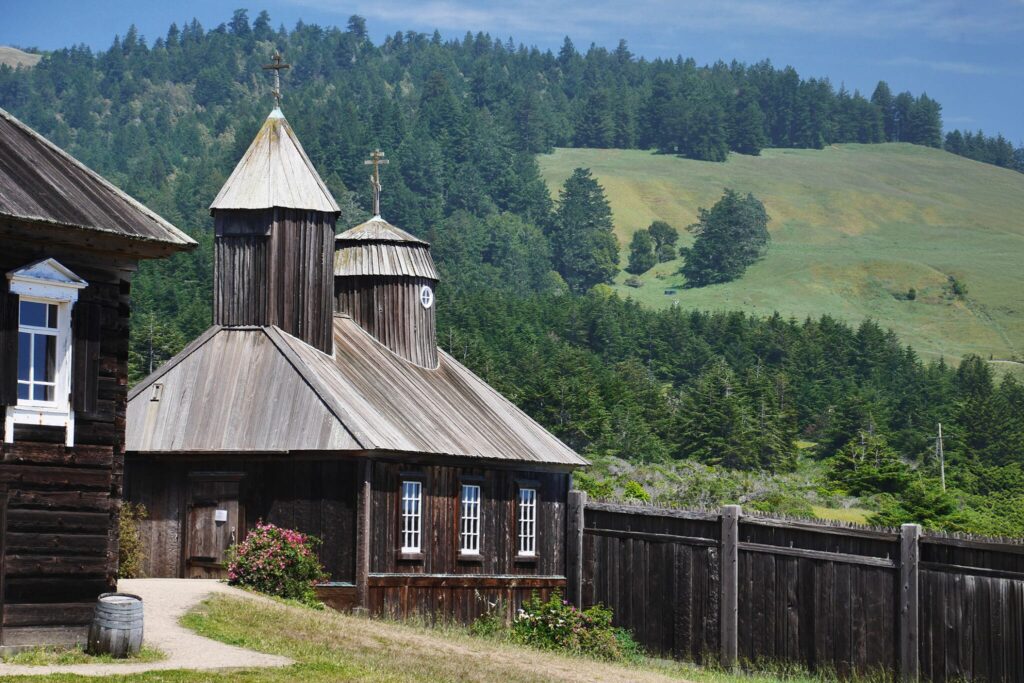
The property adjoins Fort Ross, a popular destination for its Russian-built redwood structures, historic cemetery, and coastal trails. Photo by Zug Zwang/Flickr.
With Fort Ross State Historic Park immediately north of Sonoma Coast Redwoods, the protected property also helps buffer the state park’s redwood forest and creates the potential to extend the California Coastal Trail through breathtaking scenery. It’s a chance to expand equitable public access along the Sonoma Coast and connect more people with inspiring outdoor experiences that benefit their health and well-being.
Celebrating a collective effort
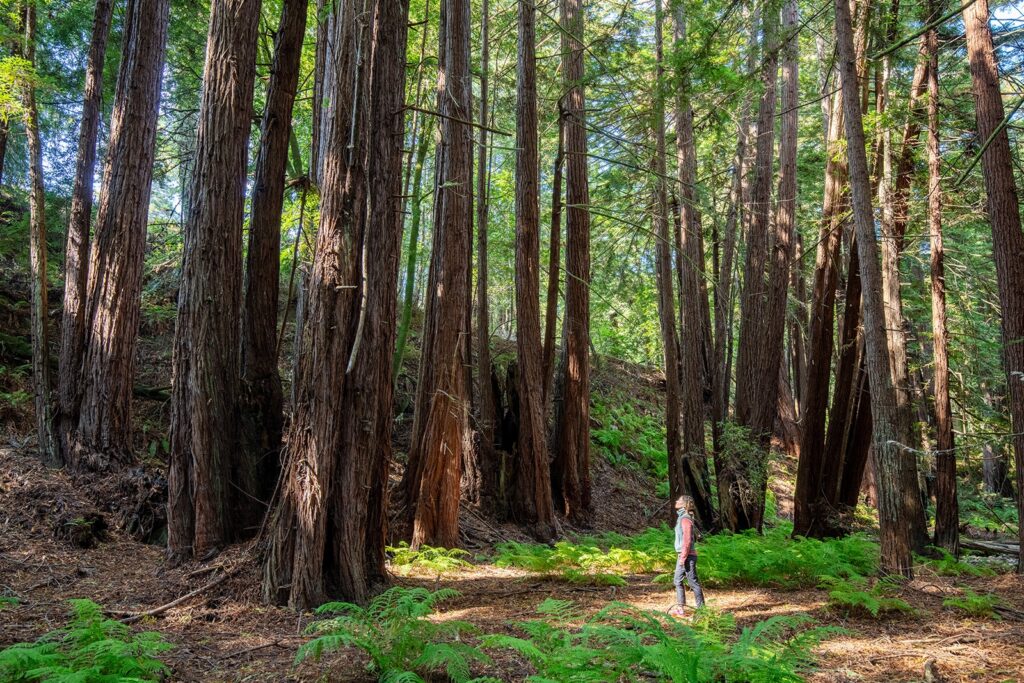
Preventing further commercial harvest and restoring this maturing forest will lock in crucial climate benefits for the long term. Photo by Max Forster.
Securing Sonoma Coast Redwoods was truly a collective effort, with people around the globe showing their love for this remarkable ecosystem. Donations poured in from every U.S. state and countries around the world, including Ecuador, Canada, Denmark, UK, Germany, Italy, Switzerland, Turkey, the Netherlands, New Zealand, and Japan.
More than 5,000 individual donations were amplified by two generous matching gifts: $1,000,000 from the Schuman Family Foundation and $200,000 from the Troper Wojcicki Foundation. Key leadership gifts from the Holdfast Collective and the Wombwell Family and an investment from the Gordon and Betty Moore Foundation also made this important acquisition possible.
These donations will also support stewardship of the redwood forest until Save the Redwoods transfers Sonoma Coast Redwoods to a long-term steward for permanent protection and public access.
Thank you for hearing our call to protect this vital landscape from private development and answering with such enthusiasm and generosity. Together, we’ve ensured that the future of this iconic stretch of California’s coast will be clear and bright.
Newsroom
PRESS RELEASES
- September 12, 2024 — Save the Redwoods League Secures Opportunity to Protect and Restore 1,600+ Acres of Redwood Forest and Coastal Prairies from Threat of Development along Sonoma Coast
IN THE NEWS
- Save The Redwoods League seeks to buy, restore 1,624-acre Sonoma Coast timber property abutting Fort Ross State Historic Park
—Press Democrat, September 2024 - Three miles of scenic Northern California coastline preserved in major redwoods deal
—The Mercury News, September 2024 - California Coastal Trail could get extension through Sonoma preservation deal
—SF Chronicle, September 2024