August 13, 2026
Before most people have poured their first cup of coffee, Save the Redwoods League’s sequoia apprentices are already waking up to birdsong and heading into the Southern Sierra to help care for some of the world’s most iconic trees.
For the past three years, the Sequoia Apprenticeship Program (SAP) has provided Central Valley community college students with hands-on experience supporting the restoration of vulnerable sequoia groves. These 11-week paid positions help develop the next generation of natural resources professionals at a time when climate-driven megafires have made this work essential to sequoia survival.
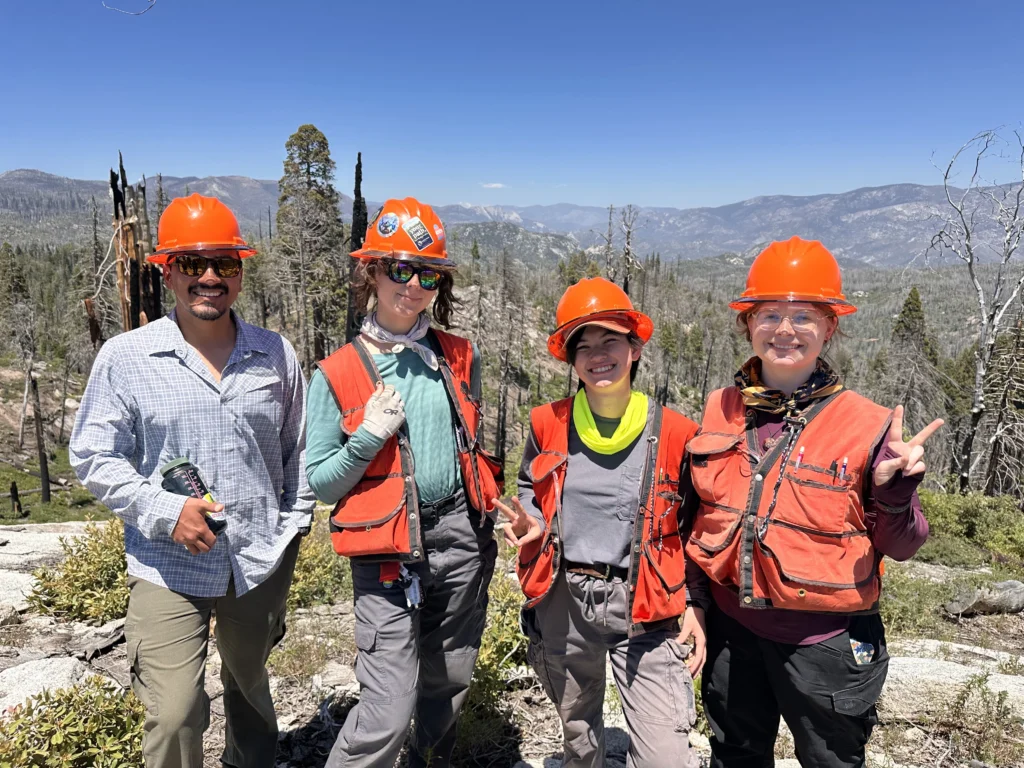
One of the first days in the field for the 2026 apprentices: (from left): Jason Mestanza, Sage
Allen, Elisha Duong-Paul, and author Cassidy Eidse. Photo by Neida
Rodriguez.
Along the way, apprentices build skills, friendships, and professional connections in a field that can be intimidating to enter. Their work ranges from monitoring post-fire sequoia health to removing invasive plants—but no two days look exactly alike.
Here’s a sample day in the life of the giant sequoia apprentice crew.
Sunrise: Nature’s alarm clock
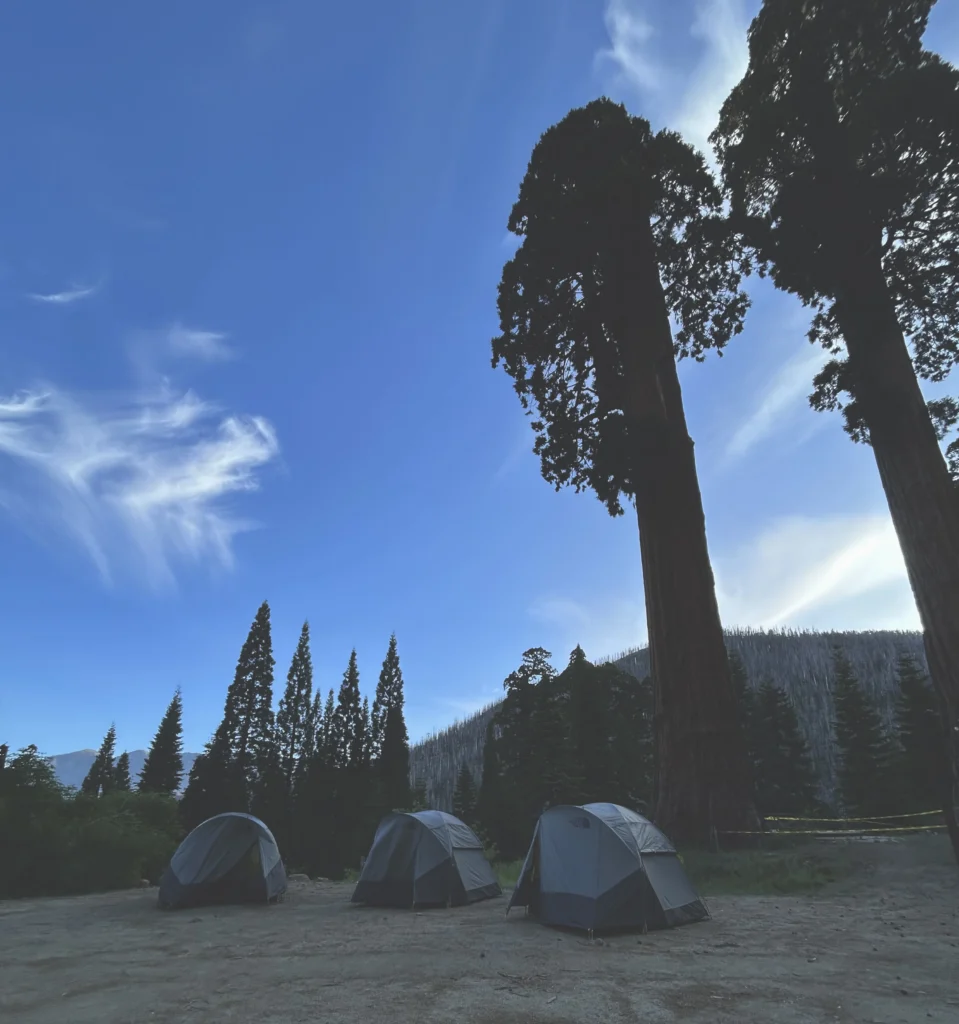
Base camp at Save the Redwoods’ Alder Creek property includes a fridge, grill, outdoor
showers, and spectacular views. Photo by Cassidy Eidse.
As the sun rises, the apprentices awake to the noisy, crescendoing call of mountain
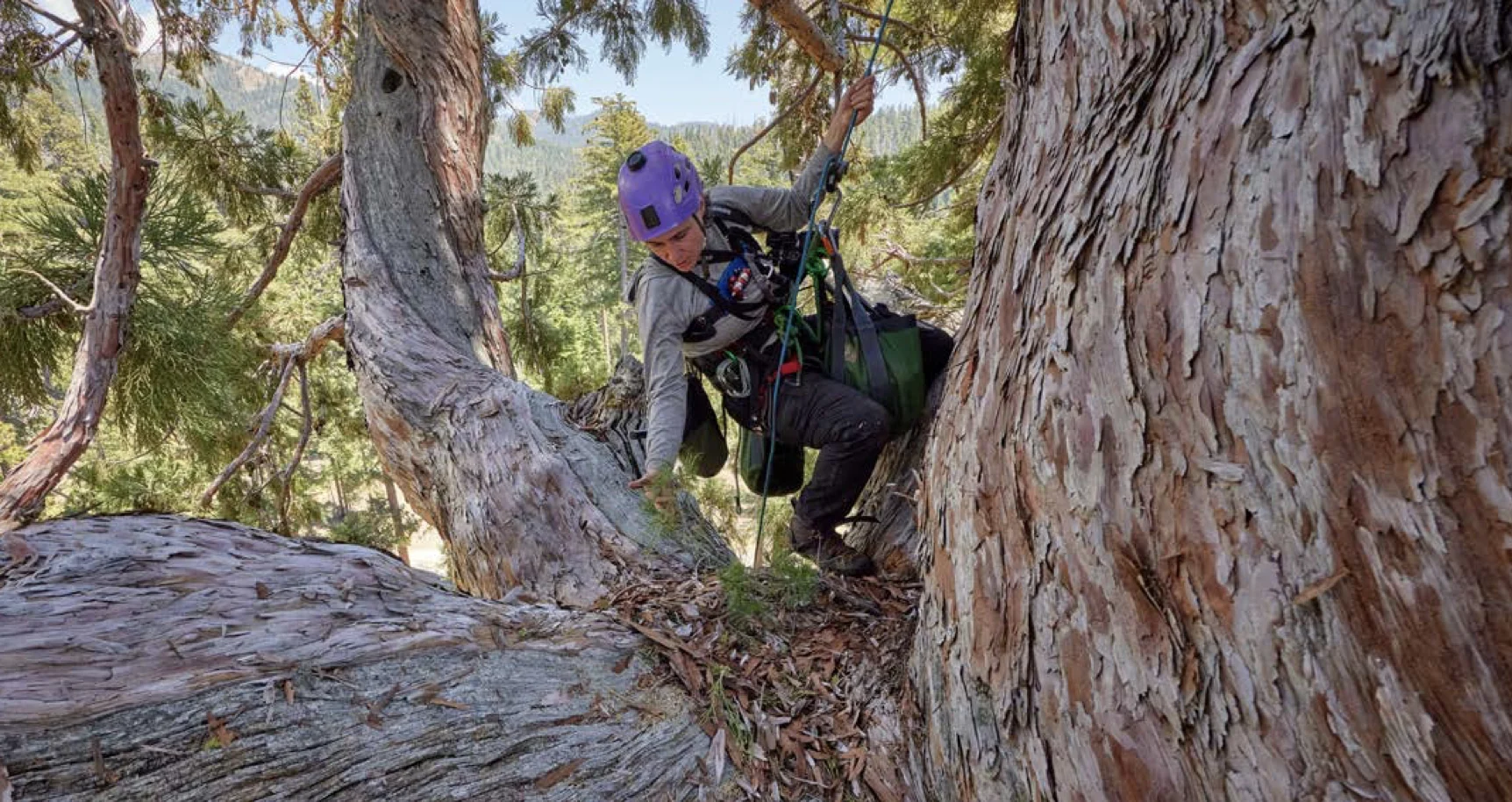
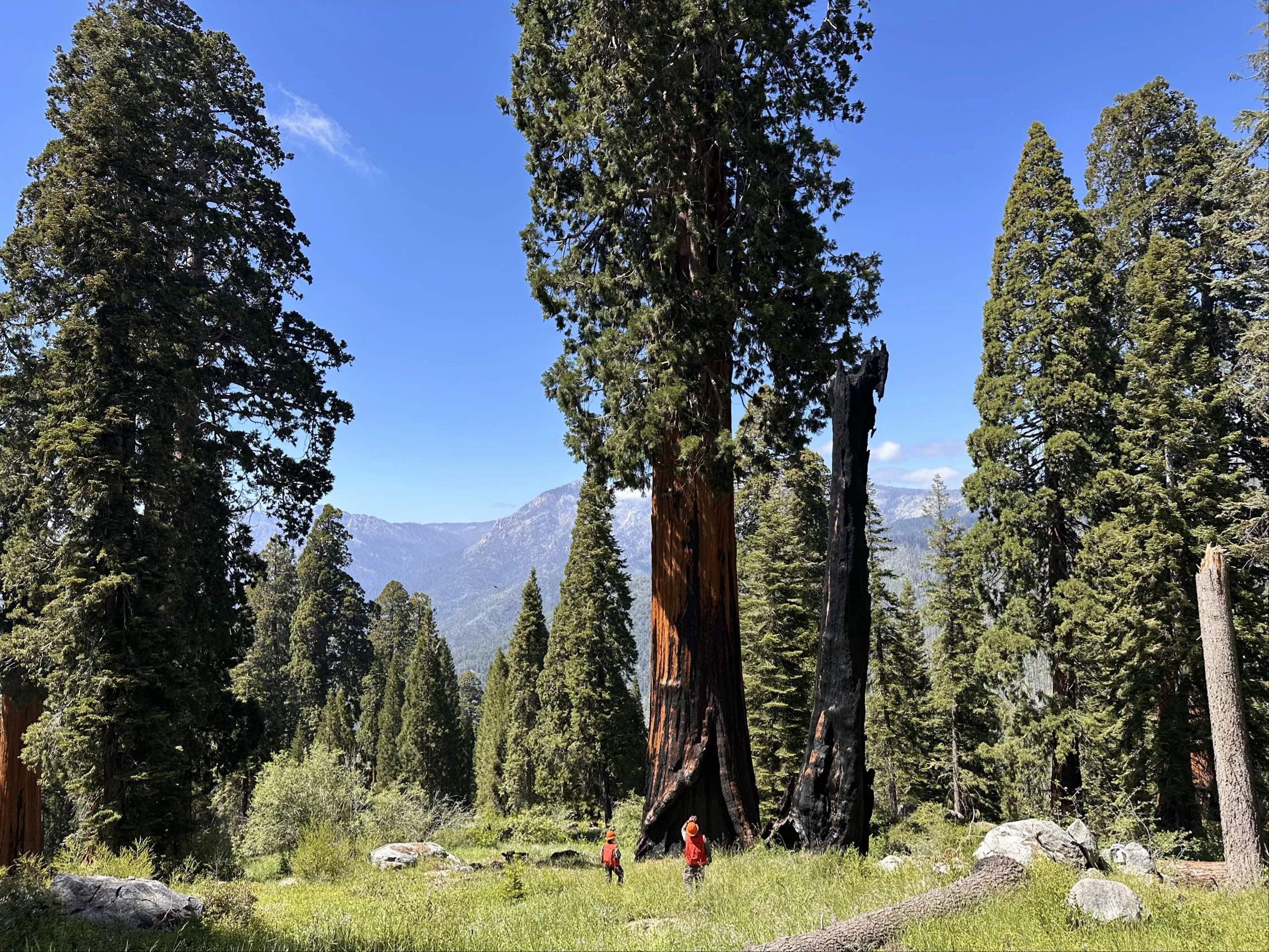
chickadees, dark-eyed juncos, and western tanagers. They unzip their tents to views of neighboring mountains, blue skies, and towering sequoias. After breakfast, it’s time to check their field vests for essential tools, including DBH (diameter at breast height) tape used to measure a tree’s diameter. Working with giant sequoias, which can reach 100 feet in circumference, apprentices often need two tape measures just to wrap around one tree.
Leaving camp, the crew heads to the day’s work site, driving the truck down narrow roads while listening to their SAP Crew ’26 playlist—a mix of favorite forest songs, from “Meet Me in the Woods” by Lord Huron to “It’s Time” by Imagine Dragons.
Reaching the site, they meet with Save the Redwoods staff to check equipment, review procedures, and make a game plan for the day. Staff member Neida Rodriguez is their main contact point and usually accompanies the apprentices in the field. She has been instrumental in setting up the program and making sure it runs smoothly.
Morning: Careful communication
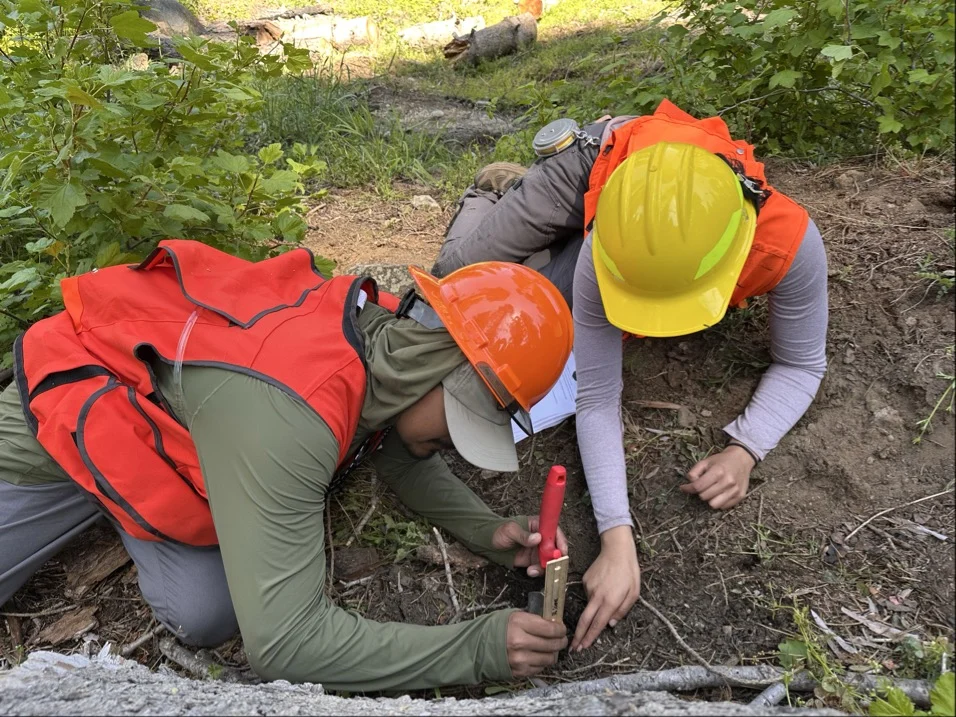
Measuring duff, a layer of decomposing leaf litter. This data helps predict fire behavior, as duff can fuel wildfires. During
high-intensity fires, the duff layer is sometimes scrapped away from the tree base. Photo by Neida Rodriguez.
The apprentices’ work changes from day to day, but data collection is a core part of the job. They begin by recording any new trees, scouring the plot for delicate seedlings and saplings that are easily overlooked in the dense vegetation without a trained eye.
Next, the apprentices measure undergrowth and other fire fuels that accumulate on the forest floor. This data provides foresters and scientists with valuable information on how sequoias are regenerating after fires and responding to recovery efforts—findings that help guide fire resilience efforts at Alder Creek and in Sequoia National Forest.
Because their data may shape the forest’s future, the apprentices must work together seamlessly to communicate accurate information. The crew may joke around together, but when it’s time to record data, their focus sharpens. Apprentice Jason Mestanza says that learning how to communicate, “how to hear others and their data,” was initially a challenge. “This was a lot more teamwork than I’ve ever done,” says Jason. “I’m grateful to everyone who’s been patient and taken the time to teach me.”
Midday: A scenic lunch
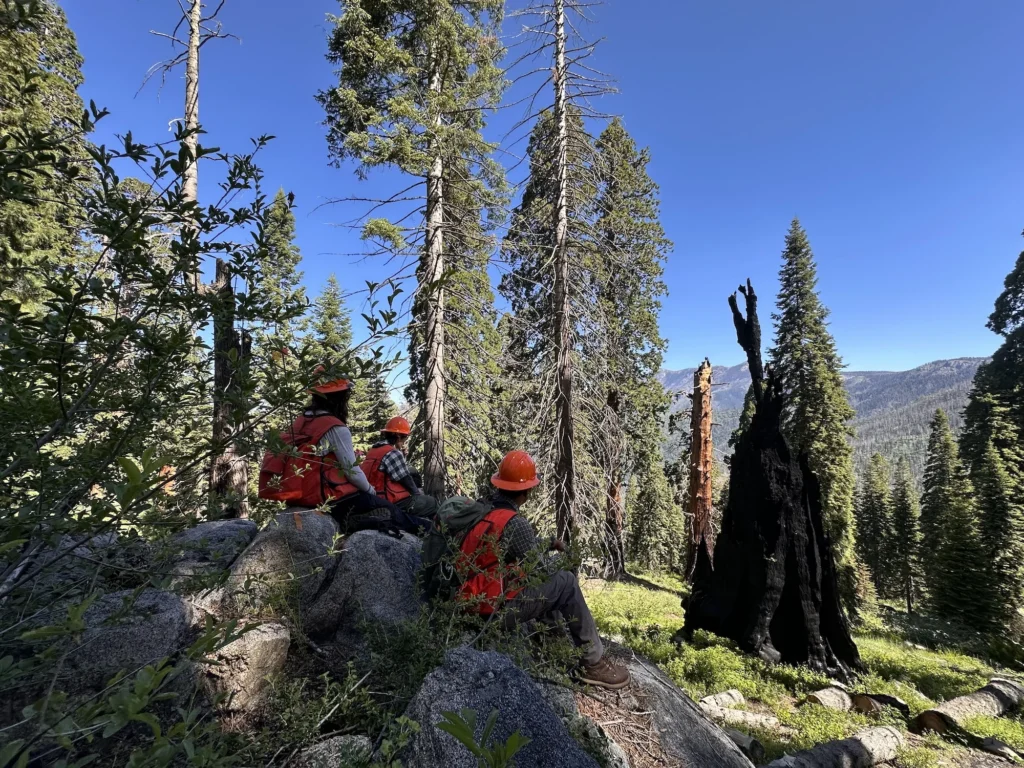
Lunch with a view is a regular perk of being out in the field. Photo by Neida Rodriguez.
Before moving to the next round of data collection, the crew breaks for lunch. Hungry after the morning’s hard work, the apprentices spread out on rocks or stumps and pull out sandwiches and shared snacks. They often eat quietly, taking in the beauty of the surrounding forest and building energy for the rest of the day.
Soon it’s back to the plot to record each tree’s species, diameter, height, and crown status. The apprentices fan out to check trees from every angle to make accurate assessments, sometimes hiking up steep slopes or bushwhacking through deerbrush and whitethorn.
Second-year apprentice Sage Allen says the physical demands have been her biggest challenge, especially as “someone who never did outside stuff at any point in my life.” Forestry, she says, was “a bit of a wakeup call.”
Afternoon: Pushing on for the forest’s sake
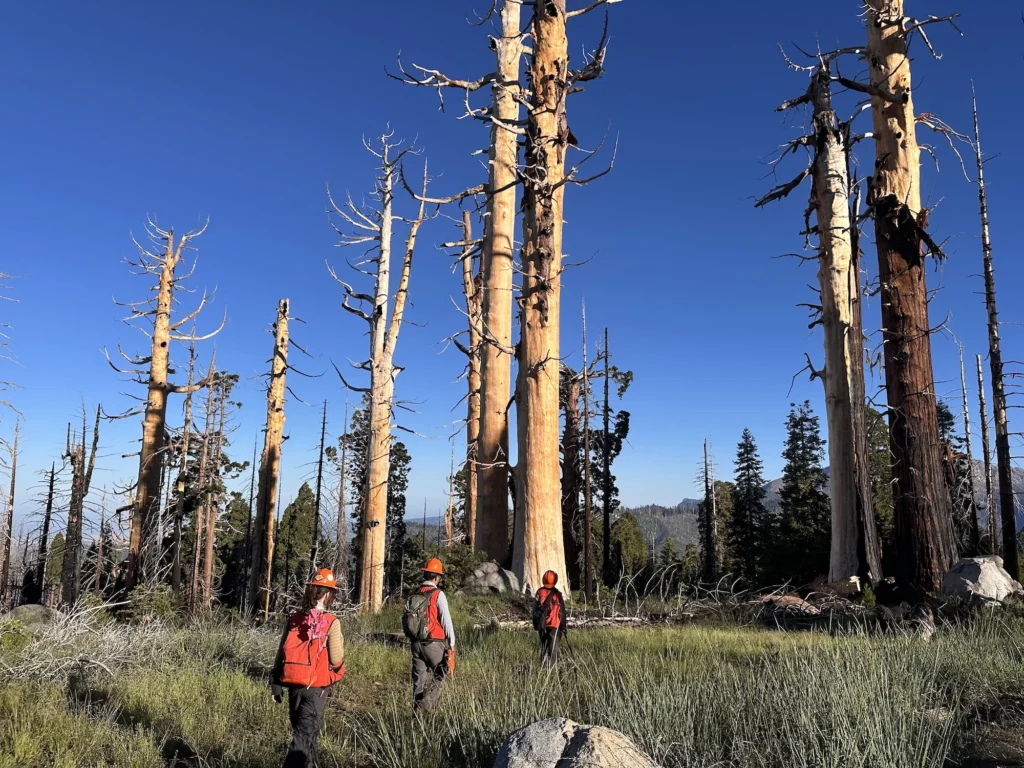
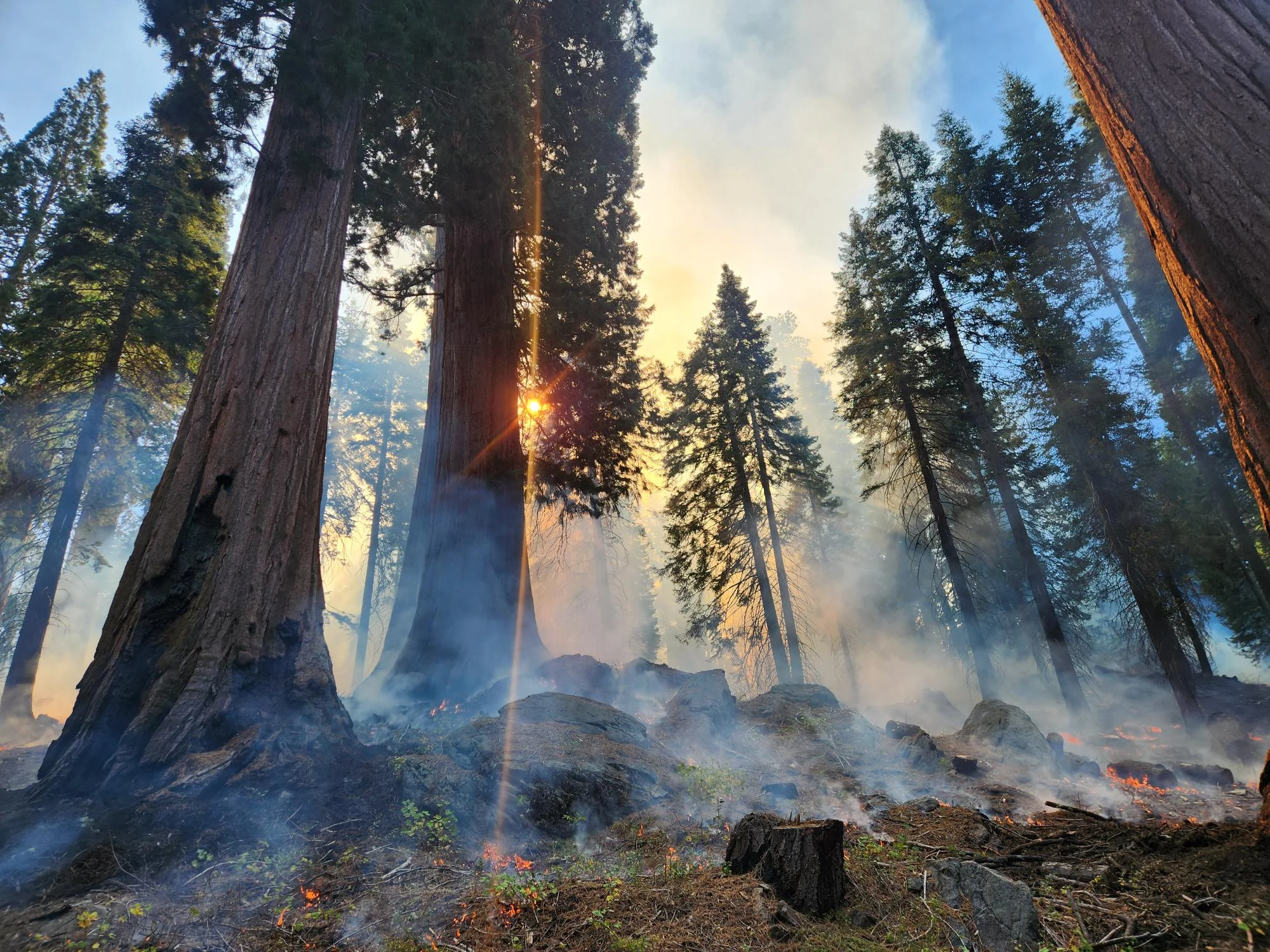
The crew’s work takes them to areas impacted by the 2020 Castle Fire, which killed thousands of mature sequoias. Photo by Neida Rodriguez.
Once they finish one plot, the apprentices move on to the next. Sometimes their work takes them into areas affected by the 2020 Castle Fire, where shade is scarce, dead trees pose hazards, thorny shrubs block the route, and loose, sooty soil makes steep slopes even harder to navigate. But these challenging post-fire conditions also make it clear why restoration work matters.
Says apprentice Elisha Duong-Paul, “We’re all here because we like the forest and our work is to keep it and help it be better.” Despite the intense physical effort, these young people keep going for the sake of the trees.
Day’s end: Review and refresh
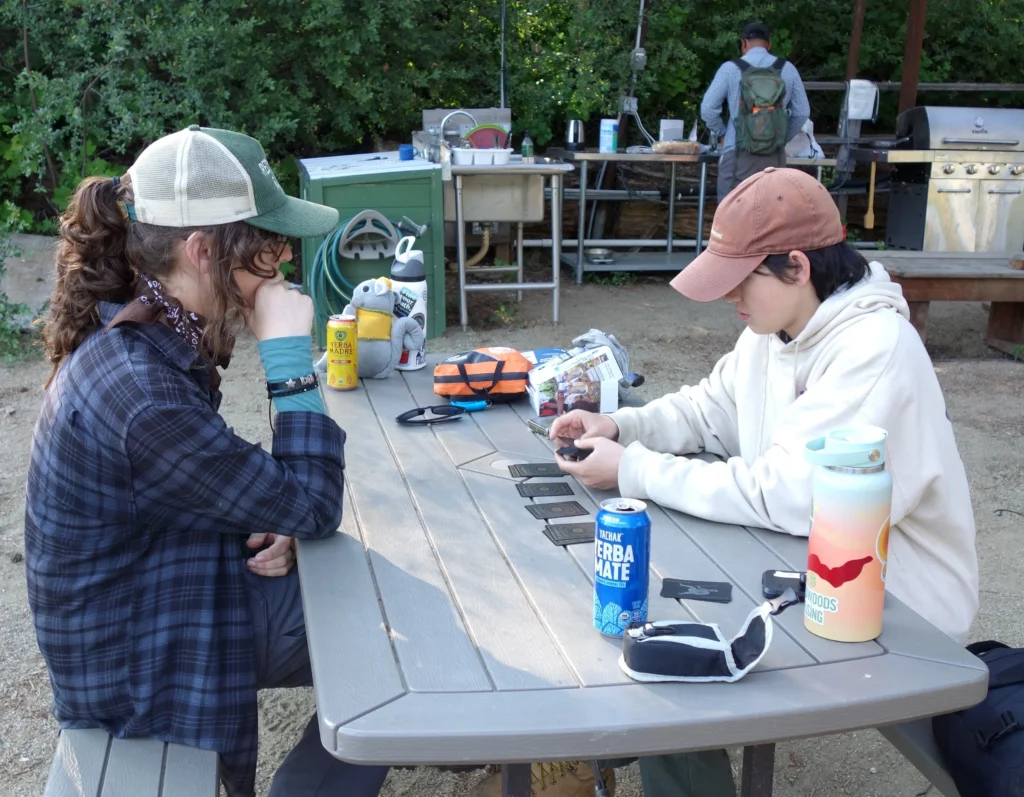
The crew takes a break with cards, yerba mate, and their squirrel stuffy mascot. Photo by
Cassidy Eidse.
Wrapping their work, the apprentices and Save the Redwoods staff gather around the truck for an after-action review. The team goes over what went well and what could be improved, and crew members receive shoutouts for their achievements. The ritual helps the apprentices recognize the unique contributions they each bring and keeps morale high after long demanding days.
Returning to camp, the apprentices usually head straight for a shower. After working in post-fire areas, dirt and soot under fingernails is only the tip of the iceberg. They then take time to relax, cook dinner, and gather around the campfire for card games or a guitar jam session beneath the ancient trees.
Night: A future in the forests
The apprentices head to bed to rest up before another early morning. Settling into their tents, they reflect on the day’s work and all they’ve learned over the summer. “The fact that we get to work with these giant sequoias has been amazing,” says Mestanza. “I feel like each tree has, in some way, its own personality.”
Similarly, each member of the crew will chart their unique path forward, combining a passion for nature with the experience the apprentice program has given them. For some that means continuing their education at university, for others it’s a life-long career in forestry or natural resources management. For Sage, it meant choosing to return as second-year apprentice to guide the incoming crew, despite the hard work and physical challenges. “This is what I should be doing,” she says. “This is my place.”
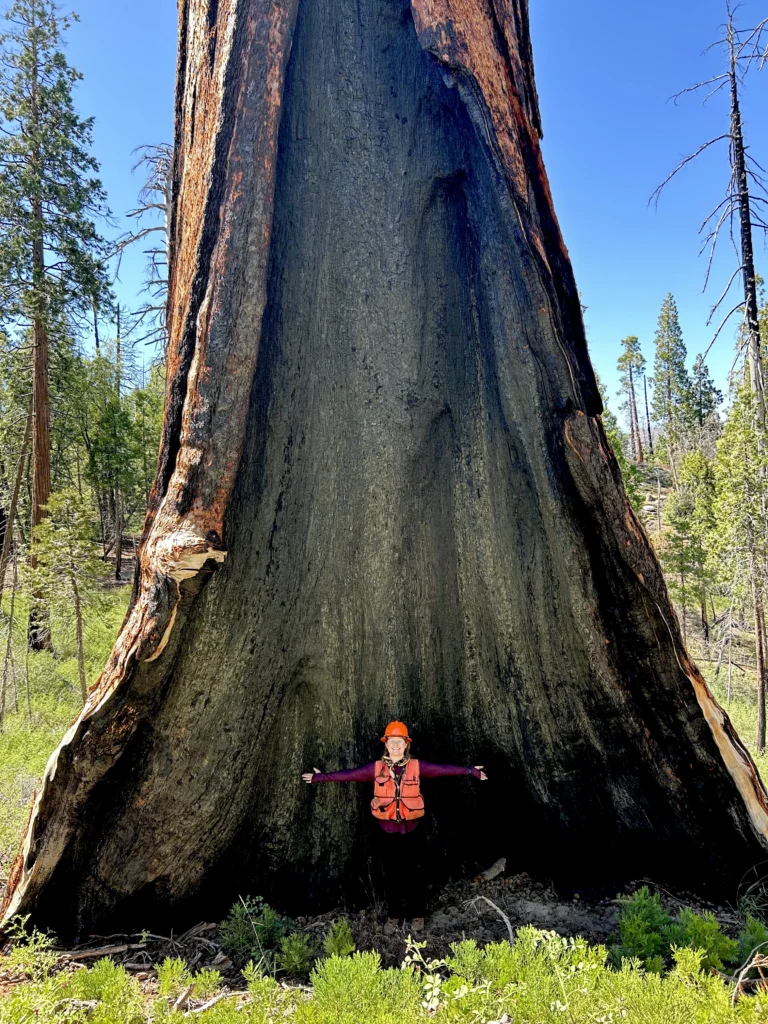
The author with a sequoia monarch. After completing her apprenticeship, she plans to continue her studies in forestry. Photo courtesy of Cassidy Eidse.