October 19, 2026
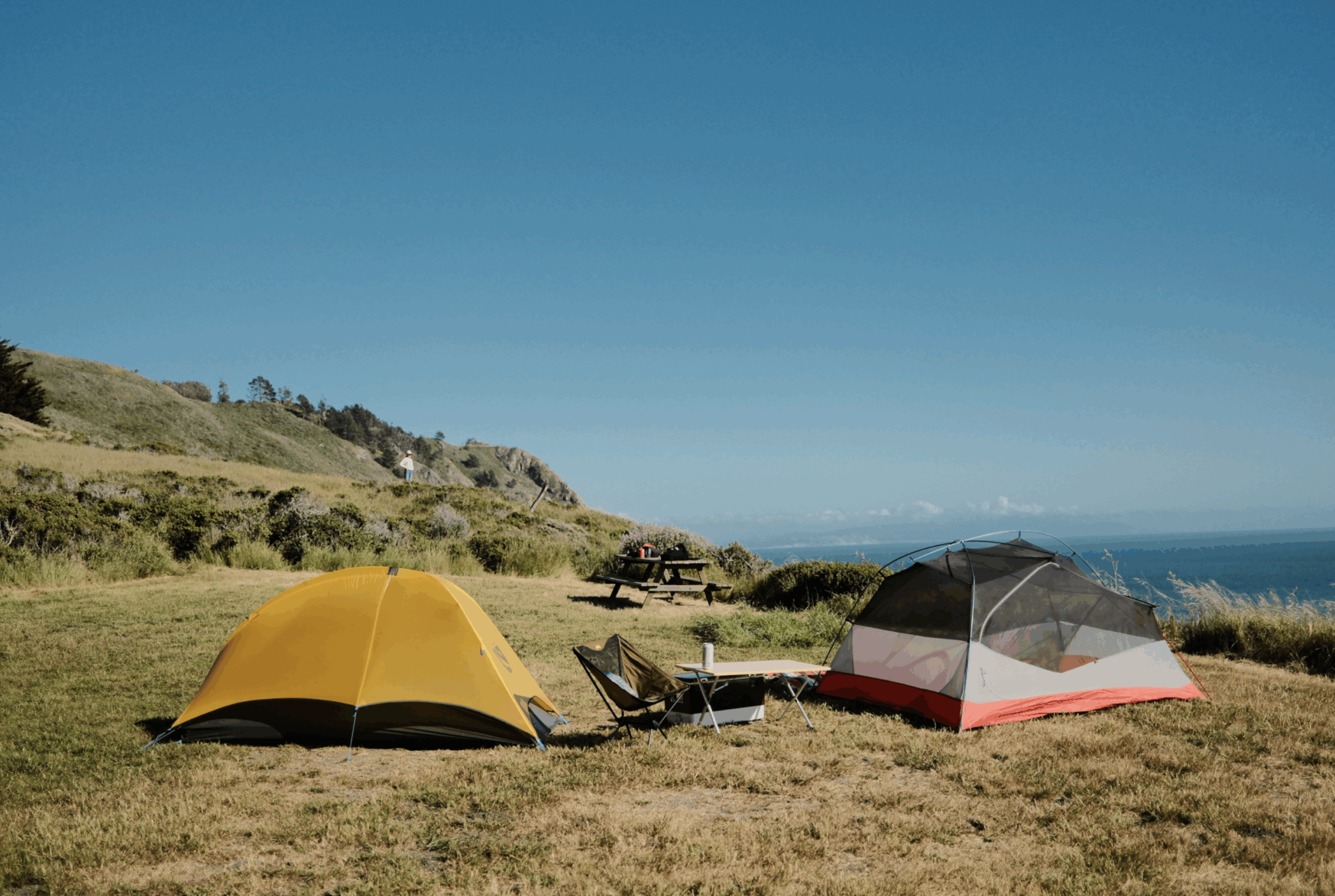
It’s a warm July day on the Sonoma Coast, and I’m standing in a meadow outlined by young redwoods and Douglas-fir. The group around me is made up of Spanish-speaking families visiting from San Francisco’s Mission District, considered the heart of the city’s Latine community. For several participants, this will be their first time camping.
We go around the circle, sharing and getting to know each other. I ask them, “¿Hay algo que te ponga nervioso aquí en la naturaleza?” (“Is there anything that makes you nervous about being in nature?”)
One thing most of the group agrees on: Encounters with wildlife—from bears to snakes to insects—are the most nerve-wracking possibility. Yet in the end, a visit from an opportunistic fox looking for leftovers becomes an often-recounted highlight of the weekend.
For bilingual staff at Save the Redwoods League, it’s been a busy summer leading Spanish-language programming at our redwood properties and public parks. As site hosts and facilitators, staff fluent in Spanish teach about the forest, lead interpretive hikes, present important safety information, and offer guidance on outdoor skills such as setting up a tent or building a campfire. The excursions are a collaborative effort with leaders from the visiting organization.
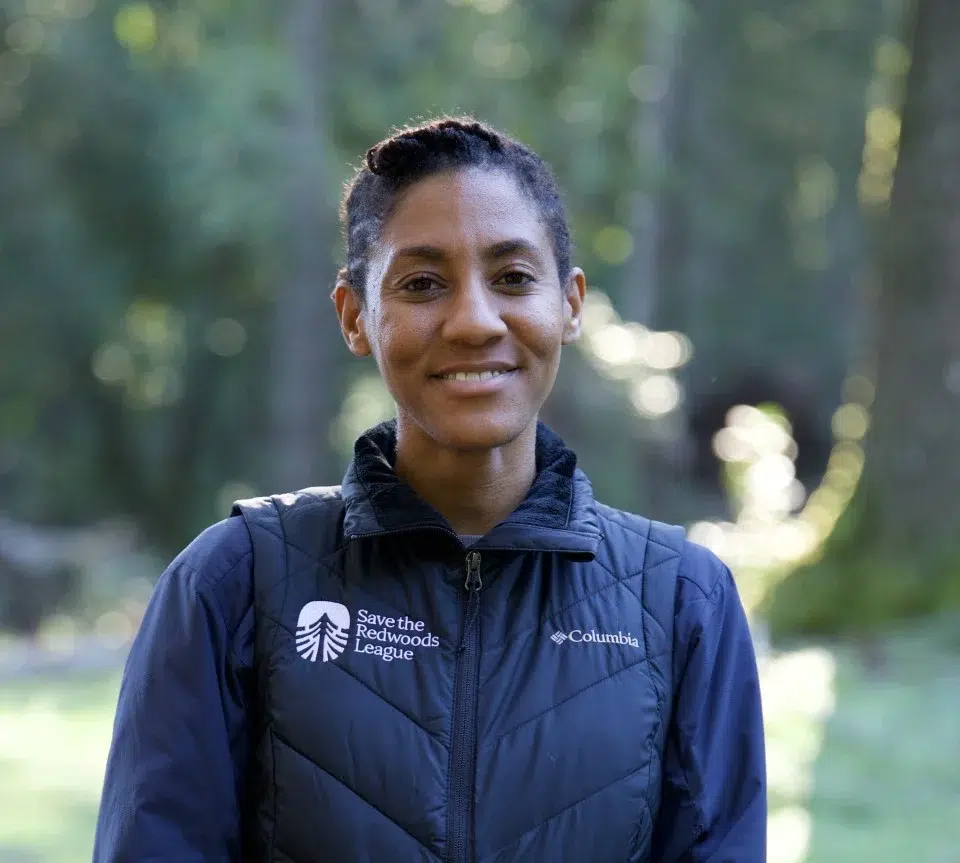
During California State Parks Week in June, Michelle Payan, this year’s community engagement fellow, cofacilitated an intergenerational campout in Spanish at Humboldt Redwoods State Park. “When you can speak Spanish out in the woods, it feels like coming home,” says Payan. “Here we are in this completely new place and we’re finding family, finding community, and finding ourselves.”
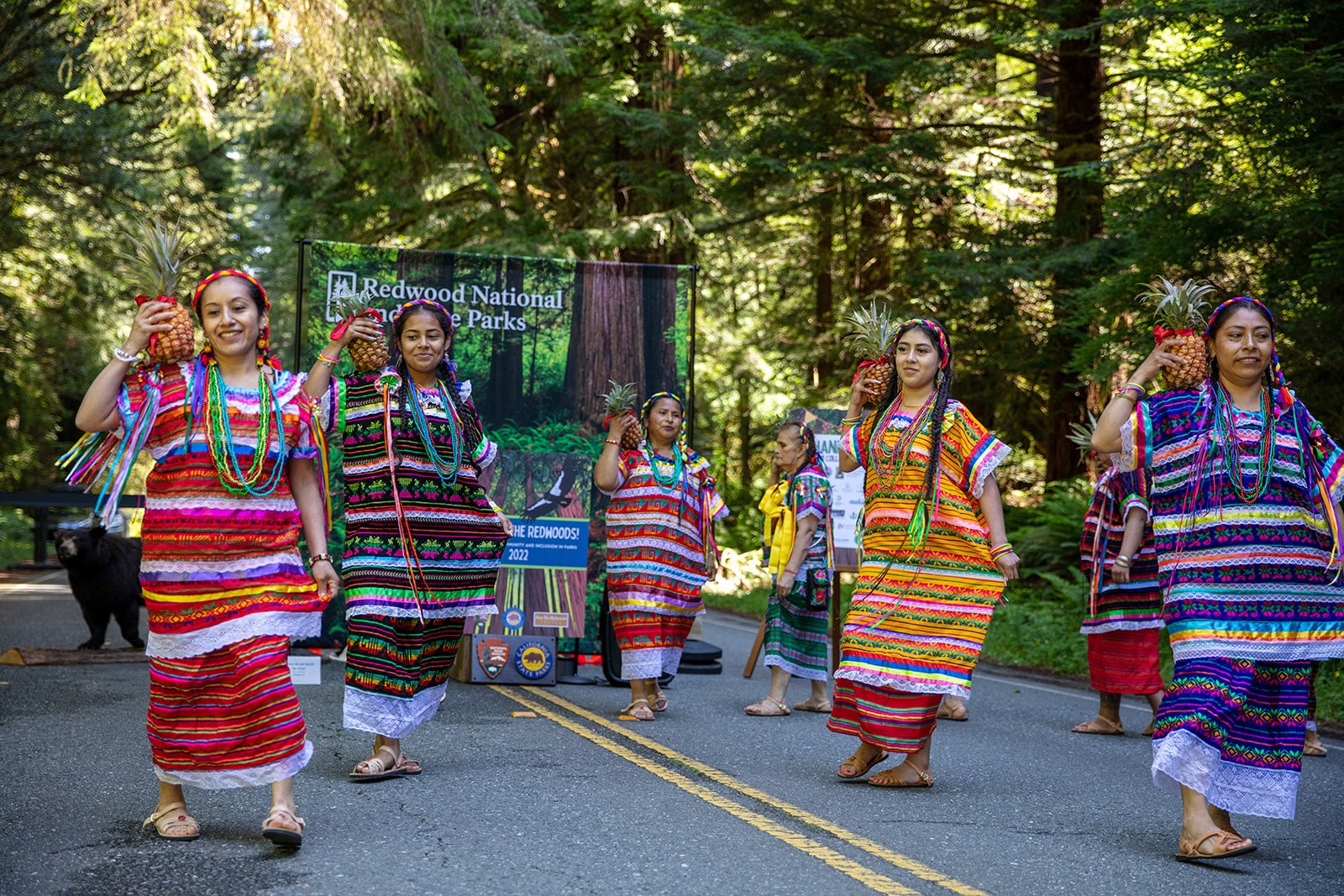
A key part of creating a welcoming camping experience is providing space for bonding and cultural activities. “When it was time to prepare the masa for tortilla making, all the moms, aunties, and grandmas gathered around,” shares Payan. “It’s a beautiful experience to talk with generations of people as you put your energy into a ball of masa, handing it to the next person to put on the comal.”
Payan says the women had joked good-naturedly about falling into their familiar food preparation roles. But they were also eager to pass along these traditions to the younger generation. “¿Dónde están los niños?” the women asked. “Where are the children?”
Wouldn’t you know it? The kids were all off playing in the woods.
Welcoming everyone to the redwoods
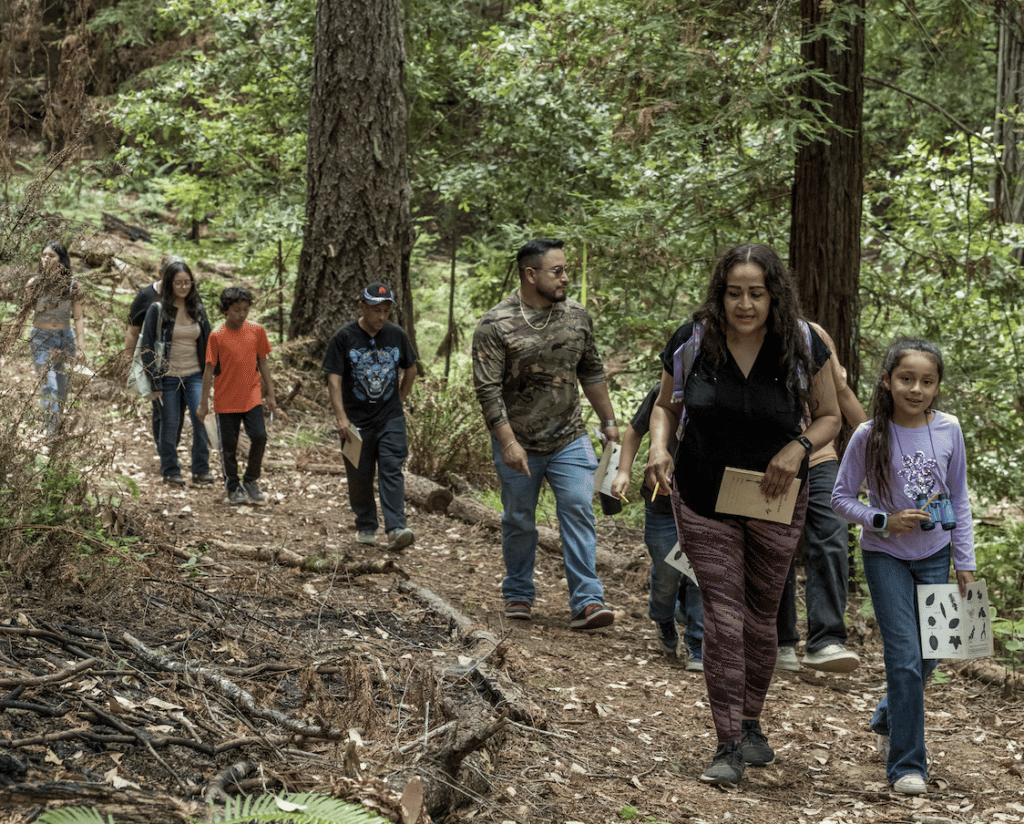
A guided hike in Spanish provides a warm welcome to a community group from San Francisco’s Mission District. Photo by Lisa Morales Winner.
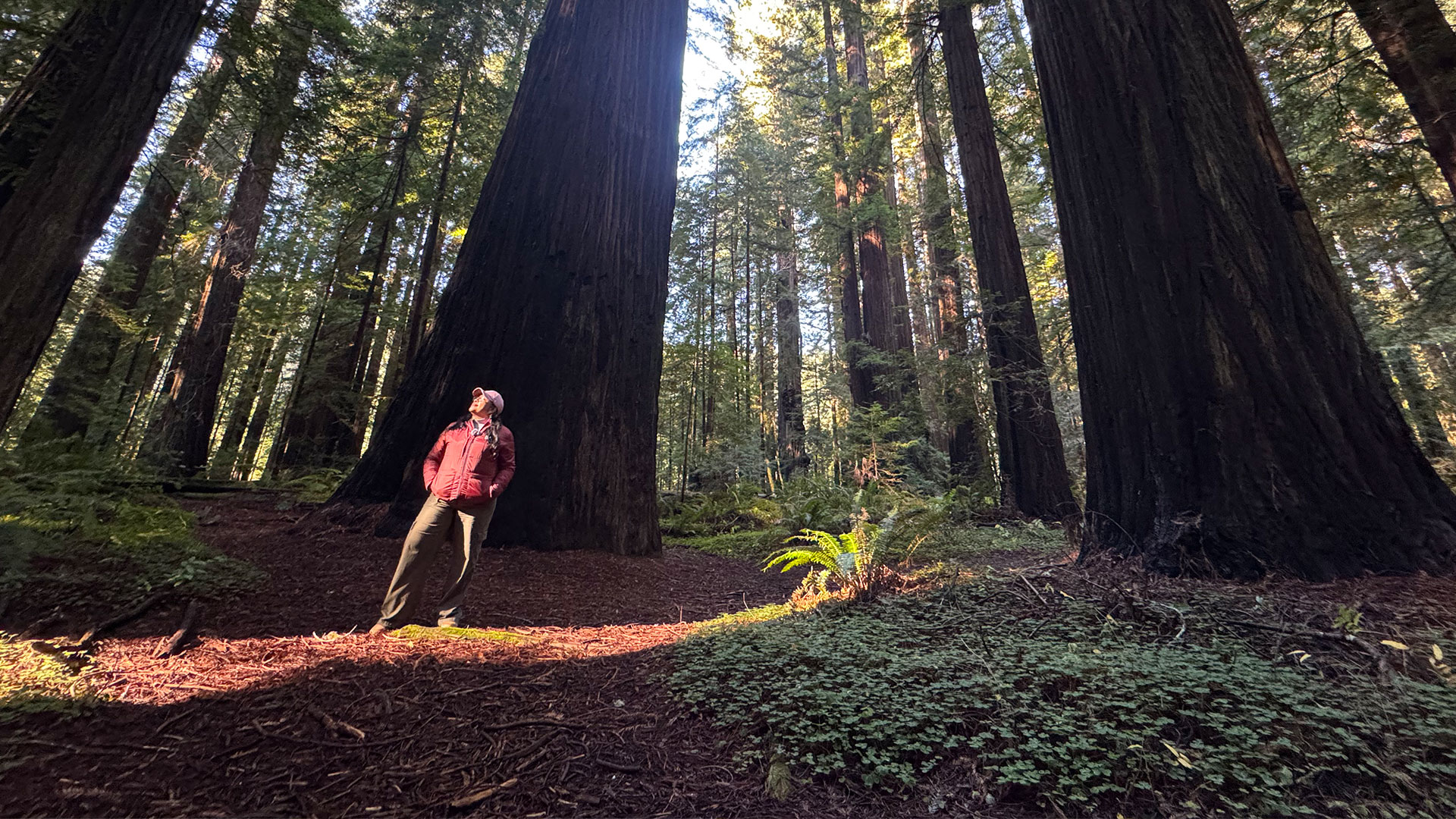
At Save the Redwoods, we believe that human connection to the trees can be transformative, and the peace and inspiration found in these forests should be available to all. But what if not everyone feels comfortable or welcomed?
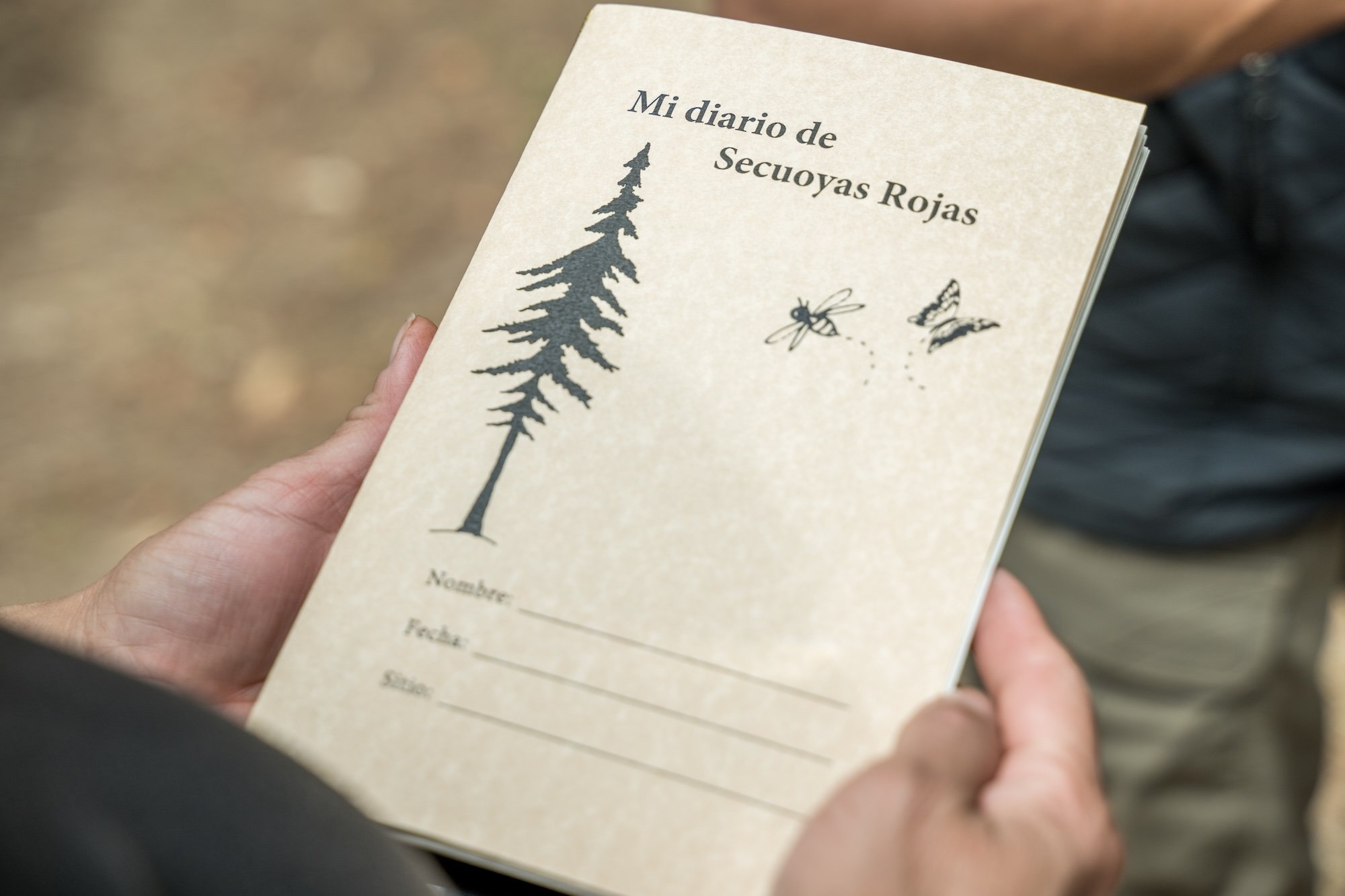
Signage and interpretive programming are among the factors that help shape the visitor experience in parks and green spaces. Yet signs and guided programs in many public parks are only available in English. Given that approximately 29% of California’s population speaks Spanish, that’s more than 10 million people who may encounter language barriers when visiting outdoor spaces.
Payan describes the benefits of offering programming for that 29%: “Having all the information facilitated in Spanish gives families a lot of autonomy and empowers them to return and do this on their own. It opens the door to a relationship with the redwoods that they can continue developing.”
Empowering and welcoming Spanish-speaking visitors is particularly meaningful at a time when Latine communities may not feel safe in many public spaces, including parks. Other potential barriers to access and enjoyment of redwood forests include a lack of transportation and outdoor gear—challenges Save the Redwoods work to address through our community grants and Redwood Rides program.
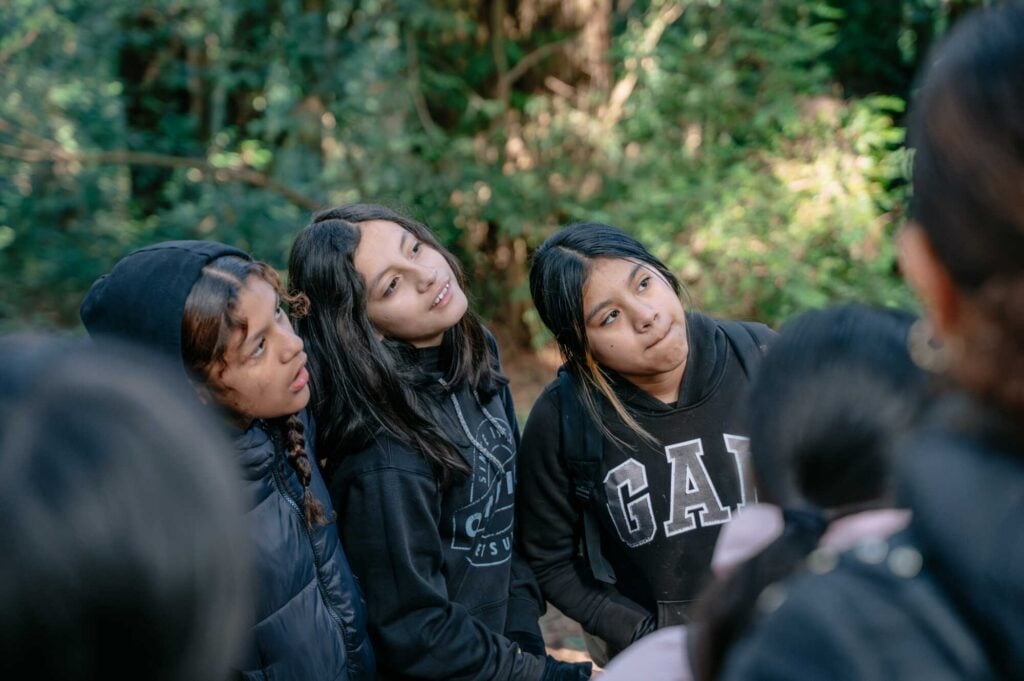
Students from a bilingual school in Oakland, California, enjoy a redwoods field trip that includes teaching in Spanish. Photo by Lisa Morales Winner.
During visits to our properties, bilingual staff serve as Spanish-speaking site hosts who present important safety information, lead interpretive hikes to teach about the forest, and offer guidance on outdoor skills like pitching tents or building a campfire. These excursions are typically a collaborative effort between our staff and the visiting organization’s leaders, who often conduct art projects and other activities.
Save the Redwoods also offers Spanish educational programming, led by senior education program manager Deborah Zierten, on school field trips in East Bay redwood parks. While many students are bilingual, there are often a few students who only speak Spanish. The difference that language-inclusive programming makes is clear to Zierten: “Students start out shy, but once they realize that I speak Spanish, they come out of their shell and start to be more engaged.”
Inspiring long-term stewardship
Staff-led programs in Spanish are not only happening in the coast redwoods. In the southern Sierra, Spanish-speaking communities visiting from the Central Valley recently gathered beneath towering secuoyas gigantes to learn about this unique habitat. Despite the giant sequoias being within a couple hours’ drive from their homes, many participants had never seen these trees in person.
One visitor, on her first-ever trip to the sequoias, summed up the awe of seeing the largest tree in the grove: “Esto fortalece mi fe en Dios.” (“This strengthens my belief in God.”)
In addition to providing impactful and safe experiences to visitors, Spanish language programs advance our long-term vision of caring for the forests. Moments of wonder and curiosity—in any language—can inspire present and future redwood stewards. For some visitors, a day in the forest sparks a life-long connection to these trees, or perhaps even a career in conservation.
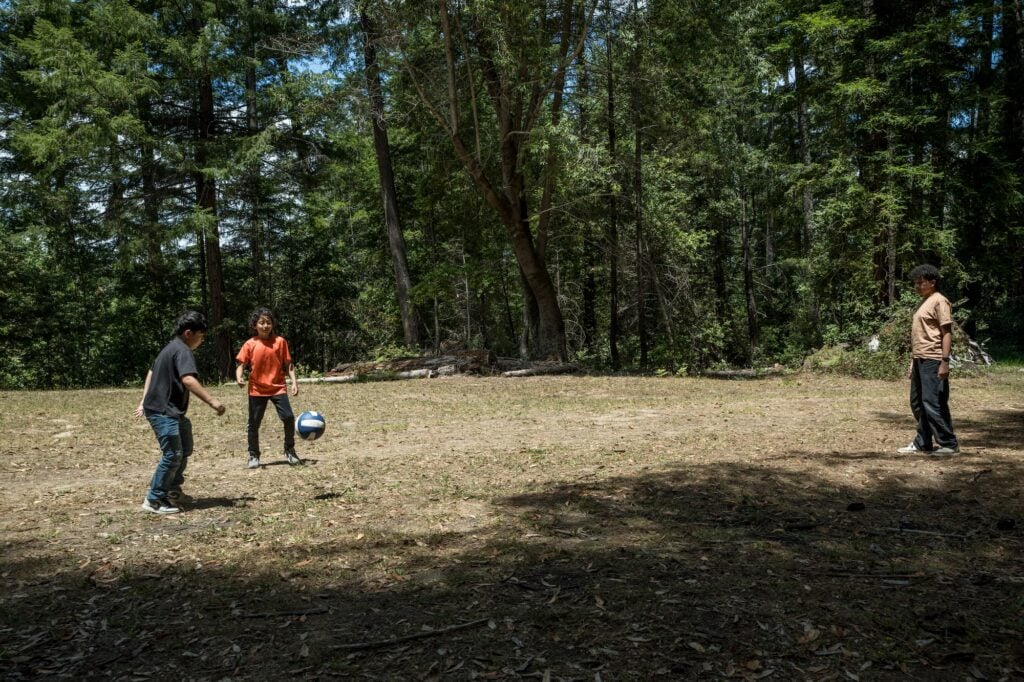
An impromptu soccer game breaks out in a forest meadow, bringing a familiar touch to a new experience. Photo by Lisa Morales Winner.
Back at the Sonoma Coast, our group from the Mission District is unwinding after a Spanish interpretive hike through the redwoods.
The World Cup is on, and we’re missing the momentous quarterfinal matches today, including the Argentina game. But at the campsite, a more understated game is unfolding: Three boys kick a soccer ball in the late afternoon light. There are no stands filled with rowdy spectators to be found out here. On this field, the players are encircled by a quiet redwood forest.