Located within the traditional lands of the Yokuts Peoples, the 530-acre Alder Creek property offers a snapshot of a primeval Sierra Nevada ecosystem. Hundreds of ancient sequoias stretch to the sky, as do magnificent ponderosa pine and white fir. Native bees swarm the blossoms of elderberry and gooseberry bushes, and the air is rich with the perfume of manzanita warming in the Sierra sun. The landscape is so palpably prehistoric it seems timeless: Black bears and mountain lions roam here, but a visitor might half expect to see a mammoth plodding through the understory.
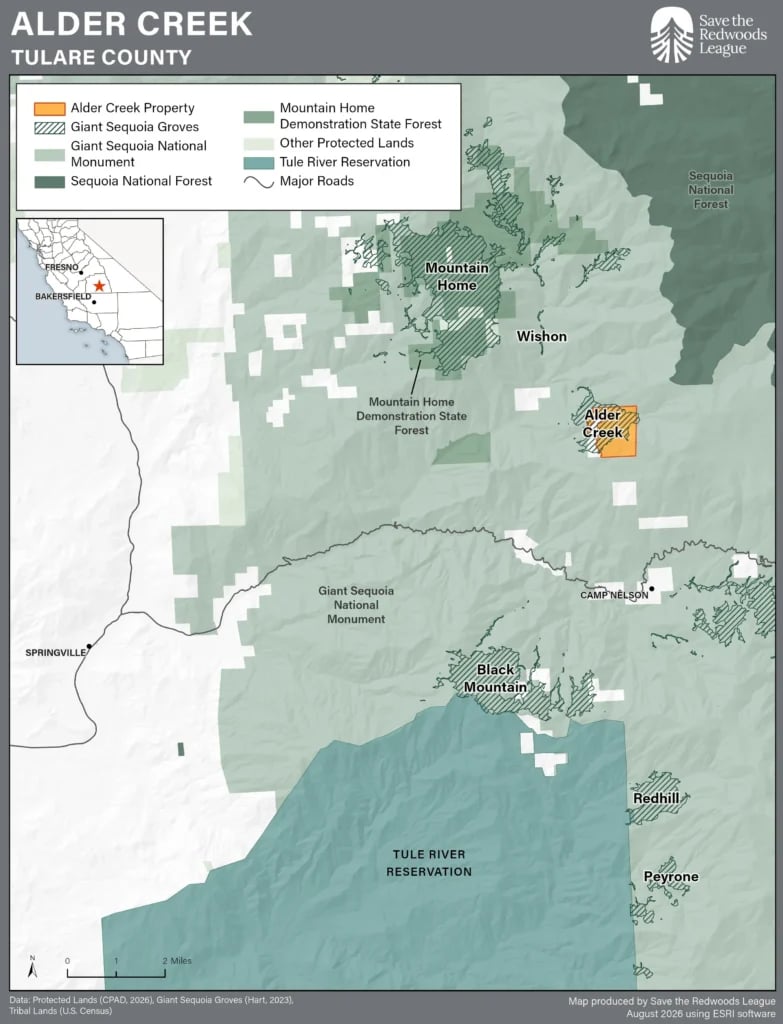
Alder Creek is bordered on three sides by the Giant Sequoia National Monument. At 328,000 acres, the monument is a scenic, recreational, and scientific treasure of incalculable value. It contains more than 45% of the world’s giant sequoias and plays a key role in the long-term conservation of the species, as well as the rare and imperiled plants and animals that share this landscape.
Save the Redwoods acquired this remarkable property in 2019. The following year, the Castle Fire burned through nearly 171,000 acres, killing thousands of giant sequoias in the adjacent national monument. Yet only 38% of Alder Creek burned at high severity. The colossal Stagg Tree and over 300 acres of neighboring giant sequoias remain standing.
Ever since, Save the Redwoods and our partners have worked to bolster long-term fire resilience in the grove. Today, the green sprouts of giant sequoia seedlings dotting the forest floor bring new life to the severely burned areas. And we’re working with our Tribal partners to reintroduce “good” fire to this extraordinary landscape to simultaneously support the health of ecosystems and Indigenous cultures. We’re excited for visitors to explore this remarkable place and experience firsthand the realities of wildfire, forest stewardship, and climate resilience.
What we secured:
- 530 acres of rare giant sequoia forest—formerly the largest in private ownership—home to the Stagg Tree, one of the five largest trees on Earth
- Habitat for imperiled species, including Pacific fisher, American marten, and California spotted owl
- A living laboratory for scientific research into wildfire resilience, reforestation, and climate adaptation
- Public access to an extraordinary giant sequoia grove, with plans for new trails, improved amenities, and interpretive programming
- An active cultural burning program led by regional Tribes, restoring Indigenous fire practices and protecting giant sequoias from high-severity wildfire
Reimagining a giant sequoia destination
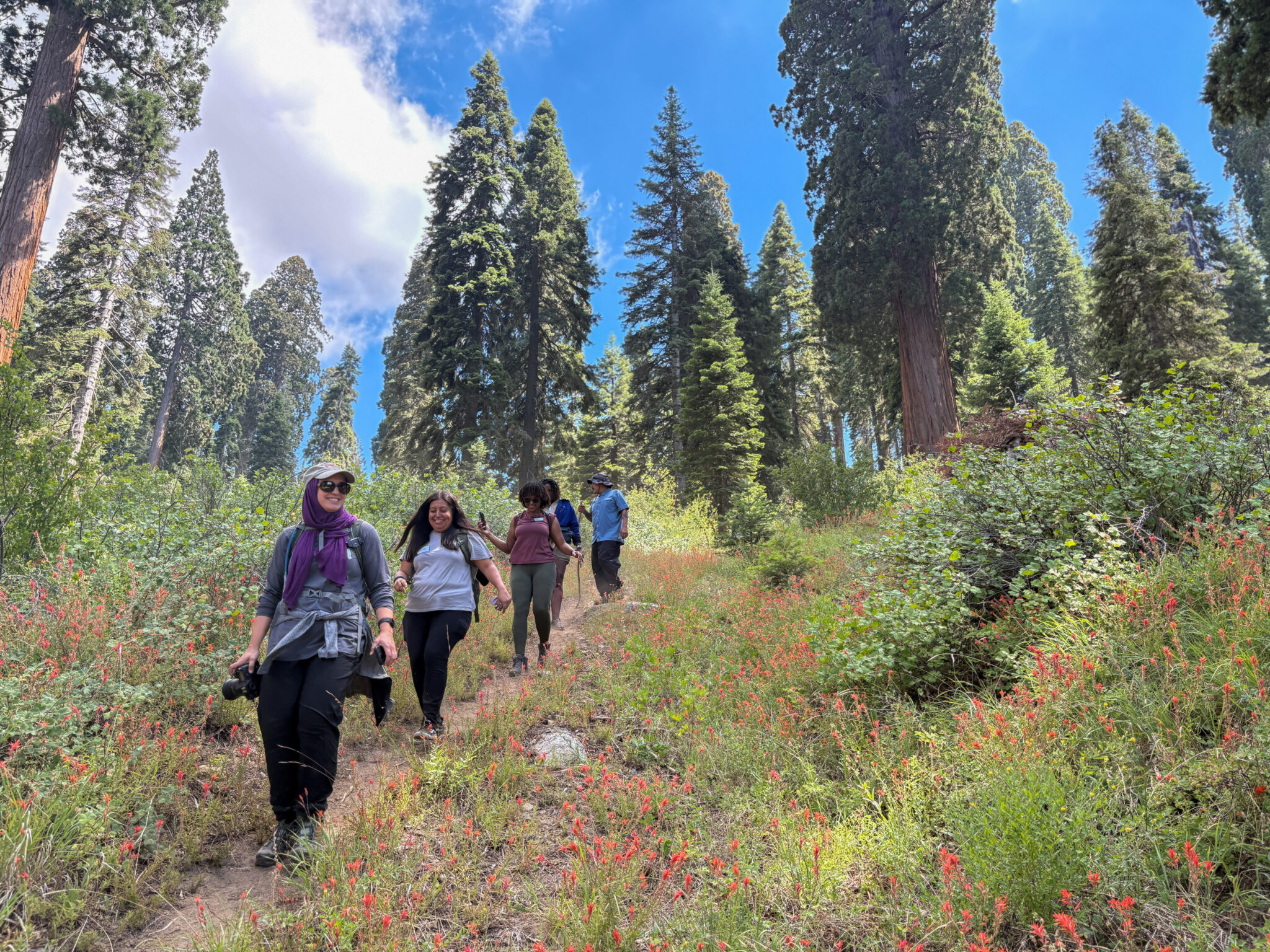
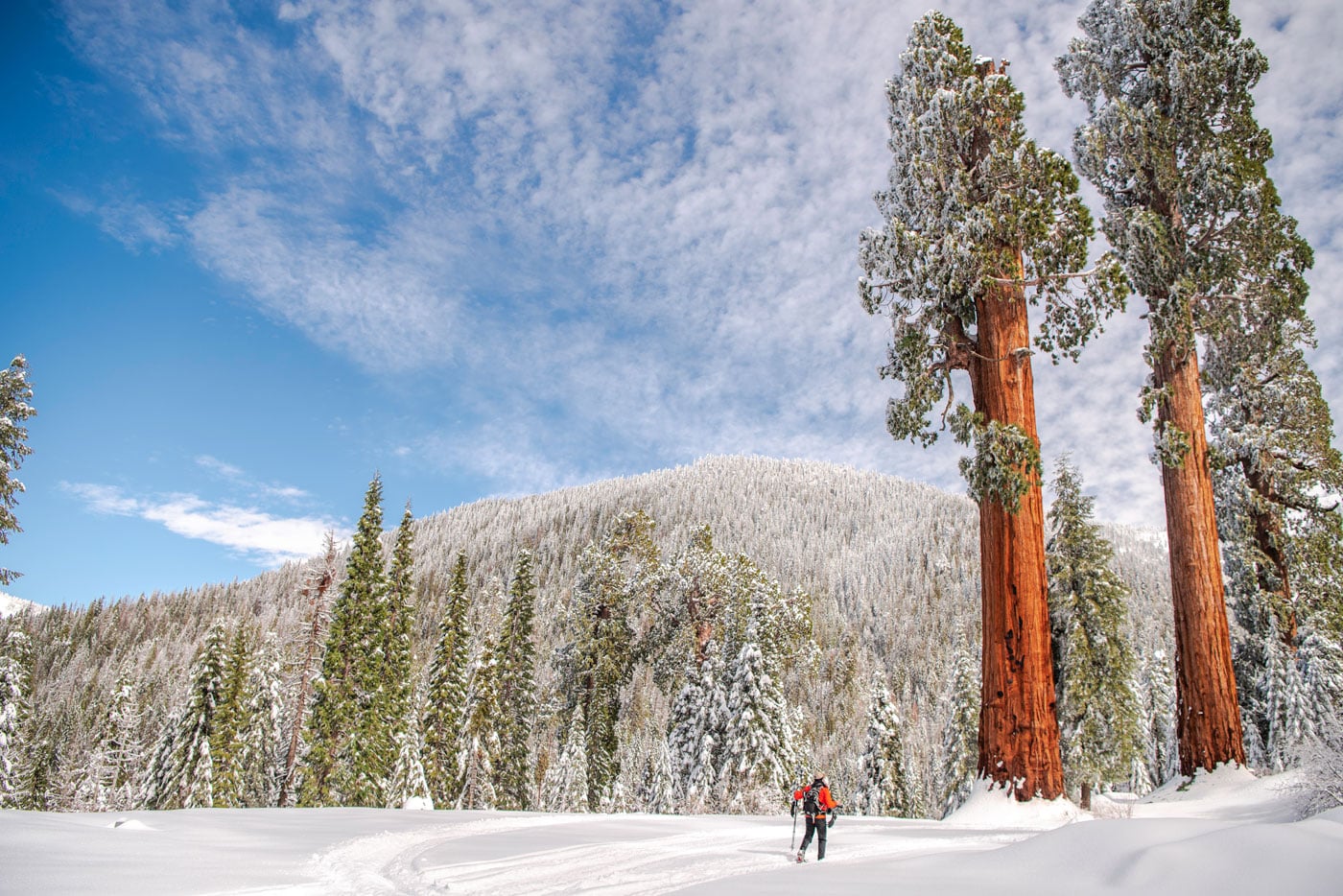
Community members hike through an area of Alder Creek known simply as “the valley”—probably because there’s no name that fully conveys the wonder and awe this landscape inspires. Photo by Alanna Smith.
When Save the Redwoods acquired Alder Creek, it was the largest privately owned giant sequoia forest remaining in the world. More than 8,500 contributions from individuals and foundations across the United States and 30 other countries made the acquisition possible—a testament to the power of collective goodwill.
Despite the size and importance of the surrounding Giant Sequoia National Monument, the monument’s recreational facilities are limited due to lack of funding and staff capacity. Thanks to your contributions, we now have the potential to develop a giant sequoia destination that could boost recreational opportunities within the monument and complement more developed areas in the greater Sequoia National Park.
We are currently reimagining public access to the grove—this might include improved amenities, new trails, and interpretive storytelling. And we’re working with local community groups to collectively imagine how future visitors might learn, play, and connect with the giant sequoias. With that vision in sight, we plan to create an outdoor space that fosters inclusive and impactful experiences in nature for everyone.
Conservation in the giant sequoia heartland
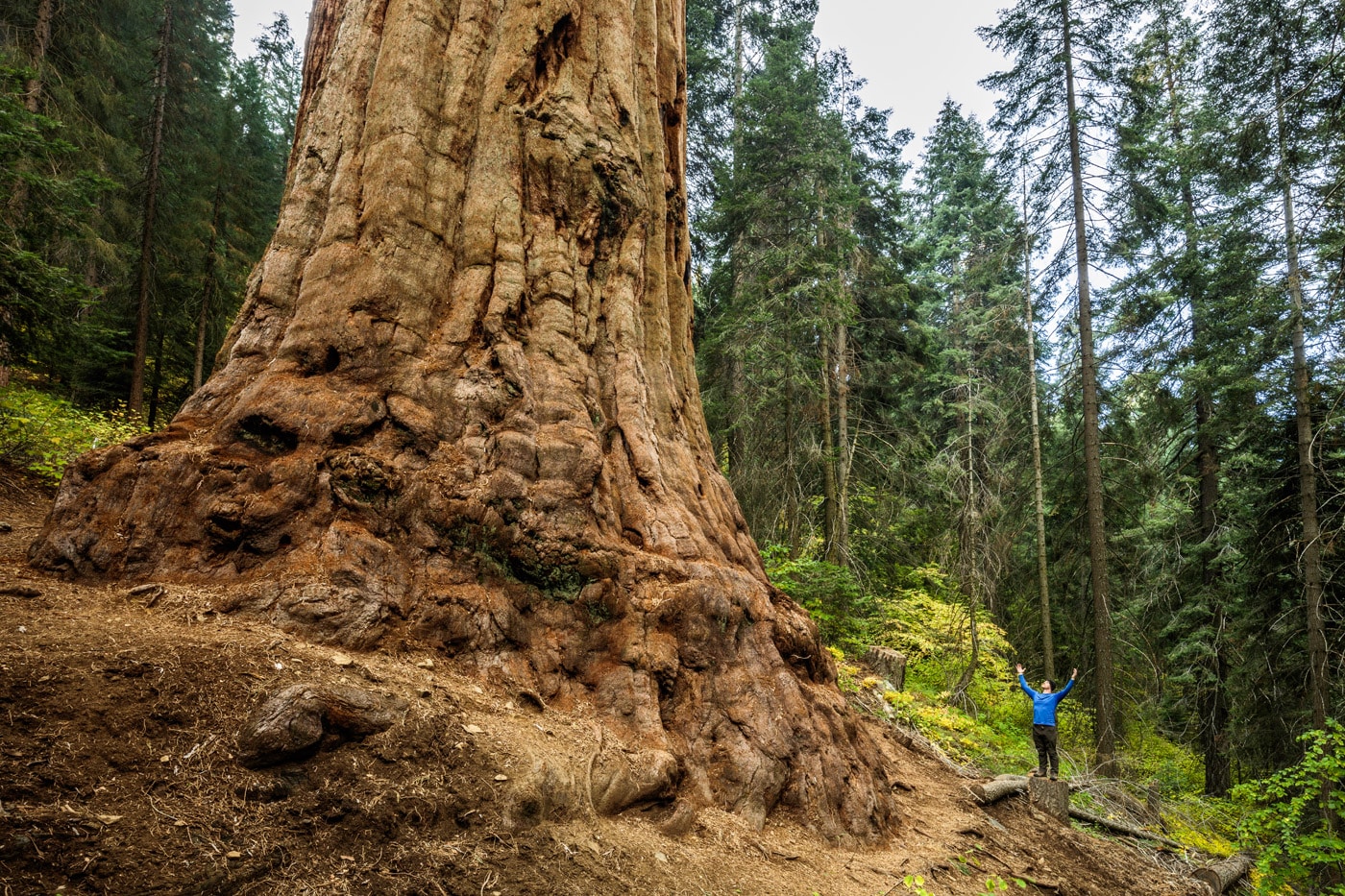
Standing in awe of the Stagg Tree at Alder Creek. Photo by Max Forster.
Unlike many sequoia groves, Alder Creek supports giant sequoias in every age class—from thousands of young saplings to hundreds of old-growth trees—making it comparable in size and significance to the famous Mariposa Grove of Giant Sequoias in Yosemite National Park. The property’s remarkable stands include the 250-foot-tall Stagg Tree, believed to be the planet’s fifth-largest tree by volume. This ancient behemoth is larger than any tree in the Giant Sequoia National Monument, wider than a two-lane street, and as tall as a 25-story skyscraper.
The property’s namesake creek runs through its northern portion, providing an abundant water source and rich habitat for fish and other wildlife. Beyond the giant sequoia groves, the landscape includes mature red fir, white fir, ponderosa pine, and sugar pine, along with meadows, wetlands, and riparian woodlands. Habitat for at-risk species such as Pacific fisher, American marten, and California spotted owl is abundant here.
Recovery and resilience
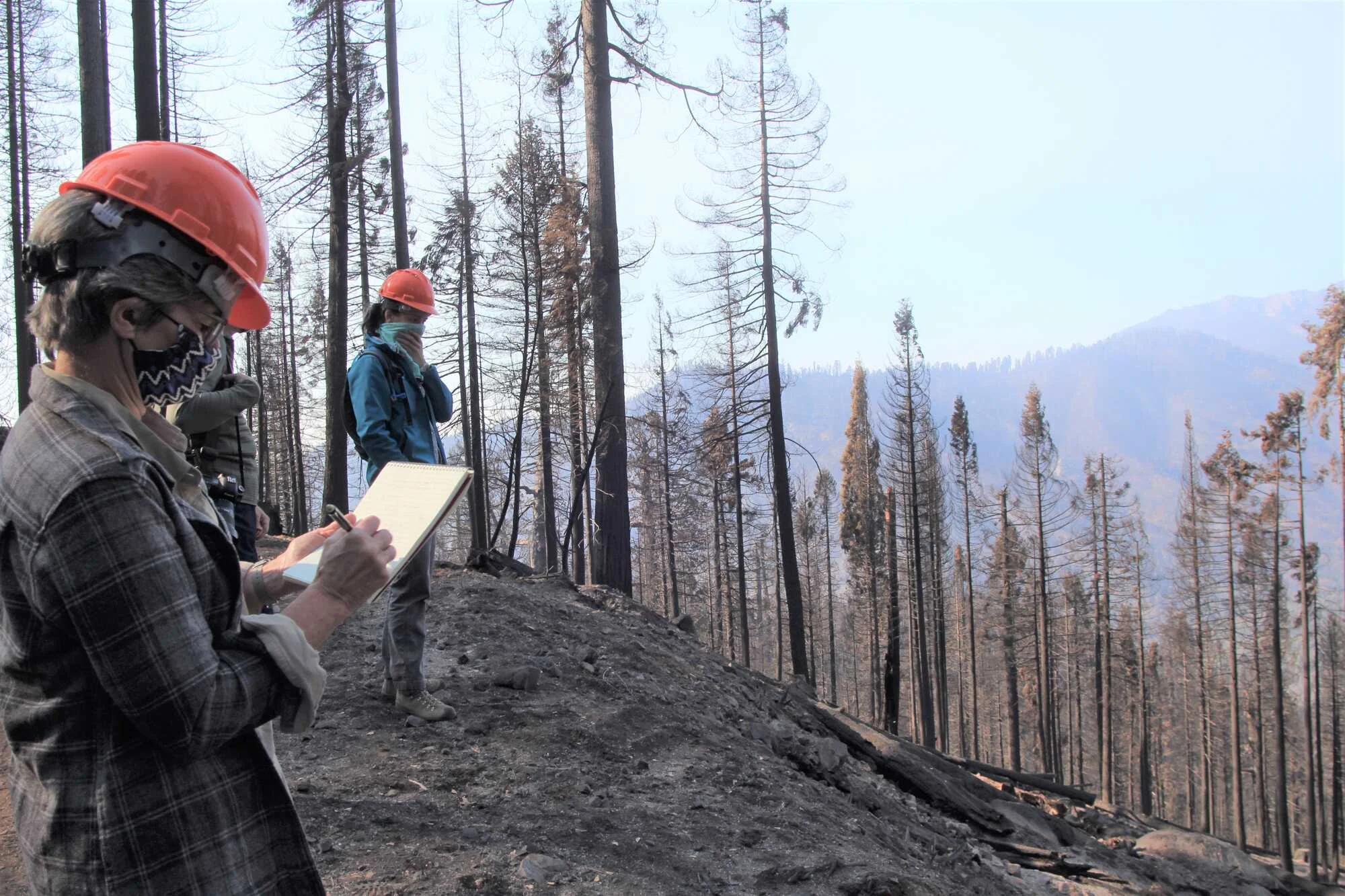
Save the Redwoods staff inspecting damage at the Alder Creek grove after the Castle Fire. Photo by Suzanne Moss.
When the Castle Fire (part of the SQF Complex) reached Alder Creek, most of the property burned at low to moderate severity. However, portions of the property burned much hotter—killing at least 108 old-growth giant sequoias, along with many firs and pines. In response, we’ve been working to prepare the grove for the existential threats of droughts, warming temperatures, and megafires.
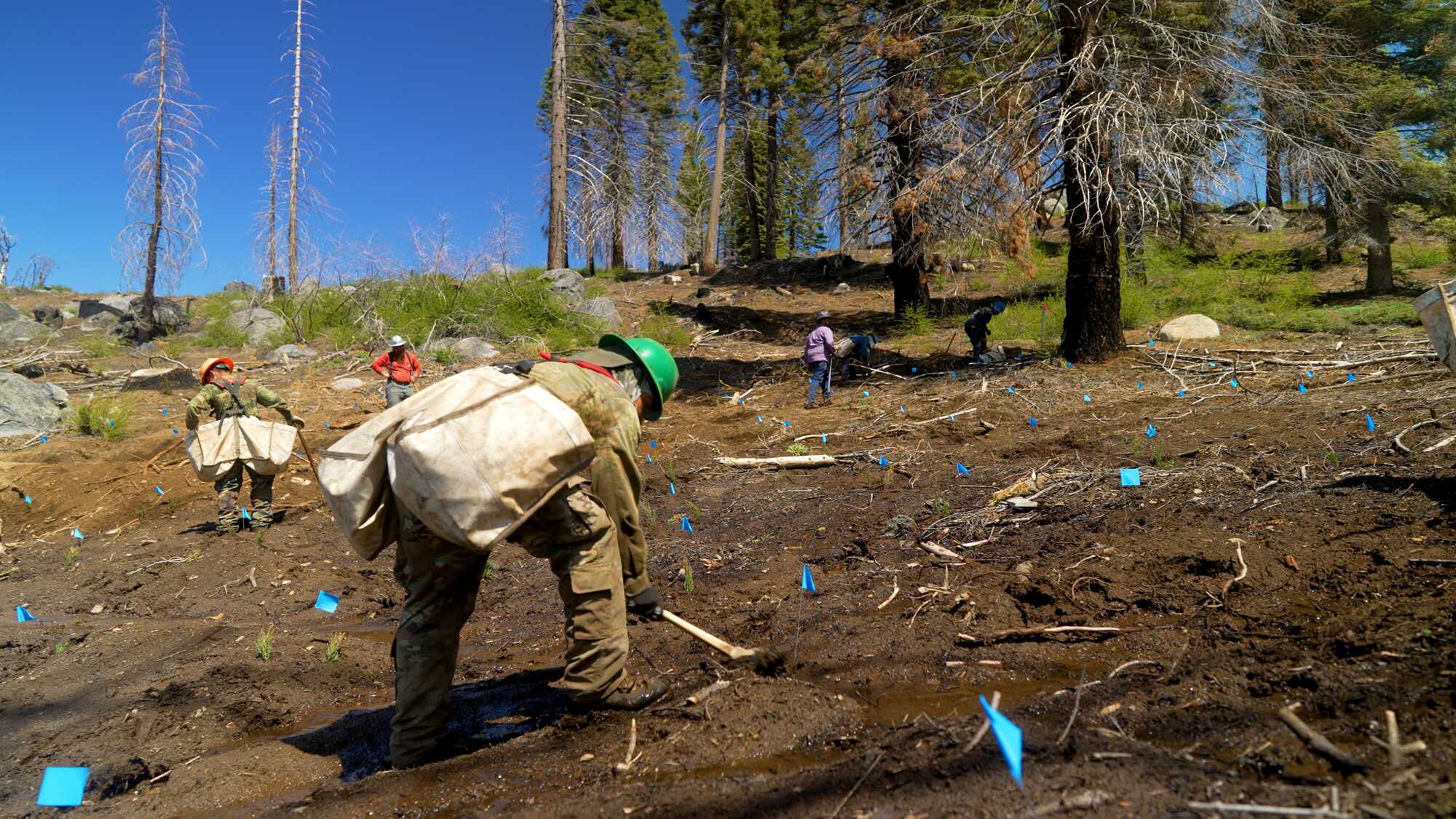
In the high severity burn areas, fire consumed seed cones and damaged the soil. Recognizing this threat to the next generation of sequoias, Save the Redwoods and our partners in the Giant Sequoia Lands Coalition embarked on a reforestation strategy. Crews reduced the density of dead trees and replanted the area with native tree species to promote the growth of a mature, fire-adapted forest.
We’re focused on building resilience across Alder Creek as wildfires become more frequent. Prescribed burns have helped thin the unnaturally dense understory, and our Tule River Indian, North Fork Mono, and Tübatulabal Tribe partners have reintroduced cultural burning to restore the forest’s health and their cultural traditions. We’ve also removed overgrown brush and smaller non-sequoia trees that have proliferated in the absence of frequent fire. The goal is to open the canopy and prepare the grove for the reintroduction of “good” fire—giving the next generation of giants the sunlight and bare forest floor they need to thrive.
A living laboratory
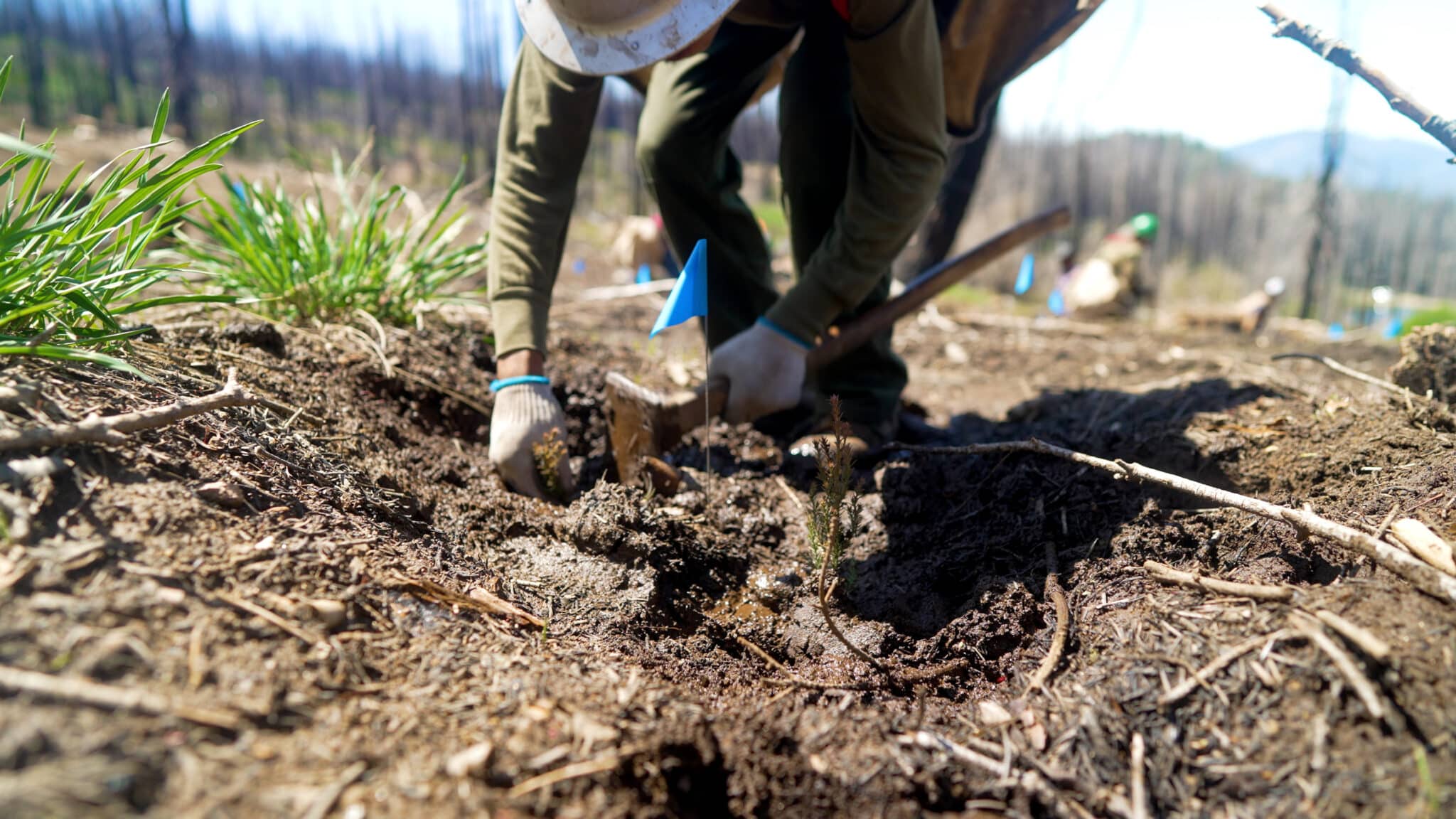
Crews planted native conifer seedlings at Alder Creek Grove. Photo by Smith Robinson Multimedia.
Among the most important uses of Alder Creek is scientific research—it serves as a living laboratory for studying how these ancient forests respond to fire, climate change, and restoration. Save the Redwoods conducts research on the property and also provides opportunities for other nonprofits and academic institutions to carry out their work.
Together with American Forests, we completed cone surveys and monitoring at Alder Creek in 2025, collecting giant sequoia cones for potential future reforestation. In 2021, we partnered with UC Cooperative Extension on a long-term study examining different planting densities of giant sequoia seedlings and restoration approaches following high-severity wildfire. In 2023, as part of the study, we planted more than 20,000 sequoia seedlings in pre-determined densities across the property. Many of the seedlings are now about two feet tall and thriving. The results will inform stewardship not only at Alder Creek but across sequoia groves throughout the species’ range.
Newsroom
PRESS RELEASES
January 8, 2020 — Save the Redwoods League Protects Alder Creek, the “Crown Jewel” of Remaining Giant Sequoia Properties
IN THE NEWS
To Protect Giant Sequoias, They Lit a Fire
–New York Times, July 2024
In burned-out giant sequoia groves, crews plant seeds of hope. Will they survive?
–Los Angeles Times, June 2023
California’s epic wildfires in 2020 took deadly aim at the state’s most beloved trees
–New York Times, December 2020