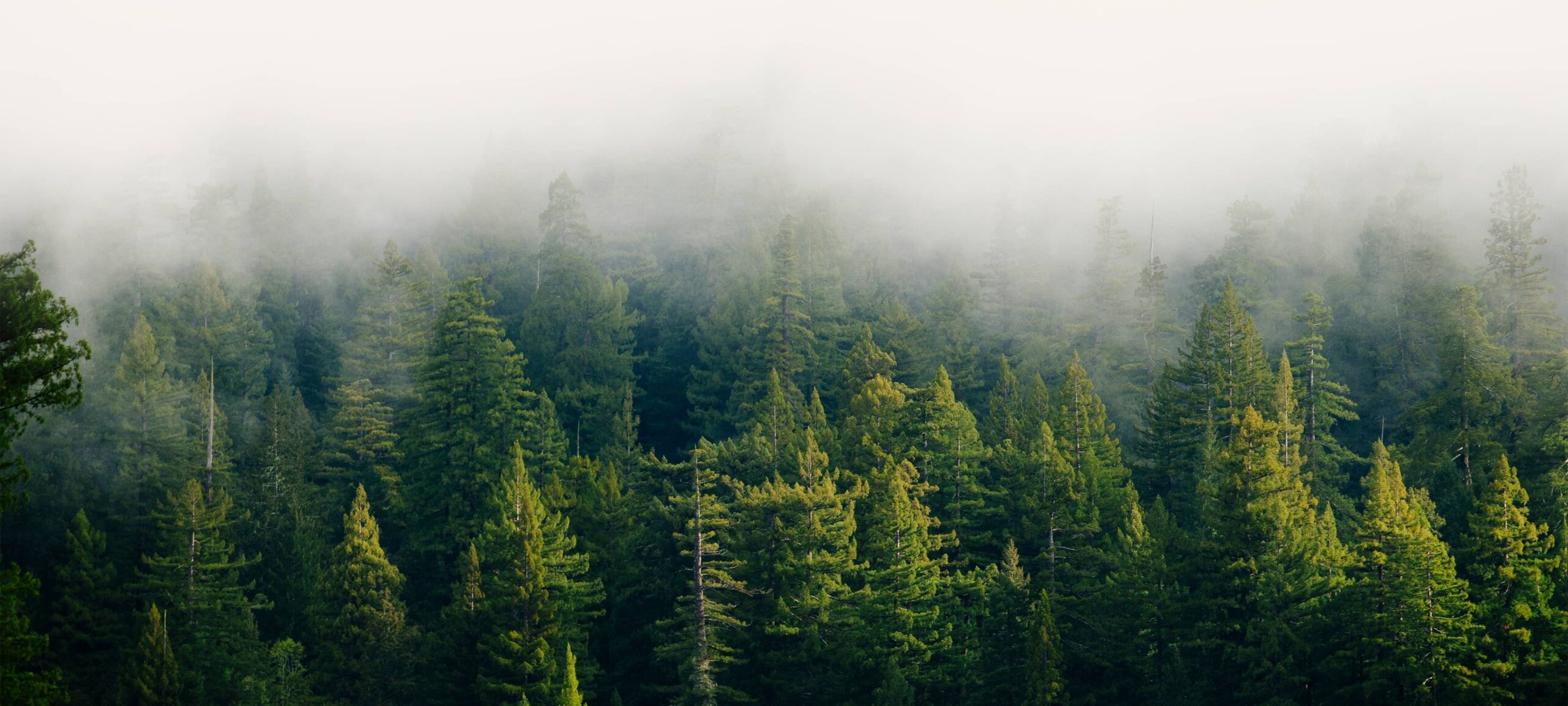
The rugged, undeveloped region of Northern California’s Lost Coast holds lush coast redwood, Douglas-fir, and grand fir forest, coastal prairies, steep bluffs overlooking the vast seascape—and an extraordinary trio of properties known together as Ólak Ólohtem (Lost Coast Redwoods).
All three properties—Cape Vizcaino, Shady Dell, and DeVilbiss Ranch—contain cultural landscapes and species of great significance to the InterTribal Sinkyone Wilderness Council (Sinkyone Council) and to its member Tribes that have inhabited this region for millennia. Totaling 4,566 acres, including 8 stunningly beautiful miles of coastline, Ólak Ólohtem is an integral part of a mosaic of protected lands in northern Mendocino County.
Between 2008 and 2021, Save the Redwoods undertook critical actions, including major campaigns, to acquire the culturally and ecologically rich lands of Ólak Ólohtem, so we could protect them from excessive timber harvesting, development, subdivision, and other negative impacts.
At Cape Vizcaino (acquired in 2008), we completed the restoration work of an ecologically-minded forest management plan, removing a build-up of potential fuel for wildfires and supporting the comeback of native species. At Shady Dell (acquired in 2011), we expanded recreational access to its fascinating candelabra-shaped redwoods with a new trail through the legendary landscape. And at Lost Coast Redwoods (acquired in 2021), we protected its vast expanse of redwoods. Then we began restoring the ranch’s 3.5 square miles of second-growth and old-growth forests that had been managed for commercial timber production since the 1880s.
On December 19, 2024, Save the Redwoods transferred the properties of Ólak Ólohtem to the Bureau of Land Management (BLM). This transfer aligns with Save the Redwoods’ broader strategy of ensuring the long-term protection of California’s redwood forests by placing these lands under public ownership, where they can be managed for conservation and the pure enjoyment of all people. Lasting protection was made possible by BLM, the Land and Water Conservation Fund, California Wildlife Conservation Board, California State Coastal Conservancy, and members and supporters of Save the Redwoods.
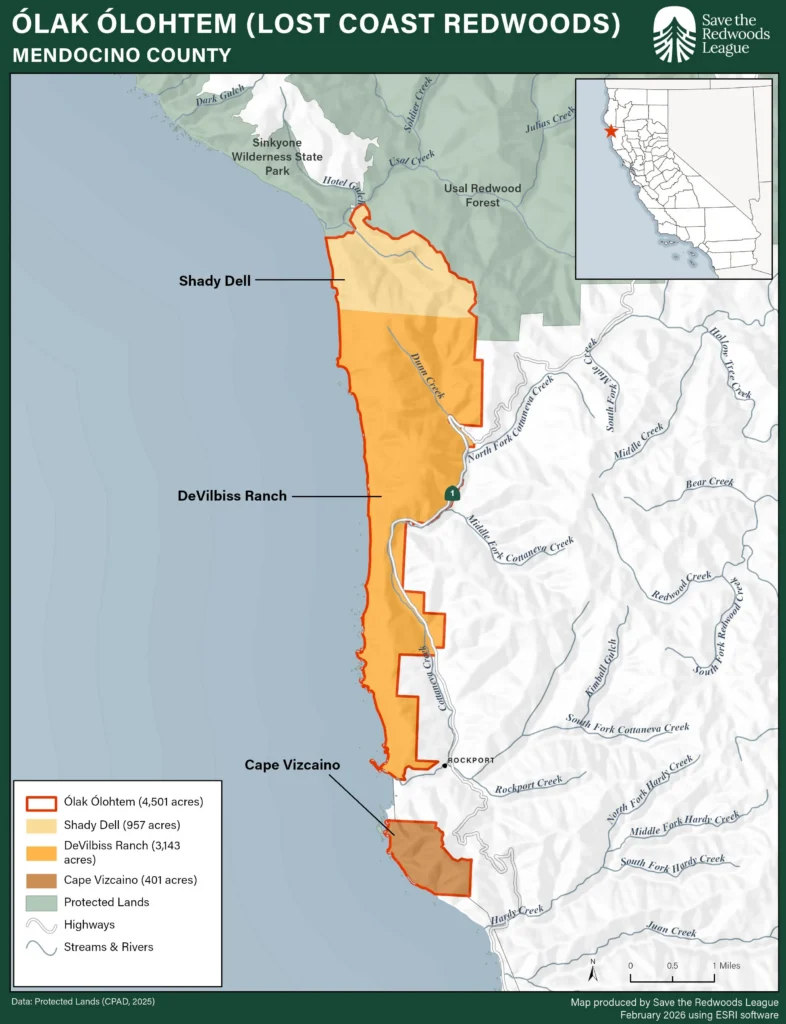
Ólak Ólohtem (Lost Coast Redwoods) is a trio of extraordinary coastal properties, Cape Vizcaino, Shady Dell, and DeVilbiss Ranch, spanning 4,566 acres and 8 miles of coastline.
What we secured
- 4,566 acres of coastal prairies and coast redwood, Douglas-fir, and grand fir forest
- 8 miles of undeveloped coastline adjacent to Double Cone Rock State Marine Conservation Area
- Culturally significant land within the traditional territories of the Sinkyone, Cahto, and Coast Yuki peoples
- Key habitat for endangered species, including northern spotted owl, marbled murrelet, coho salmon, and steelhead trout
- Expanded recreational access along a new trail to the ancient “candelabra” trees of Shady Dell
A name with deep Tribal significance
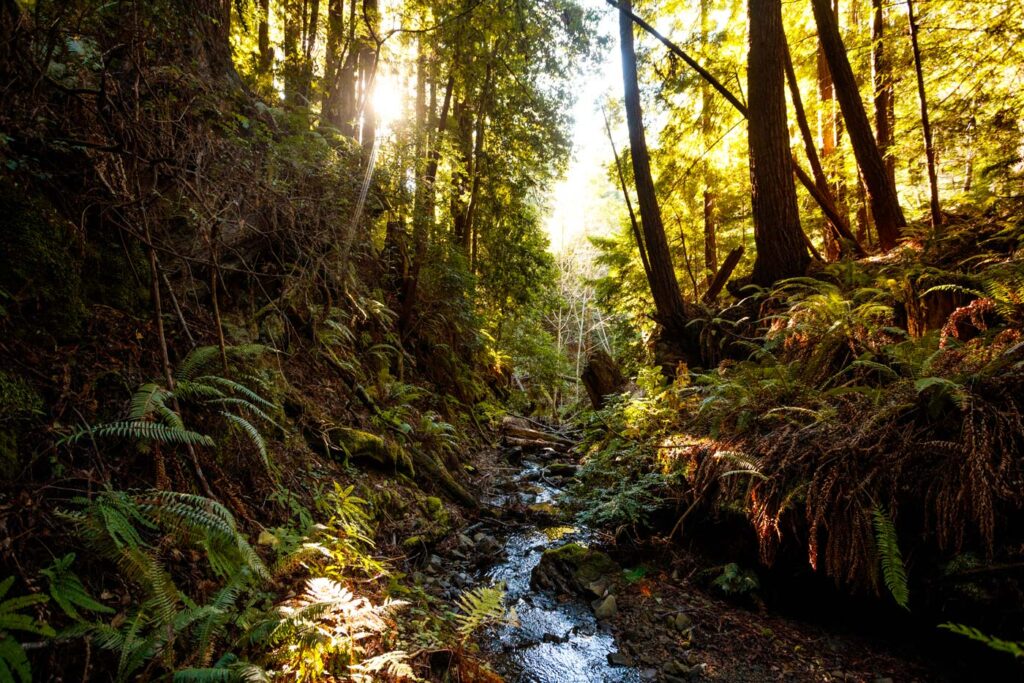
For millennia, the Sinkyone, Cahto, and Coast Yuki peoples protected and cared for the forests of Ólak Ólohtem. Photo by Max Whittaker.
Ólak Ólohtem is situated within the traditional Tribal territories of the Sinkyu-ne (Sinkyone), Ko’yoohaang (Cahto), and Ontiłka (Coast Yuki) peoples. Since the dawn of time, these Indigenous peoples protected and cared for the land through practices that enabled biocultural diversity and abundance and ensured the health and longevity of the redwood forests. The arrival of European settlers in the mid-19th century led to significant disruptions and injustices, including the genocide and forced removal of numerous Indigenous peoples and the unrestrained and extensive logging of redwoods.
Save the Redwoods is dedicated to working with Tribes and Indigenous communities to restore and protect redwood lands. For decades, Save the Redwoods has engaged in land and water protection endeavors with the Sinkyone Council, a nonprofit consortium of 10 sovereign, federally recognized Tribal Nations with deep cultural, historic, and ancestral connections and relationships with the Lost Coast region. In 2023, Save the Redwoods and the Sinkyone Council formalized their partnership at Ólak Ólohtem.
We are committed to ensuring the Sinkyone Council and its member Tribes have meaningful and permanent voices and roles in the planning and the long-term management and stewardship of Ólak Ólohtem, in a manner that respects and enables them to protect, revitalize, and effectuate their cultural lifeways, knowledge, and values.
As one part of this commitment, Save the Redwoods formally recognizes the Tribally designated name of Ólak Ólohtem, which means “Place where the redwood forest meets the water” in Ontiłka (Coast Yuki) language, one of the three original Indigenous languages of this land area. The name was approved by Tribal representatives of the InterTribal Sinkyone Wilderness Council on December 16, 2024.
Safeguarding a vibrant mosaic of lands
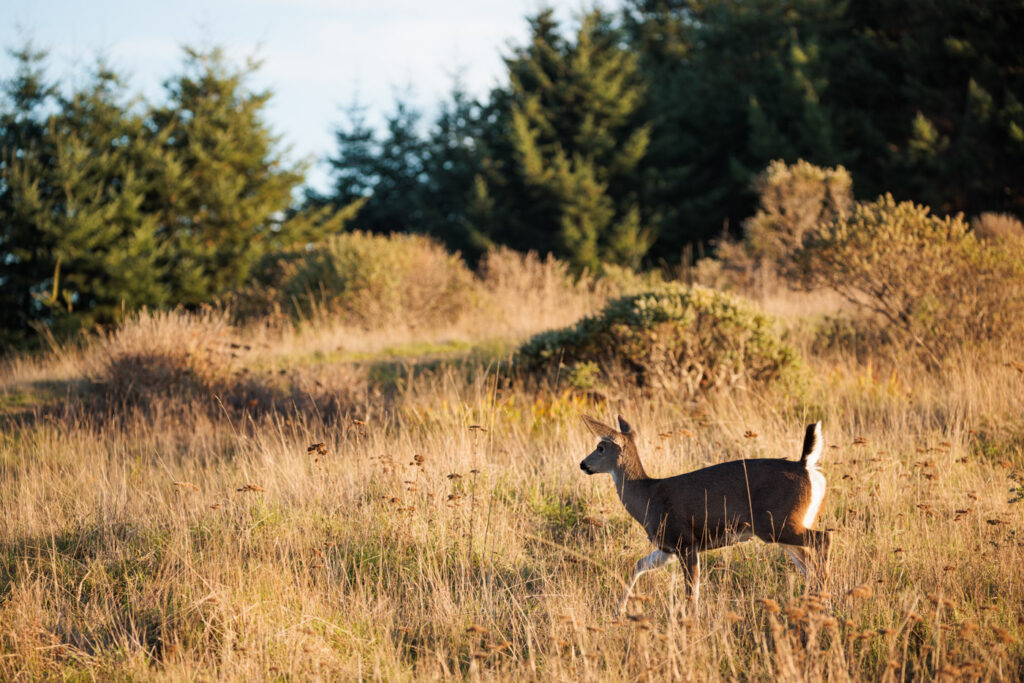
Black-tailed deer, Roosevelt elk, black bears, and mountain lions roam the landscape in and around Ólak Ólohtem, part of a 57-mile stretch of undeveloped coastline. Photo by Max Whittaker.
Situated along California State Route 1, Ólak Ólohtem comprises the southernmost portion of a 57-mile stretch of undeveloped coastline. This remote region includes significant protected areas such as the Sinkyone Wilderness State Park managed by California Department of Parks and Recreation; the Double Cone Rock State Marine Conservation Area managed by California Department of Fish and Wildlife; the InterTribal Sinkyone Lands managed by the Sinkyone Council; the King Range National Conservation Area managed by BLM; and the California Coastal National Monument managed by BLM.
In this expansive range of protected coastal prairies and forests, the lands and waters support an abundance of life. Roosevelt elk, black-tailed deer, black bears, and mountain lions roam the landscape in and around Ólak Ólohtem. The area also provides suitable habitat for northern spotted owl, marbled murrelet, and Pacific fisher, and healthy streams for coho salmon and steelhead trout—all of which are listed under the Endangered Species Act. The streams also support other plant and animal species of special concern, such as seaside bittercress, Whitney’s farewell to spring, Point Reyes horkelia, foothill yellow-legged frog, Pacific tailed frog, and Southern torrent salamander.
Offshore, the Double Cone Rock State Marine Conservation Area buffers the sensitive coastline, protecting the ocean ecosystem’s resilience, biodiversity, and cultural resources.
By safeguarding the properties of Ólak Ólohtem—part of a patchwork of protected lands that can combine to re-create a contiguous, healthy redwood landscape—Save the Redwoods is taking big steps toward its vision for landscape-scale conservation. This type of conservation aims to ensure that the interests of different stakeholders are met, instead of focusing on a single use of the land. It supports communities, the economy, as well as the wildlife and natural resources of an area. Ólak Ólohtem has so much to offer in service of these objectives, with its rich biodiversity, cultural importance, and opportunities for recreational adventure.
Expanded trail access to Shady Dell and the “candelabra” trees
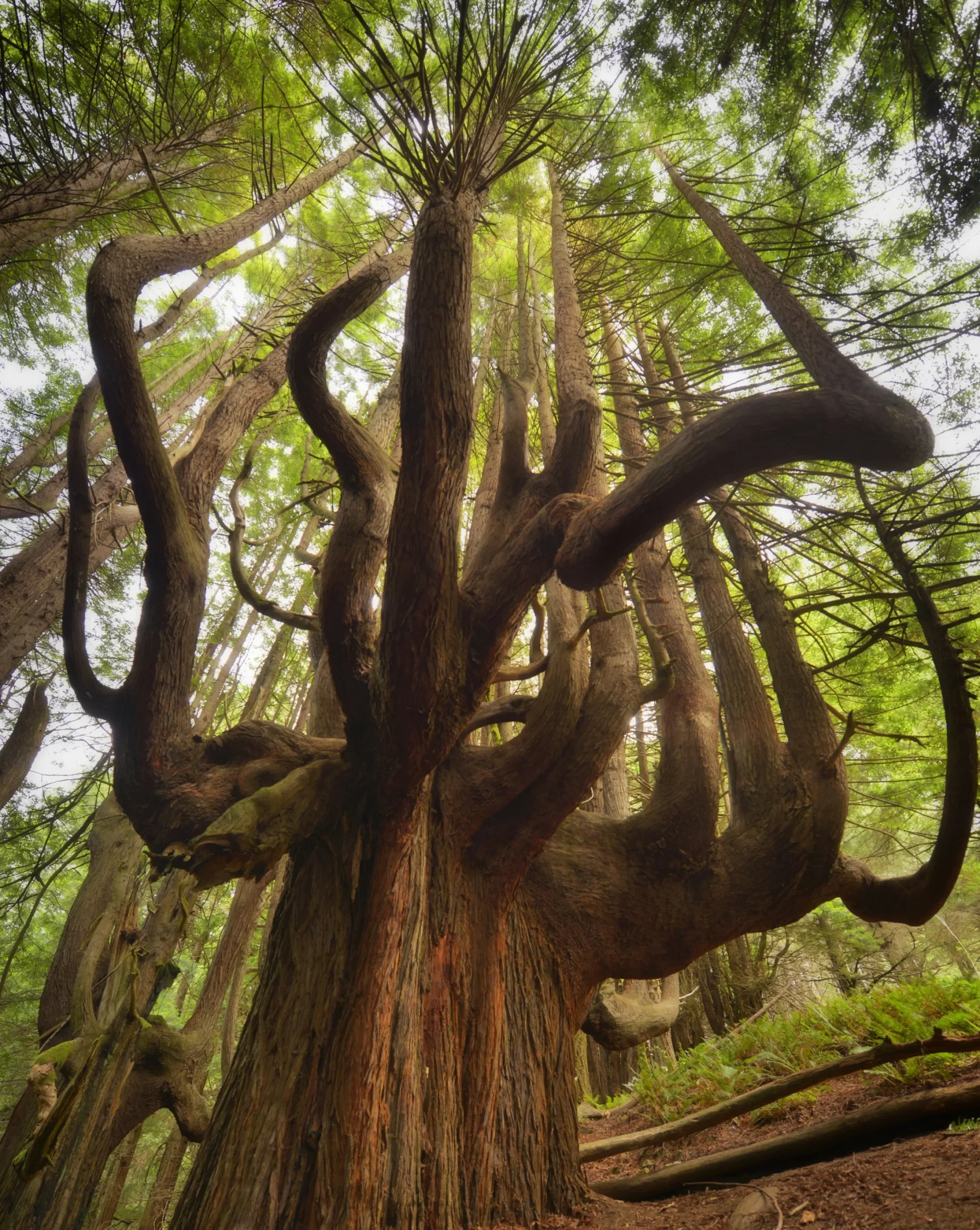
The wondrous “candelabra” trees in Shady Dell, warped by wind and salty air, are breathtaking to behold. Photo by Mike Shoys.
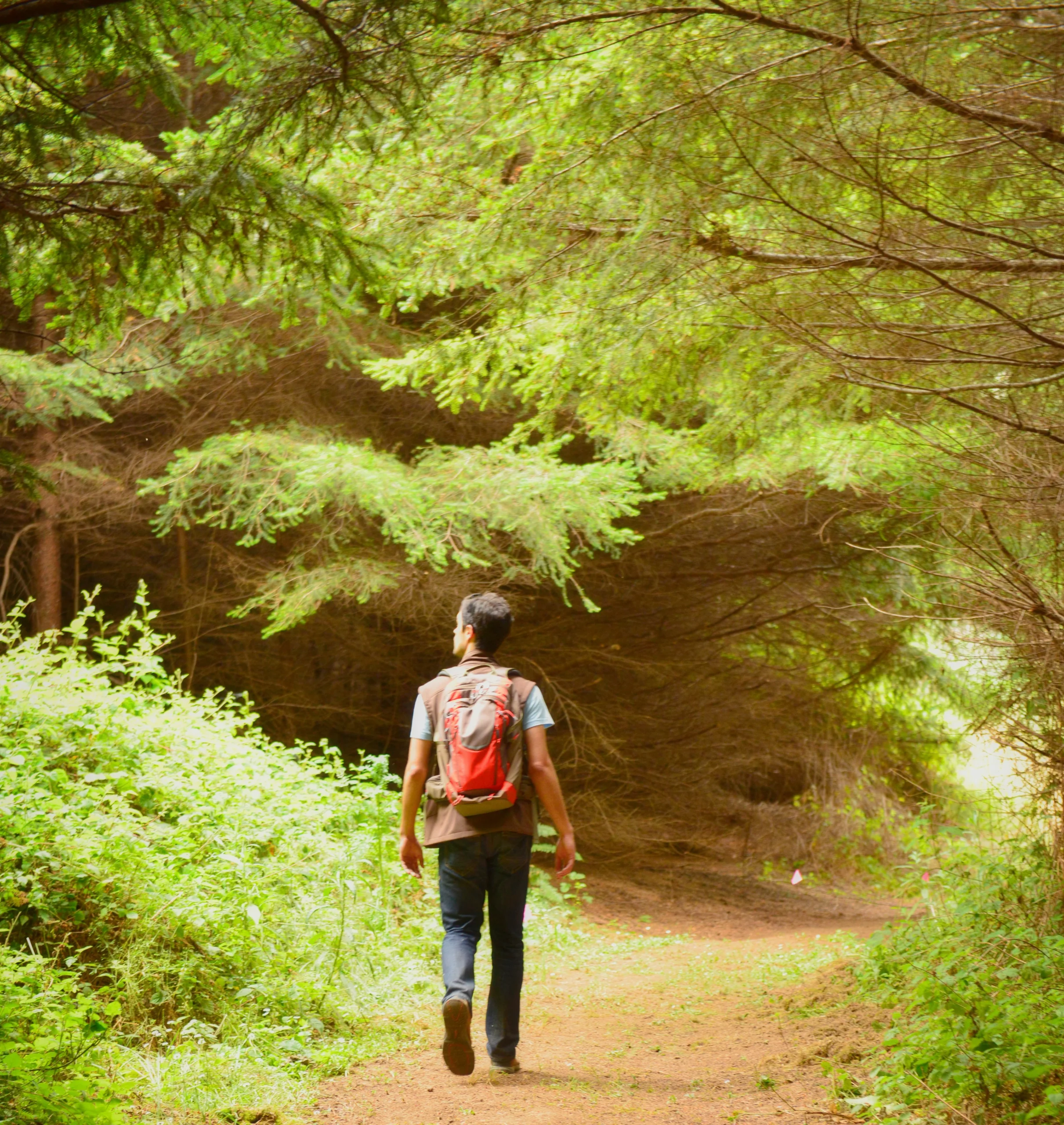
The Peter Douglas Trail connects the Usal Beach Campground and extends the Lost Coast Trail by 2.3 miles. Photo by Mike Shoys.
For more than 100 years, Shady Dell was a private, hidden treasure, but in 2011 Save the Redwoods purchased the property and began planning its protection and restoration. In 2016, through a collaboration with the California Coastal Conservancy, Mendocino Land Trust, and other key partners, we opened the Peter Douglas Trail, giving the public an opportunity to experience this special place firsthand. This new trail, which extends the Lost Coast Trail to the south by 2.3 miles, showcases the diverse and spectacular treasures of Shady Dell while protecting its ecological integrity.
Hikes from the northern trailhead by Usal Beach Campground ascend into the mystical grove of ancient redwoods shaped into grand candelabras by fire, salty air, and coastal winds. Instead of growing into massive straight columns, stressors caused these trees to sprout branches near the ground that droop like velvet ropes in a theater. Then when conditions improved, the branches grew straight up.
Continuing along the Peter Douglas Trail, hikes wind through redwood and Douglas fir forest, lush grassy bluffs, wildflower-strewn meadows, and over a creek that flows through tranquil alder groves. Visitors can pause to relax on one of the benches overlooking the Pacific Ocean and watch for passing whales.
Everyone is now welcome to enjoy this magical and inspiring place to commune with nature, in line with Save the Redwoods’ strategy of connecting all people to the peace and beauty of the California redwoods.
Vision for the future
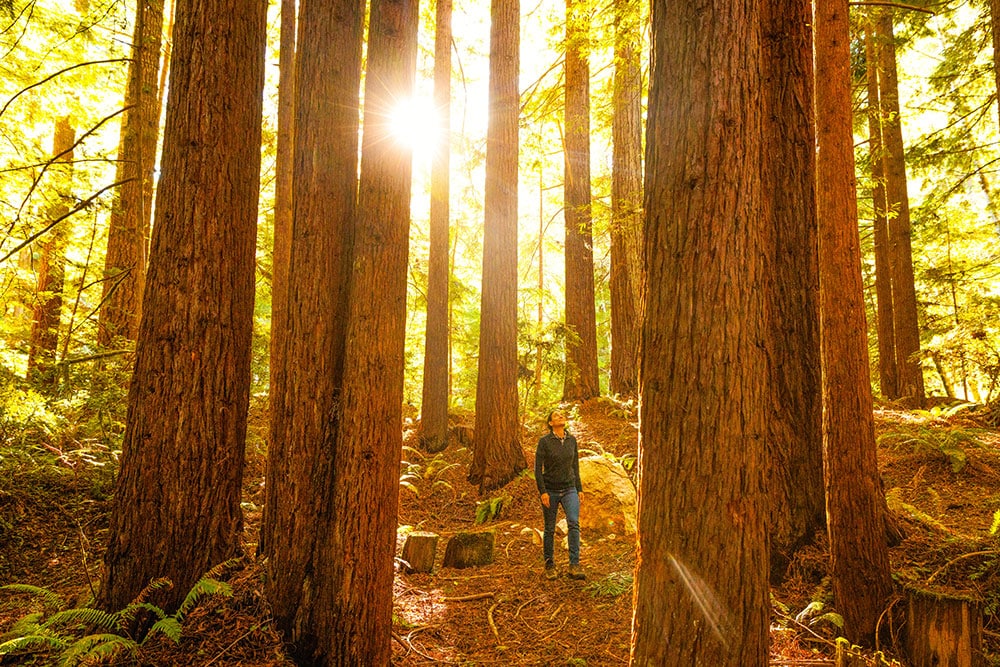
Estelle Clifton, registered professional forester and botanist with North Coast Resource Management, tours a portion of Ólak Ólohtem in 2021. Save the Redwoods will continue to work in strong coordination with our many partners to ensure the long-term health of redwood forests in the Lost Coast and beyond. Photo by Max Whittaker.
To clarify and formalize our vision for the future of Ólak Ólohtem, Save the Redwoods worked in close consultation with the Sinkyone Council, BLM, and other government agencies and conservation organizations to create a detailed Initial Vision Document for Ólak Ólohtem in 2025. This Vision emphasizes ongoing collaboration with Sinkyone Council and a meaningful alignment with Tribal values and perspectives for the long-term safekeeping of the land.
As BLM stewards Ólak Ólohtem, the agency also will engage with local communities, conservation organizations, as well as federal, state, and local agencies. Future planning efforts will focus on balancing public access with land protection, ensuring that the Ólak Ólohtem remains a place of cultural and ecological significance and revitalization for generations to come.
Newsroom
PRESS RELEASES
- January 5, 2022 — Save the Redwoods League Buys Lost Coast Redwoods, the Longest Stretch of Privately Owned Shoreline in the Coast Redwood Range
- December 9, 2021 — Save the Redwoods League Secures Unique Opportunity to Protect More than 3,100 Acres of Threatened Coast Redwoods, 5 Miles of Northern California Coastline
IN THE NEWS
- Five miles of stunning Northern California coastline preserved in landmark redwoods deal
—The Mercury News, December 2021