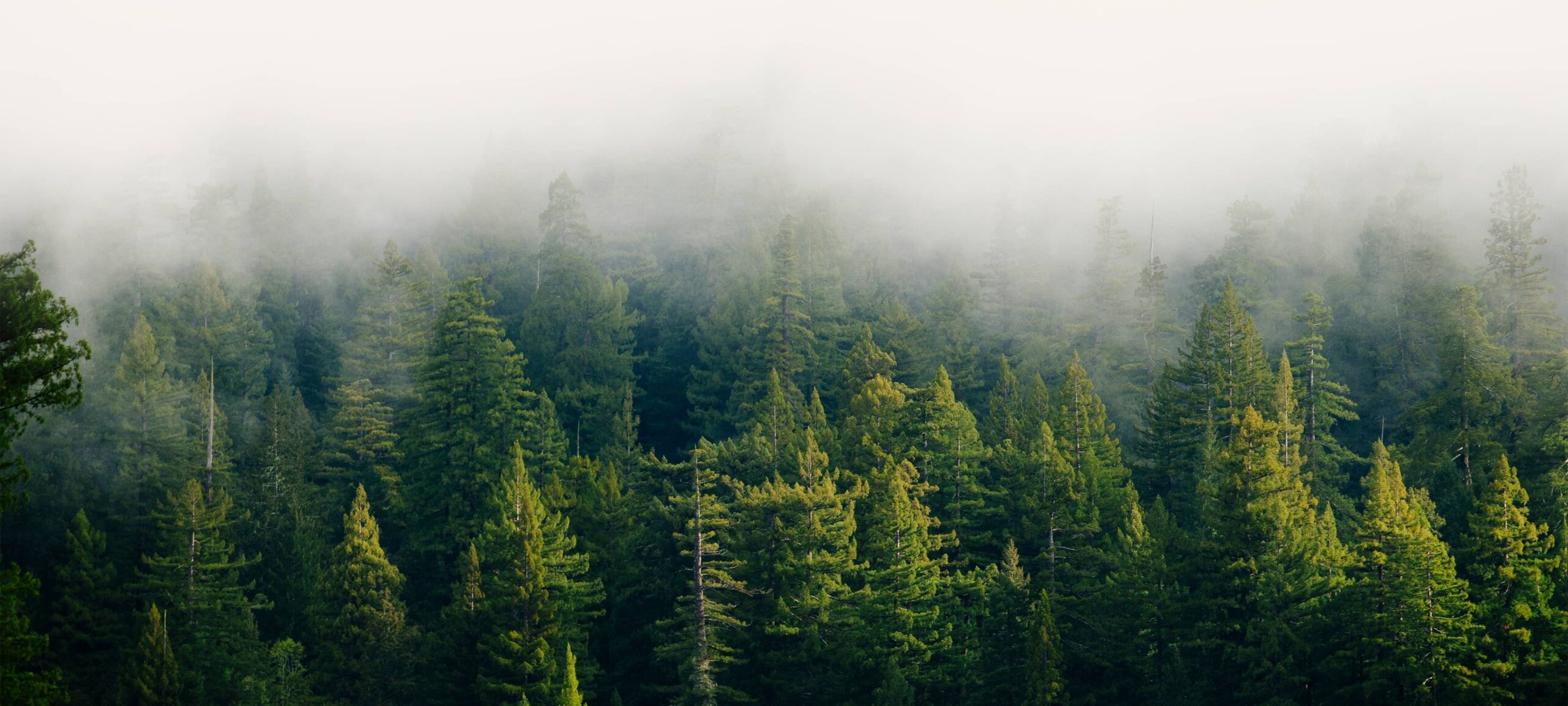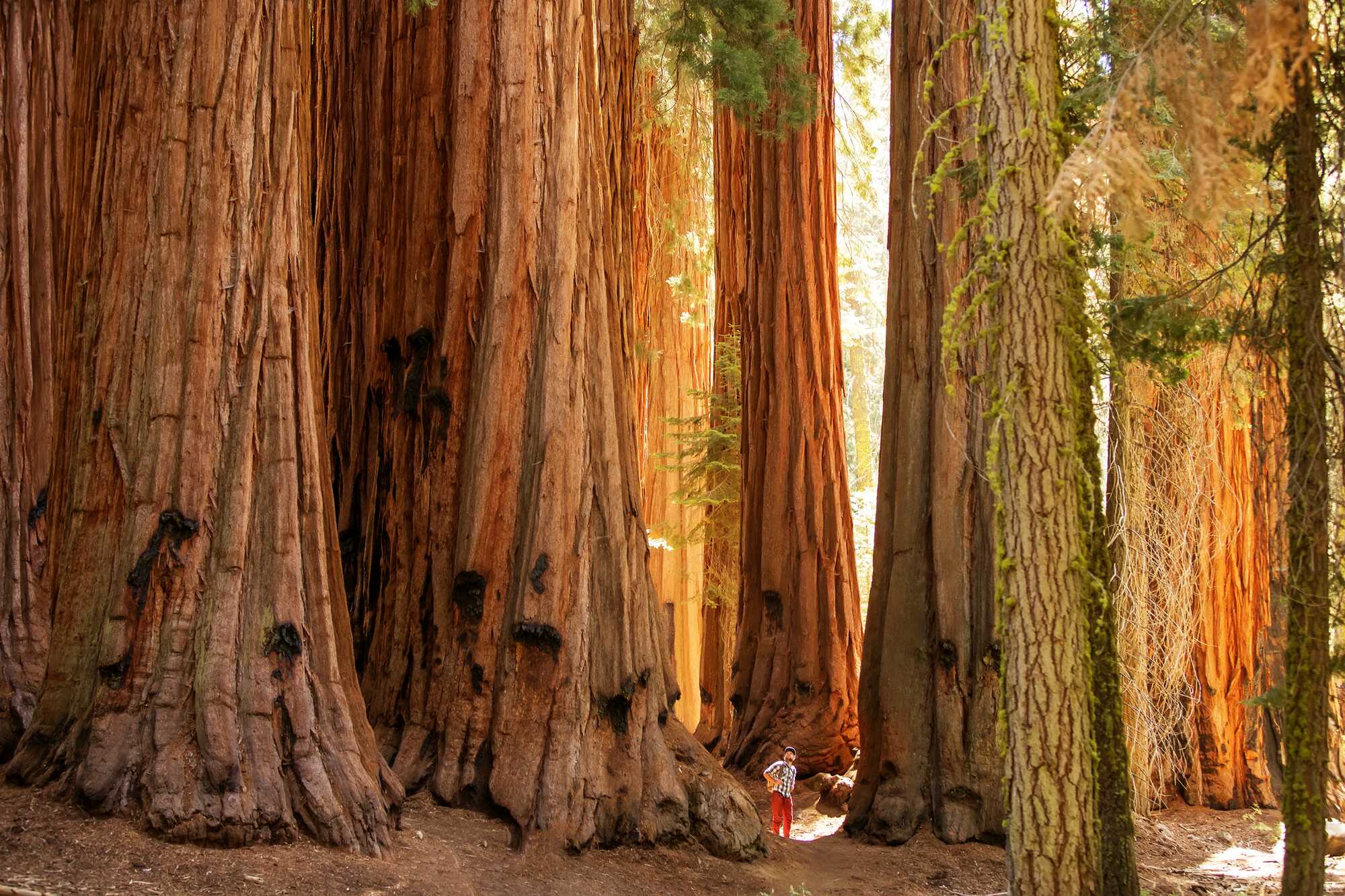
The largest known giant sequoia, the General Sherman Tree in Sequoia National Park, is between 2,200 and 2,700 years old. It stands 275 feet tall and is more than 100 feet around. Other giant sequoias are even taller, reaching more than 316 feet, while the oldest known individuals are estimated to be over 3,200 years old. Standing beneath one is a reminder that these trees were already ancient when the Roman Empire began.
These giants also helped spark one of the first conservation victories in the American West: the protection of the Mariposa Grove in 1864—years before the creation of the first national park. Despite these early protections, giant sequoias remain vulnerable. In recent years, unprecedented wildfires have killed roughly 17% of mature trees, revealing how quickly change can outpace even the longest-lived organisms. Their story today is one of not only endurance but urgency—and the opportunity to restore the natural and cultural processes that have sustained these forests for millennia.
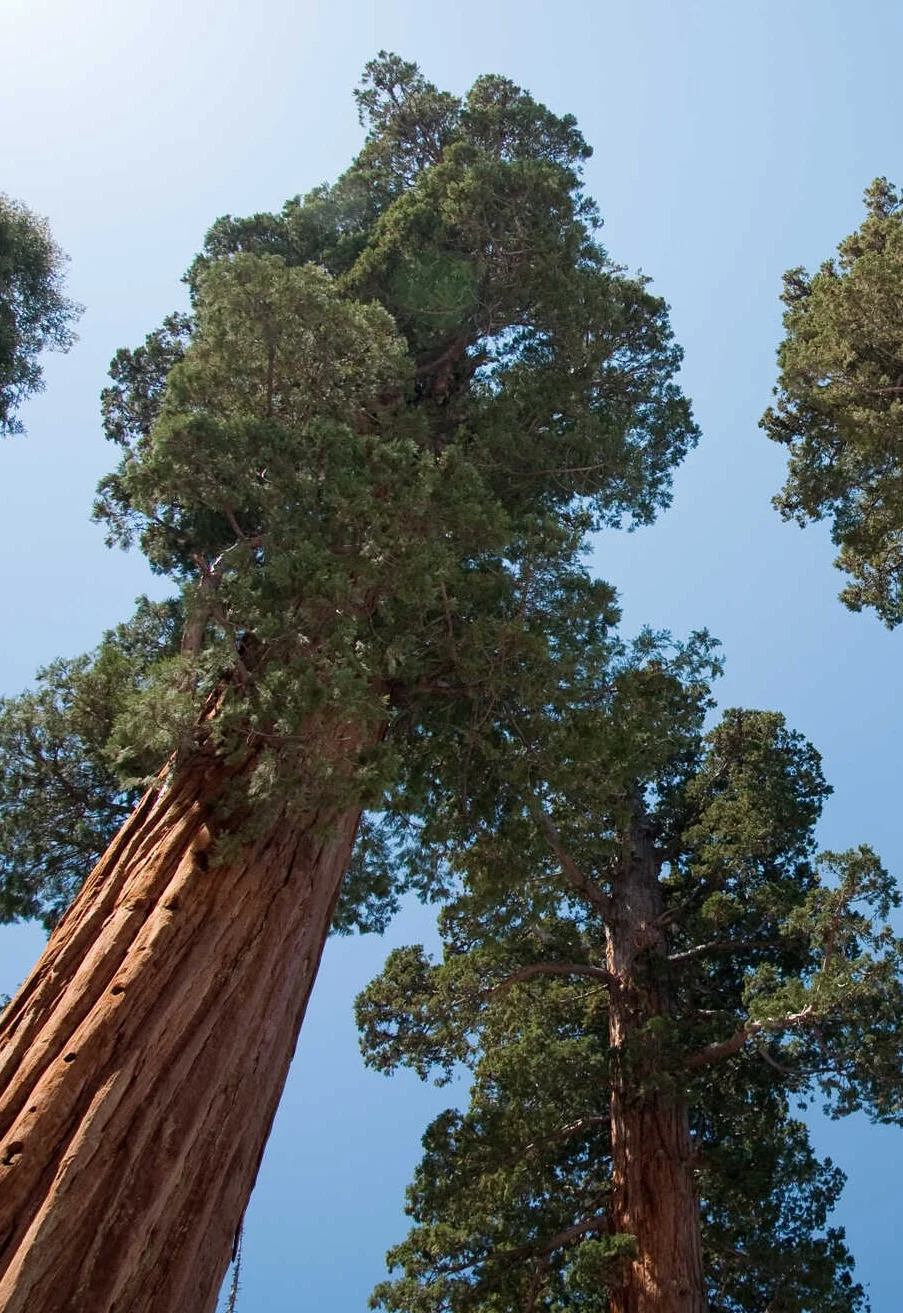
The remarkable size of giant sequoia trees is difficult to believe—especially in an increasingly dry climate. Photo by Hans Veneman/Flickr Creative Commons.
Key Facts
- Scientific name: Sequoiadendron giganteum
- Claim to fame: World’s largest trees by volume
- Impressive trait: Can live for more than 3,000 years
- Current range: About 94 naturally occurring groves in California’s Sierra Nevada
- Biggest threat: Extreme wildfire fueled by climate change and fire suppression
- Protection status: Nearly all groves are protected, but their future is not guaranteed
- Fun fact: Sequoia seeds are about the size of an oat flake yet can grow into the largest trees on the planet
The Backstory
Giant sequoias share their ancestry with coast redwoods and dawn redwoods, descendants of a lineage that flourished across the Northern Hemisphere millions of years ago. As climates cooled and grew drier, these ancient forests retreated to California’s Sierra Nevada, growing on west-facing slopes where accumulated snowfall could sustain their water needs through summer. For thousands of years, these sequoia groves were shaped by frequent, low-intensity fire. Indigenous peoples intentionally used cultural burning to steward the landscape, reduce flammable vegetation, maintain open forests, and promote diverse native species.
Unlike the coast redwoods, giant sequoias were never extensively harvested for timber. While many groves were logged after Euro-American settlement, sequoia wood proved brittle and poorly suited for lumber, often shattering when felled. Ironically, their limited commercial value may have helped save many of the largest trees from the fate that befell much of California’s old-growth coast redwood forest.
When giant sequoias first came to the attention of the wider public in the mid-1800s, many people found their immense size difficult to believe. Exhibits of giant sequoia bark and sections of trunks were displayed in East Coast cities and Europe, where some dismissed them as elaborate hoaxes. Yet public fascination quickly grew, helping inspire one of the earliest conservation victories in the United States.
In 1864, during the Civil War, President Abraham Lincoln signed legislation protecting Mariposa Grove and Yosemite Valley. This act predated the creation of Yellowstone National Park and marked a pivotal moment in the conservation movement, establishing the idea that extraordinary natural places should be protected for future generations. Giant sequoias became enduring symbols of that vision, featured prominently on the National Park Service emblem.
With the later suppression of both natural fire and Indigenous cultural burning, forests grew denser as shade-tolerant firs filled the understory. Fuels accumulated, young sequoias struggled to establish, and the ecological balance began to unravel. In recent decades, this legacy—combined with drought and a warming climate—has contributed to larger, more severe wildfires that burn hotter and longer than giant sequoia forests evolved to withstand.
Today, giant sequoias face a new chapter. Protecting these ancient trees increasingly means restoring the natural and cultural processes that shaped them for thousands of years, including the beneficial role of frequent fire.
Giant Sequoia Biology

Fire enables the cones of a giant sequoia to dry out, fall to the forest floor, and crack open, depositing seeds. Photo by Max Forster.
Giant sequoias are conifers—cone-bearing trees—and one of three redwood species on Earth. They are built for longevity and scale. Their bark, often more than a foot thick, insulates them from heat, insects, and decay, while their towering crowns can rise more than 300 feet above the forest floor.
Surprisingly, the world’s largest trees do not have deep taproots. Instead, giant sequoias develop extensive root systems that spread outward, sometimes extending more than 100 feet from the trunk. These roots intertwine with those of neighboring trees and help anchor giants that can weigh more than a thousand tons. While no single root reaches great depths, together they create a broad foundation capable of supporting trees for millennia.
The giant sequoia life cycle is inseparable from fire. The heat from low-intensity fires helps dry and open cones, releasing seeds. Fire also clears competing vegetation, exposes bare mineral soil, and helps create the sunny openings where seedlings can thrive. Without periodic fire, young sequoias struggle to gain a foothold, and other species begin to fill the understory.
Unlike coast redwoods, giant sequoias do not readily resprout after severe damage. Each new generation must begin from seed, making successful regeneration both essential and vulnerable. Sequoia groves impacted by extreme wildfires face the double threat of high tree mortality and inadequate seedling regeneration. These groves cannot recover on their own, underscoring the need for active restoration and replanting in the wake of recent megafires.
Anchoring the Ecosystem
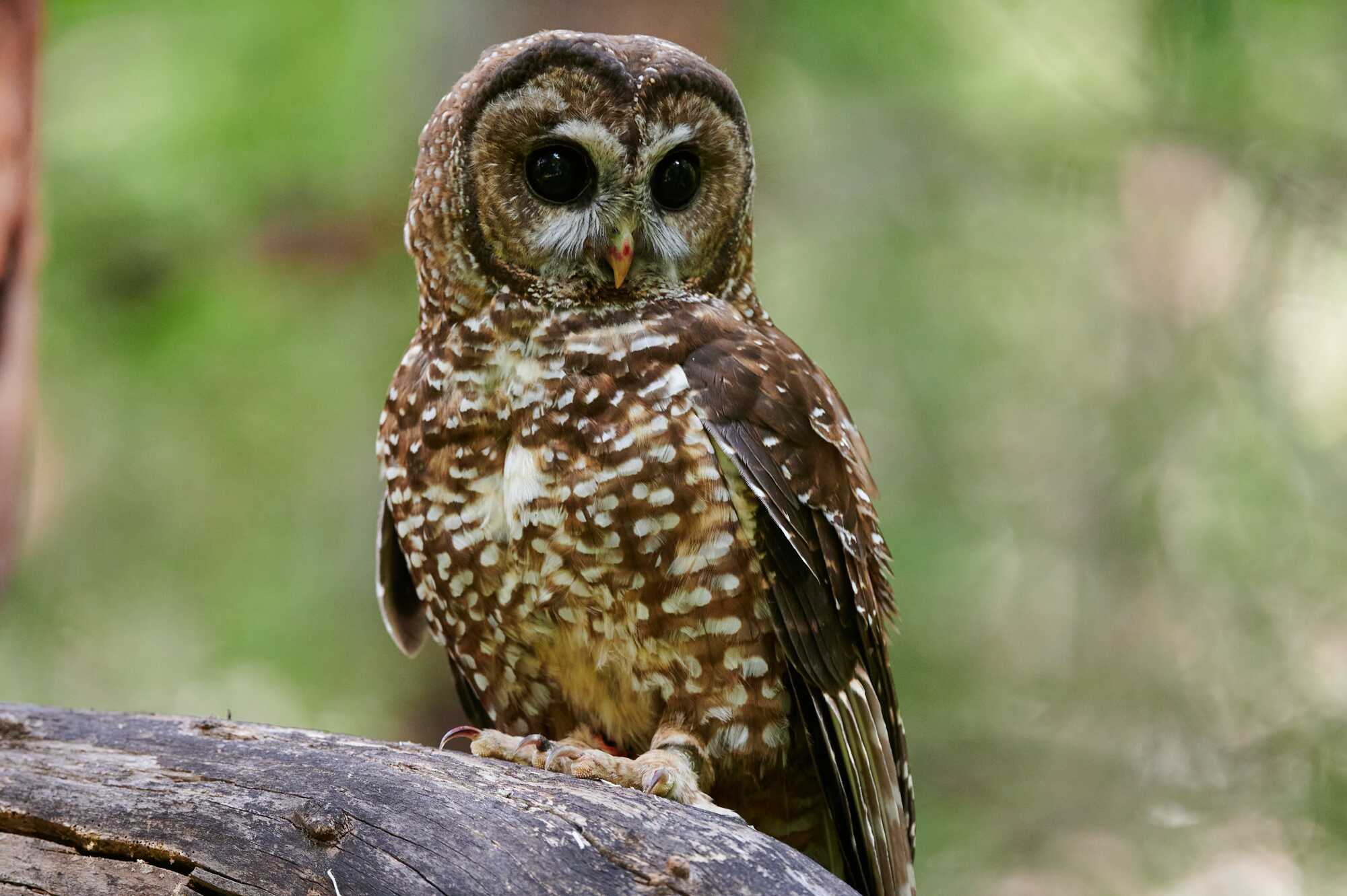
Northern spotted owls require highly specific ecosystems like those provided by giant sequoia groves to survive. Photo by Frank D. Lospalluto/Flickr.
A sequoia grove is more than a collection of massive trees—it’s a living community shaped by fire, water, wildlife, and people. The open structure of these forests, maintained for millennia by frequent fires and Indigenous stewardship, allows sunlight to reach the forest floor, supporting a rich diversity of plants and animals.
Sequoia groves provide habitat for species found nowhere else and serve as important refuges within the broader Sierra Nevada ecosystem. Pacific martens move through mature forests, hunting among fallen logs and dense cover. Black bears den in hollow sequoia trunks and cavities created by centuries of growth and decay. White-headed woodpeckers, spotted owls, and other wildlife depend on the mosaic of habitats found within and around these groves.
Fire helps sustain this biological richness. After low-intensity burns, the forest floor often erupts with wildflowers and fire-following plants that may lie dormant for years, waiting for the right conditions.
The return of wolves to the southern Sierra Nevada offers another reminder that these forests are part of a larger web of life. As predators reclaim portions of their historic range, scientists are studying how wolves may influence deer and other wildlife populations, potentially affecting ecological processes throughout the greater sequoia ecosystem.
These groves are also important water towers for California. Winter snow accumulates beneath their canopies and melts gradually through spring and summer, feeding streams and rivers that flow into the Central Valley. Healthy forests help regulate this process by protecting soils, reducing erosion, and slowing the movement of water across the landscape. The result is cleaner water, more reliable stream flow, healthier aquatic ecosystems, and benefits that extend far beyond the grove.
Climate Allies
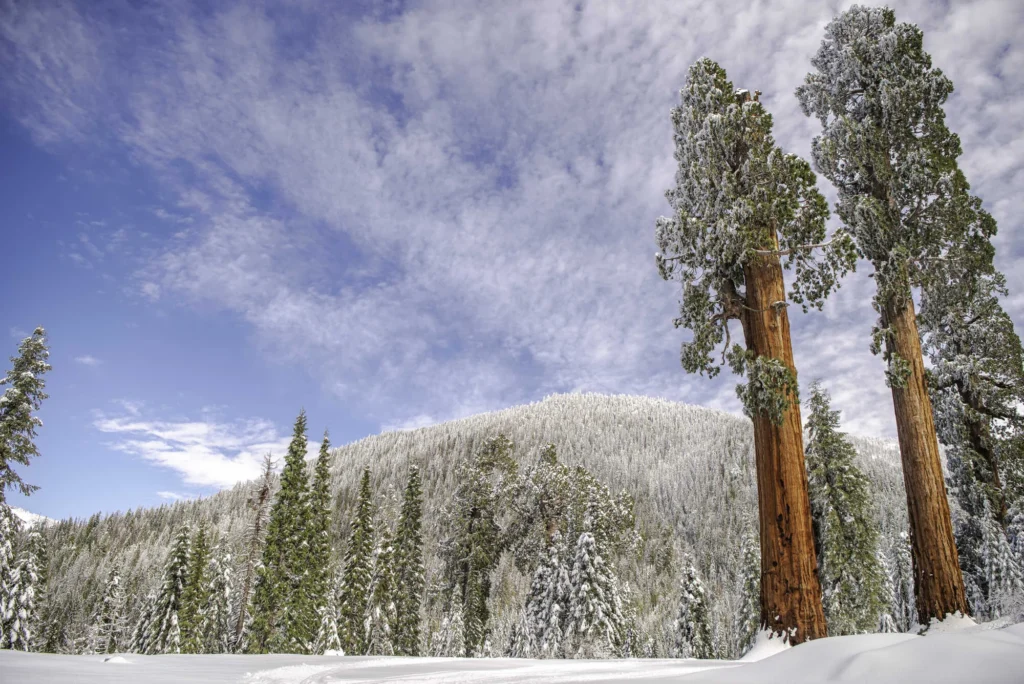
Winter’s snowpack is a crucial source of water throughout the year for giant sequoias. Photo by Victoria Reeder.
Giant sequoias are among the most effective carbon-storing organisms on Earth. Their massive trunks contain centuries of accumulated carbon, and their long lifespans allow them to hold that carbon for millennia. A single mature giant sequoia can store more carbon than many acres of younger forest, making these groves important allies in slowing climate change.
Yet a paradox lies at the heart of giant sequoia conservation: The same trees that help stabilize the climate are increasingly threatened by a warming world. Rising temperatures, prolonged droughts, changing snowpack, and more severe wildfires are creating conditions that challenge even these remarkably resilient giants.
Research is helping scientists better understand both the vulnerability and resilience of giant sequoias. In 2023, researchers completed the first-ever climb of the General Sherman Tree, gathering information about the health and condition of the world’s largest tree. Other projects are using advanced data science and mapping technologies to identify which groves face the greatest risks and where restoration efforts can have the greatest impact.
This work is helping guide a new generation of stewardship. By combining field science, Traditional Ecological Knowledge, and modern technology, researchers and land managers are working to ensure that giant sequoia groves continue to store carbon, support biodiversity, and inspire future generations. As part of a broader climate solution, these forests show how protecting and restoring resilient ecosystems can benefit both people and the planet.
Biggest Threats
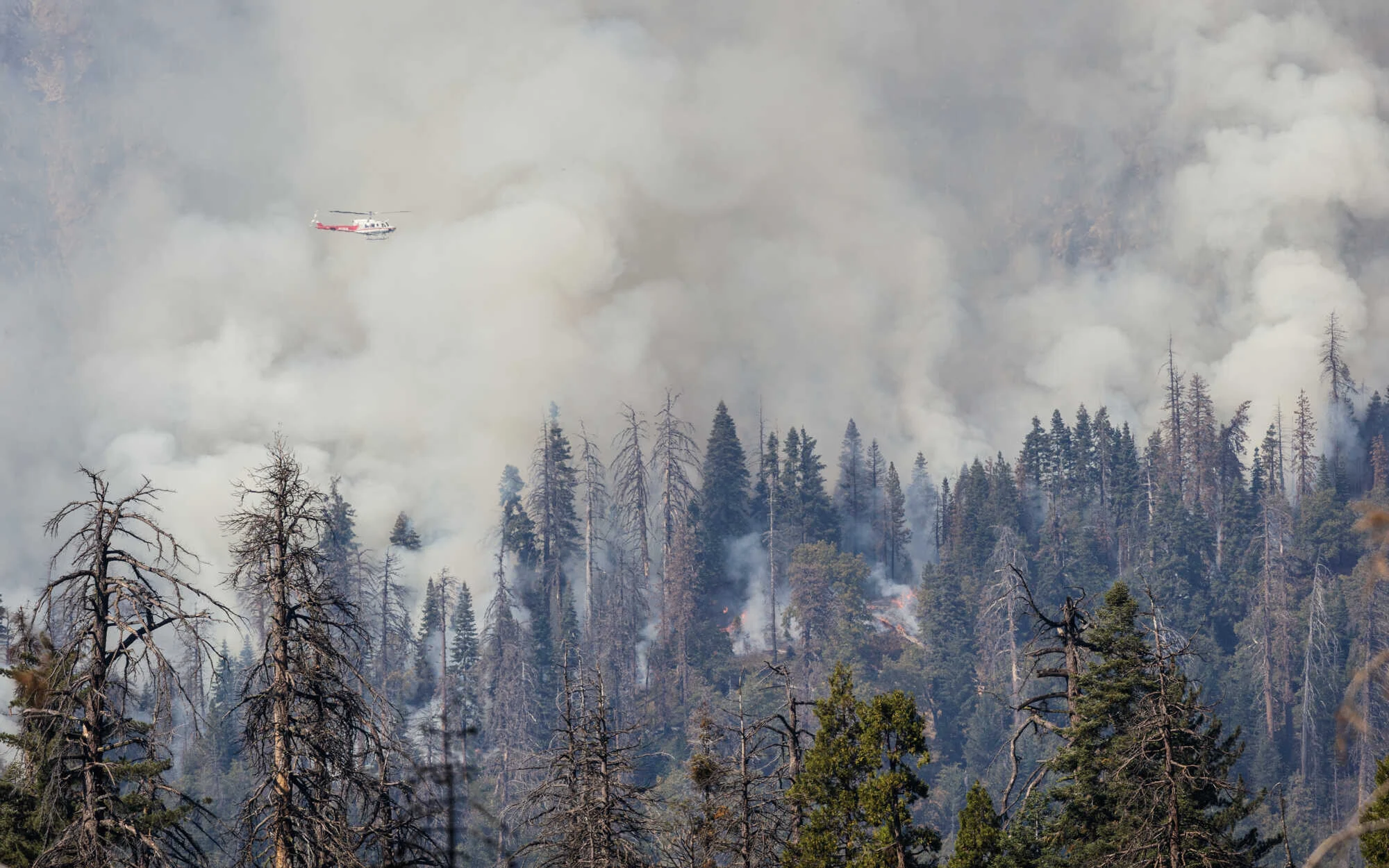
Dry conditions driven by climate change heighten wildfire risk. Photo by Max Forster.
For much of their history, giant sequoias appeared nearly indestructible. They survived centuries of drought, thousands of fires, and dramatic shifts in climate. Today, however, these ancient trees face a convergence of threats unlike any they’ve faced before:
- Extreme wildfires, driven by historic suppression of both natural fire and Indigenous cultural burning, can irreparably damage or kill sequoias.
- Drought and warming temperatures stress trees, reduce seedling survival, and increase wildfire risk.
- Changing snowpack alters the timing and availability of water throughout the year.
- Bark beetles and other pests, once a relatively minor concern, are emerging as a growing threat as climate stress weakens trees.
- Forest conversion to shrublands can occur after severe fires, making it difficult for giant sequoia forests to regenerate and recover.
The consequences are already visible. More than 17% of the world’s mature giant sequoias have died from extreme wildfire since 2015, with the majority of those losses occurring during just three wildfires in 2020 and 2021. For a species that can live more than 3,000 years, such losses are unprecedented. The threat is not simply to individual trees, but to the long-term future of giant sequoia groves themselves.
Despite these challenges, there is reason for hope. Research, prescribed fire, cultural burning, forest restoration, and collaborative stewardship are helping reduce risks and restore resilience. The urgency is real—but so is the opportunity to protect these remarkable trees for generations to come.
Our Vision
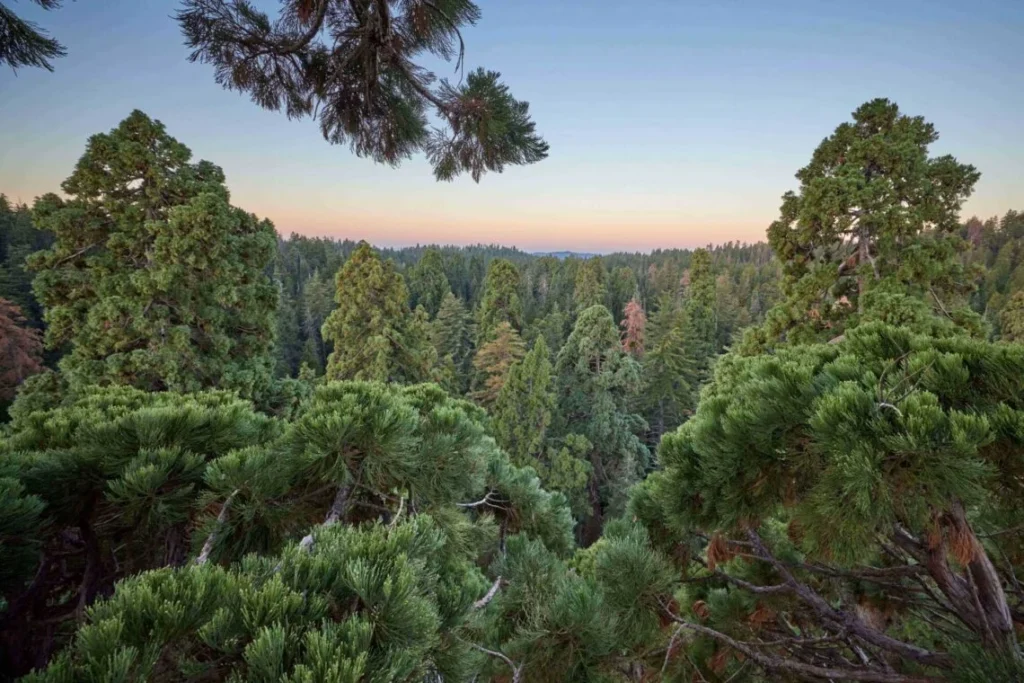
Ancient sequoias thrive at Calaveras Big Trees State Park, where the South Grove is a top priority for fire resilience treatments. Photo by Anthony Ambrose, Ancient Forest Society.
The future of giant sequoias depends on restoring balance between forests, fire, and people.
Save the Redwoods League is helping lead this effort through the Giant Sequoia Lands Coalition (GSLC), a partnership of federal and state agencies, Tribes, scientists, conservation organizations, and local communities working together to protect and restore sequoia groves across the Sierra Nevada. By coordinating action across ownership boundaries, the coalition is accelerating forest restoration, reducing hazardous fuels, expanding the use of prescribed fire, and helping ensure that limited resources are directed where they can have the greatest impact.
At the heart of this work is a growing recognition that giant sequoias evolved with frequent fire. In partnership with Sierra Tribes, Save the Redwoods is helping restore cultural burning practices that shaped these forests for thousands of years. At places like Alder Creek, cultural burns are bringing together Indigenous knowledge and contemporary science to reduce wildfire risk, promote biodiversity, and support the long-term health of sequoia groves.
This work is guided by both research and action. Scientists are monitoring tree health, studying fire behavior, and identifying the groves most vulnerable to future threats. Land managers are using that knowledge to restore forest resilience before the next wildfire arrives.
The vision is both practical and hopeful: giant sequoia groves where frequent fire once again plays its natural role, where young sequoias rise alongside ancient giants, and where these remarkable forests continue to store carbon, provide clean water, support wildlife, and inspire people for generations to come.