November 15, 2026
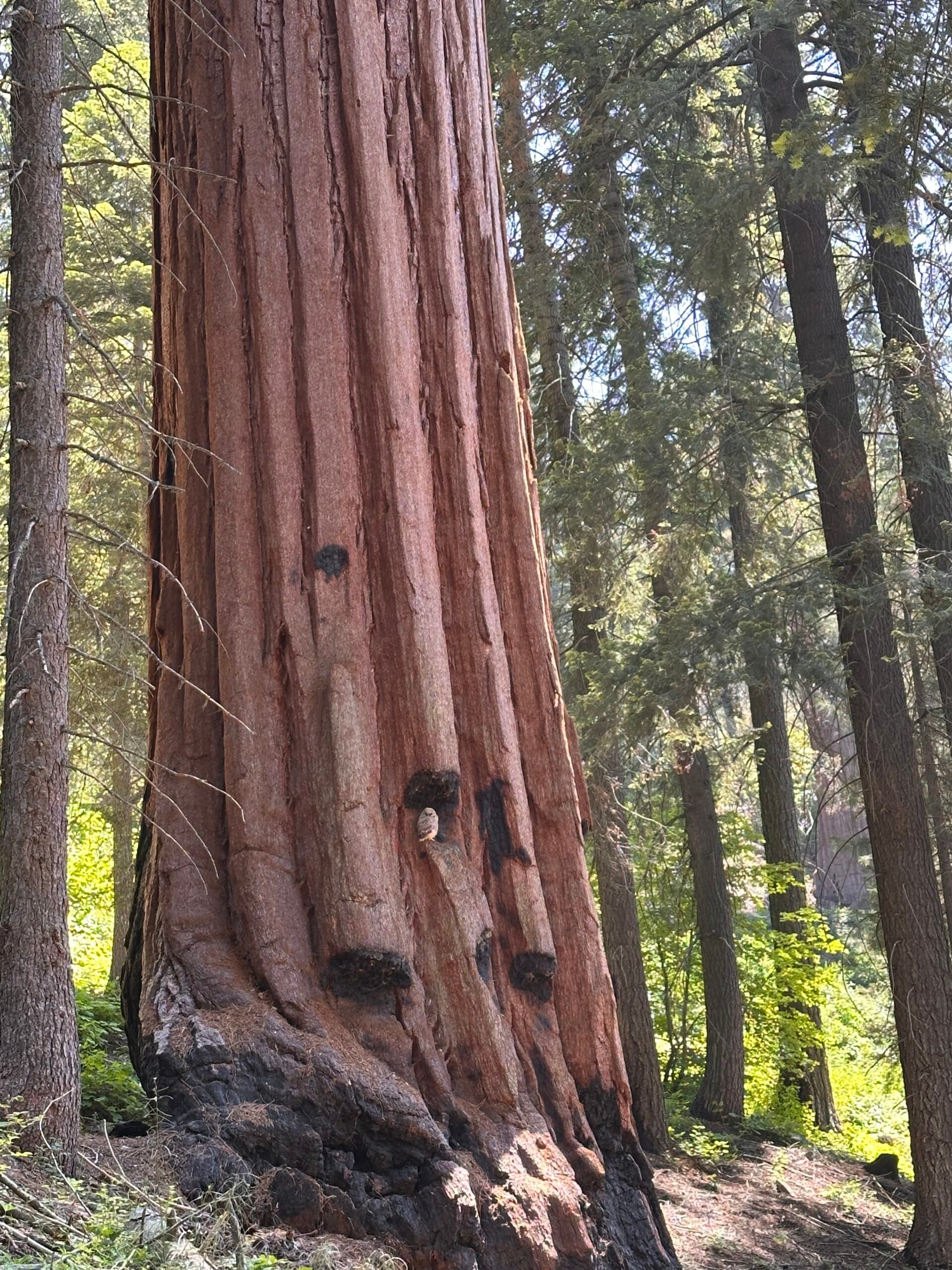
A baby owl occupies a cozy nook in the trunk of a giant sequoia tree. Photo by Neida Rodriguez.
Stroll through a giant sequoia grove and you’re touring a sky-scraping housing complex, beautifully designed by nature. Hundreds of animals live within and around these ancient trees: Squirrels scuttle down their trunks, raptors hunt from their branches, bears snooze within their hollows, bats cling to their thick bark, and even more critters depend on the forest ecosystems that sequoias anchor.
Many of these species—including Pacific fishers, foothill yellow-legged frogs, and California spotted owls—face serious threats in the region. With your help, Save the Redwoods League and our partners in the Giant Sequoia Lands Coalition work to protect sequoia groves and preserve the homes of these extraordinary critters.
Here are just 10 of the many amazing animals of the sequoias. We hope you’ll delight in their eccentricities and see them, as we do, as neighbors on this planet.
American goshawk
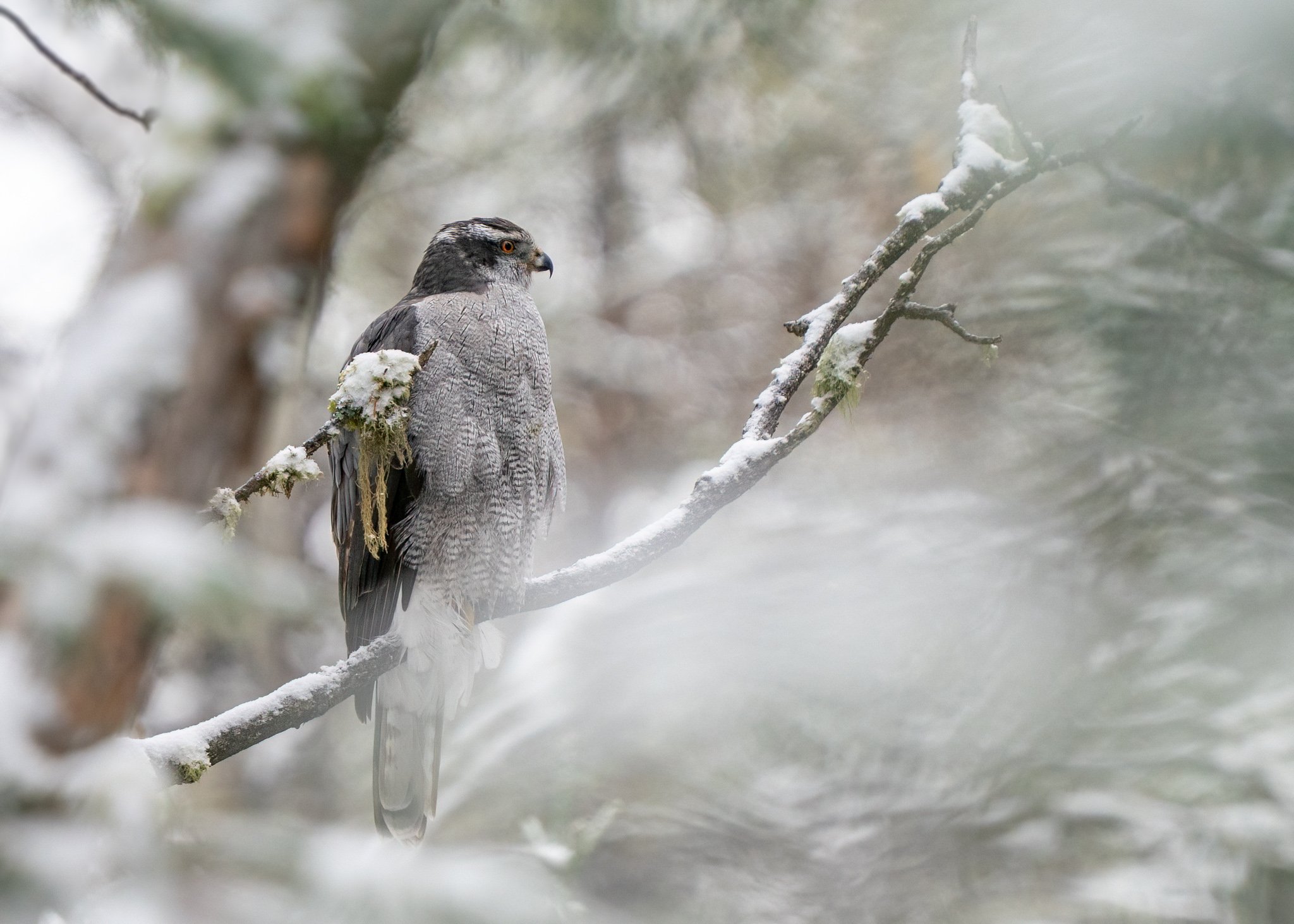
Believed to mate for life, American goshawks prefer to nest in mature and old-growth forests, often remaining in the same area, or even the same nest, for years. Photo by Sunny/Flickr.
Breeding pairs of American goshawks perform an acrobatic “sky dance,” with steep dives above the canopy and swift pursuits below. Their long, rudder-like tails and short, rounded wings allow them to maneuver through dense stands of trees, making them fierce predators. Goshawks are fiercely protective of their nesting area and may attack intruders in their territory. In fact, the once-famous Great Goshawk Tree (now diminished by wildfire) in Giant Sequoia National Monument reportedly earned its name after a goshawk chased off a naturalist there. To respect a goshawk’s territory, listen for its repetitive “ki-ki-ki-ki!” alarm call.
Foothill yellow-legged frog
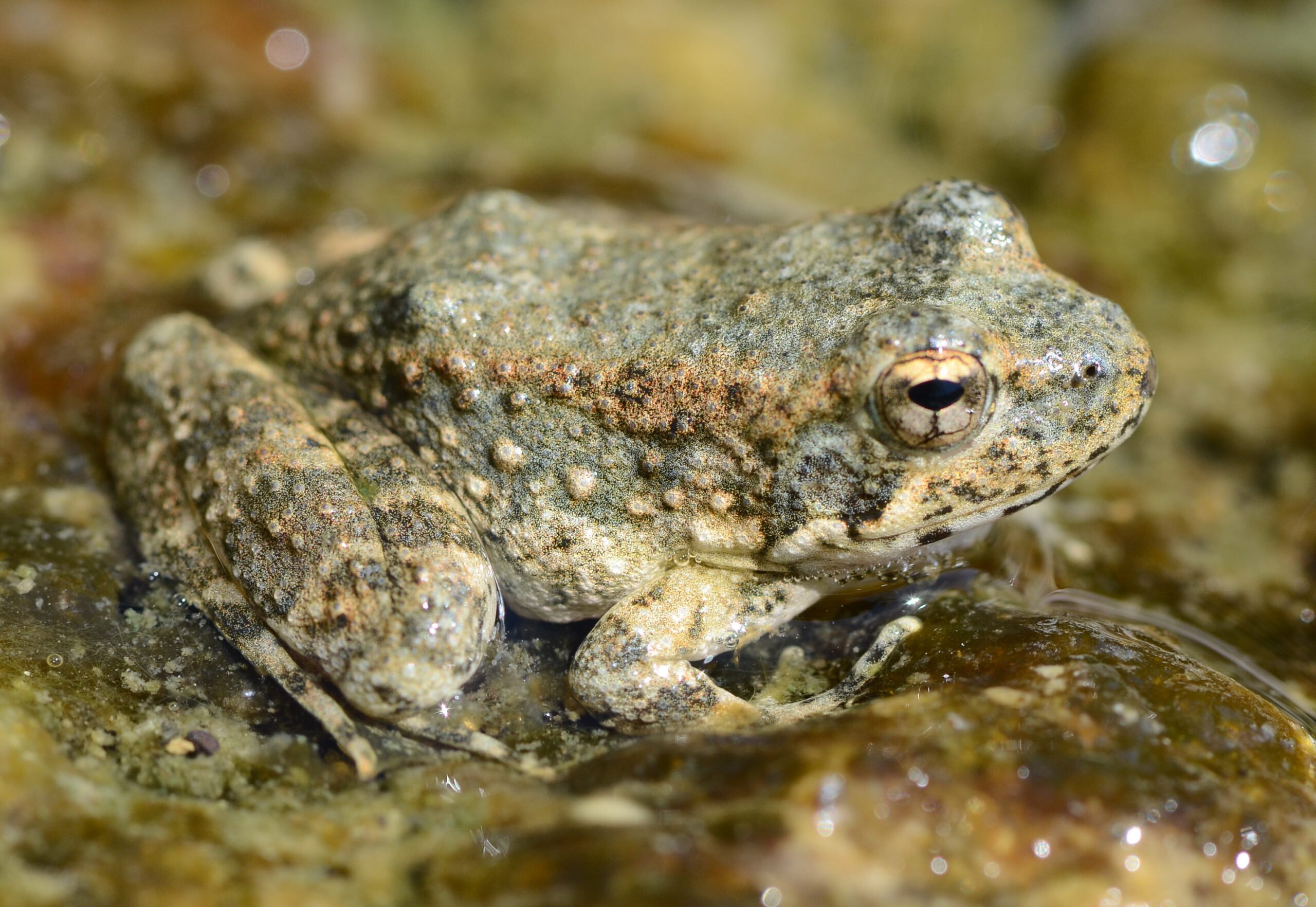
With its colorful yellow underbelly hidden, a foothill yellow-legged frog blends seamlessly into a rocky streambed. Photo by Don Loarie/Flickr.
This amphibian’s name is inspired by the stylish lemon-colored accents on the underside of its hind legs and belly. The rest of the frog’s body remains camouflaged by pebbly gray skin, allowing it to blend into rocky streams in the Sierra Nevada. To hide from predators, these frogs don’t jump into the brush; instead they duck underwater and wedge themselves beneath heavy stones. Submerged in mountain streams, male frogs also serenade mates and defend their territory with deep-pitched, rasping calls and grunts.
Pacific fisher
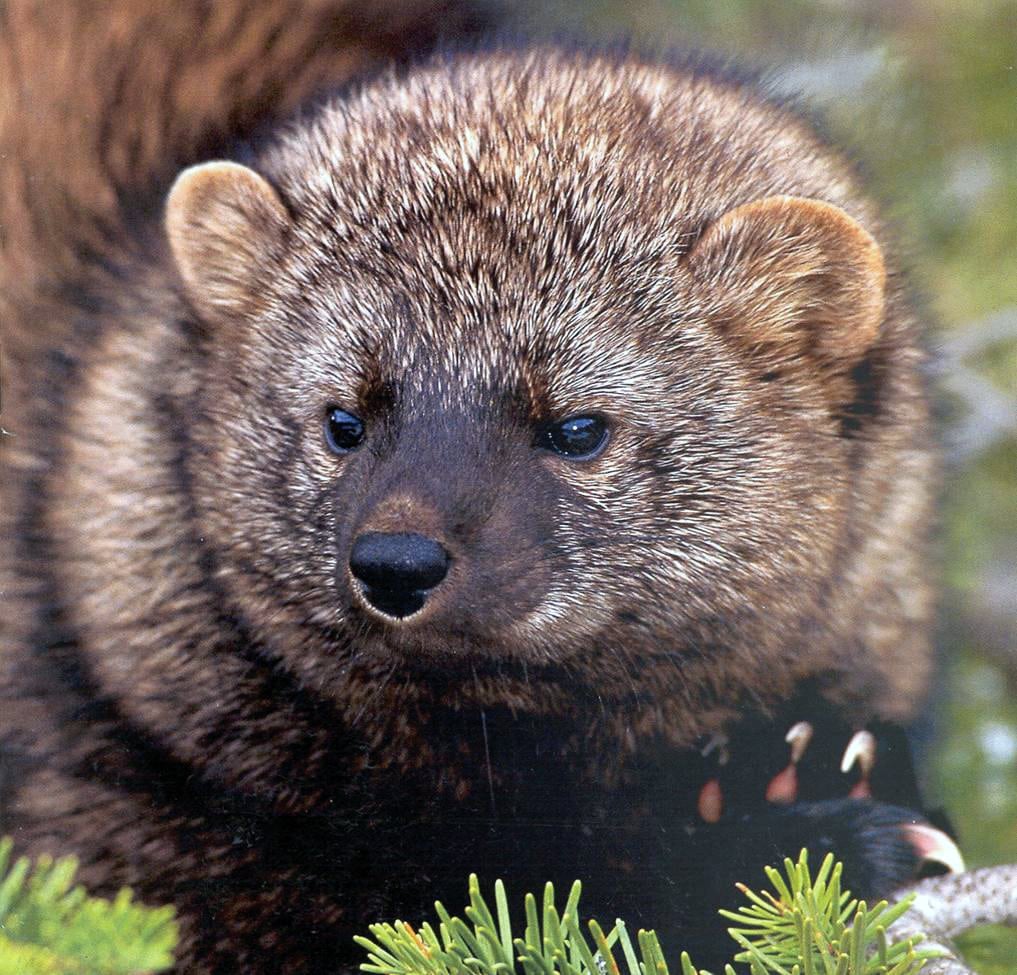
The southern Sierra Nevada population of Pacific fishers number less than 500. Photo by Pacific Southwest Forest Service USDA/Flickr.
Particularly well suited to living in dense forests, Pacific fishers can rotate their hind paws nearly backward, enabling them to descend trees headfirst. These slinky, housecat-sized members of the mustelid, or weasel, family also den in the elevated cavities of large trees or snags (standing dead trees). Despite their name, Pacific fishers don’t dine on marine life but instead eat small mammals and birds, as well as insects, fruit, and fungi. Scientists estimate that fewer than 500 Pacific fishers remain in the southern Sierra Nevada. If you’re lucky enough to encounter one, you might smell it before you see it: Like other mustelids, it releases a strong, musky odor when disturbed.
California mountain kingsnake
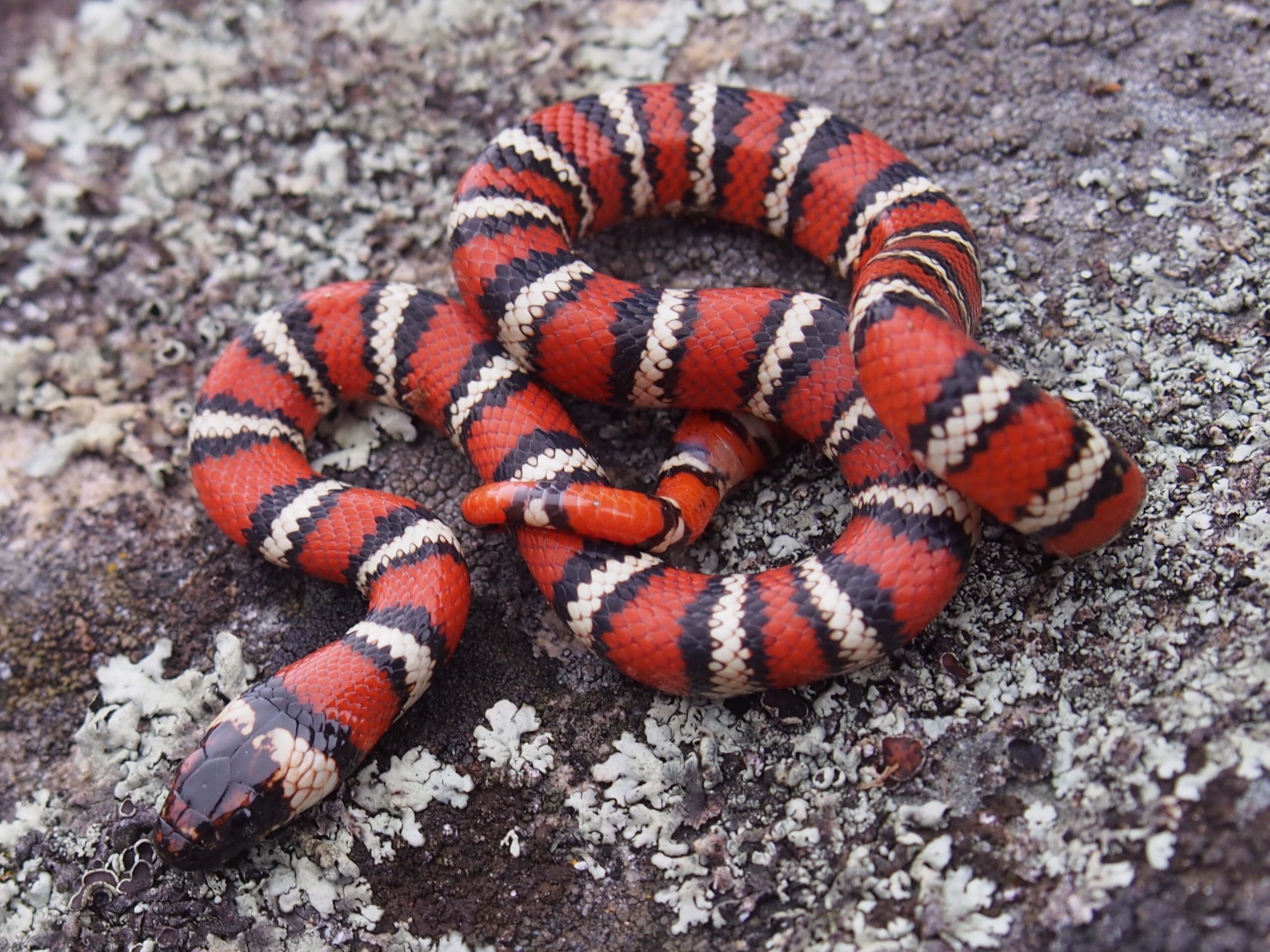
The rhyme “red touches black, venom lack” can help you tell a harmless California mountain kingsnake from a venomous coral snake. Photo by J.J. Maughn/Flickr.
Harmless to humans, the California mountain kingsnake looks similar to a highly venomous coral snake due to its eye-catching rings of black, reddish-orange, and white—a clever way to ward off predators. This 2- to 3-foot-long reptile earned its “king” moniker because it actually snacks on other snakes, as well as lizards, birds, and bird eggs. A high resistance to rattlesnake venom means that even rattlers are on the menu. Often found curled up beneath logs, rocks, or leaf litter, the California mountain kingsnake flicks its forked tongue in and out, picking up odor molecules that reveal whether its next meal is nearby.
Western tanager
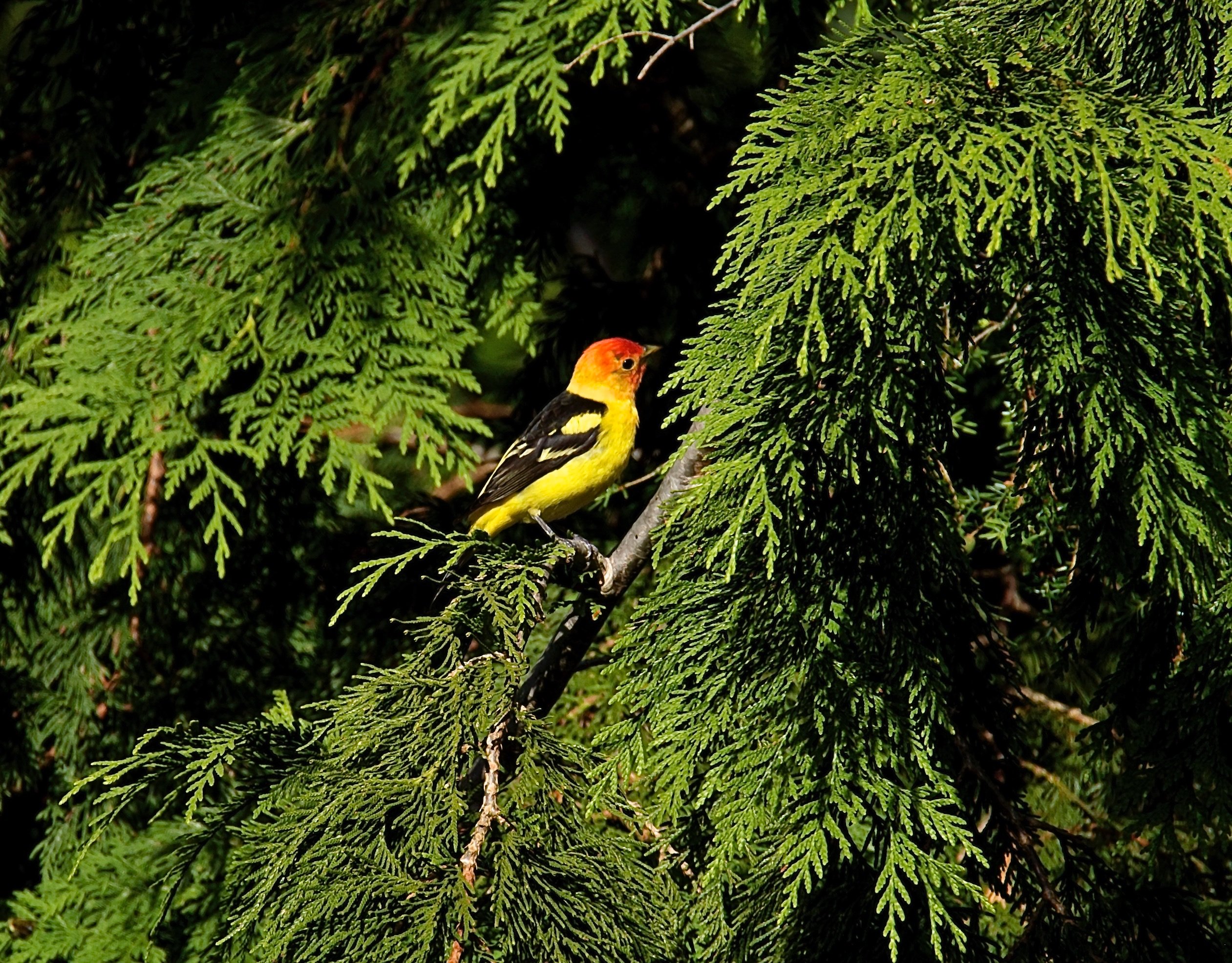
After summering in Sierra Nevada forests, Western tanagers are known to migrate as far as Mexico and Central America. Photo by Jerry McFarland/Flickr.
With a bright flash of scarlet and yellow, the Western tanager flits through the giant sequoia canopy during breeding season, sometimes catching insects in mid-flight. In the fall, these songbirds migrate long distances at night to Mexico and Central America. The males are believed to get their brilliant red-orange head feathers by consuming insects that in turn have eaten plants rich in a rare pigment called rhodoxanthin.
The male tanagers then show off their bedazzling plumage to the more humbly feathered females (neutral coloring provides camouflage while nesting). Seasonally monogamous, the pair will care for their chicks together until their offspring fledge at about two weeks old.
American pika
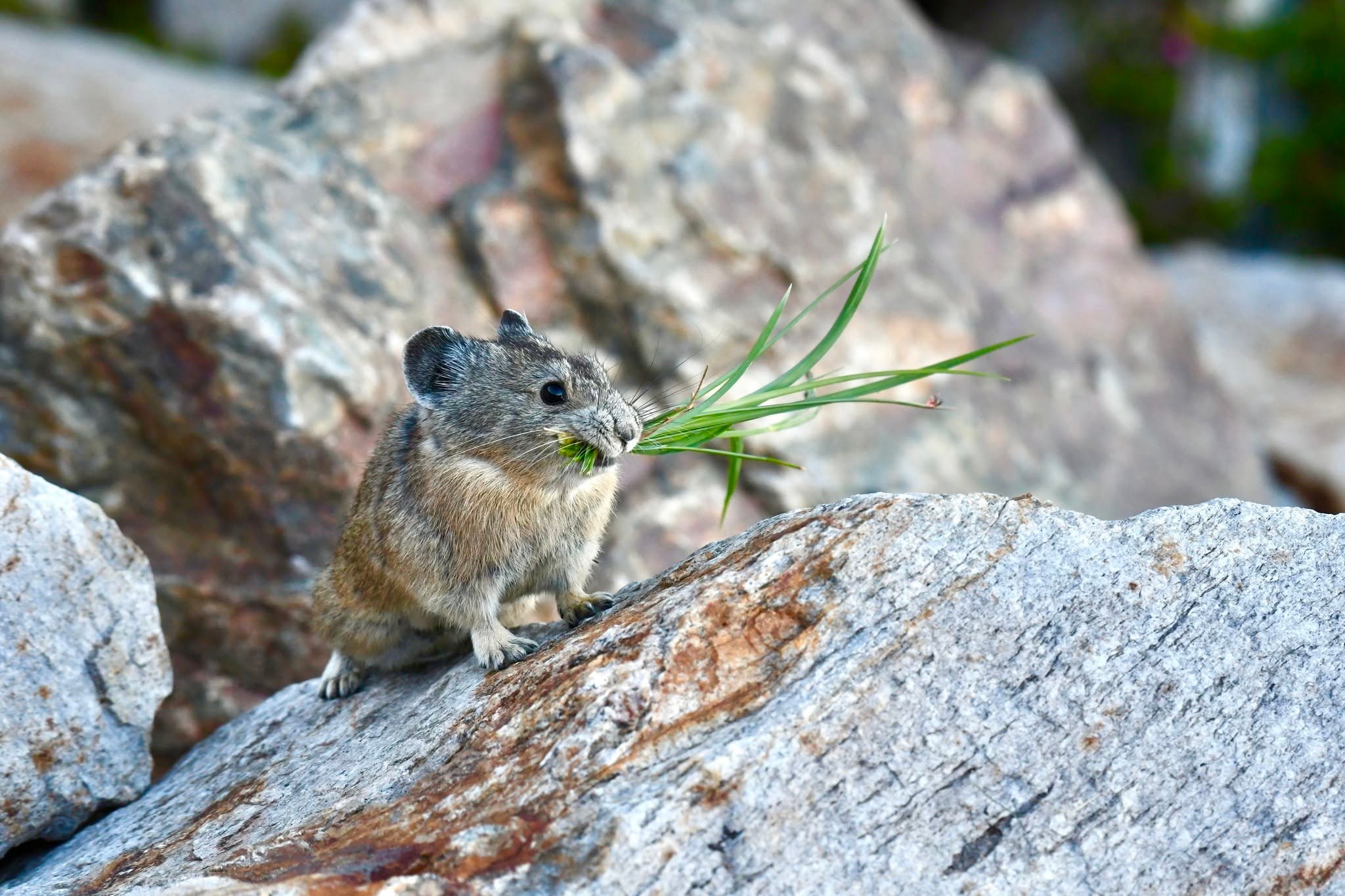
“Winter is coming!” thinks a pika as it gathers vegetation to dry and store in its den. Photo courtesy of NPS.
With a chitter and a squeak, an alarmed American pika might announce its presence on a high-altitude trail. Spotting the pika’s round, disk-like ears and puffy, potato-shaped body on the rocky talus is part of the joy of hiking in the high country above sequoia forests. Here, the mini-but-mighty American pika survives year-round in rugged, cold areas, including in parts of Sequoia and Kings Canyon National Parks. These 7- to 8-inch-long rabbit relatives prepare for winter by gathering mouthfuls of grasses and wildflowers into caches known as haypiles. Crafty pikas dry these winter supplies in the sun to keep them mold-free in their dens.
American black bear
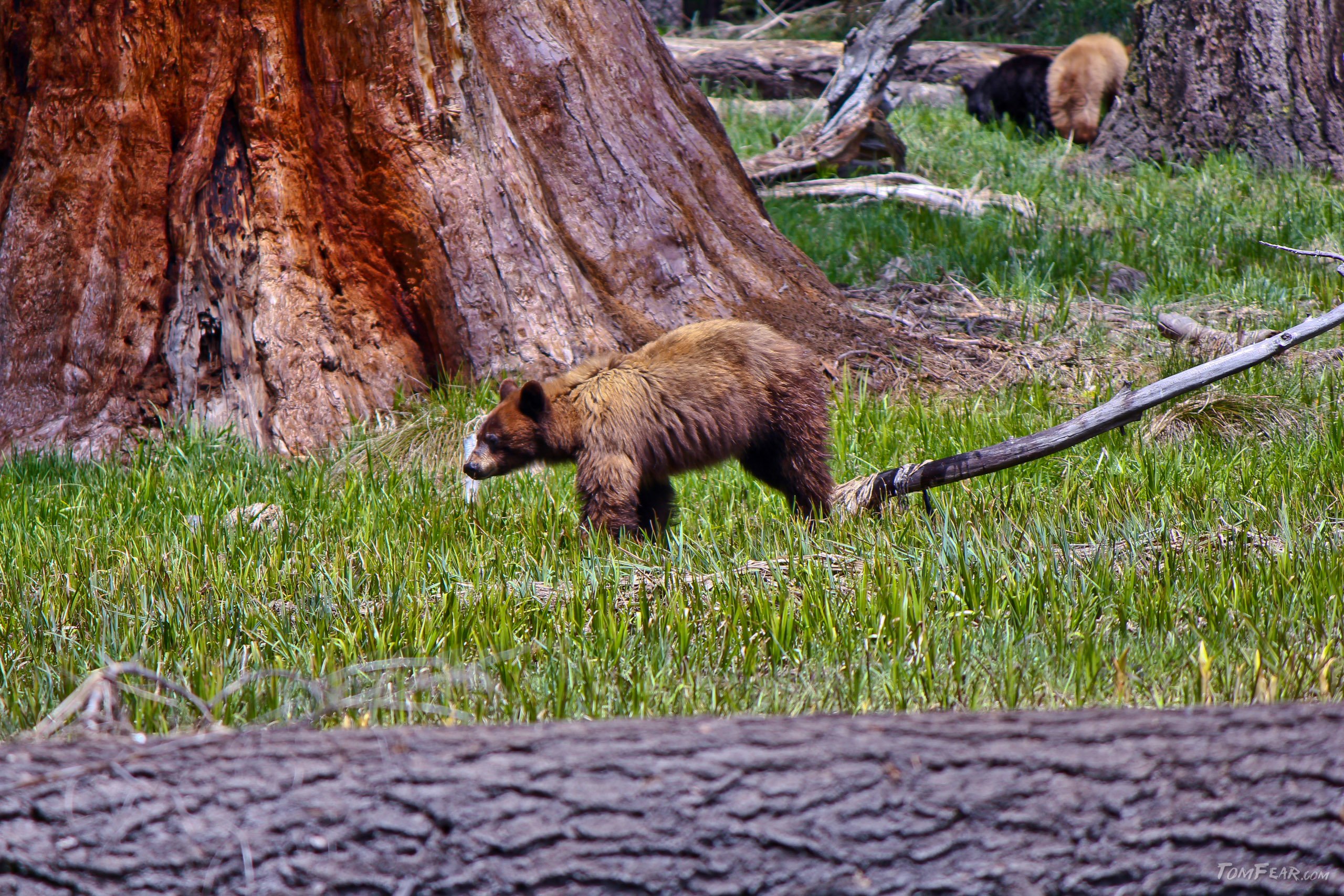
American black bears actually come in black, brown, blonde, and cinnamon hues. Photo by Tom Fear/Flickr.
Hundreds of black bears lumber through California’s giant sequoia groves, with males reaching up to 400 pounds. Examine a giant sequoia in black bear country, and you may see physical evidence of this formidable forest-dweller’s presence. Long claw marks and bits of fur show where bears may have climbed the tree to look for protein-rich grubs or to escape danger. A sequoia with missing strips of bark may reveal where a bear noshed on the tree’s cambium, a sugary layer of tissue beneath the bark. And a fire-carved hollow at the base of a sequoia may house a hibernating mom and cubs.
Townsend’s big-eared bat
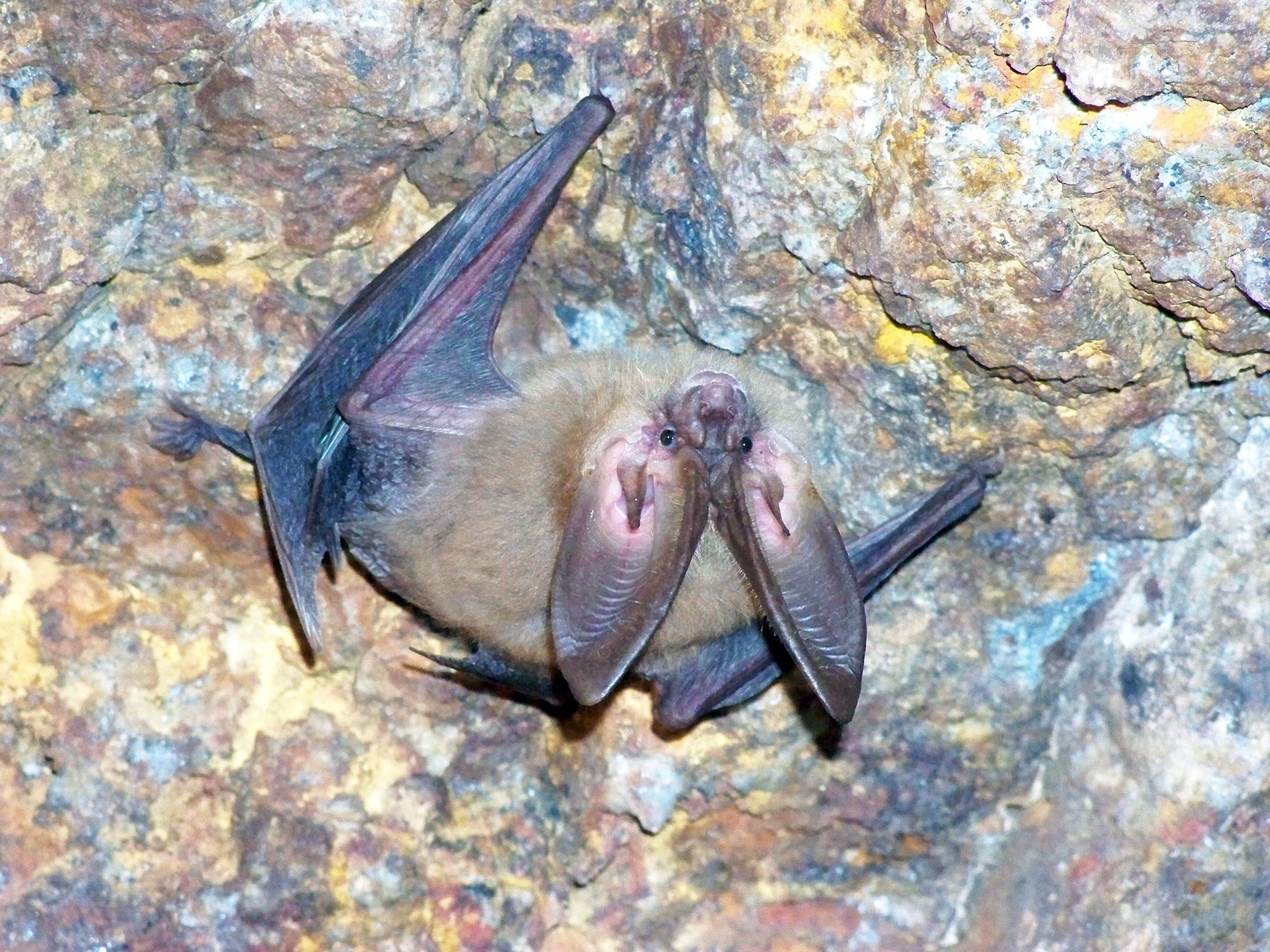
Found in caves and tree hollows, the Townsend’s big-eared bat is one of 17 bat species that live within the giant sequoia forest. Flickr photo courtesy of BLM.
The Townsend’s big-eared bat (a species of special concern) can quickly extend or contract its enormous ears, using them for supreme echolocation, temperature regulation, and even lift during flight. Although these bats normally roost in caves, they will also take refuge in large tree cavities and hollows. Females form maternity colonies in the spring and summer and give birth to one pup per year, which they nurse for six to eight weeks. The bats are long-lived for their small size, reaching an average age of 16 years.
Golden-mantled ground squirrel
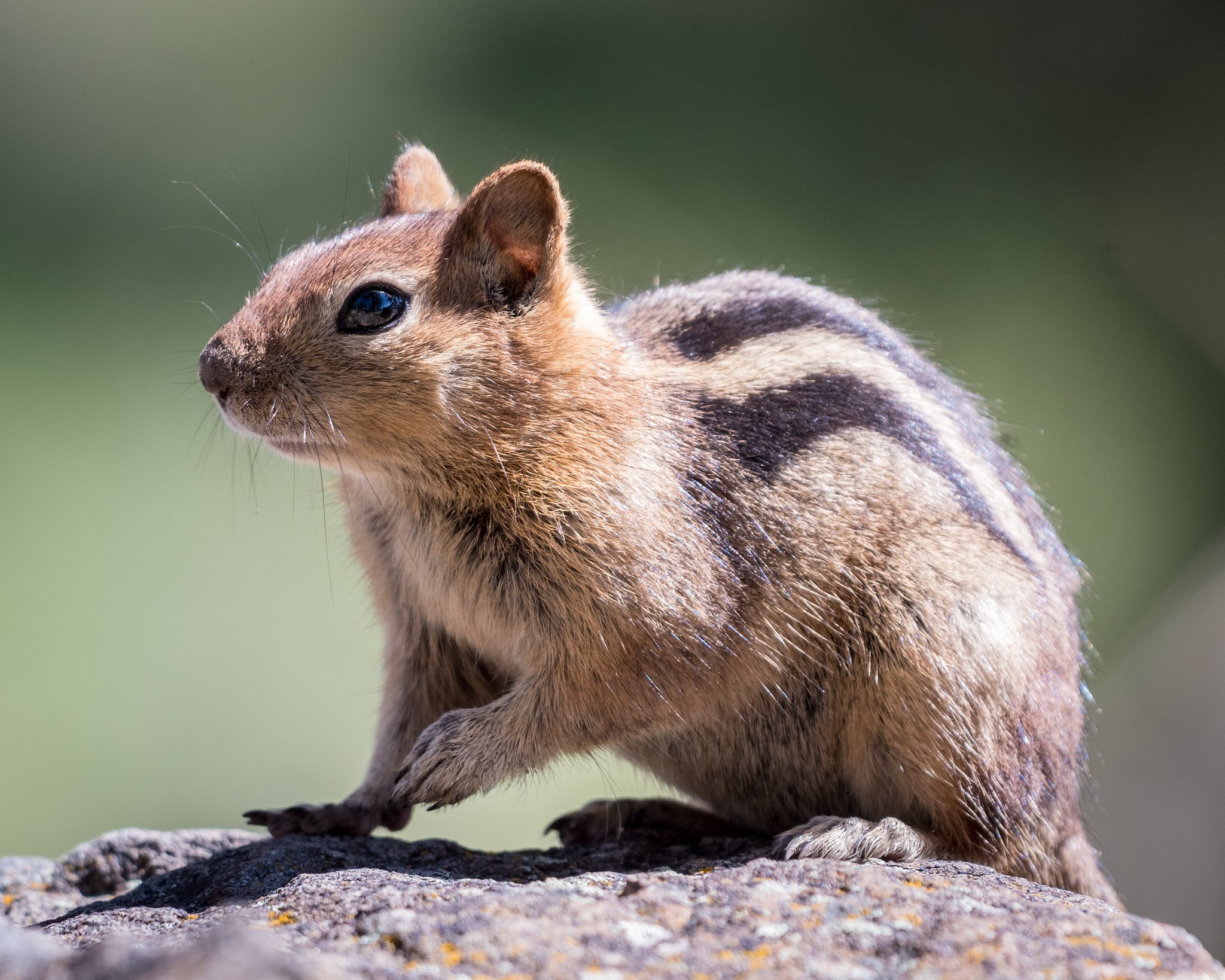
Don’t call me Chip or Dale: Unlike chipmunks, golden-mantled ground squirrels have golden-red fur around their necks and no facial stripes. Photo by Becky Matsubara/Flickr.
Sometimes called “goldies,” golden-mantled ground squirrels may look like chipmunks, but instead of a chipmunk’s stripes on their faces, they feature a “mantle” of reddish or golden fur around their necks. Goldies live in coniferous forests in western North America, where they burrow under fallen logs, tree stumps, and rocks. The squirrel stuffs its cheek pouches to capacity with seeds, nuts, and fruits, and then caches these treasures in its burrow for a post-hibernation feast. Watch for a squirrel standing upright on its hind legs—a position that allows it to scan the terrain for predators.
California spotted owl
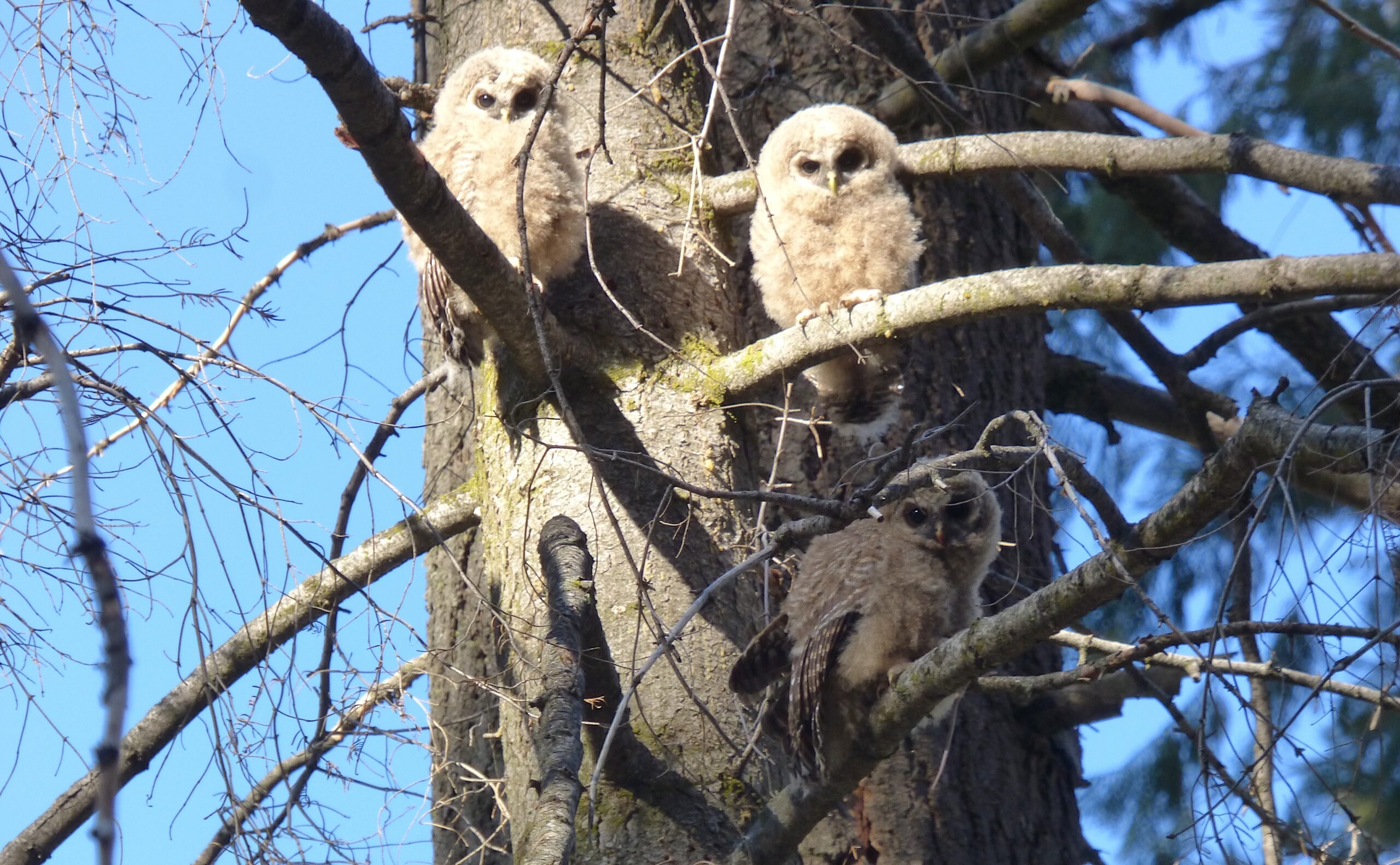
California spotted owls will sometimes nest right in a giant sequoia tree, with one to two fluffball chicks emerging about a month after the female lays her small, pearly gray eggs. Photo courtesy of Colibri Ecological Consulting.
Dark, engaging eyes and the lack of ear tufts help distinguish the California spotted owl from many other owls (which often have yellow eyes). Dappled brown and white plumage also allows this spotted owl subspecies to remain camouflaged while hunting in dense old-growth forests in the Sierra Nevada and the coastal and inland ranges of Southern California. The owls are able to soar silently toward their prey, thanks in part to comb-like serrations on their wing feathers that channel noisy turbulence.