November 21, 2023
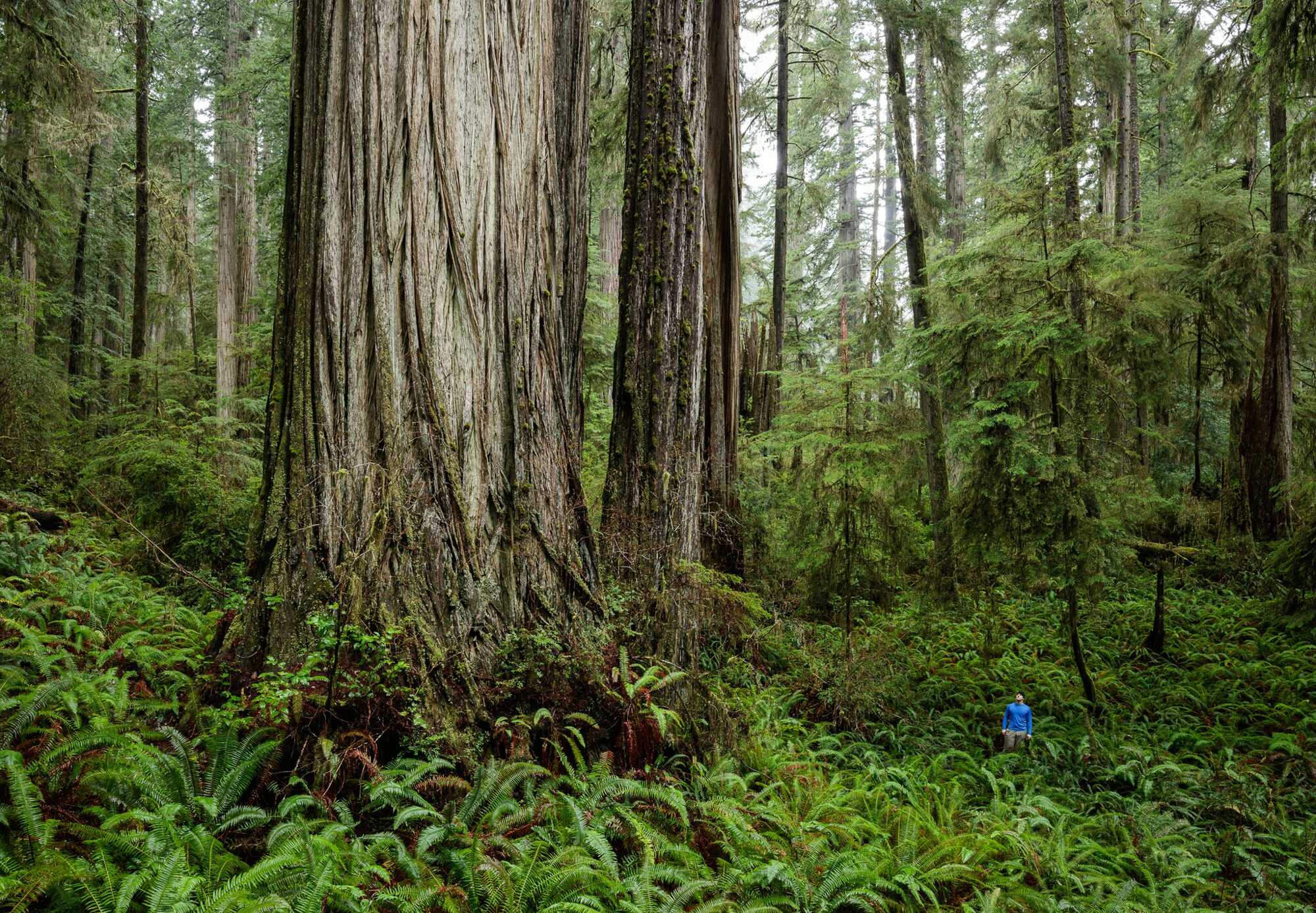
It’s easy to appreciate redwood forests for their beauty and grandeur. What’s harder to see: The many ways these forests enrich our lives and support our planet. This Thanksgiving, we’re taking a closer look at why the redwoods deserve our gratitude—and our protection.
Redwood forests provide habitat for fascinating animals
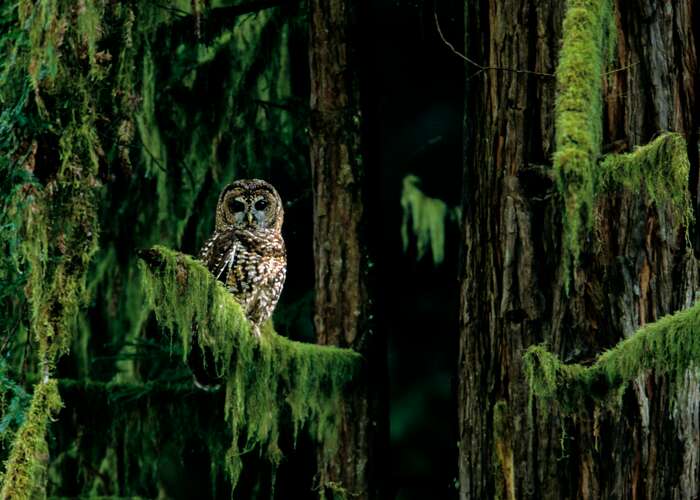
Northern spotted owls have impeccable taste, preferring to nest in old-growth redwood trees. They are among several imperiled species that depend on redwood forests for habitat. Photo by Alan Justice.
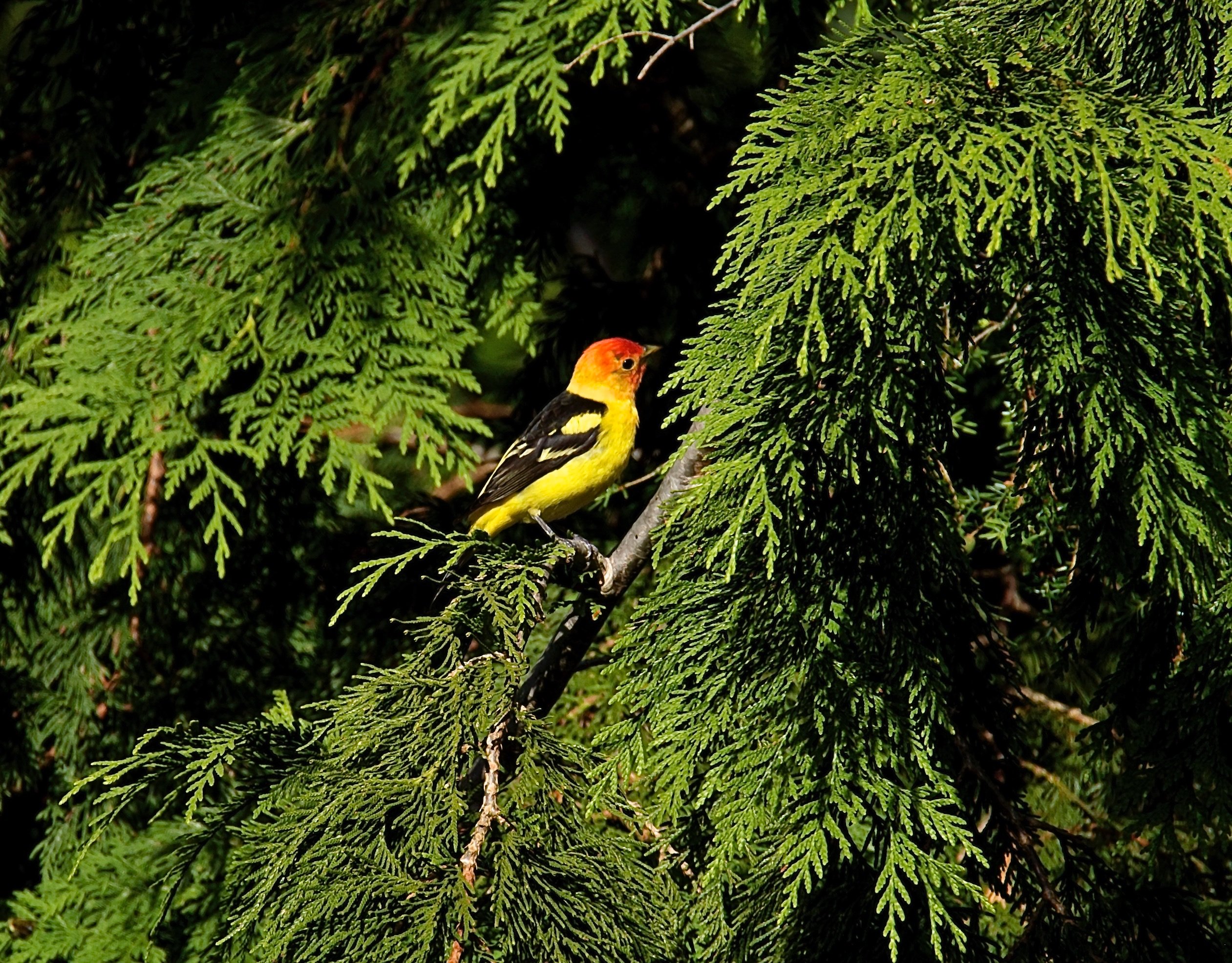
More than 1,000 plant and animal species thrive in a healthy coast redwood forest. Pileated woodpeckers and leathery bats swoop through the canopy. Gray foxes and black bears prowl the understory. Coho salmon and California red-legged frogs splash and swim in redwood-shaded streams. Not to mention beloved invertebrates like bright yellow banana slugs.
Old-growth redwood forests boast the greatest biodiversity, but formerly logged forests, if carefully restored and stewarded, can also develop the complexity needed to support diverse species. These include the wandering salamander, which can live in dense fern mats that grow high in the redwood canopy. Or the nimble Pacific fisher, a member of the weasel family that makes its den in the fire-carved hollows of giant sequoias.
Redwood trees are fierce climate allies
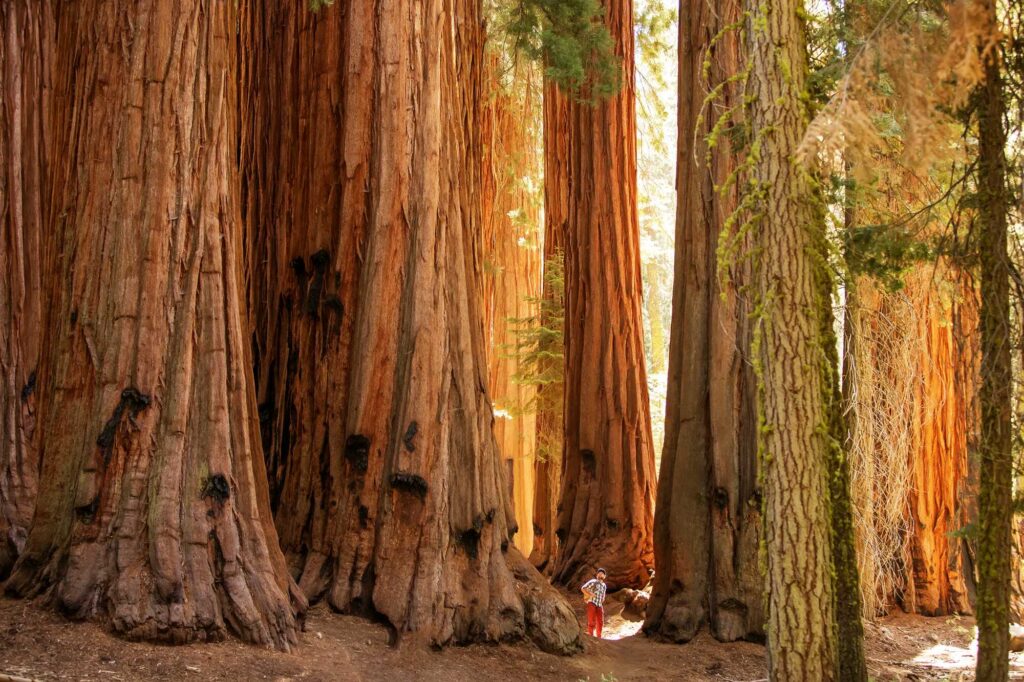
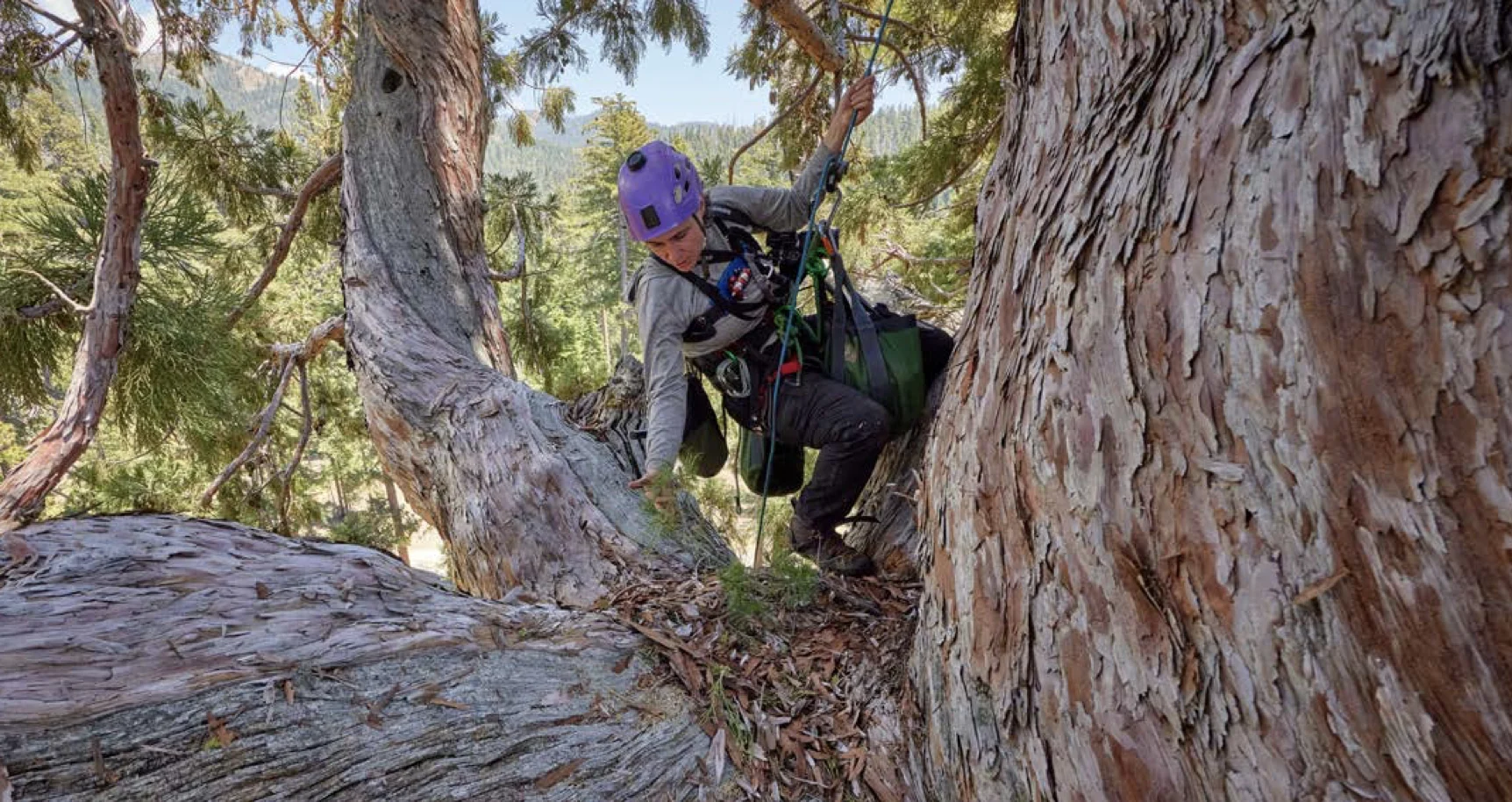
With their extended lifespan, coast redwoods and giant sequoias serve as long-term carbon sinks, buying us time to reduce emissions and mitigate climate impacts. Photo by Maygutyak/Adobe Stock.
Acre for acre, no other type of forest does as much to remove planet-warming carbon dioxide from our atmosphere than old-growth redwoods. According to carbon sequestration research out of Cal Poly Humboldt, an acre of old-growth coast redwoods can store up to 890 metric tons of carbon—equivalent to taking 700 cars off the road for an entire year. Just imagine what a vast landscape of redwoods could do.
Like most other plants, redwoods work their magic through photosynthesis, drawing in carbon dioxide and releasing life-giving oxygen back into the air. Redwoods convert the remaining carbon into sugars and eventually wood, adding girth to their trunks and growing new branches and roots. This carbon stays safely locked away for the tree’s lifetime, which can exceed 2,000 years.
Redwoods do wonders for our air and water
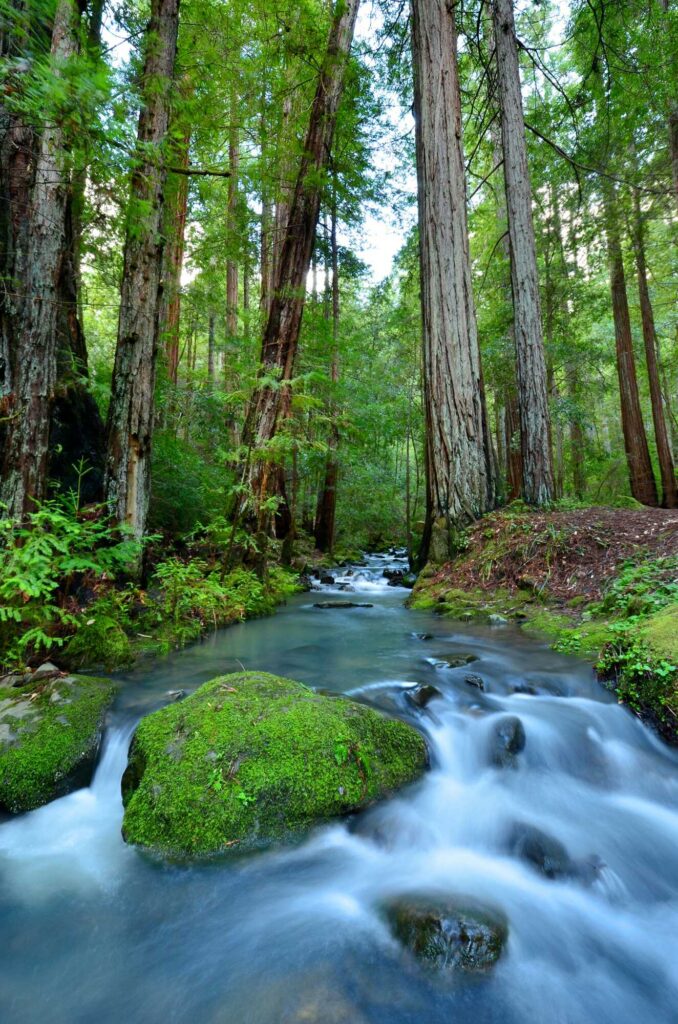
Redwood forests filter millions of gallons of clean water, while also improving air quality and soil health. Photo by Mike Shoys.
If you’ve ever camped in the redwoods, you’ve probably marveled at the plush, comfy feel of the forest floor beneath your tent. When it rains, this spongy, root-filled layer of soil acts almost like a giant Brita filter, purifying rainwater as it trickles down from above. Mature redwoods also pump up to 500 gallons of water a day from their roots to their crown, transporting the water through vascular tissue known as xylem, which has a filtering effect. Researchers have explored using the xylem of conifers as filters to remove pathogens from water.
Across California, healthy redwood forests clean millions of gallons of water—plenty of which ends up in our drinking glasses. The dense forest canopy also shades rivers and streams, while root systems minimize the erosion of sediment into waterways. This provides coho and Chinook salmon and steelhead trout with the cold, clear water they need to thrive.
Redwoods lift our spirits and improve our health

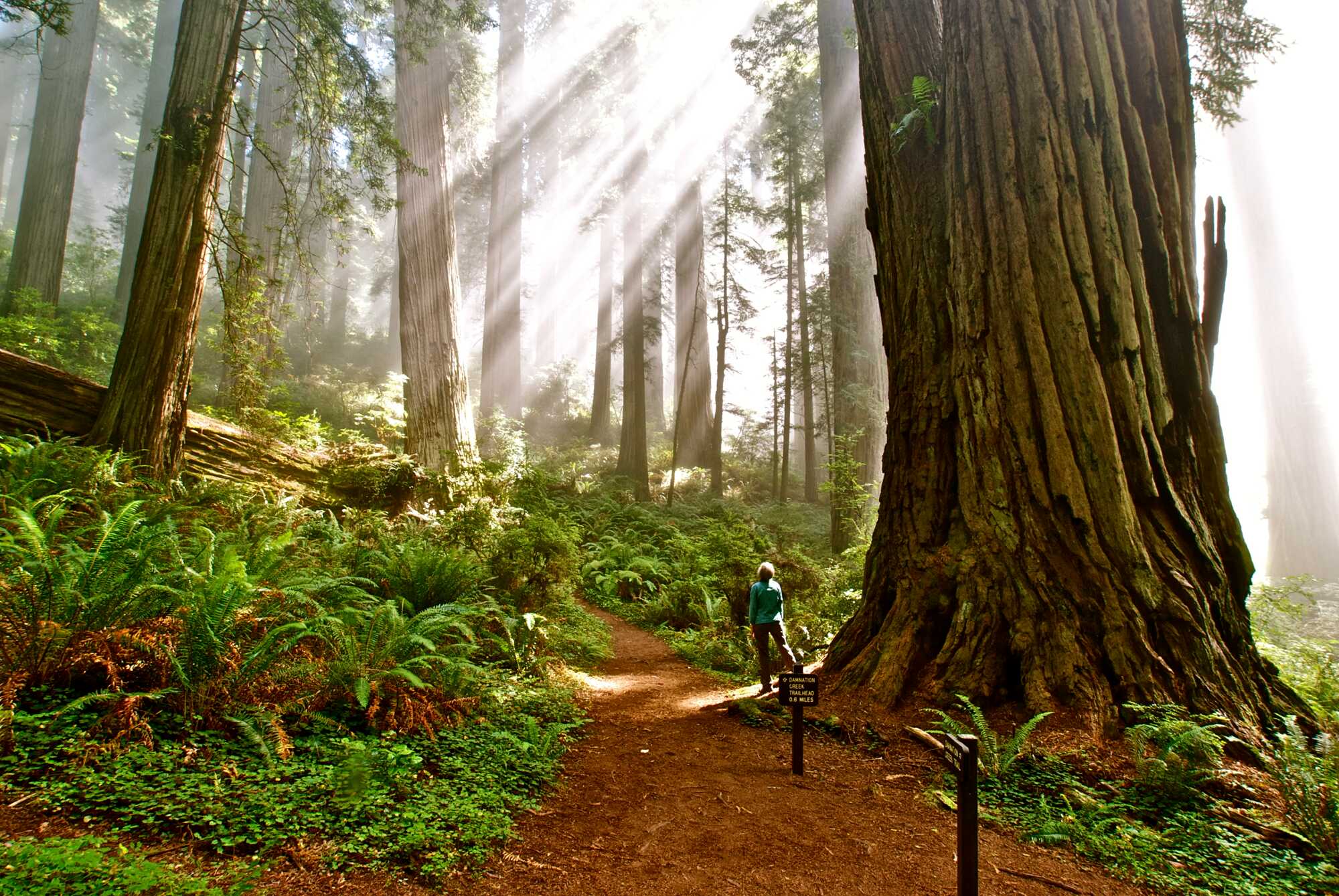
Spending time in the outdoors has been linked to everything from better sleep to a lower risk of cancer. Photo by Vivian Chen.
Exploring a redwood forest is practically guaranteed to improve your mood. Maybe it’s the dreamily diffuse light or those sturdy “I’ve got your back” tree trunks. Perhaps it’s the act of lifting your head up towards the green canopy rather than frowning down at your phone. Either way, the effect is so calming, doctors prescribe nature walks in the redwoods to address anxiety, stress, and other health issues.
Beyond finding peace and joy in the forest, research shows that spending time in the redwoods and other natural settings can improve immune function and lower cortisol levels, blood pressure, and heart rate. That’s on top of the health benefits of hiking, biking, and other invigorating activities that these magnificent forests inspire.