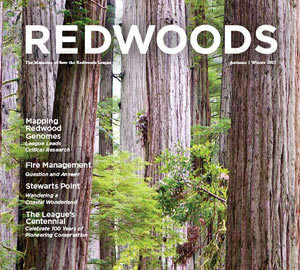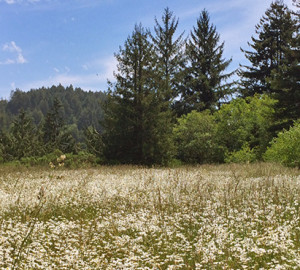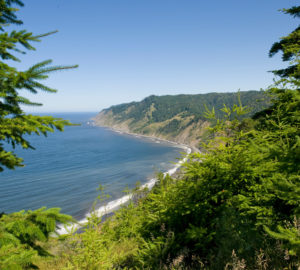
Where are the redwoods?
Redwood species grew throughout North America, Europe and Asia 144 million years ago. Over time and in response to an ever-changing environment, they retreated from most of their former range, and many once-abundant redwood species became extinct.
I'm planning a trip to visit the redwoods. Where should I go, and do you have any recommendations for accommodations?
State, federal and local parks offer amazing experiences in the redwoods.
How many acres of redwood forestland are owned by a public agency (national, state and local parks)?
340,000 acres, about half the size of Rhode Island. Examples of public agencies that own redwood forestland:
A redwood or sequoia in my backyard is looking unhealthy or falling. Can the League visit or provide information on helping this tree?
The best way to help your tree is to contact an arborist or a tree care specialist in your community because they will be familiar with your local climate and the special needs of trees in your area. You could contact the Tree Care Industry Association to find an accredited tree care company in your area, or call this association at (800) 733-2622. This Tree Care Industry Association contact information is provided for your convenience. Save the Redwoods League makes no guarantees in connection with tree care services.
My neighbor or someone in my community is planning a timber harvest on their private land. What can I do?
Please provide as much information on the timber harvest plan as you can (timber harvesting landowner's name, location, assessor's parcel number, etc.). If you have issues with the timber harvest plan, please contact the local planning or land use authorities in your city or county. The League does not take a position on timber harvest plans on private land, but we appreciate having this information in case it relates to a landowner we are working with or a project we are working on in the area.
How can the League be sure that property will be protected once it is transferred to a permanent steward?
Before we transfer land to a permanent steward, the League includes clauses in deeds limiting the future uses of the property. Generally, restrictions ensure that the future use of the land is consistent with its management as a public park.
How does the League select redwood land to protect?
For those who have had the chance to stand in the midst of a redwood grove, there are few life experiences that match it. We can all agree that there are some places on Earth that are so special that they are worth saving.
Save the Redwoods League protects and restores these magical redwood forests according to our science-based Master Plan. This plan identifies and prioritizes redwood forests and the surrounding land that nurtures them, protecting and enhancing investments made since our establishment in 1918. The Master Plan includes 16 criteria that identify areas that are important to protect. Examples of these criteria are:
When the League purchases a property, how do you determine what price to pay?
We rely on an independent assessment of value by a professional appraiser.
How are roads removed during a restoration project?
The League supports restoration of redwood forests. This restoration work is conducted by our partners, California State Parks, the National Park Service and the US Bureau of Land Management. Some of the forests we protect were owned by timber companies. These companies built roads through the forest for trucks and machinery. To keep the forest healthy, we reshape the land so it looks like it was before the road installation. In time, plants and trees grow, concealing evidence of the road.
Why does the League support the cutting of trees in forest restoration projects such as Mill Creek?
To ensure the long-term health and survival of redwood forests, Save the Redwoods League takes a comprehensive and holistic approach to their protection and care. While we stand firmly against the harvesting of any huge, very old redwood trees, we do recognize that there are times where removing younger trees doesn't jeopardize the long-term health or survival of redwood forests. And in some cases, as in our restoration efforts, removing younger trees actually promotes the health of redwood forests by giving trees that are struggling and competing with one another the space, light and water they need to grow.
What is a conservation easement?
A conservation easement, sometimes called a conservation agreement or land protection agreement, is among the tools the League uses to protect redwoods. It is a voluntary contract between a landowner and the League that permanently limits uses of the land to protect its natural resources such as old-growth redwood forests. The contract allows the landowner to continue to own and use the land and to sell it or pass it on to heirs. In making the agreement, the League agrees to monitor it forever to ensure compliance with its terms.
Does the League establish conservation easements or accept donations of land?
Yes. The League enters into conservation easements and may accept donations of land if they fit into our Master Plan.
I want to give someone a redwood book. What would you recommend?
Links to Amazon.com are provided for your convenience. Save the Redwoods League makes no guarantees in connection with their services.
About coast redwoods
About giant sequoias
History of Logging in the Redwoods
Children's books
See more on our book list for children: SaveTheRedwoods.org/kidsbooks
Does the League have any information about how my firm or organization can purchase carbon offsets?
While we don't formally endorse any one organization, here are some that sell carbon offsets. These referrals are provided for your convenience. Save the Redwoods League makes no guarantees in connection with their services.
The League maintains that redwoods stand at a new crossroads of environmental change where urbanization, habitat fragmentation, invasive species and climatic changes in combination threaten these forests in ways they have not yet experienced in their long history on Earth. We are currently evaluating any potential benefits of carbon offset programs for redwood forests.
What government agencies are the League's primary partners?
We transfer land to California State Parks, National Parks Service, US Bureau of Land Management, US Forest Service and county and local park systems, which are permanent land stewards. Agencies such as the State of California Coastal Conservancy and State of California Wildlife Conservation Board are our funding partners. We work with leading redwood forest scientists at many universities including the University of California, Berkeley, and Humboldt State University. Parks and public schools, among other providers, may be awarded grants through our Education Grants Program or Research Grants Program.
Does the League work with other nonprofits?
The League often partners with nonprofits operating at the national, state and local levels. For example, Save the Redwoods League has joined a passionate group of conservation organizations in and around Silicon Valley to protect the area's vast open spaces, broad biodiversity, productive working lands and dramatic natural beauty, including 30,000 acres of redwood forests. This new Living Landscape Initiative (LLI), includes The Land Trust of Santa Cruz County, The Nature Conservancy, Peninsula Open Space Trust and Sempervirens Fund. We also give grants to schools and park cooperating associations such as Humboldt Redwoods Interpretive Association and Stewards of the Coast and Redwoods.
Have more questions? Contact us at (415) 362-2352 or info@SaveTheRedwoods.org.