Newly passed law offers a solution: low-impact camping areas on private land
There’s a moment of resignation that comes with planning a summer camping trip. As you scroll reservation sites for your favorite campgrounds, you brace for the inevitable: Every campsite has already been claimed.
But hope may be on the horizon. This fall, California’s Assembly Bill (AB) 518—the Low-Impact Camping Areas Act—was signed into law. By making it simpler for private property owners to host small camping areas—think canvas yurt overlooking a vineyard or a tent platform perched on the edge of a forest—the new legislation could remove some of the strain on overcrowded public campgrounds.
Meeting the moment and increasing campsites
The Dyrt, a popular campsite booking platform, reports that in 2024, 56% of campers nationwide had trouble finding an available campsite. In 2019, that number was only 11%. According to California State Parks, campgrounds in the 22 North Coast Redwoods District units are typically booked solid from Memorial Day to Labor Day. And this happens the moment reservations open six months ahead.
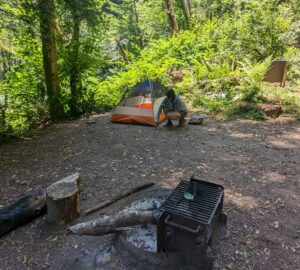
The new law seeks to address this gridlock by creating a campground category called low-impact camping areas (LICAs). As small-scale operations on private property, these sites are defined by minimal infrastructure and limited disruption of the environment. No huge parking lots, fleets of RVs running generators, or garbage trucks rumbling through in the wee hours. By law, these new camping areas will be limited to nine sites (four or fewer for RVs), must cover at least two acres, and offer no more than one site per acre.
Prior to the new law, private landowners who wanted to host more than one campsite needed a state campground permit. That process could take years and cost thousands of dollars. This legislation eliminates that requirement.
Each California county can decide whether or not to adopt the new law. If they do, the county can then set rules for private campground hosts to follow. Any landowner following county rules can legally host campers without jumping through the hoops required to get a state permit.
“One thing this law does is expand camping options—not only near the redwoods, but in all sorts of spectacular places across California,” Friedman says.
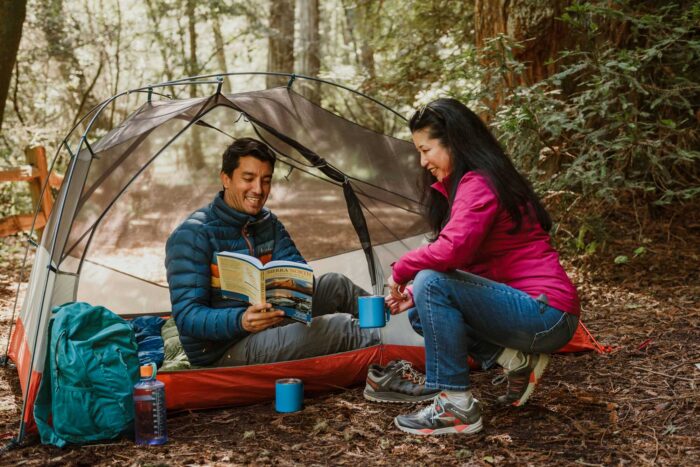
Putting the redwoods within reach
In 2021, California lawmakers launched Outdoors for All, a program designed to expand outdoor recreation opportunities for every resident. The new legislation builds directly on that initiative. Groups supporting equitable access to the outdoors, including Outdoor Afro, Salted Roots, and Rails to Trails Conservancy, endorsed the bill. Supporters are excited because new campsites will allow more people to experience a night under the stars.
“This is a historic step toward increased equity and access to California’s outdoors,” said Jazzari T. Taylor, Policy Advocate at Latino Outdoors, in a press release. “AB 518 will help break down barriers to camping and open the door for more Californians to build lasting connections with nature.”
While many listings for low-impact camping areas are more expensive than their public lands counterparts, the hope is an increased supply will result in a range of campsites that can better meet demand across all income levels.
Save the Redwoods is committed to supporting increased camping opportunities for everyone. “The new law creates more ways for families and communities to find a place to camp,” Friedman says. “Especially those without the time or ability to deal with the state or national park reservation systems. It puts experiences in the redwoods a little more within reach.”
Supporting conservation—and rural communities
The new legislation doesn’t just open the door to more campsites. It also supports camping areas that are, in many cases, less impactful on the local ecosystem—while still offering an intimate experience with the natural world.
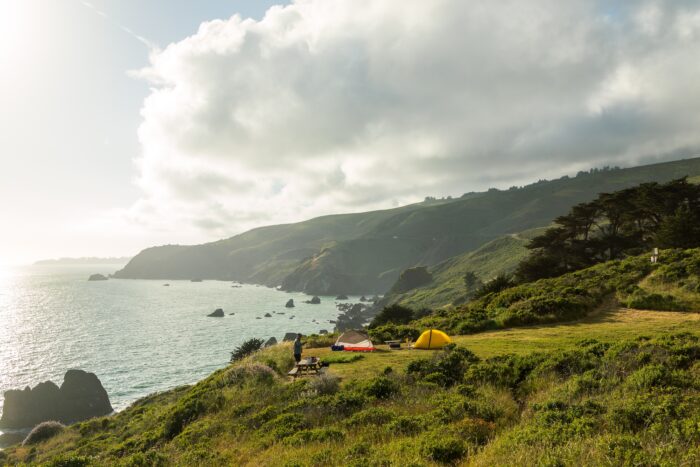
Slide Ranch in Marin County—which operates a low-impact camping area through an agreement with the National Park Service—is a good (and picturesque) example. “We want the experience to feel remote,” says Myla Marks, Slide Ranch’s executive director. “It’s intentional. So folks are able to have a quiet experience of awe and wonder.”
Private landowners who host low-impact camping areas have a strong incentive to keep their property as pristine as possible to attract campers—even on working ranches. Plus, camping provides a valuable boost to their income.
“Other rural jurisdictions have seen success with agrotourism and farm stays integrating short-term rentals and low-impact camping activities into existing ag operations,” says Russell Ford, senior planner at Mendocino County Planning and Building Services. Similarly, Ford sees low-impact camping areas bringing in both tourism income and tax revenue—helping rural California communities to grow a sustainable restoration economy.
Hopefully, the passage of the new law also means that next summer, you might just enjoy an impromptu camping trip. The moment strikes, a quick booking, and the next day you’re pitching your tent on a quiet patch of duff next to a redwood-lined creek.
We’d call that a big win.