
A second act that reshaped botany—and helped protect a beloved California forest

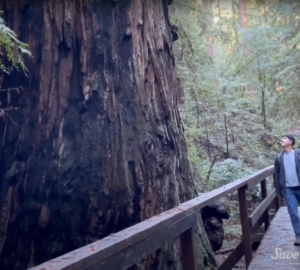
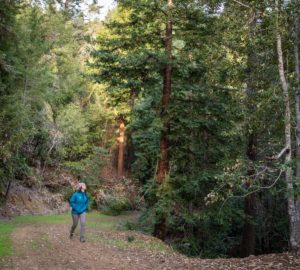
In 1918, Ynés Mexía encountered her first old-growth redwoods at what is now Montgomery Woods in Mendocino County. She stepped into that primeval forest and felt the soft loam give way beneath her feet, saw walls of lush, dripping ferns, and gawked at muscular tree trunks as thick as boxcars rising impossibly high into the fog. She had never seen such wonders. As she marveled at the beauty surrounding her, Mexía wouldn’t have imagined that a grove in this incredible forest would later be named in her honor. She certainly couldn’t have imagined that she would become one of history’s most renowned botanists.
Mexía hadn’t taken a single botany class in her life. And she was 48 years old.
A life awakened in nature
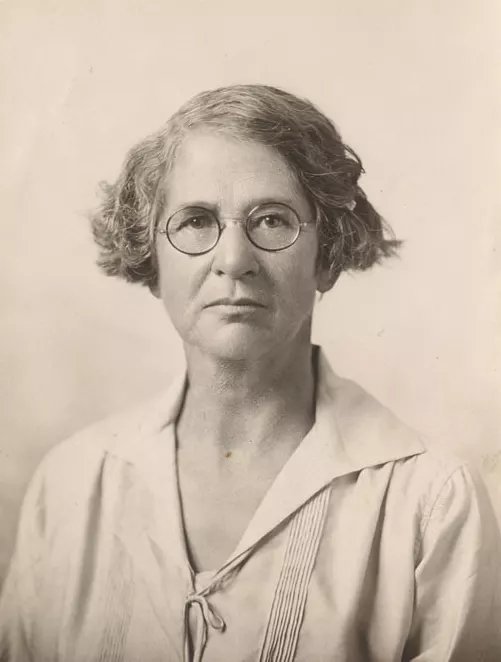
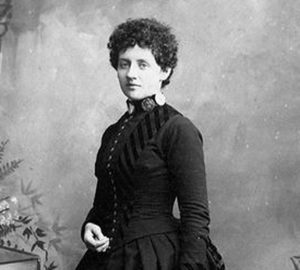
Mexía was born in 1870, the daughter of a Mexican diplomat then stationed in Washington DC. Her parents divorced when she was a toddler, and she endured a turbulent childhood. As a young woman Mexía settled in Mexico to manage her father’s ranch after his passing. She suffered through two difficult marriages and struggled with her mental health. At 39, she moved again, this time to San Francisco, to seek psychiatric treatment. What Mexía discovered there changed her life forever.
Once in California, her doctor encouraged her to seek solace and peace in nature. She accepted his advice, first with long walks in Golden Gate Park, and later as an enthusiastic participant in the early California conservation movement. Mexía joined the newly formed Save the Redwoods League in 1919, joining the ranks of the women who helped spark the organization’s early successes. She also signed on to the Sierra Club. With those groups, Mexía was introduced to the coast redwood forests of Northern California, and was awestruck by Yosemite’s grandeur.
It was as if a door to a new life had cracked open. Mexía was so stunned by the diversity of plants and wildlife she’d encountered, she decided, in her early 50s, to enroll at the University of California at Berkeley to study natural history. She immediately fell in love with botany and discovered she had a natural talent for spotting unusual species.
From Alaska to Tierra del Fuego

Mexía was an outlier in her classes at Berkeley. She was a Latina in an institution then largely composed of white students. She was a woman in the male-dominated sciences. And she was about 30 years older than most of her classmates. None of that fazed her.
In 1925 Mexía joined a plant collecting trip to Sinaloa, Mexico, with Stanford University. It was her first serious expedition. At a time when women scientists were expected to work in libraries, not in the field, Mexía’s time spent as a hand on her family’s ranch and familiarity with sleeping outside meant she was more than comfortable with long stretches in the backcountry. Mexía returned from Mexico with 1,500 plant specimens she’d carefully pressed and recorded in the field. One of them is now named for her: Mimosa mexiae—a gorgeous lavender flower that looks like a tiny exploding star.

That kicked off a 13-year period of Mexía striking off deep into the bush from Alaska to Tierra del Fuego, to collect as many plant species as she could find. Mexía, fluent in Spanish, particularly loved traveling in South America, where she stood out for being a woman traveling by herself, often arriving at far-flung destinations on horseback. She once tumbled off a cliff, breaking several ribs and was badly sickened by eating poisonous berries. But that was simply part of the adventure.
Mexía once wrote: “A well-known collector and explorer stated very positively that ‘it was impossible for a woman to travel alone in Latin America.’ I decided that if I wanted to become better acquainted with the South American Continent the best way would be to make my way right across it.”
Mexía spent months at a time in the field, ultimately collecting nearly 150,000 specimens. She was the first botanist to make plant pressings in what is now Denali National Park, and throughout her career she recorded at least 500 species unknown to science, 50 of which are now named for her. Much of her collection is permanently housed in archives at UC Berkeley and the California Academy of Sciences.
Preserving Montgomery Woods
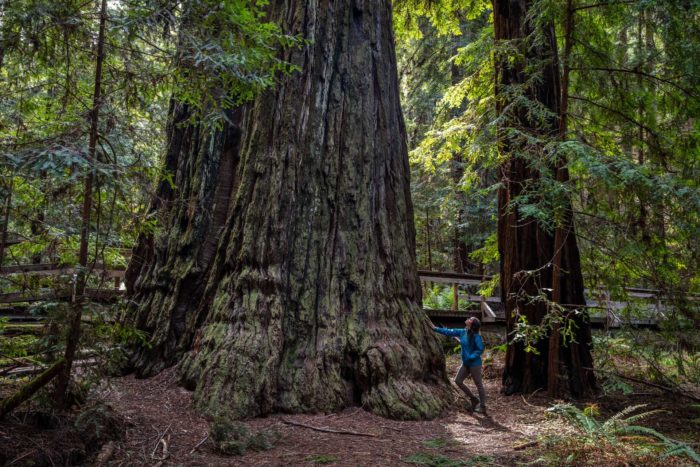
One of Mexía’s most lasting achievements is her impact on the redwood forest that helped kickstart her interest in botany. Shortly after joining Save the Redwoods, she learned industrial logging was encroaching on her beloved Montgomery Woods. Mexía wrote the organization and implored them to protect the groves. Save the Redwoods took notice and marshaled efforts to protect the trees. Some months later, she received a letter from Newton B. Drury, Save the Redwoods’ assistant secretary, who explained that through efforts of the organization and concerned local citizens, the grove was saved. “You will be glad to learn that the cutting in the heart of the Montgomery Grove has been stopped.”
Throughout her career, Mexía remained deeply connected to the redwoods. She was a favorite guest lecturer at Save the Redwoods events, where this slight, bespectacled woman fascinated audiences with adventure yarns, always waving the flag of conservation. When Mexía passed away at the age of 68, she left much of her estate to Save the Redwoods and the Sierra Club.
In 1968, officials with Save the Redwoods and California State Parks dedicated the Ynés Mexía Memorial Grove in Montgomery Woods State Reserve, in honor of her contributions to preserving that incredible landscape. Since 1947, Save the Redwoods has expanded the reserve to 2,743 acres, continuing Mexía’s legacy of protection.
“All who knew Ynés Mexía could not fail to be impressed by her friendly unassuming spirit,” William E. Colby, the secretary of the Sierra Club, wrote in a memorial. “And by that rare courage which enabled her to travel, much of the time alone, in lands where few would dare to follow.”


One Response to “Ynés Mexía, the Latina botanist who helped save redwoods”
Pat
Wonderful article. So inspiring to read about our pioneering female botanist! Keep the great articles coming!