
Episode 06 of Season 5 — Hosted by Monica Carcamo-Binetti.

Margarita Munguia and Riley Dunn
In the sixth episode of Season 5, Monica travels to Pfeiffer Big Sur State Park to meet with trail crew members Riley Dunn and Margarita Munguia, who are celebrating their work rebuilding the Pfeiffer Falls Bridge after a massive redwood tree destroyed it in a storm in 2023. They discuss building trails that feel natural and reveal the invisible work behind them.
The Pfeiffer Falls Trail reopened in June 2025 thanks to support from Save the Redwoods League and California State Parks. This episode offers an inside look at the invisible trail work that goes into reopening the trail, and each trail stands as a testament to connection, resilience, and the people influenced by the redwoods.
Riley Dunn is a Park Maintenance Worker I for the Monterey District/Statewide Trail Crew, leading complex trail projects around Monterey and Big Sur. She holds a bachelor’s degree in Landscape Architecture and Environmental Studies from Iowa State University. She chose trails over an office job because she loves being outdoors, loves maps, has thru‑hiked the Appalachian Trail, and enjoys backpacking as a civilian. Follow her on social at @radunn11.
Margarita Munguia is a trail worker at the Monterey District Trail Crew. She has worked on trails with the California Conservation Corps and the Santa Ana Water Association since 2018. She discovered a passion for climbing redwoods when she began working with state parks. Follow her at @margaritatonic
Read Transcription
Season 5, Episode 6 – Building More Than “Just a Bridge”
SPEAKERS
Monica Carcamo-Binetti (host)
Riley Dunn (guest)
Margarita Munguia (guest)
[Intro Music]
[00:00:10] Monica Carcamo-Binetti
Hello and welcome back to I’ll Go If You Go. This episode is a special one. We went out and recorded on location at Pfeiffer Big Sur Park. If you’ve ever hiked there, you know that the Pfeiffer Falls Trail Bridge is more than just a way across the creek. It’s an icon and a part of the magic of Big Sur. Back in January, 2023, a massive redwood came down during a storm and tore through one side of the bridge.
[00:01:48] Monica Carcamo-Binetti
Hello. Welcome back to I’ll Go If You Go, season five, episode six. I can’t believe it’s episode six. I say that in every single episode that I can’t believe it, but I genuinely can’t, so I am at Pfeiffer Big Sur State Park, and I am with two amazing gals. It’s a little bit of a Gal Venture episode today. So I’m with Margarita Munguia and Riley Dunn. Can you paint a picture for us, about the bridge and the actual work, how we got here, what happened to the bridge and why it needed the repair, and just a little bit of a history of the bridge and, and how and how we’re here today?
[00:00:29] Riley Dunn
The original Pfeiffer Falls trail was not the alignment that currently exists. Prior to my time on the trail crew they relocated, rerouted the trail and installed the 70 foot fiberglass bridge that still exists today. That first time around the bridge was completed around 2020, I think it opened in 2021, and then in January of 2023, California got hit with a lot of winter storms and one of the redwood trees up near the bridge fell and smashed into one end of the bridge.
So rather than replacing the bridge in its entirety, we were able to salvage a majority of the bridge and we only cut off the first 14 and a half or 15 feet where the tree smashed it. We cut off the old broken segment, brought in the new pieces, and rebuilt just that one end of the bridge. We have a crew of somewhere around 13 of us I think. So we needed a good chunk of us to help with this project because it was incredibly complex, required a lot of material and labor and just thought as far as the planning process went.
[00:03:41] Monica Carcamo-Binetti
Yeah, I mean, I also think it would require, a lot of serious teamwork, right? This isn’t a one person build a bridge show, and was there a moment that you can remember when the crew really had to pull together to get the job done?
[00:03:59] Margarita Munguia
Yeah, we were talking about this earlier. In trails we do a lot of hauling our, our tools and our stuff like, all the bridge pieces had to be hiked in, which requires two to three people on one bridge piece. There’s curves and steep sides of the, of the trail, which you guys kind of have to all communicate together. Like who’s going right, who’s going left, who needs a break? And that’s honestly where all the teamwork comes. You guys going down the trail, you just finished dropping off piece and then some people are coming in with one, you’re just giving them motivation and like, yeah, keep going.
[00:04:37] Riley Dunn
It’s the epitome of misery loves company.
[00:04:40] Margarita Munguia
Yeah.
[00:04:42] Monica Carcamo-Binetti
Say more about that. What do you mean by that?
[00:04:44] Riley Dunn
Well, sometimes, like Margarita is saying, the entire workday is you just hauling things to the work site. And when we say we are doing it, it’s, it’s maybe four or five of us from our crew, plus a CCC crew
[00:05:02] Margarita Munguia
Mm-hmm
[00:05:02] Riley Dunn
of another 12 core members. So there’s anywhere from, you know, 12 to 20 people just hauling things back and forth up the trail because we need so much gear to do this and we need all the materials up there too. So sometimes it’s, it’s efficient to do it on one go. Do it on one day. And so it doesn’t matter really what your position is, what your level of skill is. Everybody’s hauling things.
[00:05:28] Margarita Munguia
Yeah.
[00:05:29] Riley Dunn
And it makes it, it’s, they’re always my favorite days, even though they really kind of suck in a lot of ways. They’re just a, a very, achievable and visual goal as to how many things you brought up the trail.
[00:05:46] Monica Carcamo-Binetti
So I work a corporate nine to five job in an office where I sit. At a desk and I click it clock away. And in my corporate life we talk a lot about building bridges, right? Bridge between the sales team and the engineering team. A bridge between management and, you know, customers or whatever. We’re always talking about building bridges. Y’all are literally building physical bridges that this repair is is connecting so many people, you know, to explore and enjoy Big Sur. How does that feel knowing that you’re, you’re, you’re doing this, you know, for the betterment of other people so that they can access this beautiful space?
[00:06:32] Riley Dunn
The short answer is it feels good, but there’s another dimension to it that we were talking about on the drive here too, is that we know we’ve done our job when hikers don’t know that we had to do anything to build the trail. Like trail work is an invisible profession in a lot of ways to where we want our, we want our work to stand out and look nice, but also blend in to the natural environment and make it look like it’s just there. And those rocks were just placed there by nature and somebody did not go get those from miles away or hundreds of feet away down the trail and bring them there and shape them and make them fit together.
But that’s what we do and it’s rewarding to see people really not notice it. But it’s really when you get somebody that hikes through and they’ve either done trail work or they know that it’s a lot of effort what you’re doing, it’s even more special when somebody like that compliments your work because they really understand how long and how much effort it took to do all these things.
[00:07:36] Monica Carcamo-Binetti
I’ve always wondered that about the rocks. because there’s some rocks that I’m like, God, this is like a perfect placement. Like God or whoever, like redwood God, like place these here. It’s amazing.
[00:07:45] Margarita Munguia
I’ve actually heard that a lot in back country. You’re like behind these hikers on your weekend. So they don’t see you in uniform Of course.
So they’re like talking about, there was this lady, she says, wow, isn’t God and nature just wonderful? Because she was hiking up these rock steps and she’s like, these are perfectly placed, and what a miracle. And then you kind of just look at yourself and you’re like, yeah.
[00:08:13] Monica Carcamo-Binetti
I am a miracle. You’re right. No, but honestly, like you’re, you’re a hundred percent right that there is no, there’s no placard that says, you know, so and so crew brought all of these rock steps. To make, you know what I mean? Like, you’re right. It just blends in. And we, as the end users who are using these trails a lot of the time, take it for granted, because it does feel like it just blends in. Like it was just like a natural occurrence of, you know, this particular terrain that it just happened to be perfect for you to go on a hike.
So, that’s, that’s an interesting perspective, you know, to, to have is how you measure, you know, your success or that makes you feel good that you worked on, on a trail.
[Music Break]
[00:09:05] Monica Carcamo-Binetti
Big Sur weather can be wild. So did the rain, wind or just the rugged environment in general, ever throw any challenges your way and how did the crew adapt to that?
[00:09:19] Riley Dunn
So the toughest part for our crew, not just myself in particular, was the fact that nobody had done this before. So we’ve put in spliced bridges before, but not on a bridge that’s already standing or not on just a segment of the bridge. Usually a splice meets in the middle. This repair we did, the splice is just the last 15 feet of it, so the other 55 feet is not a… It doesn’t work out as well, I guess with the engineering, because usually bridges are, arched just slightly to handle the weight. So, when they splice ’em and match up in the middle, that’s an easy curve to do. Right? But if you’re not meeting the splice in the middle, it’s hard to figure that out as to how it needs to meet because the bolts need to line up exactly. And there’s a lot of little bolts on that splice.
So, that was not on us to figure out the engineers at Wagner’s did that, but for us, just figuring out how to cut off a side of the bridge and keep the rest of it there and then put a new piece on was something nobody, at least in our group of people from state parks had ever done before. So we used a, a cohort of building a trussel support underneath of it and using highline rigging, which we’re very, versed in, in order to hold up the bridge and be able to position it directionally. So the truss underneath had hydraulic jacks that we could use to minutely change the height or side to side movement of the bridge to make it match up perfectly with the new piece.
[00:11:03] Margarita Munguia
I would say in this particular project, it definitely made me a better climber and be able to stay up in a tree for so long. I think one day I was in a tree for six hours setting up ladders. Because, when you’re going up the tree, there’s these stobs in the way. So you have to have someone send you up a pole saw, you have to reach around as far as you can and as far as the pole saw, will allow you to start hand sawing that stob off. And in that particular tree, there was like 10 of ’em. So I had to flip line my way up. Cinch myself in, handsaw that stob, flip over it and then I hit another one. You gotta do it all over again and it just took me longer than usual. And I was, I think about five, six ladders up and I still had three more to go to set or two. And I was like, I’m not coming down. I’m just gonna come all the way back down just to come up, just to set two more. So I was like, just stick it through.
[00:12:05] Riley Dunn
Because when you say ladders, you said you were five or six ladders up or something?
[00:12:08] Margarita Munguia
Yeah.
[00:12:08] Riley Dunn
Each ladder is, I think 10 feet.
[00:12:10] Margarita Munguia
Yeah.
[00:12:11] Riley Dunn
So you went at least 80 feet up in the tree.
[00:12:13] Margarita Munguia:
Yeah. And then you still have to set up a, a rope so you can come back again easier than the ladders. And you take down the ladders on your way down. Once that SRT system is set up.
[00:12:25] Monica Carcamo-Binetti
Y’all are amazing. Just in case no one has told you that today. That’s absolutely amazing.
I love what you said that this is why I do this work. You know, that is something that you’re reminded of, you know, when you see people or you see kind of the fruits of your labor.
Do you think that there’s anything that, that you learned about yourself that you weren’t aware of just by being out here that you can think of? You know, whether it was a hard moment or one of those like, ah, this is why I do this moment.
Like, just something about this work that surprised you.
[00:13:00] Margarita Munguia
That honestly takes me back to my very first trail spike. We were doing loads of dirt in wheelbarrows and we had to wheelbarrow them down about a quarter mile. And it was my very first time doing any manual labor whatsoever in that capacity. I remember putting down my wheelbarrow and hurling. I had to throw up. I was not used to that. I cried. Just because I was so far away from home, it was my first time doing anything. I didn’t know the crew very well.
But each day, after that day, I got better. I took the load further than when I did my first break and then eventually I took the load without stopping at all. And then I just realized how much the human body is capable of and just makes you feel great. It makes you feel strong, makes you feel like you can do anything.
[00:14:00] Monica Carcamo-Binetti
Yeah, that’s, that’s amazing. For, for the record, I have also thrown up and cried, but I was just on a trail hiking. And I also got off of that, it was the Dipsy Trail. For anybody who’s listening, don’t judge me, it’s a hard trail. And you’re right. You are just like, wow, I, I’ve done it. Two or three additional times where I didn’t cry, nor did I throw up. But you’re right, you feel like wow. Like the human body is so much more capable.
[00:14:27] Margarita Munguia
Yeah.
[00:14:27] Monica Carcamo-Binetti
If you just think that you can do it.
[00:14:29] Margarita Munguia
Yep.
[00:14:29] Monica Carcamo-Binetti
And then you can.
[00:14:30] Margarita Munguia
Yeah.
[00:14:31] Monica Carcamo-Binetti
What about you Riley?
[00:14:32] Riley Dunn
Well the last thing you said reminded me of, so my, prior to me getting into trails, I threw, hiked the Appalachian Trail, and that’s a 2200 mile trail on the East coast. And every time I would tell somebody either that I was, while I was currently doing it or after I had done it, a lot of people’s responses would be like, oh, I could never do that. And a lot of people can’t for time restrictions. They have a family, they have a job that won’t let them take six months off, that type of thing. But physically, I think almost anybody could do that trail if they really wanted to. It’s the mental portion. That is why a lot of people either leave the trail or don’t even get there in the first place. And it’s the same thing with trail work. A lot of people can do it like neither one of us are big people.
[00:15:21] Margarita Munguia
Mm-hmm.
[00:15:22] Riley Dunn
Like, we’re fairly strong because we’ve done this work for a while, but we’re not a 6′ 5”, 200 and something pound person but you just, you do what you can and then eventually you get there and it gets the job done.
[00:15:35] Monica Carcamo-Binetti
Yeah. So I guess, you know, a follow up to that is I’ve been asking like what skills, like, you know, is there like some kind of bootcamp that y’all go to and like pick up tires and throw them over? Or, I, I mean, I’m, I’m not sure, but I think a better question is like, what, how do you prepare yourself mentally? Like what is it that shifts for you all, both mentally that gets you to that next place that you can do it and keep going?
[00:16:00] Margarita Munguia
I think it’s like from seeing your other crew mates do it like nothing, like they’ve, they have so much experience already doing it. And in your own mind, in ego, I guess you’re like, I can do that too. So you try it out and at first maybe you fail or struggle, but if you keep going you will eventually keep up with them or surpass them. It happens a lot, honestly. And, I think that’s, yeah. Just watching your crew mates do it makes you be able to do it as well.
[00:16:34] Riley Dunn
I’m a competitive person too, so I feel the same way.
[00:16:37] Riley Dunn
I’m like, yeah, you’re not gonna beat me
[00:16:38] Margarita Munguia
You know, or…
[00:16:39] Riley Dunn
or you’re not gonna carry more than me.
[00:16:40] Margarita Munguia
We do make in a competition a lot. We’ll be like, I’ll get there first. Yeah, and it’s kind of just gives you motivation.
[00:16:46] Monica Carcamo-Binetti
I’d be like, yeah, you will. You sure will. I’m just kidding. I’m also really competitive, so.
[00:16:53] Riley Dunn
but I mean, I think most people that do trails as a career more than just a season or two, really love doing trails. So it’s worth the struggle and the extra effort to be out here doing this work.
[00:17:05] Margarita Munguia
Yeah, sure.
[00:17:07] Monica Carcamo-Binetti
You both spend so much time working among the redwoods, climbing them, rigging from them, even rebuilding with their wood.
[00:17:15] Monica Carcamo-Binetti
What kind of connection do you feel to the redwoods and how do they influence you after all that time working so closely with them?
[00:17:23] Margarita Munguia
I guess the very first tree that I thought was challenging because I think that was my first 80 feet, 90 feet tree and it was a redwood tree, in Limekiln State Park. And I just remember looking down and, my coworker Audrey’s coming up and I’m just looking at them climb up and I’m like, this is so cool.
And I’m hanging onto a, a branch and the branch doesn’t look super big, but it’s literally holding my weight and all of the moving I’m doing, and I was just super like grateful for the tree and just to be up there and it’s honestly a whole nother world up there. You just feel it’s, I don’t know, it’s just a crazy unexplainable feeling. And I think I just really appreciate the strength and like I guess the connection that I had with that redwood, because it was just so cool to be up there and I kind of wanna name it, but I don’t know what.
[00:18:27] Monica Carcamo-Binetti
It’ll come to you.
[00:18:28] Margarita Munguia
Yeah.
[00:18:29] Monica Carcamo-Binetti
It’ll come to you.
[00:18:31] Riley Dunn
To go off of that, yes, we, redwoods connect us and the work that we do, very literally in the sense that they usually, if we’re climbing trees, they are redwoods typically around here, just the way that they grow. Because if you look over at the Oaks, like they have a lot of leaders. They’re not necessarily the strongest branches. They don’t grow as high. Usually we want height and strength in the trees that we’re using to rig off of. So usually that means redwoods. And they don’t have a lot of lower branches so the cables don’t get like, caught up in a bunch of things lowering the canopy.
But they’re also, like we had mentioned when we were out at the bridge, they’re what we milled some of the decking out of. Oftentimes we’ll get handrails. Well, I’ll say this, all of the wood that we buy for projects is redwood, unless it’s some special project for some other reason. But most of the wood that we buy is redwood. And if we can, when there’s down redwood, we’ll use that and we’ll mill that.
[00:19:31] Monica Carcamo-Binetti
So they’re part of the crew.
[00:19:33] Margarita Munguia
Yeah.
[00:19:33] Riley Dunn
Yeah.
[00:19:34] Monica Carcamo-Binetti
The redwoods are part of the crew.
[00:19:36] Margarita Munguia
Yeah.
[00:19:37] Riley Dunn
Yeah. A big reason we use it is aesthetics. I mean, it looks great when it’s red and sh and shiny and nice, you know? It stands out. But yeah, it’s rot resistant, it’s insect resistant.
It tends to last longer in wetter weather, so that’s big reasons why we use it.
[00:19:53] Monica Carcamo-Binetti
That’s a really good perspective of it though, that you are using the redwoods themselves to essentially, you know, build this bridge back up. Right. And so they are part of the crew, so they’re influencing everything
[00:20:08] Margarita Munguia
Yeah.
[00:20:08] Monica Carcamo-Binetti
That, that y’all are doing. And to get to climb a redwood honestly, is. I can’t even, it’s like the biggest honor. It’s like winning a, it’s like winning a redwood Oscar. Like I can’t imagine. It’s like the Redwood Super Bowl.
[00:20:22] Monica Carcamo-Binetti
So, what happens at the end of a project, like, so the bridge is obviously fixed.
[00:20:26] Riley Dunn
Mm-hmm.
[00:20:26] Monica Carcamo-Binetti
Then what happens?
[00:20:28] Riley Dunn
Well, good thing we’re in Big Sur, because the nature of the landscape, like we were talking before, does not limit itself to easily built sustainable trails. A lot of the landscape here is steep and rugged and very erodible soils, which means there’s always projects for us. It’s just a matter of, like, we, we probably have a dozen projects that we could do. Or that need done in the district just on trails, but we need the people. We need the time. We need the funding to do them.
So, once we finish one, it’s moving on to the next one. Yeah.
[Music Break]
[00:21:16] Monica Carcamo-Binetti
So as we wind down, I’d like to hear what’s next for you. Are you working on any new projects, any new adventures or any goals that you might have on the horizon that you wanna share with us?
[00:21:31] Margarita Munguia
I feel like I just wanna keep continuing in this career path and, move up at some point. Furthering my knowledge and my skill sets here.
[00:21:44] Margarita Munguia
I still have a lot to learn, even though I’ve been doing it for a while. There’s so many other revenues in this career path that I have not even experienced yet, which is why I like this career path so much. There’s just so much other paths you can take. But a more, uh, like drastic dream I have is to do trails in another country eventually.
I don’t know if I’ll ever do that, but it is definitely something that’s always in the back of my mind.
[00:22:17] Monica Carcamo-Binetti
That’s awesome. I think you can do it.
[00:22:18] Margarita Munguia
Yeah, I hope so.
[00:22:20] Riley Dunn
I kind of have the same answer. Yeah. I, I see this as being my long-term profession. I, I wanna stay in the field as long as I possibly can. As it’s a physically demanding job, so oftentimes people don’t stay in the field really past their thirties or maybe forties sometimes. So, I, I do have the lucky ability to fall back on, my degree. So I, I can go get license as a landscape architect after, you know, if I wanna get an office job. But right now, a nine to five sounds like the worst thing ever to me to have to sit in a chair all day. That sounds horrible. So, I wanna be active. I wanna be outside as long as I can and doing
[00:23:06] Margarita Munguia
As long as your body allows.
[00:23:07] Riley Dunn
yeah, and doing trails is, is the way that I wanna do that. So maybe in the future I will move into a more sedentary position, but not anytime soon, I hope.
[00:23:21] Monica Carcamo-Binetti
No, that’s amazing. No, honestly, this is. Like what y’all do. There’s, I, I listened to myself back and I say the word amazing so many times. Magnificent, wonderful, spectacular. What y’all do is all of those things. So it, it is really, really great to get to meet you and talk to you, and I really appreciate all the time that you took today.
[00:23:43] Monica Carcamo-Binetti
I was in complete awe of Riley and Margarita. As I listen to their stories, and honestly I still am. It wasn’t just their strength and skill, but the care they bring to this work. Hearing them talk about precision, the patience and the courage it takes to do what they do, it really makes you appreciate the trails We walk on a little differently, and while climbing a redwood sounds absolutely incredible. It requires a level of skill and safety that one needs to train for. So let’s leave that to the professionals.
The Pfeiffer Fall Trails is one of my absolute favorite places to spend time with my family. If you haven’t been yet, make your way to Pfeiffer Big Sur State Park and check out the newly repaired Pfeiffer Falls Bridge. It’s one of those places that feels magical from the moment you step onto the trail. Take a moment to appreciate the incredible hands and hearts that make it all happen, and enjoy a beautiful day or a long weekend in one of the most breathtaking corners of California’s redwood country.
[00:24:47] Monica Carcamo-Binetti
Thanks for joining us on I’ll Go If You Go, a Save the Redwoods League podcast. This season is produced by Leslie Parra and hosted by Monica Carcamo-Binetti. Edited and sound engineered by Mac Cardona at cWave Media.
Thank you to Mariela Gándara and Caleb Castle for graphic design and media support, and to Adam Kaplan for tech support. Theme song and music by Nhu Nguyen and Anni Feng.
You can find seasons one through four, wherever you listen to podcasts or on
savetheredwoods.org where you can also find transcripts of each episode.
If you like our show, please rate and review. It helps more people find us and join in on the conversation. For behind-the-scenes and bonus content, follow us on Instagram @IllGoIfYouGoPod. If you have comments or questions, you can email us at outreach@savetheredwoods.org. We’d love to hear from you and maybe even share your comments on the podcast.
I look forward to when our paths cross again, on the hiking trail or beyond.
[Final Music]
About the podcast
I’ll Go If You Go, a Save the Redwoods League podcast.On I’ll Go If You Go, we have thought-provoking conversations with emerging environmental leaders from diverse backgrounds who explore and work in the outdoors. By examining how we think, work, and play in the outdoors, we’re building community and illuminating how Californians from all walks of life experience nature and conservation, in the redwoods and beyond.
Subscribe to our podcast in your preferred app to be notified when new episodes are posted!
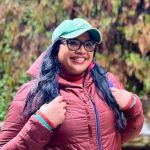
Monica is a storyteller, hiker, and Save the Redwoods League council member. She is also the co-founder of Bay Area GalVentures, an Instagram community she started with her lifelong friend to share their hiking adventures, especially among the redwoods. Monica discovered her love for the outdoors later in life and now champions access to nature for women. She extends this passion into her role as our new podcast host, where she shares stories that connect people to redwoods, nature, and each other—with heart, curiosity, and a deep love for the forest.
Connect with us
We'd love to hear from you! You can leave us a voice message and tell us what you think about each episode, or shoot us an email at outreach@savetheredwoods.org.
Join our community: Follow @IllGoIfYouGoPod on Instagram for the latest updates!