
Episode 7 of Season 5 — Hosted by Monica Carcamo-Binetti.

Guest Bio
Beatrix Jiménez-Helsley
In this seventh episode of Season 5 of “I’ll Go If You Go,” host Monica Carcamo-Binetti heads to San Vicente Redwoods to meet Sempervirens Fund natural resource manager Beatrix Jiménez-Helsley. Recorded among sweeping ocean views, fog, birdsong and the hum of a drone, their conversation explores the hidden connections between faraway Louisiana crayfish and the manmade ponds at San Vicente Redwoods, the complexity of fuel reduction projects and the return of native plant species. The 8,850-acre San Vicente Redwoods – ancestral land of the Awaswas-speaking Ohlone people – is stewarded by Sempervirens Fund, Save the Redwoods League and the Peninsula Open Space Trust. Beatrix discusses how this collaborative stewardship builds community resilience and restores watersheds.
Guest Bio
Beatrix Jiménez-Helsley is an ecologist passionate about protecting California’s biodiversity. She has experience working in the private sector, non-profit organizations and state and federal agencies and serves as the natural resource manager at Sempervirens Fund. A daughter of immigrants from Mexico and El Salvador, she is endlessly curious about native plants and animals and holds a BA in Biology with a minor in Earth Science from UC Santa Barbara. Follow her on Instagram at @botanicalbeatrix.
Read Transcription
Season 5, Episode 7 – Louisiana Crayfish and San Vicente Redwoods: More Connected Than You’d Think!
SPEAKERS
Monica Carcamo-Binetti (host)
Beatrix Jiménez-Helsley (guest)
[Intro Music]
[00:00:09] Monica Carcamo-Binetti
Good morning. We are on a gorgeous Friday here recording season five, episode seven of I’ll Go If You Go Podcast, and we are at San Vicente Redwoods here in the Santa Cruz Mountains. And I am with a guest joining me today who works for Sempervirens, and I’m going to have you introduce yourself.
[00:00:29] Beatrix Jiménez-Helsley
Hello, my name is Beatrix Jiménez-Helsley.
I use she/her pronouns, and I’m a natural resource manager with Sempervirens Fund.
[00:00:37] Monica Carcamo-Binetti
Fantastic. Thank you. I’m so excited about being on this property. I’ve never been here before, and part of what I’ve loved about doing this podcast is that I get to visit all of these amazing places. I wish that this was a video podcast so people could see how gorgeous it is. So what trail are we on currently?
[00:00:54] Beatrix Jiménez-Helsley
So, we are here at San Vicente Redwoods on the hu – mis Trail at the vista point and we have a beautiful view here of the Monterey Bay. So, San Vicente Redwoods is located on Ben Lomond Mountain, so here in the Santa Cruz Mountains and kind of goes down all the way close to down to Highway one in Davenport area there and is about 9,000 acres.
[00:01:16] Monica Carcamo-Binetti
The view is breathtaking. So let’s get into a little bit more about your background. Can you tell me why you do restoration and stewardship work?
[00:01:27] Beatrix Jiménez-Helsley
In my undergraduate studies, I studied ecology and evolution, and I minored in earth science at UC Santa Barbara, very heavy in research. And before I went full on going into research, I wanted to have experience in non-research. You know, when I moved to the San Jose area with my partner, I got an internship at Peninsula Open Space Trust, and that was my foot in the door with land conservation and seeing restoration work on the non-research side.
This is the applied side and managing land in the mountain. So, that really kind of just inspired me and wanting to continue doing work like this. So, I was really happy to join the Sempervirens Fund team and be able to do restoration work on the ground on these coast redwood forests and mixed grasslands and to kind of help restore these areas for native species to inhabit and thinking too about climate change and climate resiliency, recognizing the impacts that humans have had on the ecosystem. I was just inspired to be able to be able to play a part in helping set up this ecosystem up for success, for future climate kind of resiliency.
[00:02:42] Monica Carcamo-Binetti
No, that’s great. Thank, thank you.
That’s, that’s really inspirational that you kind of had this, you were on your own trail in a way, right. And where you ended up today and what land are you currently stewarding and what type of monitoring is currently taking place?
[00:02:57] Beatrix Jiménez-Helsley
So, we are on the land of the Awaswas speaking people and of San Vicente Redwoods, which is about close to 9,000 acres.
And some of the work that I do here is I work really closely with our partners and contractors and doing kind of road management, restoring our redwood forests that were damaged from early clear cut logging in the 1900, and then even more recently, the 2020 CZU fire in areas where, you know, it got very, very toasty and burned a lot of it. They’re still living, but they’re still kind of the recovery efforts that are after. And so, working closely with the team on restoring a few manmade ponds that are resourced and habitat for so many species here and taking care of our watersheds. So, watersheds are an area where basically we’re water drained and protecting our creeks. That are essential, that flow into the ocean and support coho salmon and steelhead trout. So that’s just kind of some of the work that I do. Working closely with researchers and technical experts, contractors and implementing some of the work that we’re doing.
[00:04:13] Monica Carcamo-Binetti
Can you tell me a little bit more about the, what you just mentioned, manmade ponds and how that helps restore.
[00:04:19] Beatrix Jiménez-Helsley
Throughout the Santa Cruz mountains and beyond folks, you know, we’ll make ponds and because they would use them for some of their, you know, agricultural use and just kind of land property management, it’s nice to have a water source for fighting fires or just maintaining your property. And so, when we acquired Feliz Ranch in 2019. There were three manmade ponds on there. We’ve definitely utilized the ponds helping with some of our restoration work here, but also those ponds, although they have invasive animals like American Bull Frogs and Louisiana crayfish. They’re still habitat and a resource for native species. So, I think about the sensitive species. Purple Martin, for example.
I was out there one of these times and I could just see it flying and using its wing to collect water. Or another time an osprey was around. But was getting harassed by all the red wing blackbirds that nest along the pond, so it never made it to the pond. Or even like the Red Tail hawks just kind of flying and perch on the forest edge there.
[00:05:24] Monica Carcamo-Binetti
Wait, I’m sorry, you said the Louisiana
[00:05:26] Beatrix Jiménez-Helsley
Crayfish
[00:05:27] Monica Carcamo-Binetti
and so how did that, how did he get here?
[00:05:29] Beatrix Jiménez-Helsley
That’s a great question. Yes. So some people will stalk their pond. So there’s actually some, for example, some bass in the pond and sunfish that the previous landowners brought in. And so some people will bring in some of these species for, sometimes for, for their own utilization.
[00:05:45] Beatrix Jiménez-Helsley
But you know, one of the big things too is sometimes people bring these species into these systems and then they kind of get away and then they start to kind of spread.
[00:05:54] Monica Carcamo-Binetti
Yeah.
[00:05:55] Beatrix Jiménez-Helsley
So, for example, they say that crayfish can walk over land for three miles.
[00:05:59] Monica Carcamo-Binetti
What?
[00:06:01] Beatrix Jiménez-Helsley
Yes. So, having to be careful and being mindful, right?
[00:06:04] Beatrix Jiménez-Helsley
Oh, of what you bring in.
[00:06:05] Monica Carcamo-Binetti
Oh my gosh. They’re on a hike for three miles.
[00:06:07] Beatrix Jiménez-Helsley
You could be hiking alongside one.
[00:06:10] Monica Carcamo-Binetti
I had no idea. That’s hilarious. So, I mean, this is actually all really interesting and it relates to my, my next set on my next question that this property San Vicente Redwoods, is a property that we can really look and learn about restoration efforts since it’s been stewarded for over 10 years and has undergone a lot. Right?
How has the health of the forest of this area been monitored over time and what are some of the biggest challenges in managing particularly a redwood forest ecosystem in this environment?
[00:06:42] Beatrix Jiménez-Helsley
When we acquired this property, you know, we are really trying to protect our redwood forest and other important ecosystems and species here.
And ideally, you know, enhance them and , restore areas where there was an impact. So, you know, there are areas where they were overly logged, so selectively enhancing those areas.
Some of the work that we do is a bit more cutting edge, so we work with some research institutions like UC Berkeley and UC Santa Cruz, to do studies.
So, we’ll do like different, what we call treatments as we’re kind of reducing the amount of vegetation, what we call fuel. You know, we aren’t trying to kind of slick off everything. We’re not trying to get down to bare ground, like that’s not, that’s not good. We need plants to stabilize the soil, so we have what we call a feathered approach to it.
And so, some areas we might do what we call a lop and scatter. So just kind of cut the base of the tree and just kind of spread it around. Others we will, we will do like mastication. So mastication is basically just picture a lawnmower, but bigger and attach to an excavator and it would go and just kind of shred up the tree and small brush it to kinda just reduce vegetation.
So, we kind of see all these different treatments and seeing what the effects are after. So, we don’t shy away from that. And so I think though some of the challenges we are facing is from the CZU fire. It burned from very high to, to very low in this area. And so, we are navigating how to restore that. Fire is a part of the system, so we’re not touching everything, but there are areas where it was very highly disturbed and, you know, we had never seen catastrophic mega fires like we did in 2020. I mean, there were so many complex fires. There was the CZU Lightning Complex fire, the SCU Complex fire, the LNU Lightning Complex Fire.
So, we’re seeing really big fires than ever before and seeing more people who live in the wildland urban interface. You know, housing is challenging and so managing the protection of the neighbor, the neighborhoods in these communities that call these places home, but while also doing the work that is best for this, this, this land, for it to be resilient in the future, we might get other big fires. We, we expect there will be the next one. It’s just a matter of when. So that’s just kind of some of the, our thinking as we do some planning. We’re thinking 10. 20, 30, 40, 50, a hundred years out.
[00:09:15] Monica Carcamo-Binetti
What are some other key species that you’re working to protect in these forests?
[00:09:20] Beatrix Jiménez-Helsley
Here at San Vicente Redwoods, we have many several endangered species and a threatened species.
So, the mountain lion puma concolor. There are steelhead trout, which are threatened. We occasionally will have coho salmon endangered. We have sensitive species like the purple Martin, rare plants like Horkelia managing the invasive American bullfrog because those can definitely eat some of the eggs in the pond and we don’t have red-legged frog there, but adjacent on Cotoni-Coast Dairies National Monument, they do have California red-legged frog. Um, so those are just kind of some of the, the key species that, you know, we are aiming to. Protect here and their habitat, their food sources.
[00:10:07] Monica Carcamo-Binetti
Can you talk to me a little bit more about what are some of the goals that y’all are after?
[00:10:13] Beatrix Jiménez-Helsley
Yeah, so some of the work that we’re doing here and our goals are to restore and protect our redwood forests, our oak woodlands, our native grasslands and wet meadows, our riparian habitat, our creeks. And that’s through, you know, our restoration efforts. You know, thinning out really dense forests or removing invasive animal species and plant species to allow the native species to, to thrive.
We are really active right now in our management, but I don’t plan to manage certain areas forever because at some point you kind of just, the system doesn’t really need much more and can be more resilient on its own and be able to thrive. But right now, you know, we kind of need to do some, some stewardship efforts and to help set it up for success and for it to thrive.
[00:11:03] Monica Carcamo-Binetti
Like a child.
[00:11:04] Beatrix Jiménez-Helsley
Yeah, you kinda have to steward it, once it’s an adult, you can let it go, but you know, right now, you know, we did play an impact and so we’re trying to create a variety in the forest composition, the age of the trees, and how dense they are having different, you know, habitats. You know, we love redwood forests. Doing what we can with where we are to protect these areas.
[Music Break]
[00:11:38] Monica Carcamo-Binetti
Every season we have a theme and so the theme this season is the Redwoods: the ultimate nature influencer. And so when you think of an influencer, right, what is that, you know, make you think of Right? Somebody who’s out there like leading and packing the way. So how have the Redwoods, the sempervirens influenced you in the work that you do?
[00:12:00] Beatrix Jiménez-Helsley
Oh man. I’m gonna go take a step back and think about the Redwoods cousin. The Sequoiadendron giganteum, so the giant sequoia. I went on a big family trip back in middle school with my family, my Salvadorian side of the family, and we went to the Sequoia National Park, and I was just in awe by the night sky there.
Just seeing these enormous trees, it inspired me. It, it influenced my life and that I wanted to be a part of whatever protects this, and I wasn’t sure in what shape or form that would play. It was exciting because then in, in, in college, that was when I finally got to experience a redwood forest. I was on this like two week research trip going to different UC reserves and on the way we’d kind of stop in some places. And actually, one of the ones that we stopped doing was Prairie Creek, Redwood State Park. And I just remember just being amazed and seeing these huge trees and I felt like, oh my goodness, what are they called? An Ewok, I felt like an Ewok in Star Wars with all these tall, like five foot tall like ferns and these chunky banana slugs and these large trees and these huge mushrooms.
You know, I feel like most of my earlier years and the drought, so I didn’t get to really experience creeks and water, especially in LA and so I was excited to see fungi growing this huge orange lobster one. And so just everything about it just kind of influenced me and my love for nature and just wanting to protect areas like these.
[00:13:41] Monica Carcamo-Binetti
I love that. You, you also mentioned that at some point you were also a volunteer, or you were doing an internship of some kind, right?
[00:13:50] Beatrix Jiménez-Helsley
Yeah.
[00:13:50] Monica Carcamo-Binetti
We were talking as we were walking. And the way that nature is, right, it involves a lot to get one ecosystem to, you know, get to be where it’s at. So here in San Vicente, there’s a, a bunch of different players, right, who make this all happen.
Similarly, as, as humans, you know, whether you work at Sempervirens or Save the Redwoods League or you’re a volunteer, right? So let’s talk a little bit more about how the local communities or the volunteers play in the stewardship, play a part in the stewardship of this land.
[00:14:23] Beatrix Jiménez-Helsley
Support comes in many shapes and forms, you know. Some folks can give money and some folks can give their time. Some folks give by spreading the word about the work that we do. So here at San Vicente Redwoods, you know, we work with our volunteers to do stewardship. So they’ll do invasive plant management, so tackling these invasive species so they, we reduce the spread of them.
We’ll host some days where we’ll go spread native seed mixes because we want them to, that that were collected on the property, to continuing that work and stewarding that. Our volunteers have also helped us lead some hikes to talk about, you know, the amazing cool features. And for example, we just had a geology hike recently.
We work with them too to do tabling at public events. We’ll do tabling events at the Santa Cruz Natural History Museum on their first Fridays. And yeah, so we hope to do more public hikes in the future to involve people and bring them, make them aware of just the work that we’re doing and also hopefully inspire others to kind of support this kind of work.
[00:15:26] Monica Carcamo-Binetti
And it’s important to expose people in communities that maybe didn’t, didn’t know that this was something that they could have a career in. Right? And similarly to you, when you first saw a Sequoia, and not just like that seed that was planted in you, that grew into this immense Sequoia or redwood tree, right?
That was planted from a young age, and it grew and grew and grew. And so the importance of bringing people that are, are not accustomed to maybe exploring the outdoors in this way.
I, I can’t remember exactly where it was in the Netherlands, in Sweden, I can’t recall. It’s one of the first places where doctors are prescribing going out into nature as medicine. Right? Yeah. And so the importance of that here in the states of, you know, kind of going into that mentality in Japan, you know, forest bathing is also something else that is really important in its cultural. And even though it’s a huge sprawling city, there’s a lot of green spaces that are available for people to step into when that everyday life just starts getting to be too much.
So, we have talked a lot about restoration and this amazing work that y’all are doing, but for what I talked about earlier, the end user, like why open this up right to end users? This could have been just, you know, a place that you restore and that you keep, but what was it that was that motivation to open this up to end users like myself?
[00:17:02] Beatrix Jiménez-Helsley
You know, the partners came together, recognized that this property not only has many resources that we need to protect, but also resources that folks should be aware of and why we should protect them. Public access and recreation is an a key, a way for people to enjoy the outdoors and be able to see these areas and immerse themselves because there is that feeling when you go on a trail and you hear all these birds just swishing by, or maybe you’ve upset a hummingbird because you’re too close to their nesting site.
So, they’re dive bombing you and you start to realize, oh yes, there are other things that habit that inhabit these areas, not just you we’re all a part of this. System. And so we recognize that we need recreation for people to enjoy these areas and to continue to care, but also, like you mentioned, it is medicine.
Sempervirens works with Dr. Suzanne Hackenmiller, and I believe that’s her name and AllTrails, to kind of determine which trails could provide certain medicine. So we have a resource online talking about Henry Cowell, some trails there and at Big Basin and different ones kind of give you different kind of stimulation really.
Maybe you’re hiking through one and there’s more scents and you get more of a maple syrup. Maybe in another one you’re under a redwood understory and you feel the, the crisp, moist of the air and the crunching of the duff as you walk or you know, you’re here at San Vicente and you have the sun hitting you and the crunch of the, the trail, because there’s far less duff and you hear like the rocks and the Wrens just swishing through.
And once again, the hummingbird upset and the acorn woodpeckers laughing in the background. It is medicine.
[00:18:51] Monica Carcamo-Binetti
Yeah. It, it takes you out of your everyday monotony about things where you’re just being you, you are just taken back to who we are as humans. Right?
[00:19:04] Beatrix Jiménez-Helsley
Yeah.
[00:19:05] Monica Carcamo-Binetti
So, it actually is, it’s just bringing us back to who we naturally are.
[00:19:09] Beatrix Jiménez-Helsley
No, I agree. I mean, just nature overall is just such an influencer. I, I think about that. You know, I’m thinking about being under an old growth oak tree, and if you just stand there still, you start to hear all the movements and you hear the beetles, the birds, the rodents below ground, and it’s, it’s that connection, you know.
I think so often humans think we’re separate from nature, but we’re not. We’re, we are part of nature. Yeah. This is a co-living situation. This whole thing is a big old co-op.
[00:19:43] Monica Carcamo-Binetti
This is a really big co-op, y’all. If you didn’t know. No, it a hundred percent is like, there’s no way to get around it. And so, yeah, like, you know, we’ve been talking about, it’s just this is all very layered.
This is all very layered and we’re all part of this giant ecosystem, and each one of us play a different role. This place is genuinely unreal. So when we first sat down, I could see the Monterey Bay, but now there is this beautiful, beautiful belt of fog that has rolled in and it is giving now the place a different perspective.
And I just want to thank you, Beatrix, for bringing us here and recording Live in this gorgeous, gorgeous place, San Vicente Redwoods that I will definitely come back and visit and maybe do one of, do a, a group hike with some folks out here. because I think that everybody should see this place. So, thank you so much.
[00:20:37] Beatrix Jiménez-Helsley
Yeah, thank you so much for having me and I’m so glad I got a to bring you out here to the San Vicente Redwoods trailhead, and we could hike the hu’-mis and the rum-me, ma-rus trails and be able to see this beautiful vistas amongst all these native plants and native birds.
[00:20:52] Monica Carcamo-Binetti
Thank you. Thank you. I’ll see you on the trails?
[00:20:54] Beatrix Jiménez-Helsley
Yes, definitely.
[00:20:58] Monica Carcamo-Binetti
Thanks for joining us on I’ll Go If You Go, a Save the Redwoods League podcast. This season is produced by Leslie Parra and hosted by Monica Carcamo-Binetti. Edited and sound engineered by Mac Cardona at cWave Media.
Thank you to Mariela Gándara and Caleb Castle for graphic design and media support, and to Adam Kaplan for tech support. Theme song and music by Nhu Nguyen and Anni Feng.
You can find seasons one through four, wherever you listen to podcasts or on
savetheredwoods.org where you can also find transcripts of each episode.
If you like our show, please rate and review. It helps more people find us and join in on the conversation. For behind-the-scenes and bonus content, follow us on Instagram @IllGoIfYouGoPod. If you have comments or questions, you can email us at outreach@savetheredwoods.org. We’d love to hear from you and maybe even share your comments on the podcast.
I look forward to when our paths cross again, on the hiking trail or beyond.
[Closing Music]
About the podcast
I’ll Go If You Go, a Save the Redwoods League podcast.On I’ll Go If You Go, we have thought-provoking conversations with emerging environmental leaders from diverse backgrounds who explore and work in the outdoors. By examining how we think, work, and play in the outdoors, we’re building community and illuminating how Californians from all walks of life experience nature and conservation, in the redwoods and beyond.
Subscribe to our podcast in your preferred app to be notified when new episodes are posted!
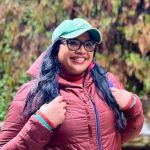
Monica is a storyteller, hiker, and Save the Redwoods League council member. She is also the co-founder of Bay Area GalVentures, an Instagram community she started with her lifelong friend to share their hiking adventures, especially among the redwoods. Monica discovered her love for the outdoors later in life and now champions access to nature for women. She extends this passion into her role as our new podcast host, where she shares stories that connect people to redwoods, nature, and each other—with heart, curiosity, and a deep love for the forest.
Connect with us
We'd love to hear from you! You can leave us a voice message and tell us what you think about each episode, or shoot us an email at outreach@savetheredwoods.org.
Join our community: Follow @IllGoIfYouGoPod on Instagram for the latest updates!