
Eerie and inedible, these frightful forest fungi are also wildly fascinating

It’s late afternoon in the redwoods and shadows lengthen across the forest floor. Tendrils of mist curl around the trunks of trees. You glance down and shiver: Is that thing emerging from a buried log natural … or supernatural?
Damp, dark, and littered with fallen debris, redwood forests are havens for mushrooms and other fungi with eerie appearances and spooky names. Yet despite the creepy factor, these organisms play important roles in the ecosystem. Many are saprotrophs, which decompose dead organic matter and help recycle nutrients back into the soil. Others are part of the mycorrhizal network, an underground system of fungi that pass chemical signals from tree to tree while also providing nutrients in exchange for sugars.
Just another reminder that it takes a village to create a thriving redwood ecosystem—even if some of those villagers give you the willies. A few of our favorites:
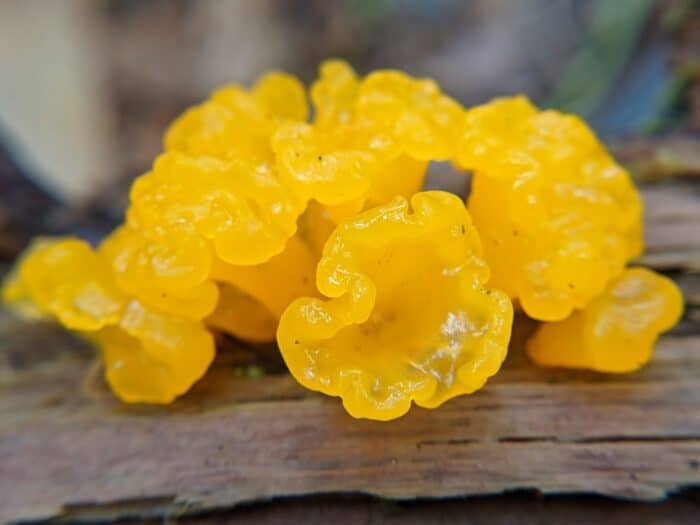
1. Witch’s Butter
The name says it all: These bright gelatinous blobs are believed to be left behind by witches cooking up mischief in the night. Of the many witch’s butter species, Dacrymyces chrysospermus, also known as orange witch’s butter or orange jelly spot, is most common to conifer forests, often growing on fallen logs, stumps, and other dead wood.
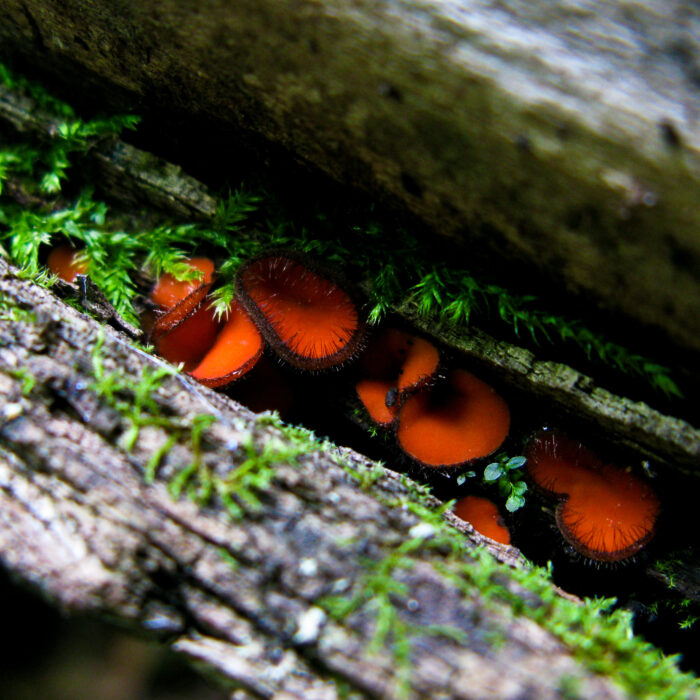
2. Eyelash cup
Dark, eyelash-like hairs that sprout around the rim of a shallow cup give Scutellinia scutellata its memorable moniker. “Bloodshot eye” would also be apt: Most eyelash cups have a red or bright-orange center that stands out against green moss and lichens.
3. Death Cap
The ultimate silent killer, these pale, innocent-looking toadstools are among the most toxic mushrooms in the world. The death cap (Amanita phalloides) is not native to the West Coast, unlike its deadly sidekick, the western destroying angel. But it has been introduced to redwood locations such as Reinhardt Redwood Regional Park, where it typically grows on the roots of oak trees.

4. Bleeding Tooth Fungus
This is the stuff of dental nightmares: A fungus that oozes glistening red droplets that resemble blood emerging from an incisor. Despite its gruesome appearance, the bleeding tooth (Hydnellum peckii) is a benevolent member of the mychorrizal network, connecting trees in mixed conifer forests.

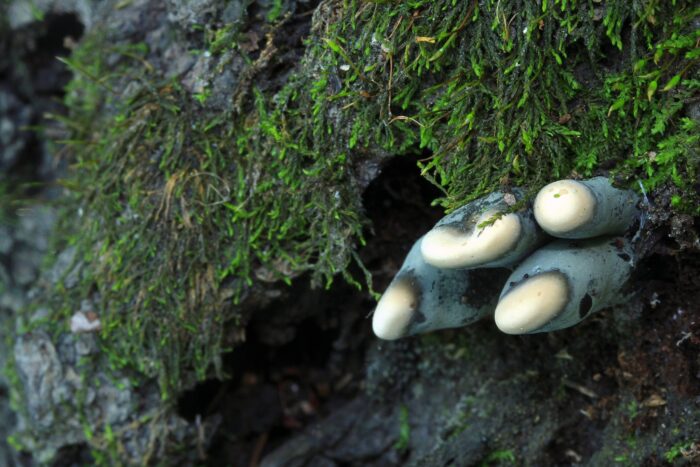
5. Dead man’s fingers
They may look like zombie hands emerging from the grave, but these “fingers” are actually a fungus (Xylaria polymorpha) that feeds on decaying wood. When first forming, dead man’s fingers may appear white or pale blue, shifting to all black as they mature. While not a threat to thriving trees, this fungus can stress trees that are unhealthy.





One Response to “Haunted redwoods: 5 spooky mushrooms and creepy fungi”
Janie Allan Noon
Fabulous! At university I took a botany class with “Dr. Slimemold”, and have loved the great recyclers of the forest and slime molds ever since. Wonerful way to teach people, young and old, about the wonderful world around us. I donate to STRL every year, and do a Charitable Rollover from my RMD.