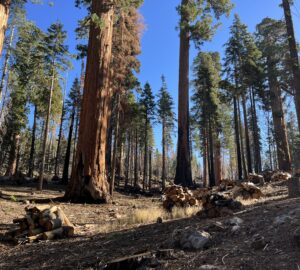
From imposing pines to cinnamon cedars, how to identify trees that resemble redwoods
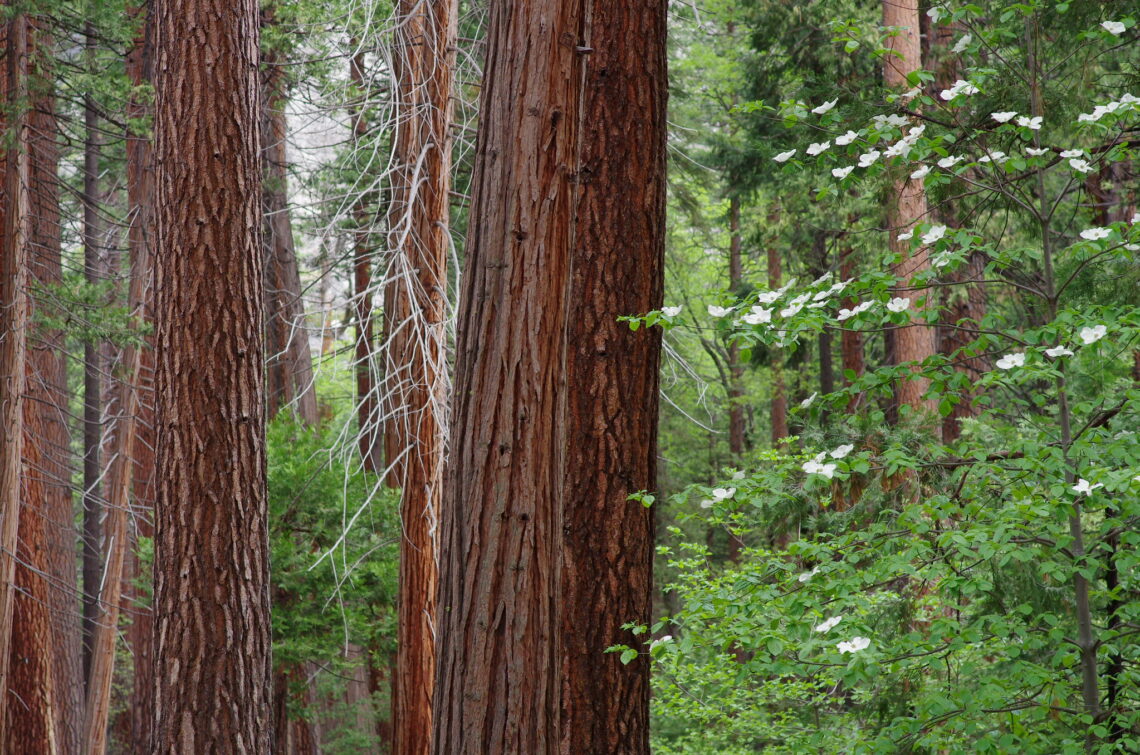
Redwoods set the bar high—literally. In California, it’s easy to spot a towering tree and assume it’s one of the state’s famous giants. But with 95 native tree species, the Golden State’s forests boast extraordinary diversity—and hold plenty of surprises. Simply telling the difference between coast redwoods and giant sequoias can be a challenge.
Here are seven trees most often mistaken for redwoods, with clues about bark, needles, cones, and habitat that can help you reveal their true identity. Slow down, look closer, and soon the remarkable story of each tree will come into focus.
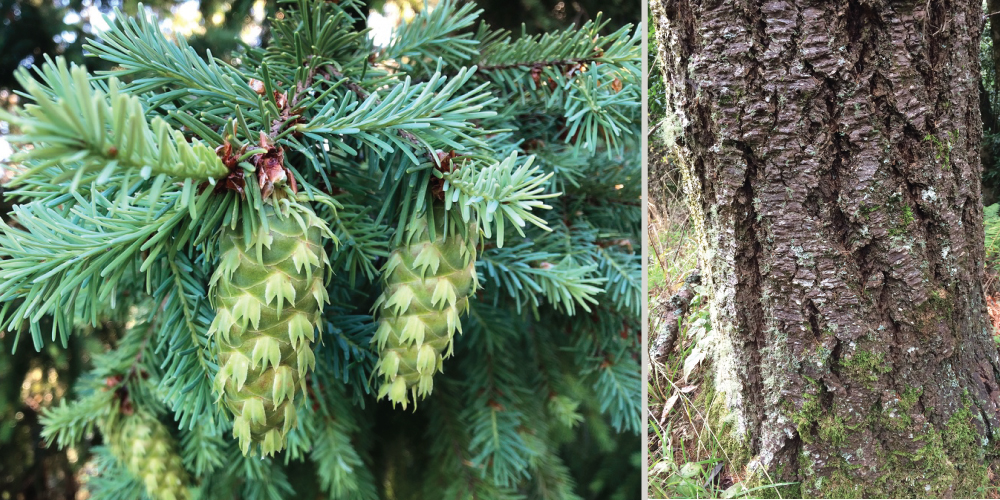
1. Douglas-fir (Pseudotsuga menziesii)
Why it fools us:
Douglas-fir trees grow shoulder-to-shoulder with redwoods across much of the range and often reach comparable heights. From a distance, a straight, massive trunk rising into the fog feels redwood-enough to pass the test.
How to tell the difference:
Douglas-fir bark is corky and deeply furrowed, not fibrous. Its cones hang downward and carry distinctive three-pointed bracts—often likened to the tiny tails of mice. By contrast, coast redwood cones are small, rounded, and unadorned.
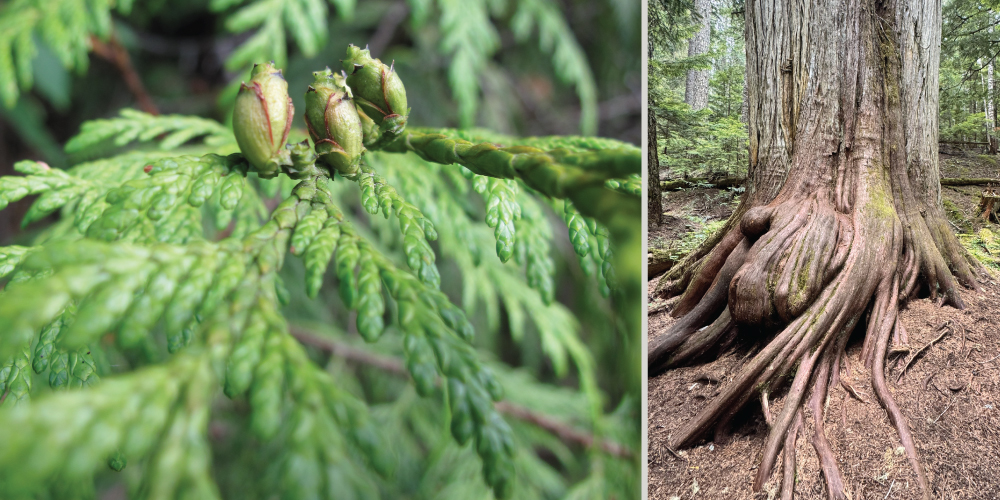
2. Western redcedar (Thuja plicata)
Why it fools us:
The name does half the work, and the reddish, fibrous bark does the rest. Western redcedar grows in moist valleys and shaded creek bottoms where moss, filtered light, and redwood-like tree trunks closely echo the vibe of a redwood forest—especially at a glance.
How to tell the difference:
Western redcedar is a Pacific Northwest specialist, its range barely overlapping redwood forests in Humboldt and Del Norte counties. Its leaves form flattened, scale-like sprays, while redwood needles are individual and arranged in v-shaped ranks on shaded twigs. Redcedar bark peels in thin strips and smells sharply aromatic when scratched; redwood bark is thicker, deeper, and softly spongy.
3. Incense-cedar (Calocedrus decurrens)
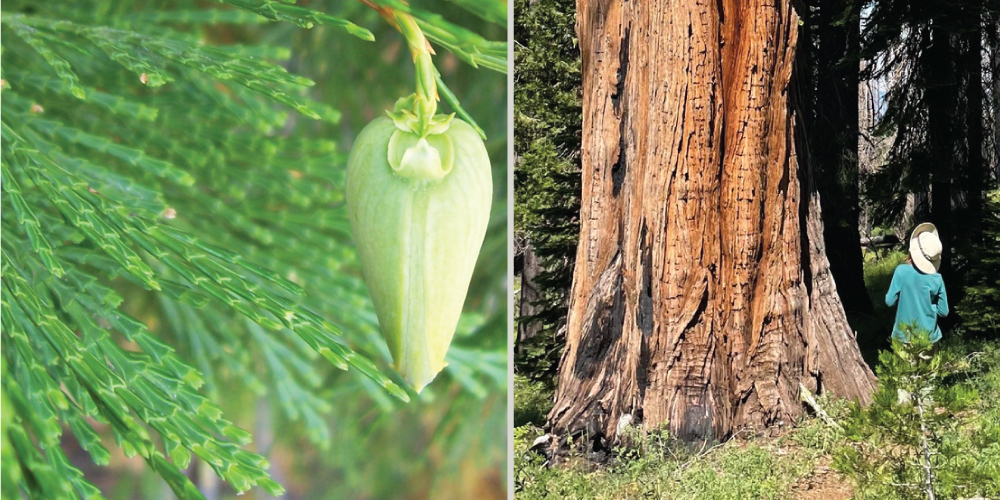
Why it fools us:
Incense-cedar is a California forest native of the Sierra Nevada and interior Coast Ranges. While its territory doesn’t meaningfully overlap with coast redwoods, its tall, straight trunk and warm, cinnamon-colored bark often lead people to mistake it for a giant sequoia.
How to tell the difference:
Crush the foliage and the clue arrives immediately: Incense-cedar smells like a pencil box. Its leaves are scale-like and tightly pressed to the twig. The cones are long and slender like a duck’s, whereas sequoia cones are egg-shaped and coast redwood cones are round. The incense-cedar’s bark forms deep, interlacing furrows—similar to a giant sequoia’s, but lacking the thick, fibrous texture of a true redwood.
4. Ponderosa pine (Pinus ponderosa)
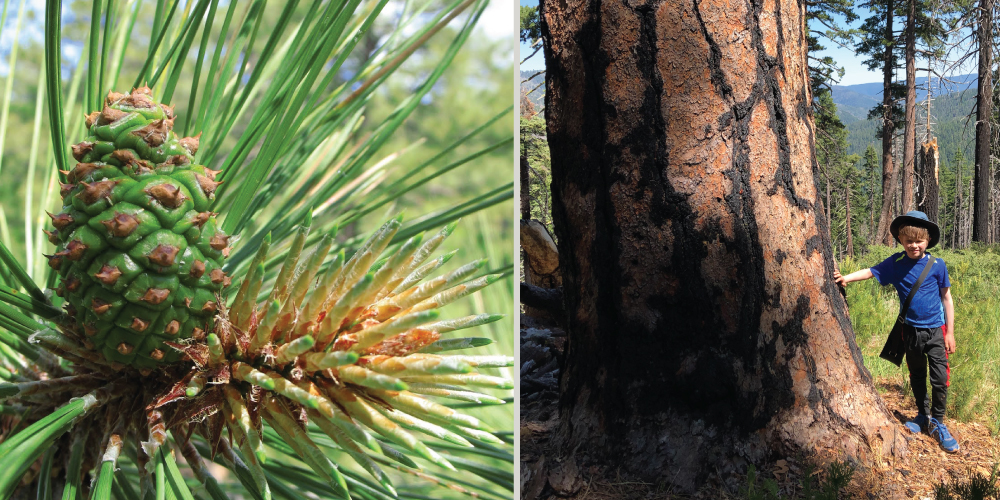
Why it fools us:
Pines belong to an entirely different plant family than redwoods, yet size alone can blur that distinction. Ponderosa pine develops massive, reddish-brown trunks and an imposing presence that feels positively redwoods-esque. The ponderosa pine’s range rarely overlaps with coast redwoods, except marginally in places like Santa Cruz County. It is far more likely to grow alongside giant sequoias in the Sierra Nevada.
How to tell the difference:
Ponderosa bark separates into large, puzzle-piece plates that often smell faintly of vanilla in warm sun. Its long, pointy needles grow in bundles of three, and it bears familiar woody pine cones. Redwoods and sequoias produce much smaller, rounded cones and carry softer needles that grow directly from twigs.
5. Sugar pine (Pinus lambertiana)
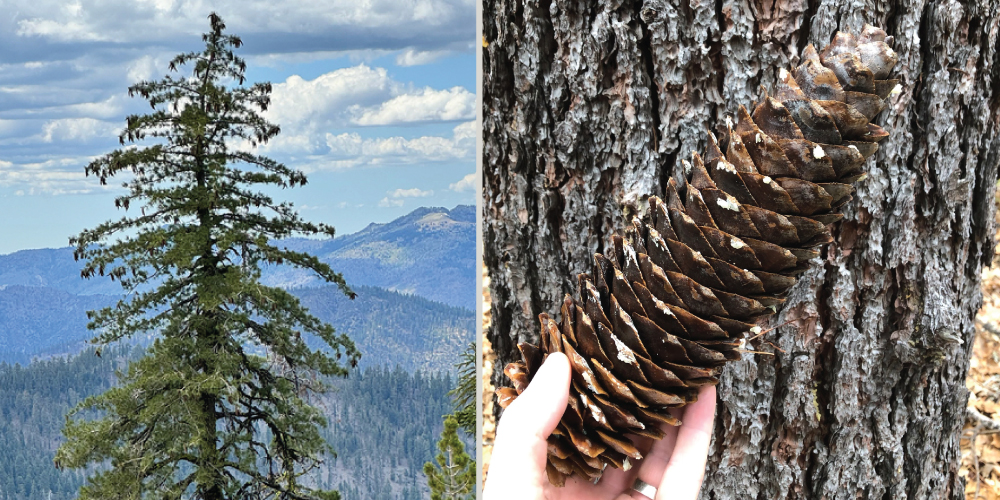
Why it fools us:
Those cones. Sugar pine produces the longest cones of any conifer—often over a foot long—leading many visitors to assume that anything with giant cones must be a redwood. Like Ponderosa pines, however, these trees belongs to a whole different plant family than redwoods.
How to tell the difference:
Redwood cones are modest in size—only a little large than an olive. Sugar pine needles grow in bundles of five, and its branches spread in graceful horizontal tiers. Sugar pine favors higher, drier forests, far from the coast redwood’s fog-nourished realm.
6. Pacific yew (Taxus brevifolia)
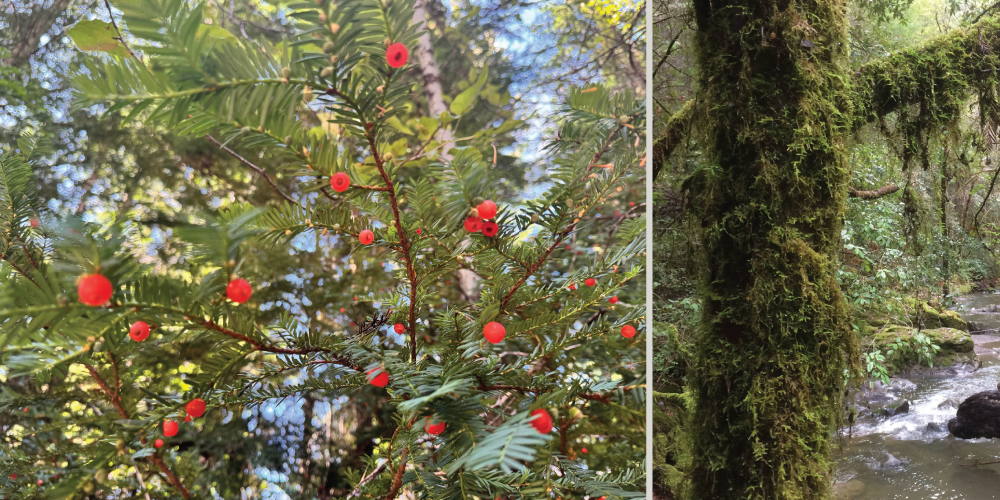
Why it fools us:
Pacific yew belongs to the yew family (Taxaceae), not the redwood family, but its habitat and foliage invite confusion. It grows in the shaded understory of Coast Range forests, sharing cool, moist conditions with redwoods. Its flat, dark needles can look surprisingly similar in deep shade.
How to tell the difference:
Yew needles are shorter, darker, and more irregularly arranged along the twig. If you’re lucky, the reproductive structures settle the question immediately: Yew produces a single seed partly enclosed in a bright-red, berry-like covering called an aril—not a cone. The Pacific yew’s range can overlap with redwoods, and a great place to see this is in Humboldt Redwoods State Park. Yew also overlaps in one place with giant sequoias, at the northern edge of their range in Calaveras County.
7. California nutmeg (Torreya californica)
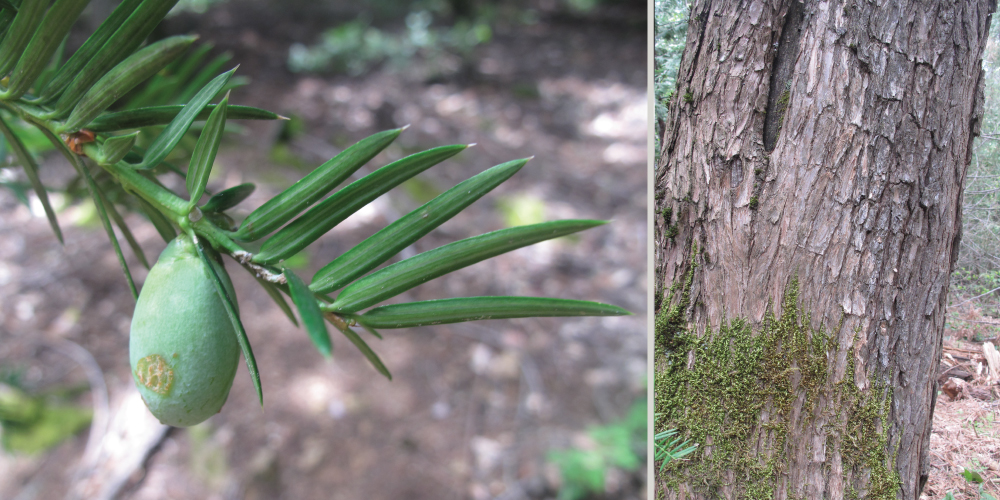
Why it fools us:
Like the Pacific yew, California nutmeg is a member of the Taxaceae family and it occupies similar coastal forests and Sierra foothill habitats. When young or growing in shade, its flat, narrow needles can suggest redwood foliage to the untrained eye.
How to tell the difference:
Look for plum-sized seeds that are unmistakable if present. (Though handle the foliage carefully—nutmeg needles are stiff and sharply pointed, unlike redwood’s soft needles). Nutmeg remains a mid-sized tree, never approaching a redwood’s towering scale. In the Sierra Nevada, nutmeg grows at lower elevations than giant sequoias. Along with coast redwoods, they are among the most fascinating flora of the Sonoma Coast.
A final note from the forest
Mistaking a redwood or giant sequoia for another giant is not a failure of observation—it is often the beginning of a relationship. California’s forests are full of trees that share stature, bark color, or habitat, especially to eyes still learning the language of the woods.
Learning names—quietly, patiently—changes the encounter. A name opens the door to curiosity about family, deep time, fog, fire, and place. Redwoods remain singular, but they do not stand alone. They rise within a diverse community, each species offering its own clues. When we begin to notice those differences—needle by needle, cone by cone—we move from simply seeing trees to knowing them. And from knowing, connection and care for these living landscapes follows naturally.