What’s the location and size of the property?
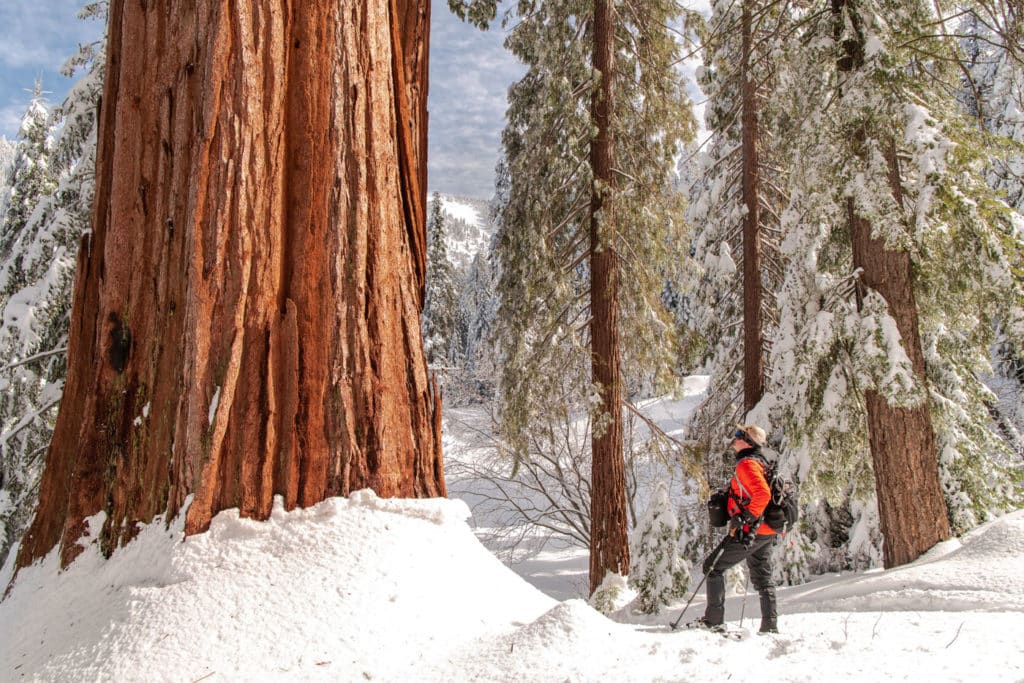
Alder Creek is a 530-acre property off California State Route 190 near Camp Nelson in the southern Sierra Nevada. It is surrounded on three sides by the Giant Sequoia National Monument and Sequoia National Forest.
Why was the acquisition of this property a priority for the League?
The League strongly believes that a giant sequoia grove of this significance should be permanently protected and shared with the public.
There are only 25,000 acres of giant sequoia forest in the world, making every inch critically important. The 530-acre property contains hundreds of ancient giant sequoias and is an exceptional example of ancient, wild California. The forest includes a diversity of age classes, from young sprouts to towering trees that are thousands of years old. Among these is the Stagg Tree, believed to be the fifth-largest known tree on the planet. The property also supports mature forests of red fir, white fir, ponderosa pine, and sugar pine and encompasses a variety of wildland habitats, including meadows and wetlands.
Are any imperiled species found on the property?
The Alder Creek property includes ideal habitat for several species of concern, including Pacific fisher, American marten, and California spotted owl. Black bears, mountain lions, and American goshawks have also been spotted.
Are there any specific management or restoration plans for the property?
The League worked with its research partners to develop a post-fire restoration plan for the property in 2021 and 2022 that was focused on the portions of the property that burned at high-severity in the 2020 Castle Fire. This informed the League’s reforestation strategy. The League also developed a Forest Management Plan for the less severely impacted parts of the property that identified strategies for addressing the legacy of fire suppression and selective logging that has impacted that portion of the property.
Did Alder Creek burn in any recent fires?
In September 2020, the Castle Fire, also known as the SQF Complex Fire, reached Alder Creek. While most of the property was unburned or burned at low to moderate severity, roughly 38% burned at high severity.
Were any monarch sequoias burned in the fire?
At least 108 large, old-growth giant sequoias were killed in high-severity areas of the Castle Fire.
How has the property changed since the fire?
In areas that were impacted by low- to moderate-severity fire, the forest and meadows are still healthy, hundreds of ancient sequoias remain standing, and some seedlings have sprouted in low-severity burn areas. However, in some areas, severe fire destroyed the forest canopy and giant sequoia cones and seeds, as well as damaged the soil, meaning these areas cannot recover on their own and reforestation was needed.
What is Save the Redwoods League doing for post-fire recovery?
In 2021 the League started a multiyear fire recovery project intended to accelerate the return of a healthy forest ecosystem that will be prepared for the next fire. Over 50,000 native conifer seedlings were planted across the property in 2023 and 2024.
What is Save the Redwoods League’s reforestation plan?
After preparing several areas of the high-severity burned area of Alder Creek, Save the Redwoods League planted over 50,000 seedlings of sequoia, sugar pine, ponderosa pine, and white fir in spring 2023. The League will continue to monitor future growth and adjust our reforestation plan accordingly.
Why is Save the Redwoods League removing timber from the Alder Creek property?
Save the Redwoods League is committed to using every tool available to aid in the restoration of Alder Creek. Removal of dead standing trees is among those tools and is used in areas where fire killed an unnaturally high number of trees, which pose a threat to reforestation efforts. Large stands of dead standing trees can fall over in the years following the fire, restricting new growth of trees and posing a fire hazard that would kill any new seedlings and require the reforestation process to start again. The League is using funds generated by the sale of timber to offset a small portion of the costs of its reforestation efforts and is not netting a profit on the sale.
Why not let the property recover on its own?
Forests that burn at high severity—as sections of Alder Creek did—are especially susceptible to type-conversion. Type-conversion is when the forested landscape is replaced by plants or shrubs that were not dominant before. In this case, our concern is that previously forested areas will now be dominated by shrubs, a shift that would impact wildlife habitat availability, restrict the growth of new trees, and promote repeated high-severity wildfire. Conversion is growing increasingly common following extreme fire. To protect the remaining sequoias at Alder Creek and the neighboring community, Save The Redwoods League is taking management steps to ensure a healthy return of the tree species that existed before the fire.