Shared priorities and coordinated action drive restoration success in 2025
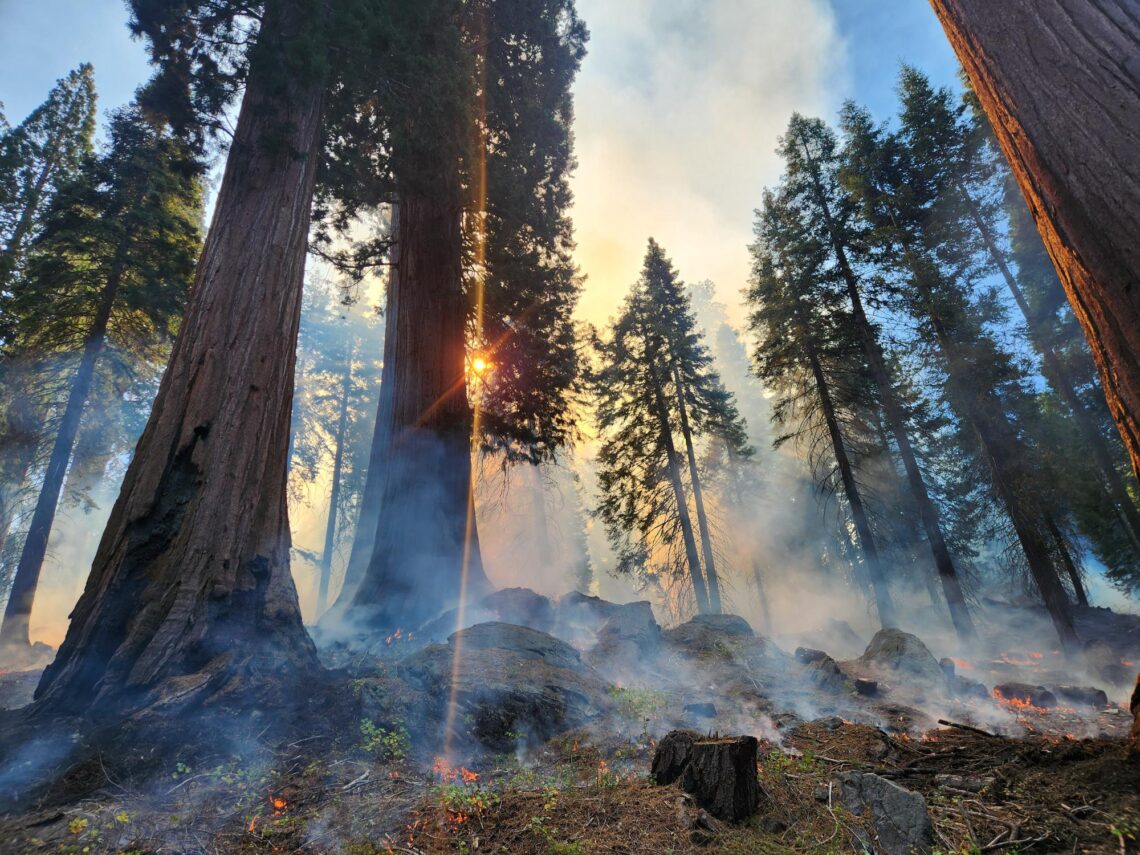
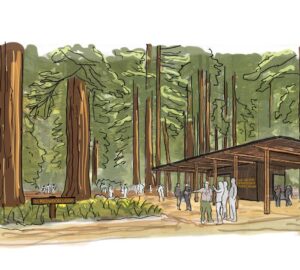
Standing in a giant sequoia grove is a bucket list experience. With their ruddy bark, buttressed trunks, and soaring branches, these 2,000-year-old trees exude a sense of timelessness that’s difficult to wrap your mind around.
What is equally hard to grasp: How vulnerable these seemingly immortal trees really are. Growing in a narrow band in California’s Sierra Nevada, giant sequoias have suffered catastrophic losses in the past decade, with 17% of mature giant sequoias killed by extreme wildfires since 2015. Fueled by climate change and the effects of fire suppression, megafires are burning hotter and higher, tearing into the crowns of sequoias and killing trees outright, along with the seeds needed to replenish a scorched grove.
In response, an alliance of nearly two dozen agencies, Tribes, and nonprofits, including Save the Redwoods League, gathered in 2021 to address the growing threat. Today, the Giant Sequoia Lands Coalition (GSLC) continues to drive restoration, stewardship, and scientific efforts to protect the world’s remaining sequoia groves. The urgency of this work is underscored by a new scientific study showing roughly 13% of the giant sequoia range to be at some risk of local extinction due to extreme fire.
2025 progress report spotlights success on the ground
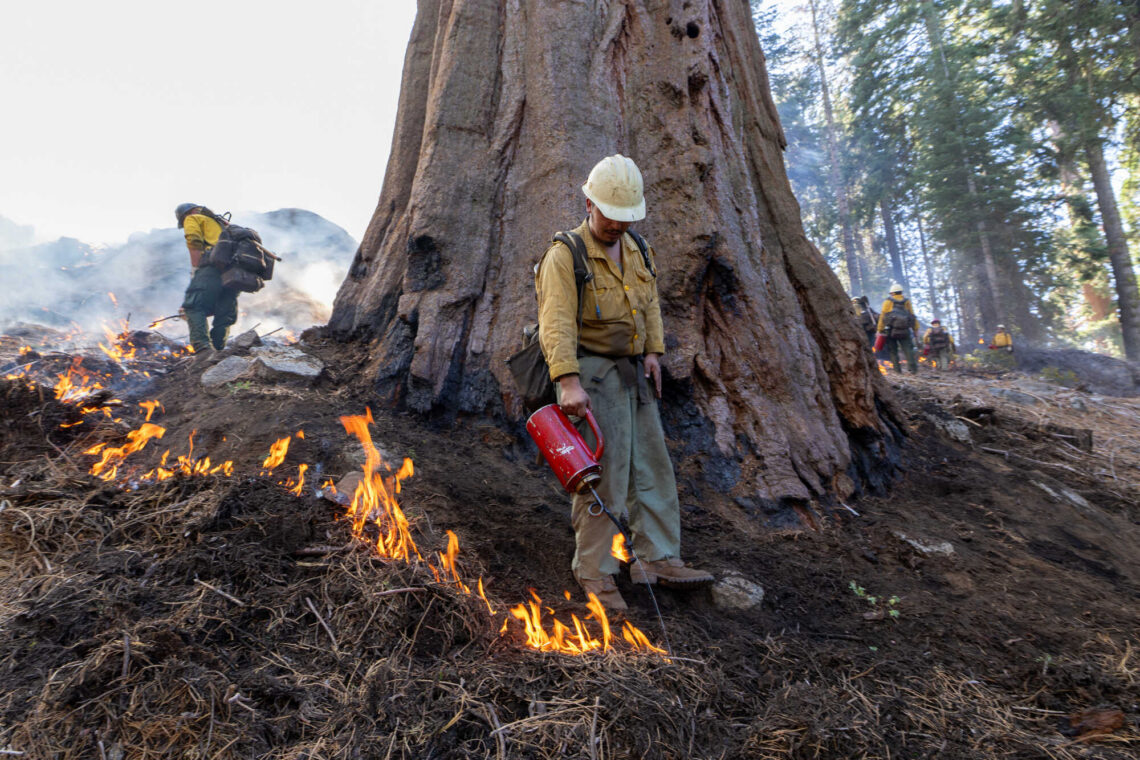
In protecting the giant sequoias, Save the Redwoods and GSLC partners have focused efforts on reducing hazardous fire fuels, replanting seedlings in severely burned groves, and expanding research and monitoring to better understand threats such as drought and bark beetles. The 2025 GSLC Progress Report shows how this landscape-scale approach delivers meaningful results:
- Completed restoration treatments on 4,508 priority acres across 25 groves
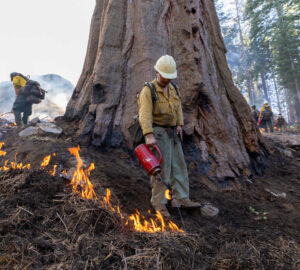
- Reduced hazardous fuels through thinning, piling, prescribed fire, and cultural burning
- Planted 65,345 native trees in areas where high‑severity fires killed mature seed trees
- Expanded seed collection to support a genetically diverse seed bank for future reforestation
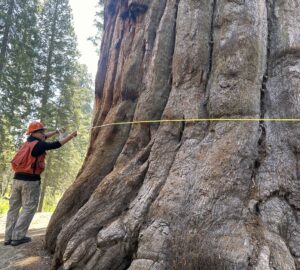
- Advanced scientific research and monitoring to better understand long‑term sequoia resilience
To date, coalition partners have planted over 680,000 native trees and completed restoration treatments on more than 23,000 acres across 44 of the world’s 94 giant sequoia groves.
Task force develops prioritized list of vulnerable groves

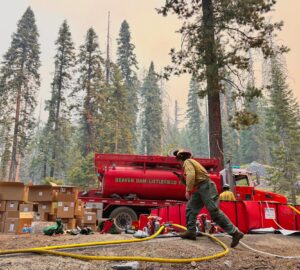
While 2025 was a quieter wildfire year in the Sierra Nevada, the events of the Garnet Fire underscored the importance of treating vulnerable giant sequoia groves. When the Garnet Fire threatened ancient sequoias in McKinley Grove in August 2025, work to reduce fuels in the grove was only 20% complete. It took extraordinary fire suppression efforts—and a lucky change in weather—to prevent catastrophic losses.
This narrow miss highlighted the need to complete fire resilience treatments as swiftly and efficiently as possible. But with 94 giant sequoia groves managed under multiple agencies, which groves should be treated first?
The GSLC’s Grove Assessment Task Force, led by Plumas Corp and the Conservation Biology Institute, has tackled this question, creating a data‑driven ranking of all 94 groves to show where restoration and replanting are most urgently needed. The effort combined scientific modeling with on‑the‑ground expertise to evaluate wildfire risk, drought stress, and post‑fire regeneration.
High‑priority groves on the list include Starvation Creek, which burned in the 2021 Windy Fire and requires replanting, and Horse Creek Grove, which has gone many years without fire or fuels reduction. The full list will be made available through the GSLC Grove Resilience Dashboard, along with an interactive map and detailed information about each grove. The dashboard will be updated as treatments are completed and new fires occur.
Restoration at Alder Creek and other priority groves
In 2025, Save the Redwoods League collaborated with GSLC partners to reduce fire fuels at Packsaddle and Freeman Creek groves and continued ongoing stewardship at Alder Creek. This work included planting thousands of native seedlings in areas of Alder Creek that burned at high severity in the 2020 Castle Fire, as well as removing dense vegetation in the unburned forest. These actions will help protect the many sequoia giants in this oasis—including the Stagg Tree, the fifth-largest known tree in the world.
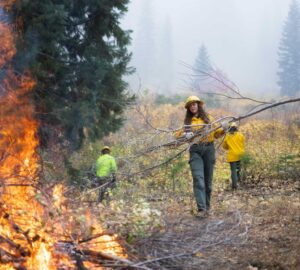
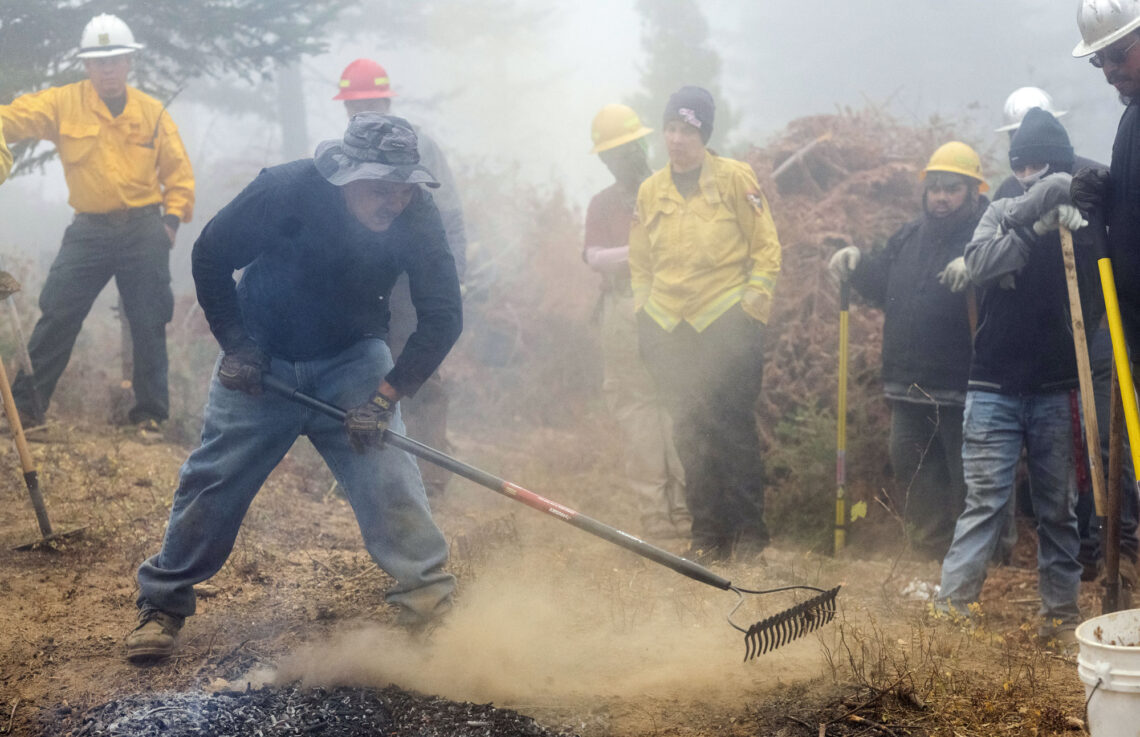
Save the Redwoods also hosted two cultural burns at Alder Creek, led by Tribal Liaison Jesse Valdez in partnership with the Tule River Tribe, North Fork Mono Tribe, and Tübatulabal Tribe. These small, carefully planned burns protect sequoias by reducing hazardous overgrowth, small trees, and duff on the forest floor. They also encourage the growth of culturally important plants used by Tribes for medicine and basketry.
Crews from CAL FIRE, the U.S. Forest Service, and the Tule River Tribe supported the burns, alongside dozens of members from seven regional Tribes. These all-day events also gave Tribal youth the chance to learn about “good fire” from their elders.
“Cultural burning is not just about fuels and flames; it’s about connecting back to the land that we once lived on,” says Valdez.