
The Sierra Nevada grows more than just giants. Future stewards grow there too.

Gonzalo Fernandez Rocha still remembers the moment he opened the email. After years of feeling stuck in dead-end jobs, he learned he’d been accepted into Save the Redwoods League’s giant sequoia apprenticeship program. This was his chance to build a career in the outdoors. “It was the biggest break of my life so far,” he says. “It’s been one of my biggest accomplishments, too.”
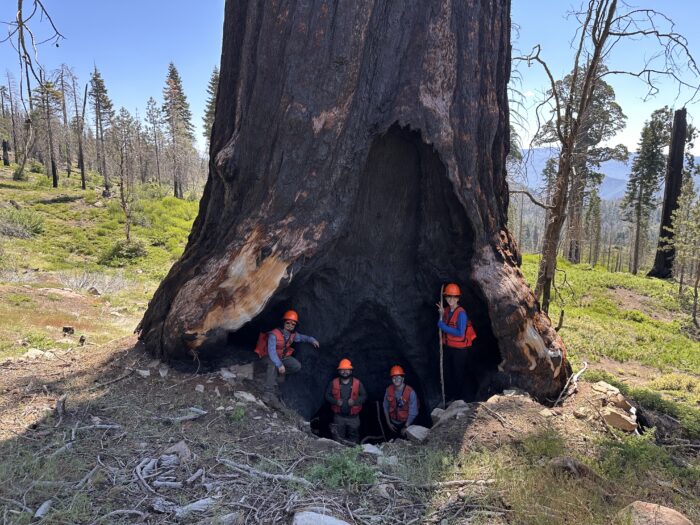
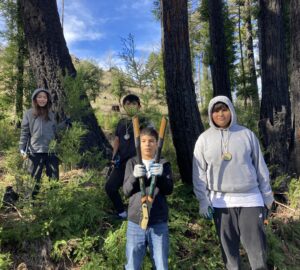
Rocha is one of several students from California’s Central Valley who spent 11 weeks this past summer living and learning in the giant sequoia groves of our Alder Creek property. Selected from Bakersfield and Reedley community colleges, the apprentices traded fluorescent-lit classrooms for creeks and campsites—many sleeping in a tent for the first time in their lives—to gain the skills, confidence, and connections needed to work in natural resources management.
“It was an honor to be in the sequoias’ space, to appreciate them, and to help them regenerate. I want to watch these groves become healthier and thrive.” —Gonzalo Fernandez Rocha
Modeled on our Redwoods Rising apprenticeships, our sequoia program has two goals. First, it creates meaningful opportunities in a region where pathways to a forestry career are limited—especially for young people from marginalized communities. Second, it helps cultivate the skilled forestry workforce California will rely on for decades. With rising temperatures and megafires threatening the sequoias, we need skilled specialists who can steward these forests toward long‑term resilience and success. The more hands we have caring for the redwood range, the stronger its future becomes.
A place where every cone counts
Launched in 2024, the sequoia apprentice program is guided by program coordinator Neida Rodriguez, a forest fellow with Save the Redwoods. Rodriguez, who grew up outside of Bakersfield, is the daughter of migrant workers and a first‑generation American. She knows how rare it is for students from her community to see a future in conservation. “Where I’m from, there aren’t many other opportunities like this apprenticeship,” she says. “It’s so exciting for me, and for them.”
Rodriguez helps select apprentices, designs fieldwork plans with Save the Redwoods’ science and restoration teams, and even introduces the students to the fine art of camping comfortably for weeks at a time.
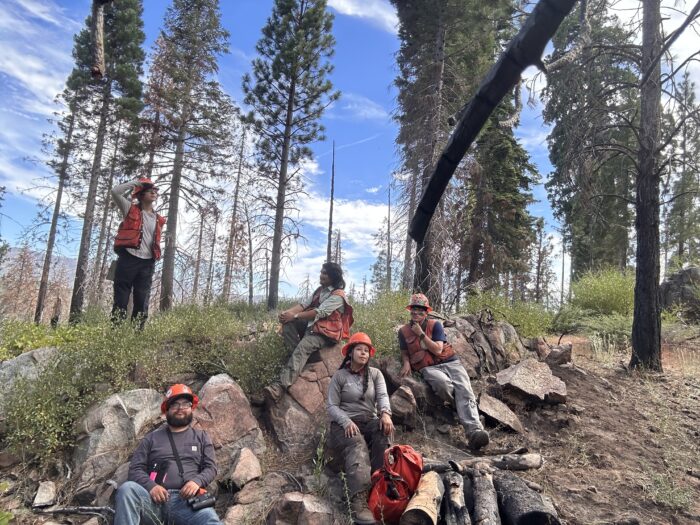
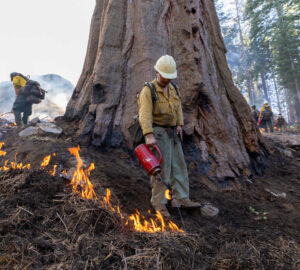
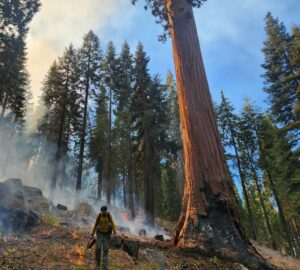
During the program’s field season—late May through early August—students gain valuable experience in a wide range of forestry jobs. They start by learning to use the tools of the trade, then dive into plant identification, species mapping, post‑fire grove inspections, and hands‑on forest restoration, including supporting cultural burns with tribal partners.
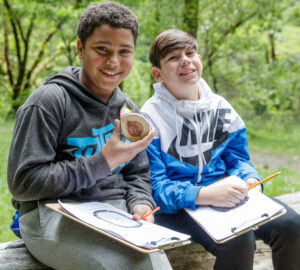
One of the most anticipated weeks is Cone Camp, conducted in partnership with American Forests, CAL FIRE, and the USDA Forest Service. Alongside veteran researchers, the apprentices practice cone identification, collection techniques, and, if they wish, tree climbing. “We get to run around and look at cones all day,” Rodriguez says. “It’s one of the apprentice’s favorite trainings and definitely a highlight.”
Hungry for new opportunities
The forestry skills the apprentices learn are the foundation of the program, but—like any apprenticeship—the relationships they build, and the career steps they take are just as important.
For Marcos Santos, it was the perfect opportunity to reboot his career. Santos already had a job in digital animation, but he found office life uninspiring. Despite being a father in his thirties, he recently headed back to school to study plants. The apprenticeship gave him a foothold in botany and a renewed sense of purpose. “This program has given me so much confidence in myself going forward to build a new career,” he says.
As for Rocha, he appreciates how the program inspired him to build relationships with forestry experts. “Learning about different jobs opened my eyes and made me hungry for new opportunities and really pushed me to grow.”
From greenhorns to sequoia pros
By the end of the season, apprentices leave with marketable forestry experience and the seeds of a promising professional network. Through the program’s affiliation with Cal Poly Humboldt, students interested in transferring to a four‑year university make direct connections with professors who can support their academic journey. Others use their hands‑on training to secure conservation jobs right away.
That’s what Rocha did. He’s now a bilingual ranger at the Wind Wolves Preserve, on the hilly outskirts of Bakersfield. (The same nature preserve that first sparked Neida Rodriguez’s own career in conservation.) Rocha is working full-time but taking classes on the side to prepare for a potential university transfer down the road.
Santos is weighing his next step: try to enter the conservation workforce straightaway or pursue a bachelor’s degree in forestry. His advice for others considering a career shift as a working adult is simple: “Give yourself grace. Take small steps and you’ll be making progress. Be open to putting yourself in the best possible position.”
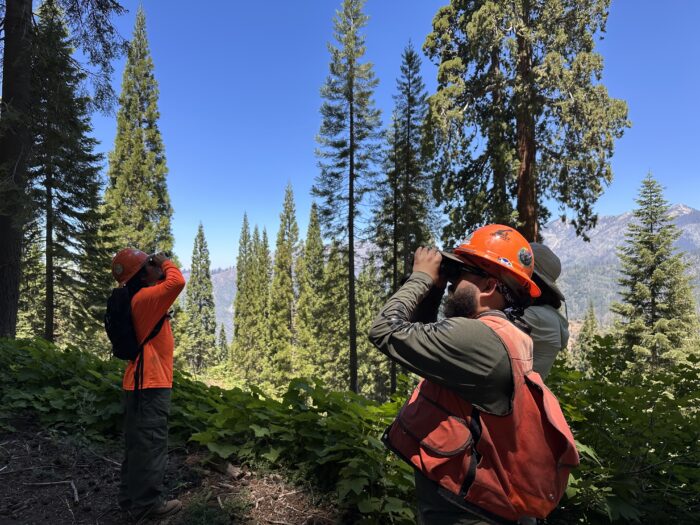
Rodriguez, who is studying forestry at Cal Poly Humboldt while continuing to run the apprenticeship program, sees her work as removing barriers for the next generation of conservationists from the Central Valley. And she’s just getting started. “I’m lifting up my community and opening doors for them,” she says. “I’m taking this role and running with it until someone tells me no.”




2 Responses to “Sequoia apprentices go from the classroom to Cone Camp”
Martin
Keeping the wilderness in place is the most important lesson to teach the younger generations. These young ones should be allowed to go bring some of their friends/family to come with them and see what it feels like to be surrounded by this kind of energy….Its a spiritual kind of feeling and see if they can feel the energy of the trees doing the healing they do silently ….. Blessing sent for these young ones…
Justin Housman
Hi Martin – a couple of the apprentices I spoke with already have or are making plans to bring their families to the sequoias. They’re eager to share the majesty of these forests and the work they’ve done to safeguard them.