November 8, 2022
Redwoods and rain are a match made in heaven. Across the coast redwood range, the rainy season brings fresh, earthy scents, the patter of drops on fronds and leaves, and the enchanting sights of waterfalls, newts, and fungi. It’s also a great time to enjoy the forests without the summer crowds. So slip on your slicker, fill your thermos with a hot beverage, and get ready to experience these wonders of the woods.
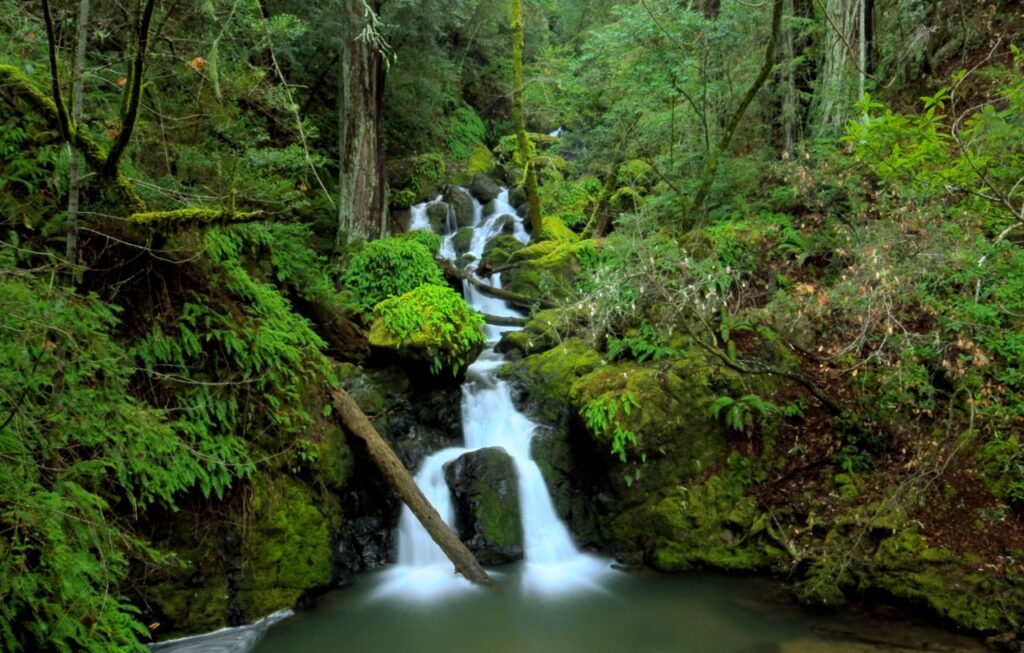
Cataract Falls in Marin County. Photo by Sathish J, Flickr Creative Commons
Flowing waterfalls
When it rains, it pours, and that’s good news for nature. California’s drought years have taught us that rainy days are not to be taken for granted. Even though almost every song ever written about precipitation makes it sound like a mood killer, there’s a lot to love about it. Like these waterfalls.
- Cataract Falls: These popular falls on Mount Tamalpais are a San Francisco Bay Area favorite. They consist of multiple cascades along Cataract Creek, emptying into Alpine Lake—with some nice redwoods along the way.
- Trillium Falls: The Trillium Falls Trail is one the most scenic walks in Redwood National and State Parks, featuring old-growth redwoods, majestic maples, and a lovely little waterfall. Off Davison Road, 3 miles north of Orick, the trail starts at Elk Meadow, where you just might spot some resident Roosevelt elk. The hike to the falls is only .5 miles with a 200-foot elevation gain.
- Pfeiffer Falls: A favorite destination in Pfeiffer Big Sur State Park accessible by the recently renovated Pfeiffer Falls Bridge. Visitors can climb through the redwood canyon to see white ribbons of water streaming from 60 feet above. The Pfeiffer Falls Trail completes a 1.5-mile loop with the Valley View Trail.
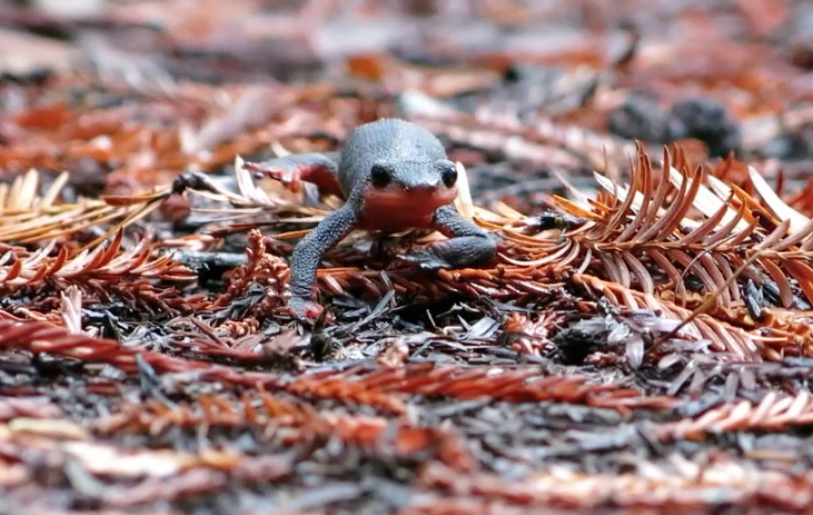
The red-bellied newt (Taricha rivularis) is easily identified by its red underside.
Newts on the move
If you venture into the redwoods on a rainy day, you may have the pleasure of crossing paths with one of the forest’s most charismatic creatures: newts! Three species of newts can be found in the coast redwood forest, and they love to make an appearance during wet weather, often clustering near streams.
The red-bellied newt is easy to pick out, with its red underside and black eyes. The California newt and the rough-skinned newt can be much harder to identify. Each has a yellow or orange belly, but their eyes are the distinguishing feature. Rough-skinned newts have yellow irises and dark coloration around the eyes, whereas California newts tend to have lighter coloration around their eyes.
When threatened, these species will secrete a poisonous neurotoxin from their skin called tetrodotoxin. If the toxin is ingested, it can be fatal to many predators, possibly even humans if eaten in a high enough quantity. Don’t eat the newts.
If you’re in the San Francisco Bay Area, Butano State Park in San Mateo County is a hot spot for these funny creatures. So is Tilden Regional Park, which closes off a section of roadway to care during the annual newt migration.
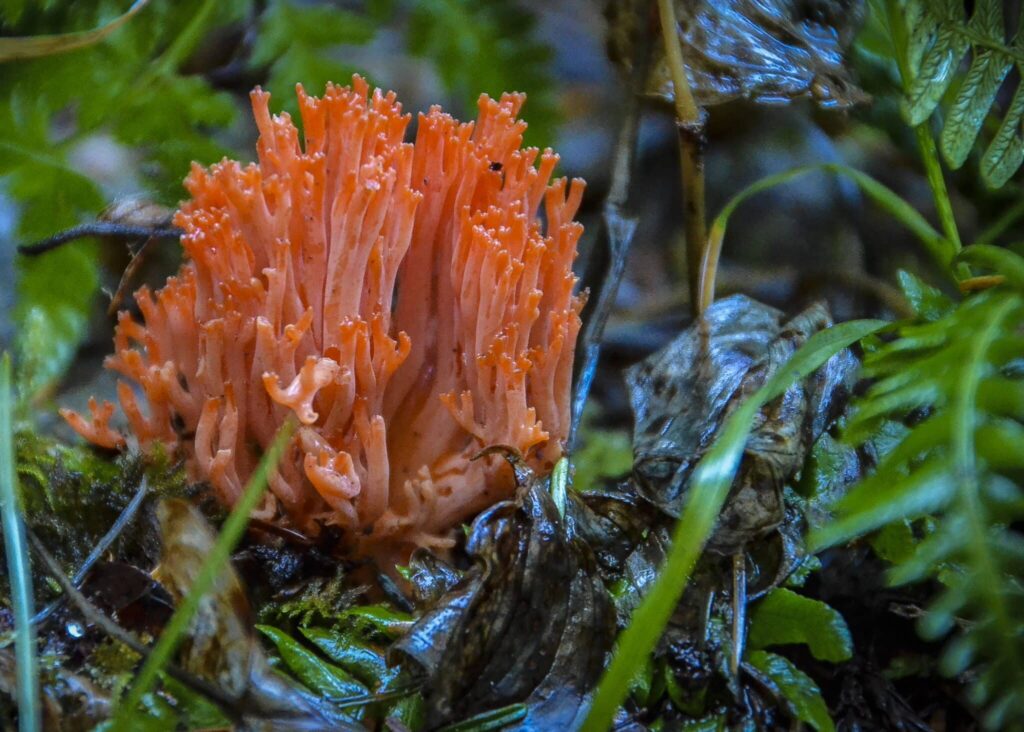
Red coral mushroom stands out against the lush green of the forest floor. Photo by Ginny Dexter.
Fantastic fungi
Coast redwood forests are best known for their larger flora, but this ecosystem is also home to wondrous things at a much smaller scale. Fall and winter are a great time to look for mysterious mushrooms, as they flourish during the rainy season.
One of our favorites, coral fungus, emerges after the rain, and comes in a variety of colors: white, yellow, orange, and red. It quickly grows to a height of 5 to 10 inches off the forest floor, forming connections with the roots of trees and trading nutrients absorbed from the soil for sugars produced by the trees.
It’s obvious how the bird’s nest fungus gets its name. But it’s also fascinating how this mushroom’s form helps with reproduction. It’s shaped in a way that creates a perfect splash cup: When a raindrop falls and hits the cup of the mushroom, it propels the egg-like peridioles inside the cup out onto other surfaces, where spores are released.