Follow the Pacific’s wild edge for a concentrated dose of California beauty
Driving Highway 1 through Big Sur feels like a dare—cliffs plunging to the Pacific Ocean on one side, steep slopes rising on the other, and enormous redwoods towering all around. Right now, the answer is a resounding yes: After a three-year closure, the West Coast’s most thrilling coastal highway is fully open to adventure-seekers once again.
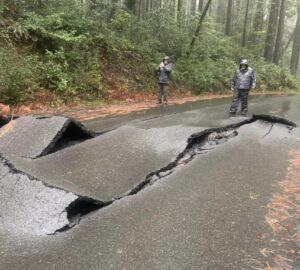
Built along some of the most landslide-prone terrain in the western United States, this stretch of Highway 1 closed in January 2023, when intense storms sent some 500,000 cubic yards of earth sprawling across the highway at Paul’s Slide. Repairs stretched for three years, as crews contended with another massive slide near Esalen in 2024. With the highway now reopened, visitors approaching from the north or south can travel the entire route, with stops at three of Big Sur’s redwood-rich state parks: Pfeiffer Big Sur, Julia Pfeiffer Burns, and Limekiln.
Don’t delay this bucket list road-trip: Climate change means more extreme weather, which could cause new highway-swallowing landslides. But also remember that beauty this astonishing is best sipped over several days. Take time to savor each of these Big Sur state parks—listed north to south—and explore tucked-away waterfalls, beaches rich with wildlife, and standout hikes among redwoods far older than the road itself.
A must-cross bridge at Pfeiffer Big Sur State Park
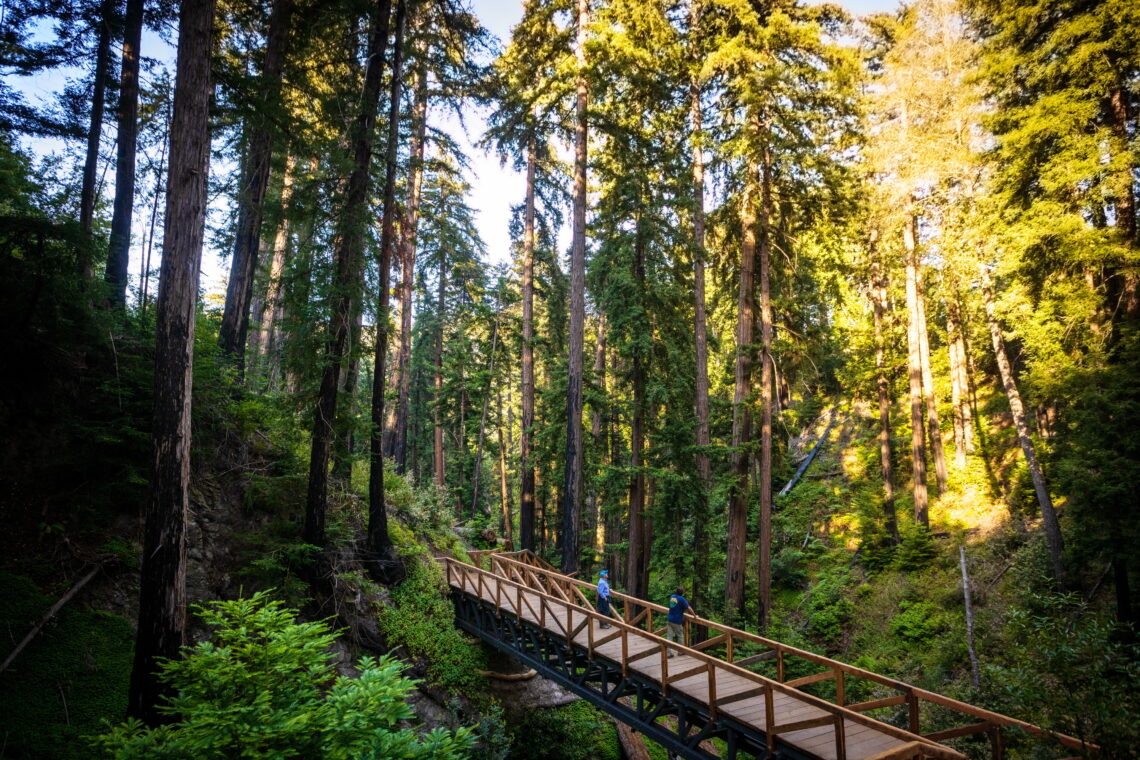
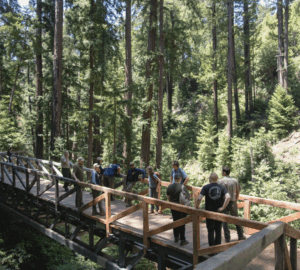
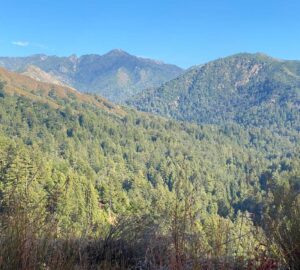
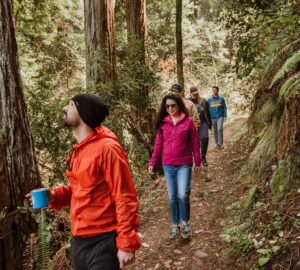
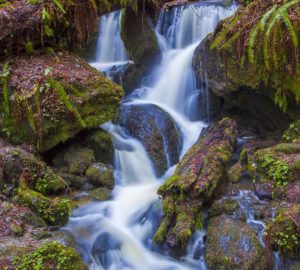
The Big Sur River dominates Pfeiffer Big Sur State Park, its crystalline waters and dramatic falls earning the park the nickname “Mini Yosemite.” The most popular trek here is the 2-mile round-trip to Pfeiffer Falls and Valley View. The trail winds through a lush redwood canyon, crossing an 70-foot pedestrian bridge built and then rebuilt with support from Save the Redwoods—an elegant way to keep visitors connected to the forest while protecting the landscape. At the falls, water drops 60 feet into a shaded gorge. Continue a bit farther for a sweeping view across oak woodlands and redwood-filled valleys stretching toward the Pacific.
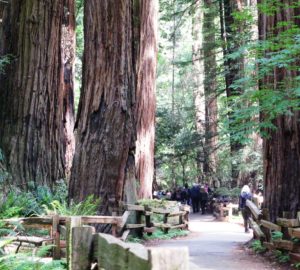
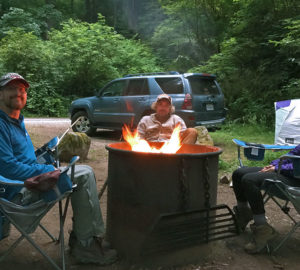
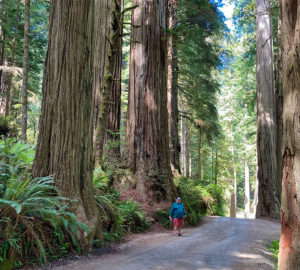
Camping: If you’ve ever wanted to spend a night among redwoods, start here. The campground at Pfeiffer Big Sur is the area’s largest, with 189 tent and RV sites set beneath old-growth redwoods along the babbling Big Sur River. Just across the river, the 1,100-year-old Colonial Tree spans an impressive 31 feet in diameter. The park also offers a 61-room lodge, a grocery store, and a cafe that scoops up post-hike ice cream.
Winged wonders at Julia Pfeiffer Burns State Park
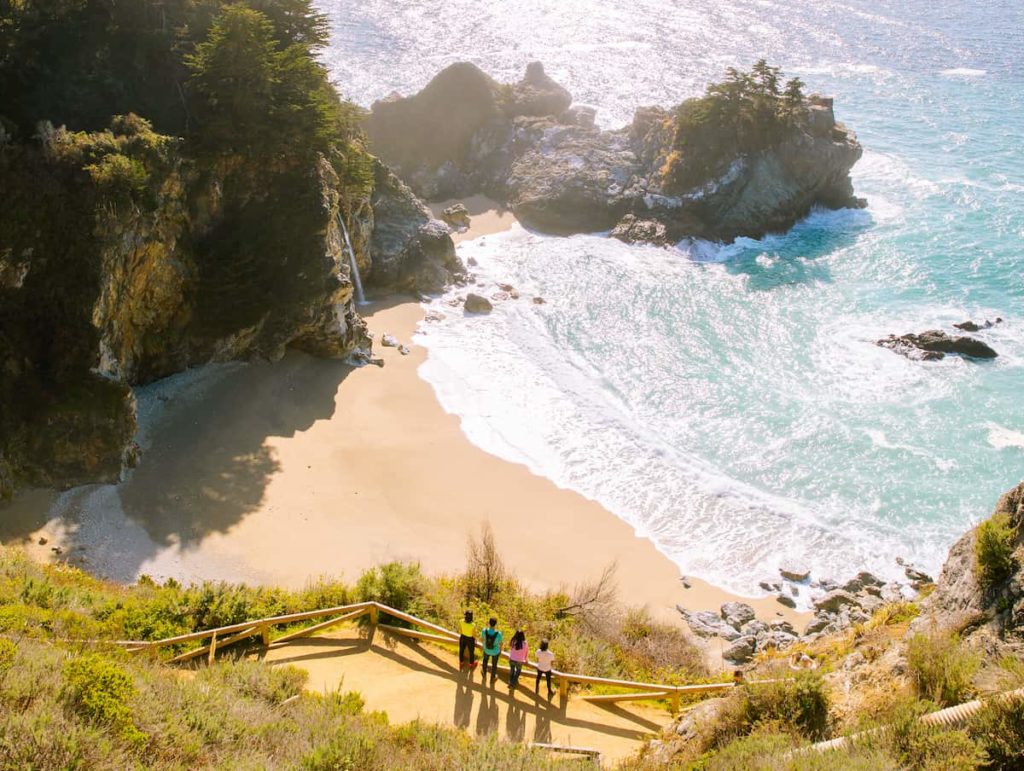
Julia Pfeiffer Burns State Park is known for McWay Falls, an 80-foot waterfall that spills directly onto a secluded beach before meeting the lacy foam of the Pacific Ocean. The beach itself is off-limits, preserving a sense of untouched beauty that can be seen from a vantage point off Highway 1. (The classic vista from the Overlook Trail will reopen after retaining wall repairs—check current conditions before visiting.)
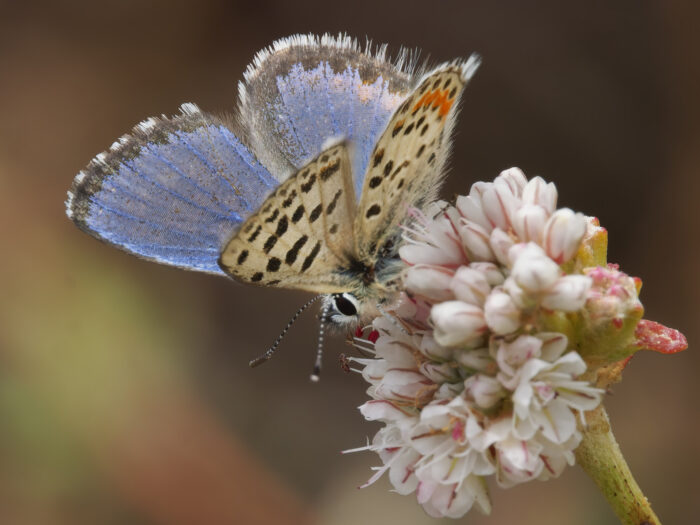
The park’s appeal extends beyond this iconic view. Offshore, migrating whales, dolphins, and porpoises are commonly spotted. Just inland, redwood groves provide habitat for rare species, including one of the last surviving colonies of Smith’s blue butterflies. Watch for their periwinkle wings as you hike the park’s Ewoldson Trail, a challenging 5-mile loop that climbs through a redwood forest to chaparral-covered hillsides with expansive coastal vistas.
Other wings to watch for include the 9.5-foot span of a California condor, one of the state’s most endangered species. Lucky hikers report seeing numerous condors swooping above the park’s protected land, which Save the Redwoods has helped expand twice over the years.
Camping: Perched on a coastal bluff, the park’s two walk-in campsites offer one of the most dramatic overnight stays in Big Sur. Reservations are essential.
Big Sur sampler at Limekiln State Park
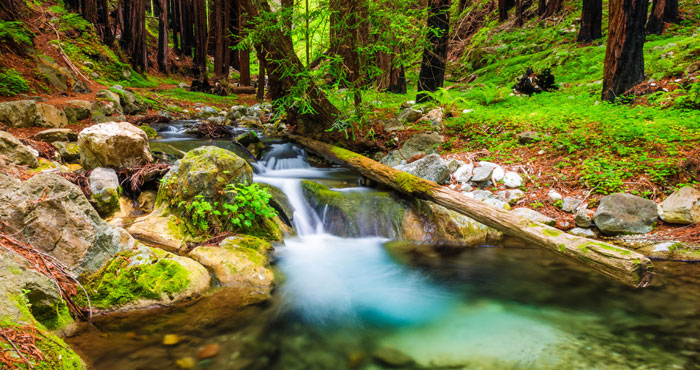
At the southern end of Big Sur, Limekiln State Park brings together a dramatic coastline, a misty redwood forest, and early California history in one compact landscape. Established with help from Save the Redwoods, the 716-acre park offers a range of experiences—from spotting sea otters off the sandy beach to hiking through shaded groves to a 100-foot waterfall.
Another popular hiking destination: The park’s namesake limekilns, which date from the late 1800s. Fueled with firewood from nearby redwoods, these large kilns turned limestone into lime—a key ingredient in the concrete that binds some of the oldest buildings in San Francisco and Monterey. Today, the forest is slowly reclaiming the site, green growth sprouting from the weathered structures in a quiet reminder of both loss and renewal.
Camping: Not quite ready to leave Big Sur’s charms behind? Limekiln’s recently reopened campground includes sites near the ocean and along a tranquil stream through the redwoods. A wooden footbridge—rebuilt with support from Save the Redwoods—connects the campground to trails while protecting the stream and surrounding habitat. It’s a small example of how we work to bring people closer to the redwoods while deeply respecting the fragility and resilience of nature.