A simple guide to identifying the tallest and largest trees on the planet
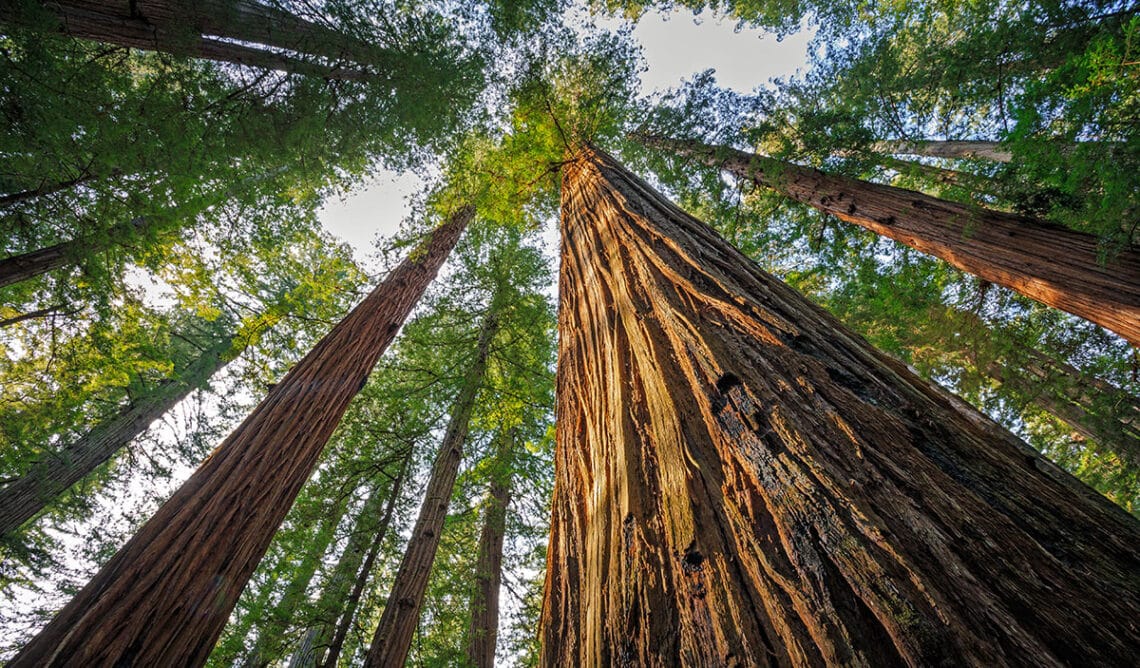
If you’ve ever confused a coast redwood (Sequoia sempervirens) with a giant sequoia (Sequoiadendron giganteum), you’re in good company. Mixing up these two redwood species is easy: Both trees tower high above, with reddish bark, immense trunks, and a sense of timelessness that can leave a person breathless.
It doesn’t help that these conifer cousins have been planted far outside their native ranges. You’ll find fog-loving coast redwoods in sunny inland cities. And snow-loving sequoias in botanical gardens along the coast. (In fact, the UC Botanical Garden at Berkeley is home to all three redwood species: giant sequoias, coast redwoods, and the dawn redwoods of Asia.)
To help you distinguish between California’s two living giants, we’ve gathered our favorite identification tips and tricks. Consider them the perfect excuse to spend more time gazing at magnificent trees.
How to tell coast redwoods from giant sequoias
Check out the cones


Coast redwoods produce small, rounded cones that grow on the tips of their branches. These cones measure less than an inch long—easy to overlook among fallen needles. Giant sequoia cones, on the other hand, are the size of a chicken egg.
Both cone types turn from green to russet brown as they mature. Each one holds over a hundred tiny, winged seeds, waiting for wind, rain, time—or in the sequoia’s case, fire—to release them to the forest floor.
Note that all redwood cones are “seed cones” (versus “pinecones,” which only grow on pine trees).
Look at the leaves
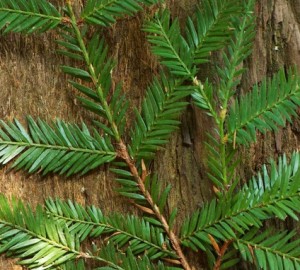
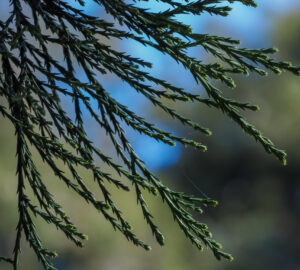
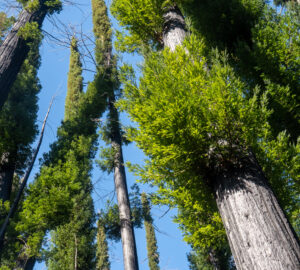
Examining the foliage of a mature coast redwood or giant sequoia can be a challenge—the crowns of these trees are often hundreds of feet overhead. But check out the lower branches or find a younger tree and the differences become clear: Coast redwoods bear flat needle-like leaves designed to gather moisture from fog. In shape, they resemble green feathers. Giant sequoias have pointy tapering needles that clasp tightly around twigs to minimize water loss in the dry Sierra Nevada air. Some say they resemble pipe cleaners or chains of origami cranes.
Gauge the height and shape
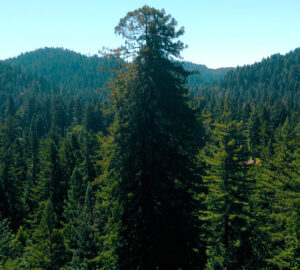
Coast redwoods are the tallest trees on Earth—soaring to 380 feet in one known instance. Their crowns often disappear into fog or blend into the surrounding canopy, making height difficult to judge. Coast redwoods tend to have a more slender silhouette, often with dense foliage extending throughout their upper canopy.
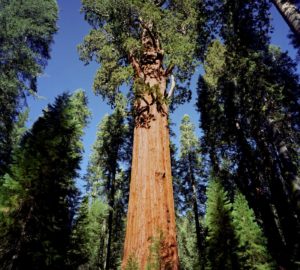
The world’s largest trees by volume, giant sequoias rarely exceed 320 feet—currently ranking them as the world’s seventh-tallest tree species. (The difference between such impressive heights is nearly impossible to discern by eye alone, meaning scale is not always a reliable field mark.) Old-growth sequoias often have ample space between their massive branches, as if trimmed by a bonsai master. Fun fact: The General Sherman Tree once lost a branch measuring 98 feet in length—the size of many mature trees.
Don’t forget the bark and the base
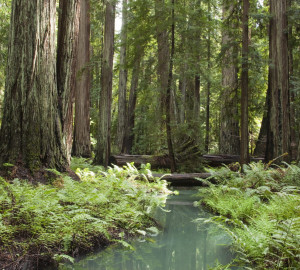
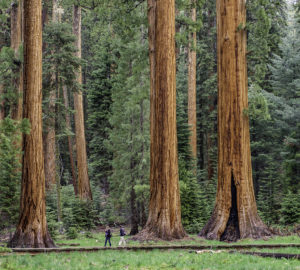
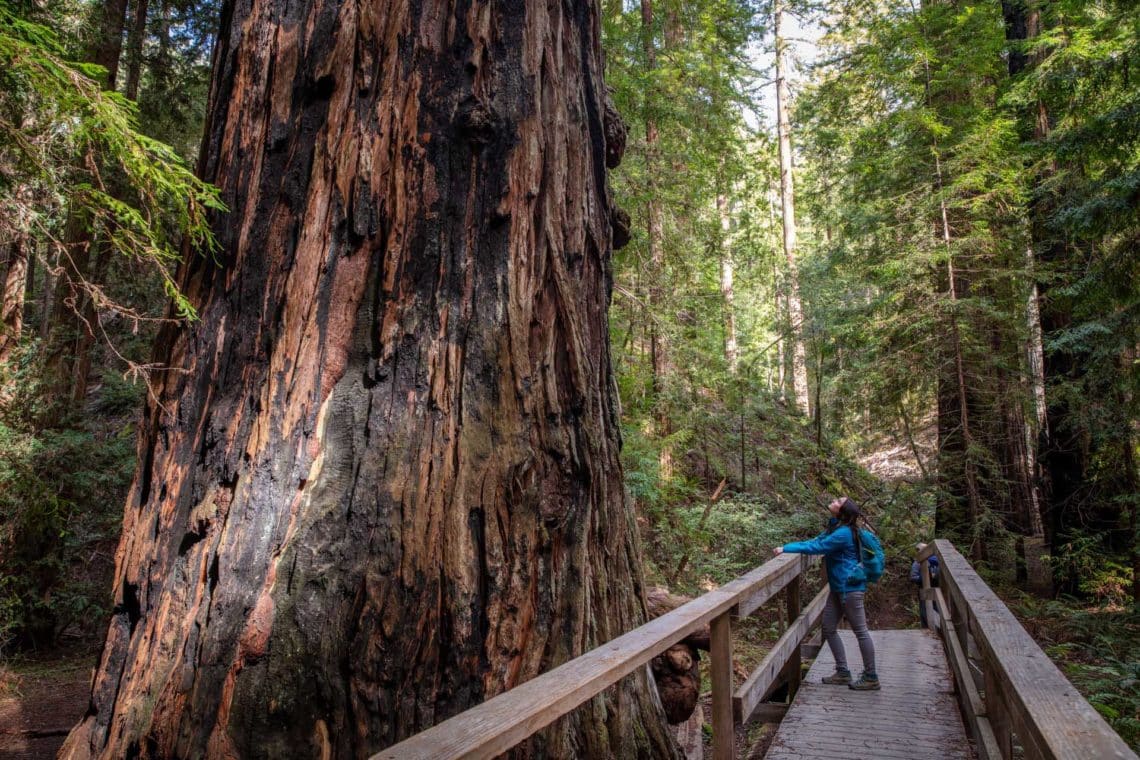
Both coast redwoods and giant sequoias have massive trunks—so large that it can take 10 or more people linking arms to encircle a single tree. Yet their appearance at the base tells very different stories.
True to their name, coast redwoods are reddish-brown in color, though old-growth trees often weather to charcoal or gray, softened by green mosses and lichens that cling to their ridges. These trees rise from lush understories thick with ferns and shrubs, which can obscure their full girth. Coast redwoods can also resprout from their base when they fall or are cut down, forming “fairy rings” of younger trees around the original stump.
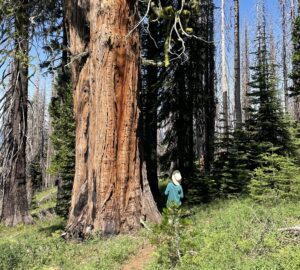
Giant sequoias, by contrast, don’t typically resprout. Thanks to the drier landscapes they call home, the area around their base tends to be more open—providing excellent views of their formidable trunks. The bark of a giant sequoia comes in varying shades of cinnamon-orange and can glow beautifully, even on a cloudy day.
More differences between coast redwoods and giant sequoias
Ideal habitat
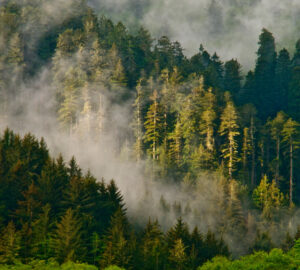
Coast redwoods flourish in the cool, misty air of California’s coast. Their roots draw strength from deep alluvial soils, while their crowns drink fog rolling in from the Pacific—an invisible river that sustains them through the dry summer months. The coast redwood’s natural range stretches from California’s central coast to just over the Oregon border.
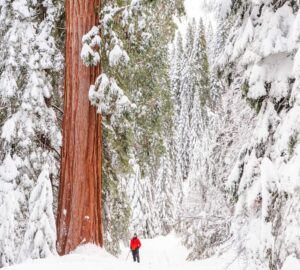
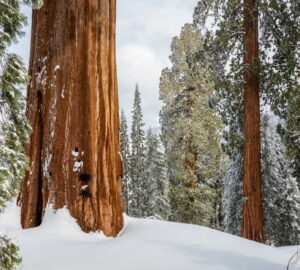
Giant sequoias stand high in the Sierra Nevada, between 4,000 and 8,000 feet in elevation. They thrive in well-drained granitic soils, in places where snow blankets the ground in winter, melting into the ground each spring. Approximately 80 ancient sequoia groves are scattered across a narrow range measuring less that 300 miles from north to south.
Relationship with fire
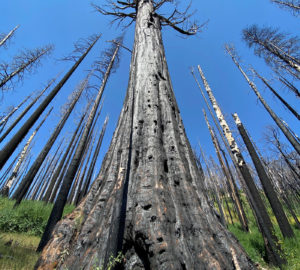
For giant sequoias, fire has always been a necessary ally—opening seed cones, clearing duff from the forest floor, and creating the perfect seedbed for new life. The sequoia’s thick bark evolved to withstand low-intensity flames, and for millennia these fires helped renew the forest rather than destroy it. But that balance has shifted. Today, longer droughts, drier forests, and unnaturally intense fires fueled by climate change have turned fire into an existential threat. In the past decade, nearly 20% of all mature giant sequoias have been killed by extreme fire—an unprecedented loss in the species’ 200-million-year history.
Coast redwoods, too, are adapted to fire, but they respond differently: When flames pass through, the trees resprout from burls and basal buds, regenerating rapidly from living roots. This resilience has helped coast redwoods endure centuries of disturbance. Yet they too are facing fires that are hotter, larger, and more destructive than ever before. What were once cycles of renewal have entered an era of risk—challenging both species in ways unseen in the deep past.
Water sources
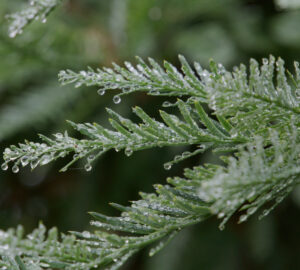
Water defines the worlds of both species, but in different ways. Coast redwoods sip fog through their leaves, capturing moisture from the air itself. Some drips down to nourish ferns, sorrel, and salmonberry in the shaded understory below. Scientists are currently studying the relationship between redwoods and fog to better understand how climate change might shift this delicate balance.
Giant sequoias depend on cold Sierra snowmelt filtering through granite and soil, rising up through roots and immense trunks to once again reach the sky. Because the steep Sierra Nevada mountains force most moisture from the Pacific to fall on their western vs. eastern flanks —what’s known as the rain shadow effect—you’ll only find sequoias groves on slopes that face west.
Shared heritage across deep time
Despite their differences, both of these redwood species share a lineage stretching back over 200 million years, to a time when dinosaurs roamed and conifers ruled the Earth. Their survival—each in its own ecological niche—is a story of endurance, adaptation, and chance.
Standing before these trees—whether in misty Muir Woods or snowy Yosemite—one can sense the presence of deep time. The redwoods remind us that our planet has endured countless cycles of climate, fire, and upheaval, and that we, too, are part of a long and living story. Hopefully, together, we can ensure their legacy continues for generations to come.