
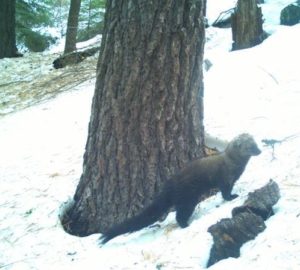
Spotted: The Elusive Pacific Fisher at Red Hill
onThese nocturnal critters are mid-sized carnivores in the weasel family. Females have home ranges up to 10 square miles, and males have even larger home ranges since they mate with multiple females.
These nocturnal critters are mid-sized carnivores in the weasel family. Females have home ranges up to 10 square miles, and males have even larger home ranges since they mate with multiple females.
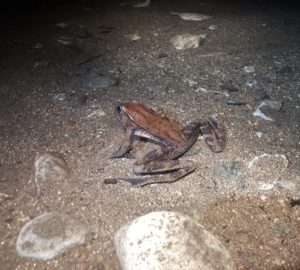
Imagine this: There’s an amazing neighborhood farmers’ market that’s a safe and easy walk from your house. You shop for fresh local produce there every week, until one day, the market is relocated to a spot that’s just out of reasonable walking distance. To top it off, there’s now a six-lane freeway that you’d have to cross to get to it. Your habitat has just been fragmented.
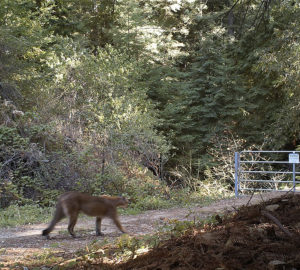
As I was heading toward the gap in the logs, I noticed that the one to my right had a large dark area under it. I didn’t think it was anything because most of the time it’s either charred or shaded making it look darker than it really is.

In the most comprehensive assessment of its kind, the United Nations (UN) paints a bleak picture, describing a future in which 1 million plant and animal species are at risk of extinction — unless we make transformative changes now.
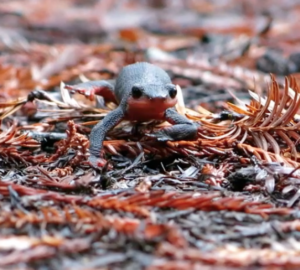
If you decide to venture into the redwoods on a rainy day, you may be rewarded with the pleasure of crossing paths with one of the redwood forest’s most charismatic creatures – newts! There are three species of newts that can be found in the coast redwood forest, and they love to make an appearance during wet weather.
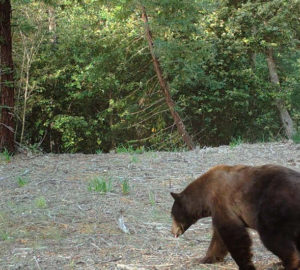
The League’s wildlife cams at Cape Vizcaino (Cape Viz) in Mendocino County caught animals in action playing, prancing, grazing, and generally doing what animals do. The property provides habitat to a variety of wildlife including (but certainly not limited to) American black bears, ospreys, black tailed deer, and pumas living among stands of old-growth coast redwoods, grasslands, chaparral, and a scenic, rugged coastline.
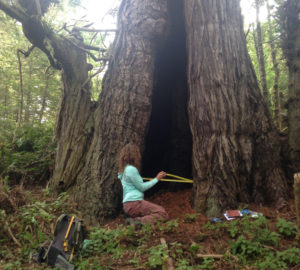
This summer, the League protected Harold Richardson Redwoods Reserve, the largest old-growth redwood forest remaining in private lands. Many wild animals call the property home, including northern spotted owls, Townsend’s big-eared bats, foothill yellow-legged frogs, and Sonoma red tree voles!
The Department of the Interior is working to revise regulatory language in the ESA. The alarming proposal would allow for the analysis of economic impacts when considering listing species or considering protections — a reversal of the current statute.
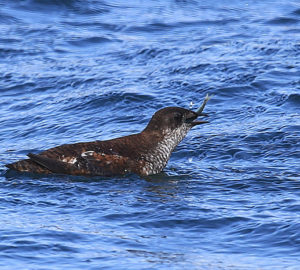
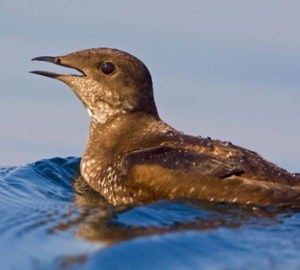
In February, Oregon’s Fish and Wildlife Commission voted to reclassify the marbled murrelet from threatened to endangered. The vote is good news, considering that murrelets have lost an estimated 78,600 acres of nesting habitat in Oregon since 1993. By some models cited by the Oregon Department of Fish and Wildlife, the species risks an 80 percent chance of extinction by 2060 in certain parts of the state.
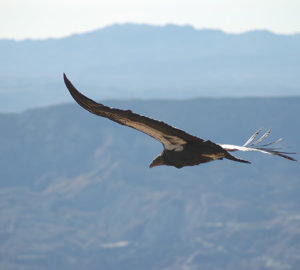
California condors have been absent from the Pacific Northwest for over a century. But the Yurok tribe — whose ancestors lived along the Klamath River in Northern California — still revere and celebrate them. The sight of a condor flying over the redwoods has been erased from living memory, and, as tribe chairman Thomas P. O’Rourke told Audubon last March, “His absence is a hole in our hearts.”
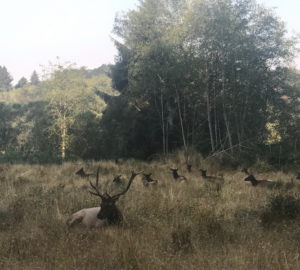
The Orick Mill Site, a 125-acre property in the Prairie Creek Scenic Corridor, was a top priority for acquisition by the League for a long time. It’s not hard to see why: the property is nestled between the most iconic redwood groves in the world — the groves of Redwood National and State Parks. But land acquisitions — and the resulting changes in land management — are complicated affairs, especially if you happen to be a herd of Roosevelt elk.
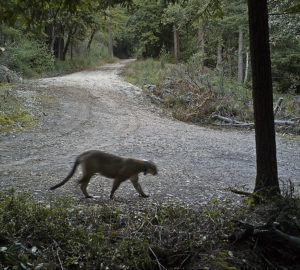
A few years ago, Justine Smith, a researcher with the Santa Cruz Puma Project, observed an interesting pattern; in human-populated areas, mountain lions killed more prey but spent less time feeding. Researchers weren’t sure why, but they suspected it had to do with lions’ fear of people.
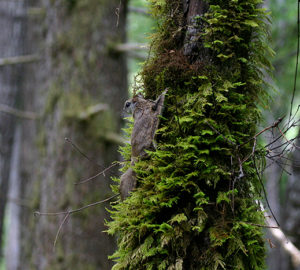
It’s estimated that about 150 species go extinct per day, so it is always exciting news when a new species is discovered! This spring, we learned about a new mammal found in the coastal redwood range called Humboldt’s flying squirrel.
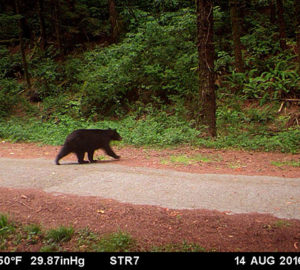
Hoping to catch a glimpse of the various wild animals living on and passing through the Orick Mill Site, Save the Redwoods League set up multiple wildlife cameras – and we found some incredible species on the property.
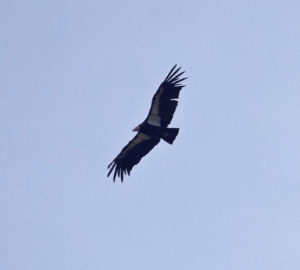
After disappearing from the Pacific Northwest over a century ago, wild California condors may once again find ample nesting, breeding, and foraging habitat in the redwood range.
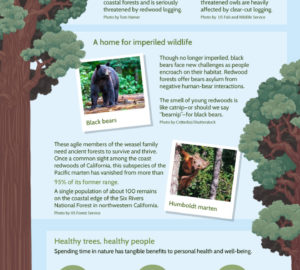
Did you know that the California Legislature named the coast redwood as California’s official state tree on April 3, 1937? In honor of our magnificent redwoods, we’ve created an infographic to show just some of the ways that redwoods support people and wildlife.

Warning: this topic is gruesome, and awesome. Last week, Land Project Manager Christine Aralia and I walked the Orick Mill Site with Texas State researcher Butch Weckerly. Butch has studied the Roosevelt elk in Redwood National and State Parks since 1997, witnessing local extinctions and population explosions of the elk over the years…
With recreational marijuana legal in Colorado and Washington and medicinal marijuana available in 23 states and the District of Columbia, marijuana is here to stay. And, more of the marijuana on the U.S. market comes from California than any other …
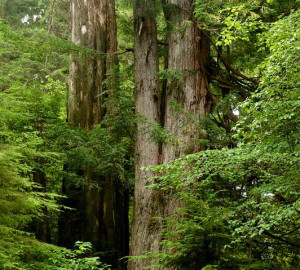
As surprising as it may seem, the shaded areas on park maps indicating different kinds of habitat and vegetation do not always reflect the reality “on the ground.” This is true for Redwood National and State Parks, which contains a …
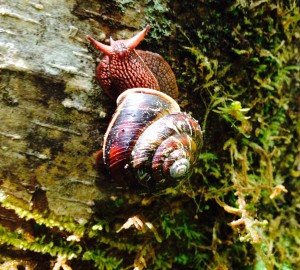
There are certain animals in the redwood forest that easily call attention to themselves. The banana slug is bright yellow, the Pacific giant salamander barks, the spotted owl hoots, and the yellow-spotted centipede has distinctive yellow spots on the sides …